





About

The consultancy born at the intersection of behavioral economics and human experience.

René Studio
AI EXPERIENCE STUDIO

The CX design platform we built from a decade of client work.

Explore René Studio
Mysterya
MYSTERY AUDITS, LIVE

Mystery audits we run, scored live for every location.

Explore Mysterya
NOW HIRING

Join a team reshaping how the world experiences brands.

View open roles →

COMPANY

GROW WITH US

CONNECT

Services

Comprehensive CX and management consulting for enterprise brands.

René Studio
AI EXPERIENCE STUDIO

Every engagement, mapped and scored in one AI workspace.

Explore René Studio
Mysterya
MYSTERY AUDITS, LIVE

Mystery shopping, scored and evidenced in real time.

Explore Mysterya
ALL SERVICES

Explore the full range of CX & management consulting services.

Browse all services →

CORE

SPECIALIST

Solutions

Structured solutions that turn CX ambition into measurable outcomes.

René Studio
AI EXPERIENCE STUDIO

Map, score and fix the journeys we redesign, with AI.

Explore René Studio
Mysterya
MYSTERY AUDITS, LIVE

Check the experience you designed is delivered.

Explore Mysterya
ALL SOLUTIONS

Explore every CX solution we offer.

Browse solutions →

STRATEGY & GOVERNANCE

DESIGN & DELIVERY

CULTURE & EXPERIENCE

Industries

A decade of CX transformation across the region's defining sectors.

René Studio
AI EXPERIENCE STUDIO

Sector-ready journeys, scored by AI in minutes.

Explore René Studio
Mysterya
MYSTERY AUDITS, LIVE

Mystery audits tuned to your sector, scored live.

Explore Mysterya
ALL INDUSTRIES

See how we work across every sector.

Browse industries →

BUILT ENVIRONMENT

FINANCE & TECH

PEOPLE & MOBILITY

Products

Proprietary tools, platforms, and AI that power CX transformation.

René Studio
AI EXPERIENCE STUDIO

Design, score and fix customer journeys with AI.

Explore René Studio
Mysterya
MYSTERY AUDITS, LIVE

Audit every location and act on what you find.

Explore Mysterya
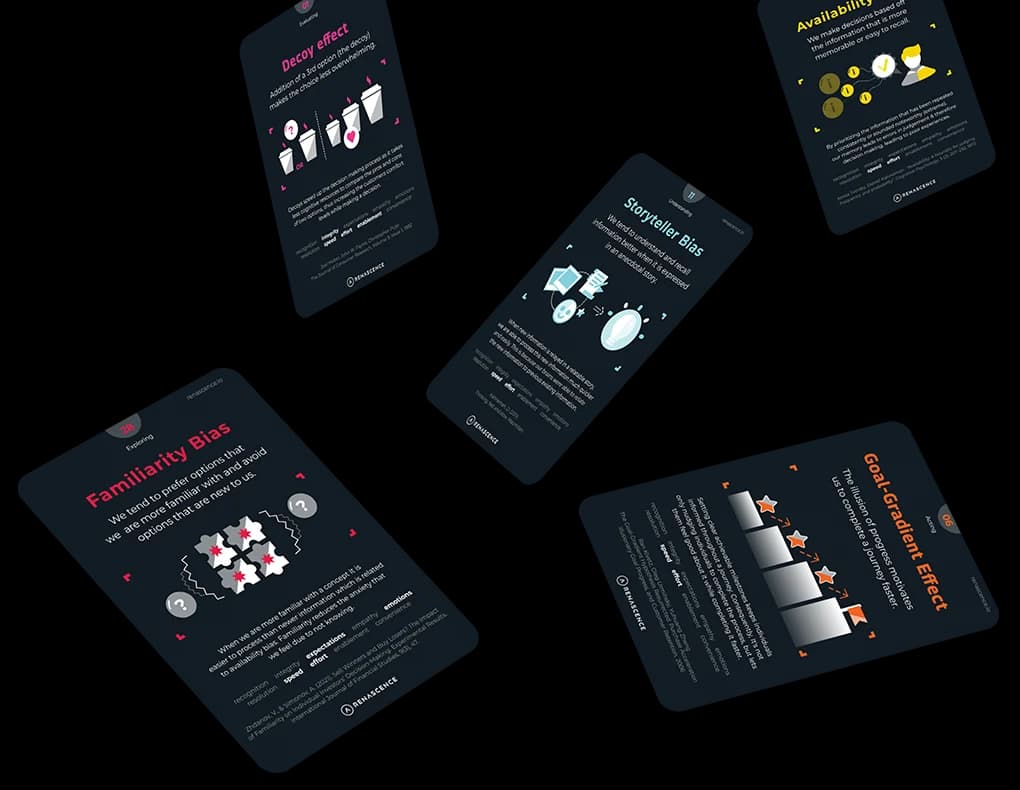
REBELDECK A · 36 FORCES

The forces that shape how humans experience the world.

Explore REBEL Reveal →
ALL PRODUCTS

Explore the full Renascence product ecosystem.

Browse products →

PLATFORMS

AI & TECHNOLOGY

LEARNING & FRAMEWORKS

CX TOOLKIT

Opinion

Insights, research, and conversations at the frontier of CX.

René Studio
AI EXPERIENCE STUDIO

Turn what you read into a journey you can score.

Explore René Studio
Mysterya
MYSTERY AUDITS, LIVE

See what customers really experience, visit by visit.

Explore Mysterya
ReadExperience JournalArticles & research on CX, behavior, and transformation.Watch & listenExperience LoomOur video podcast on CX & behavior.CuratedCX NewsIndustry news that matters in CX, minus the noise.

Latest articles

Latest episodes

Latest news

Hub

Free tools, templates, and resources to advance your CX practice.

René Studio
AI EXPERIENCE STUDIO

Design, score and fix customer journeys with AI.

Explore René Studio
Mysterya
MYSTERY AUDITS, LIVE

Every visit, every location, every score. Live.

Explore Mysterya
THE MANIFESTOBurn the Deck.
Ten Virtues. Zero Excuses.Start reading →
THE HUB

Every free tool, template and resource in one place.

Visit the Hub →

AI TOOLS

FREE TOOLS

LEARNING

CULTURE

Digital Transformation · 16 October 2026

Smartphone Shipments Fall as Memory Shortage Lifts Device Prices

Smartphone shipments have fallen sharply as competition for memory chips from AI infrastructure raises handset costs, with budget devices hit hardest. Analysts quoted by The Register see little relief before 2028.

Newsdesk
Curated briefing · 2 min read

What happened

Smartphone shipments have fallen sharply as a memory shortage pushes up the cost of handsets, with the steepest pressure falling on budget devices. Reporting from The Register attributes the squeeze to AI's growing appetite for memory components, and analysts quoted in the coverage see little prospect of relief before 2028.

The core dynamic is a competition for components. Memory chips that go into phones are also in high demand from the AI infrastructure build-out, and that competition has raised component costs for device makers. Lower-priced models, which run on thinner margins, have less room to absorb those increases than premium flagships.

The result is a market where fewer devices are moving and the ones that do ship are more expensive. The Register's report frames this as a supply-side problem rather than a fall in demand for phones as such, though the two effects reinforce each other when prices rise at the entry level.

Why it matters

For experience leaders, the most important consequence is who gets priced out. Budget handsets are often the first and only smartphone for many customers, and in many markets they are the main route into digital banking, government services, healthcare and messaging. When entry-level devices become more expensive or harder to find, the digital services built on top of them are effectively less accessible, even if the services themselves have not changed.

It also shows how AI's infrastructure demands can reach the customer experience through channels that have nothing to do with AI products. Organisations planning digital channels, self-service journeys or app-led service models should assume that device affordability and upgrade cycles may shift, and design for a wider range of hardware and connection quality rather than a single assumed standard.

The Renascence take

Most commentary on this story will treat it as a hardware or supply-chain headline. That misses the point. A device price increase is not just a line on a balance sheet; it changes which customers can reach your service at all, and it tends to fall hardest on the people with the least slack in their budgets.

Organisations tend to design digital journeys for the average device and the average customer, and then discover too late that their most price-sensitive users have quietly dropped out. The behavioural principle underneath is simple: friction compounds when people are already stretched, so small increases in cost can produce disproportionate drop-off. A customer-obsessed operator should audit which of its journeys assume a recent, premium handset, test them on mid-range and older devices, and treat hardware accessibility as a service-design constraint rather than someone else's problem.

Sources

This briefing was written by our Newsdesk, synthesising reporting from the outlets below. Follow the links for the original coverage.

FAQ

Questions we get on this topic

Memory chips used in phones are in high demand from AI infrastructure build-out, which has raised component costs for device makers. According to The Register's reporting, this supply-side pressure is pushing handset prices up.

Budget and entry-level devices are hit hardest because they run on thinner margins and have less room to absorb higher component costs than premium flagships.

Analysts quoted in The Register's coverage see little prospect of relief before 2028.

Budget handsets are often a customer's first and only smartphone and their main route into digital banking, government services, healthcare and messaging. When entry-level devices become more expensive or harder to find, digital services become less accessible to price-sensitive users.

Stay ahead of CX

Get the signal, not the noise.

The stories shaping customer experience — plus the Journal and Experience Loom — in your inbox.