





About

The consultancy born at the intersection of behavioral economics and human experience.

René Studio
AI EXPERIENCE STUDIO

The CX design platform we built from a decade of client work.

Explore René Studio
Mysterya
MYSTERY AUDITS, LIVE

Mystery audits we run, scored live for every location.

Explore Mysterya
NOW HIRING

Join a team reshaping how the world experiences brands.

View open roles →

COMPANY

GROW WITH US

CONNECT

Services

Comprehensive CX and management consulting for enterprise brands.

René Studio
AI EXPERIENCE STUDIO

Every engagement, mapped and scored in one AI workspace.

Explore René Studio
Mysterya
MYSTERY AUDITS, LIVE

Mystery shopping, scored and evidenced in real time.

Explore Mysterya
ALL SERVICES

Explore the full range of CX & management consulting services.

Browse all services →

CORE

SPECIALIST

Solutions

Structured solutions that turn CX ambition into measurable outcomes.

René Studio
AI EXPERIENCE STUDIO

Map, score and fix the journeys we redesign, with AI.

Explore René Studio
Mysterya
MYSTERY AUDITS, LIVE

Check the experience you designed is delivered.

Explore Mysterya
ALL SOLUTIONS

Explore every CX solution we offer.

Browse solutions →

STRATEGY & GOVERNANCE

DESIGN & DELIVERY

CULTURE & EXPERIENCE

Industries

A decade of CX transformation across the region's defining sectors.

René Studio
AI EXPERIENCE STUDIO

Sector-ready journeys, scored by AI in minutes.

Explore René Studio
Mysterya
MYSTERY AUDITS, LIVE

Mystery audits tuned to your sector, scored live.

Explore Mysterya
ALL INDUSTRIES

See how we work across every sector.

Browse industries →

BUILT ENVIRONMENT

FINANCE & TECH

PEOPLE & MOBILITY

Products

Proprietary tools, platforms, and AI that power CX transformation.

René Studio
AI EXPERIENCE STUDIO

Design, score and fix customer journeys with AI.

Explore René Studio
Mysterya
MYSTERY AUDITS, LIVE

Audit every location and act on what you find.

Explore Mysterya
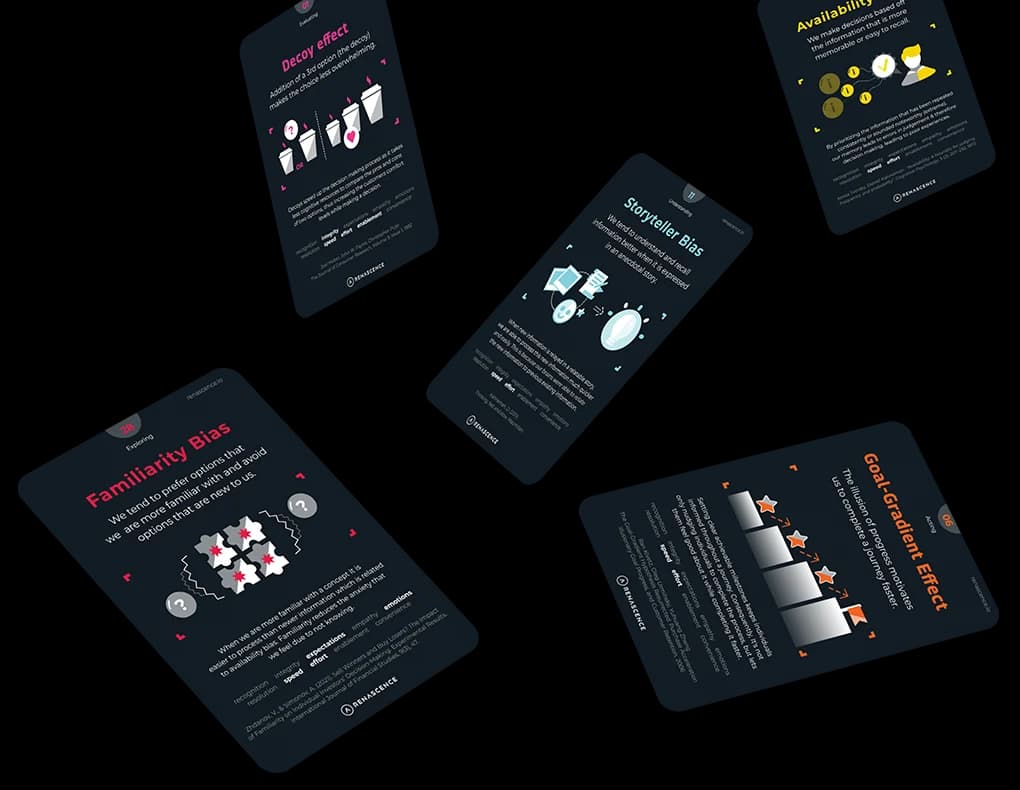
REBELDECK A · 36 FORCES

The forces that shape how humans experience the world.

Explore REBEL Reveal →
ALL PRODUCTS

Explore the full Renascence product ecosystem.

Browse products →

PLATFORMS

AI & TECHNOLOGY

LEARNING & FRAMEWORKS

CX TOOLKIT

Opinion

Insights, research, and conversations at the frontier of CX.

René Studio
AI EXPERIENCE STUDIO

Turn what you read into a journey you can score.

Explore René Studio
Mysterya
MYSTERY AUDITS, LIVE

See what customers really experience, visit by visit.

Explore Mysterya
ReadExperience JournalArticles & research on CX, behavior, and transformation.Watch & listenExperience LoomOur video podcast on CX & behavior.CuratedCX NewsIndustry news that matters in CX, minus the noise.

Latest articles

Latest episodes

Latest news

Hub

Free tools, templates, and resources to advance your CX practice.

René Studio
AI EXPERIENCE STUDIO

Design, score and fix customer journeys with AI.

Explore René Studio
Mysterya
MYSTERY AUDITS, LIVE

Every visit, every location, every score. Live.

Explore Mysterya
THE MANIFESTOBurn the Deck.
Ten Virtues. Zero Excuses.Start reading →
THE HUB

Every free tool, template and resource in one place.

Visit the Hub →

AI TOOLS

FREE TOOLS

LEARNING

CULTURE

Digital Transformation · 16 October 2026

ChatGPT for Teens: researchers flag serious safety risks

Researchers testing more than 4,000 prompts found serious weaknesses in ChatGPT for Teens, with parents reportedly not receiving the warnings they expect, according to TechRadar.

Newsdesk
Curated briefing · 2 min read

What happened

A new investigation using more than 4,000 prompts has found serious weaknesses in ChatGPT for Teens, the version of OpenAI's chatbot designed for younger users. TechRadar's reporting says the researchers' findings have been described as an unacceptable risk, and that parents are not receiving the warnings they expect.

The available coverage is brief. It does not set out the specific failure cases, the testing methodology in full, or any response from OpenAI, so this briefing does not characterise those details. Readers who need the specifics should go to the original investigation and TechRadar's full article.

Why it matters

Teen-facing AI products sit at the point where product design, family trust and regulatory expectation meet. When a safety feature exists on paper but does not reliably reach the people it is meant to protect, the gap is an experience failure as much as a technical one. Parents, teenagers and schools are asked to trust a set of safeguards they cannot easily inspect, and the findings suggest that trust may be running ahead of what the product delivers.

For leaders in AI and digital service design, the story is a reminder that safety is judged by what users notice and act on. A warning that is technically triggered but not seen, understood or acted on offers little protection. Any organisation deploying conversational AI to younger users will need to test whether its safeguards work in real interactions, not only in its design documents.

The Renascence take

Most coverage of this story will focus on whether the product is safe enough. The more useful question is whether the safeguards are legible to the people relying on them. Behavioural economics has long shown that people act on salient, timely signals, and that a control buried in settings or a warning shown too late will be ignored, however well it is engineered. Operators serving teens should treat every safeguard as a designed experience, with its own journey, moments of truth and measurable outcomes, and should audit those outcomes with real users and their parents before making claims about protection.

The findings are less about a single feature failing than about a design habit: assuming that a safeguard which exists is a safeguard which works. Renascence's view is that a warning a parent never sees is, in practical terms, no warning at all. Teams building for young users should instrument the full path from risk to notification to response, and publish what they find.

Sources

This briefing was written by our Newsdesk, synthesising reporting from the outlets below. Follow the links for the original coverage.

FAQ

Questions we get on this topic

A new investigation using more than 4,000 prompts found serious weaknesses in the version of OpenAI's chatbot designed for younger users. TechRadar reports that the findings have been described as an unacceptable risk.

According to TechRadar's reporting, parents are not receiving the warnings they expect. The available coverage does not set out the underlying detail behind this finding.

The available coverage does not include any response from OpenAI. Readers who need specifics should consult the original investigation and TechRadar's full article.

Safeguards only protect users when warnings are seen, understood and acted on. Organisations deploying conversational AI to younger users may need to test whether their safeguards work in real interactions, not only in design documents.

Stay ahead of CX

Get the signal, not the noise.

The stories shaping customer experience — plus the Journal and Experience Loom — in your inbox.