About

The consultancy born at the intersection of behavioral economics and human experience.

René Studio
AI EXPERIENCE STUDIO

The CX design platform we built from a decade of client work.

Open rene.cx
Mysterya
MYSTERY AUDITS, LIVE

Mystery audits we run, scored live for every location.

Open mysterya.cx
NOW HIRING

Join a team reshaping how the world experiences brands.

View open roles →

COMPANY

GROW WITH US

CONNECT

Services

Comprehensive CX and management consulting for enterprise brands.

René Studio
AI EXPERIENCE STUDIO

Every engagement, mapped and scored in one AI workspace.

Open rene.cx
Mysterya
MYSTERY AUDITS, LIVE

Mystery shopping, scored and evidenced in real time.

Open mysterya.cx
ALL SERVICES

Explore the full range of CX & management consulting services.

Browse all services →

CORE

SPECIALIST

Solutions

Structured solutions that turn CX ambition into measurable outcomes.

René Studio
AI EXPERIENCE STUDIO

Map, score and fix the journeys we redesign, with AI.

Open rene.cx
Mysterya
MYSTERY AUDITS, LIVE

Check the experience you designed is delivered.

Open mysterya.cx
ALL SOLUTIONS

Explore every CX solution we offer.

Browse solutions →

STRATEGY & GOVERNANCE

DESIGN & DELIVERY

CULTURE & EXPERIENCE

Industries

A decade of CX transformation across the region's defining sectors.

René Studio
AI EXPERIENCE STUDIO

Sector-ready journeys, scored by AI in minutes.

Open rene.cx
Mysterya
MYSTERY AUDITS, LIVE

Mystery audits tuned to your sector, scored live.

Open mysterya.cx
ALL INDUSTRIES

See how we work across every sector.

Browse industries →

BUILT ENVIRONMENT

FINANCE & TECH

PEOPLE & MOBILITY

Products

Proprietary tools, platforms, and AI that power CX transformation.

René Studio
AI EXPERIENCE STUDIO

Design, score and fix customer journeys with AI.

Open rene.cx
Mysterya
MYSTERY AUDITS, LIVE

Audit every location and act on what you find.

Open mysterya.cx
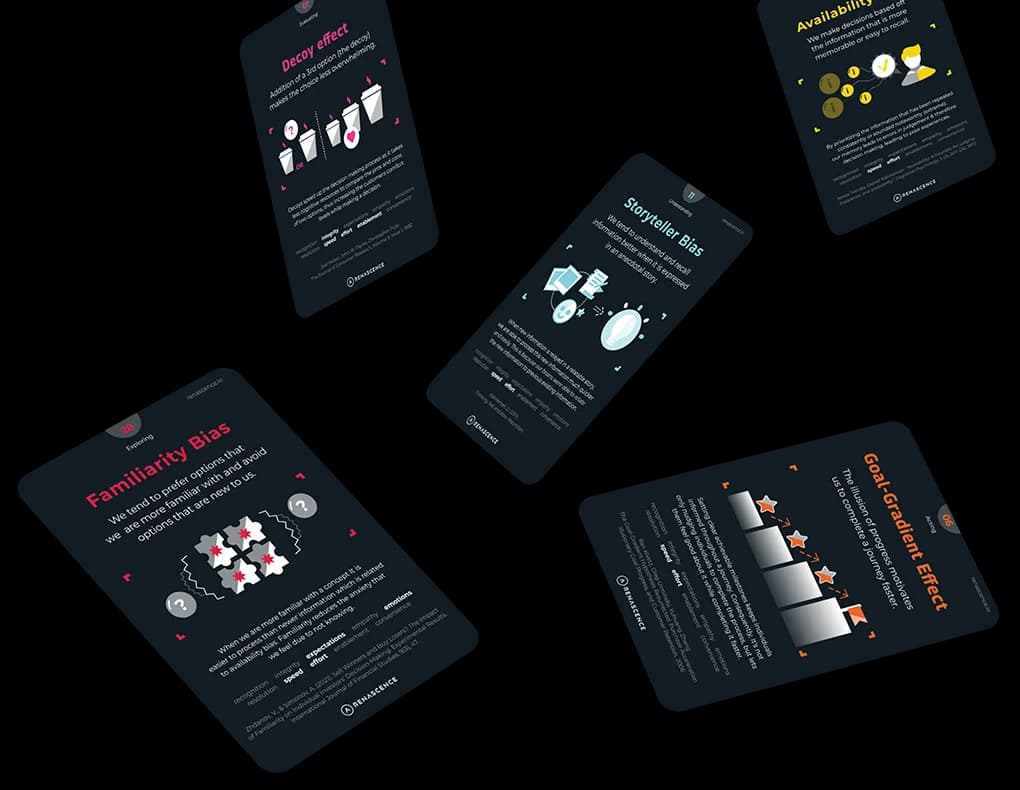
REBELDECK A · 36 FORCES

The forces that shape how humans experience the world.

Explore REBEL Reveal →
ALL PRODUCTS

Explore the full Renascence product ecosystem.

Browse products →

AI & TECHNOLOGY

LEARNING & GAMES

PLATFORMS & TOOLS

CX TOOLKIT

Opinion

Insights, research, and conversations at the frontier of CX.

René Studio
AI EXPERIENCE STUDIO

Turn what you read into a journey you can score.

Open rene.cx
Mysterya
MYSTERY AUDITS, LIVE

See what customers really experience, visit by visit.

Open mysterya.cx
ReadExperience JournalArticles & research on CX, behavior, and transformation.Watch & listenExperience LoomOur video podcast on CX & behavior.CuratedCX NewsIndustry news that matters in CX, minus the noise.

Latest articles

Latest episodes

Latest news

Hub

Free tools, templates, and resources to advance your CX practice.

René Studio
AI EXPERIENCE STUDIO

Design, score and fix customer journeys with AI.

Open rene.cx
Mysterya
MYSTERY AUDITS, LIVE

Every visit, every location, every score. Live.

Open mysterya.cx
THE MANIFESTOBurn the Deck.
Ten Virtues. Zero Excuses.Start reading →
THE HUB

Every free tool, template and resource in one place.

Visit the Hub →

AI TOOLS

FREE TOOLS

LEARNING

CULTURE

AI · 16 October 2026

TypeSafe Jev Model Faces Security Concerns from HiddenLayer Study

HiddenLayer researchers say TypeSafe's Jev model can be more vulnerable to attack than conventional LLMs, citing adversarial text and prompt injection risks. TypeSafe has not publicly responded.

Newsdesk
Curated briefing · 2 min read · 2 sources

What happened

A security assessment published on Wednesday by researchers at HiddenLayer argues that TypeSafe's Jev model, rolled out last month, is in some cases more vulnerable to attack than traditional large language models (LLMs). The researchers said both adversarial text attacks and prompt injection can disrupt the model's outputs, which they warned could lead to incorrect and potentially harmful actions.

TypeSafe markets Jev as offering significant advantages over conventional LLMs. The vendor has not publicly responded to the HiddenLayer findings, and did not reply to multiple requests for comment from reporters at Computerworld and InfoWorld.

The reporting also highlights a disagreement over how Jev should be classified. TypeSafe has said the model is not an LLM and has introduced a separate category, which it calls "System One". The company describes this as "a new class of frontier models built to make fast, structured decisions that software can use directly." HiddenLayer, by contrast, says Jev appears to be an LLM.

Why it matters

The story sits at the point where AI capability and operational risk meet. A model designed to make fast, structured decisions for software is not a chatbot that produces text for a person to review. When its outputs feed directly into systems, a manipulated response can trigger an action rather than just a wrong answer. That makes the security profile of the model a design question for the organisation deploying it, not only a concern for the vendor.

The classification debate matters too. If a vendor's category label shifts how a model is assessed, buyers and security teams could find that familiar testing routines do not fully apply. Leaders evaluating any new AI platform will need to establish what the system is, how it takes input, and where its outputs can go, before deciding how much autonomy to grant it.

The Renascence take

Most of the coverage frames this as a vendor dispute over labels and a security researcher's findings. The more useful reading is about where the failure would land. Experience leaders tend to ask whether an AI system is accurate, but the more pressing question for a fast, software-facing model is whether a single crafted input can change what happens next. Customers and employees rarely see the decision pathway, so a silent error can erode trust long before anyone traces it back to the model.

A model that acts on behalf of software needs the same scrutiny as a frontline employee with system access: clear limits, verified inputs and a human checkpoint before consequential actions. Treat a new category label as a reason to test more, not less. The operators who win will be the ones who map failure paths in the service journey before they map features in the product brief.

Sources

This briefing was written by our Newsdesk, synthesising reporting from the outlets below. Follow the links for the original coverage.

FAQ

Questions we get on this topic

HiddenLayer's security assessment, published on a Wednesday, argues that Jev is in some cases more vulnerable to attack than traditional large language models. The researchers said adversarial text attacks and prompt injection can disrupt its outputs, potentially leading to incorrect and harmful actions.

TypeSafe has not publicly responded to the HiddenLayer findings and did not reply to multiple requests for comment from Computerworld and InfoWorld reporters.

TypeSafe says Jev is not an LLM and has introduced a separate category it calls System One, describing it as a new class of frontier models built for fast, structured decisions that software can use directly. HiddenLayer disputes this and says Jev appears to be an LLM.

Stay ahead of CX

Get the signal, not the noise.

The stories shaping customer experience — plus the Journal and Experience Loom — in your inbox.