








Customer Loyalty · October 16, 2026
Ulta Beauty Customer Experience: How Its Loyalty Model Works
Ulta Beauty's customer experience runs on a single rewards ledger that unifies retail and salon spend, turning transactions into one continuous relationship.

Ulta Beauty's stores sell a $9 drugstore mascara three feet from a $68 serum, and at the back of the same floor, someone is getting her eyebrows threaded. That mix is not a merchandising accident. It is the whole model: one retailer, one membership card, and one ledger that tracks everything from a lipstick purchase to a salon blowout. Most beauty retailers treat loyalty as a discount mechanism bolted onto checkout. Ulta built it as the operating system of the entire store.
The short answer to how Ulta Beauty's customer experience works: it unifies retail spend and in-store services — hair, skin, brow, makeup application — inside a single rewards account, so every interaction with the brand feeds one points balance and one behavioural profile. That structural choice, more than any single app feature or store format, is why Ulta's loyalty programme functions less like a marketing campaign and more like the connective tissue of the customer journey. Everything else — the Target shop-in-shops, the virtual try-on tools, the tiered rewards — sits on top of that foundation.
What makes Ulta Beauty's customer experience different from its rivals?
Ulta's defining choice is refusing to pick a lane. It sells prestige brands, mass-market brands and its own in-store services — colour, skincare treatments, brow and lash work — under one roof, priced and merchandised side by side rather than segregated by tier. For the shopper, that removes a decision most beauty retailers force on them: whether this is a "nice" trip or a "cheap" trip. Ulta lets it be both in the same basket.
That assortment strategy is a CX decision as much as a merchandising one. It reduces what behavioural scientists call choice friction — the cognitive tax of having to switch stores, mental budgets or brand expectations depending on what you're buying. A customer picking up everyday shampoo and a prestige foundation in the same visit isn't forced to reconcile two different shopping identities. The in-store salon adds a second layer: a service occasion sits inside a retail environment, so a haircut appointment becomes a browsing occasion, and a browsing trip becomes a service upsell. Few retailers design for that kind of occasion-blending on purpose; Ulta's store layout — salon visible from the shop floor, not tucked away — makes it structural.
How does Ulta Beauty Rewards actually work?
The programme's history matters here. Ulta launched its loyalty scheme in 2014 under the name "Ultamate Rewards," and the company has since rebranded it as Ulta Beauty Rewards — folding the programme's identity directly into the Ulta Beauty name rather than keeping it as a separate sub-brand. That rebrand is a small but telling signal: Ulta treats the rewards account not as an add-on loyalty club sitting beside the brand, but as a synonym for the brand itself.
Functionally, the programme earns points on purchases across both product categories and in-store services, and members move through tiers — Ulta currently labels them Member, Platinum and Diamond — as cumulative annual spend rises. The exact spend thresholds and point-to-dollar conversion rates shift over time and aren't something worth pinning to a specific figure here; what matters for CX design is the mechanism, not the arithmetic. A single account tracks a haircut, a skincare consultation and a mascara purchase as contributions to the same progress bar. That is unusual. Most retailers with service counters — department stores with hair salons, pharmacies with clinics — run those as separate systems with separate points, separate receipts, sometimes separate staff incentives. Ulta's decision to merge them into one ledger is what turns a transaction into a relationship with momentum.
Why does a single loyalty ledger matter more than it sounds?
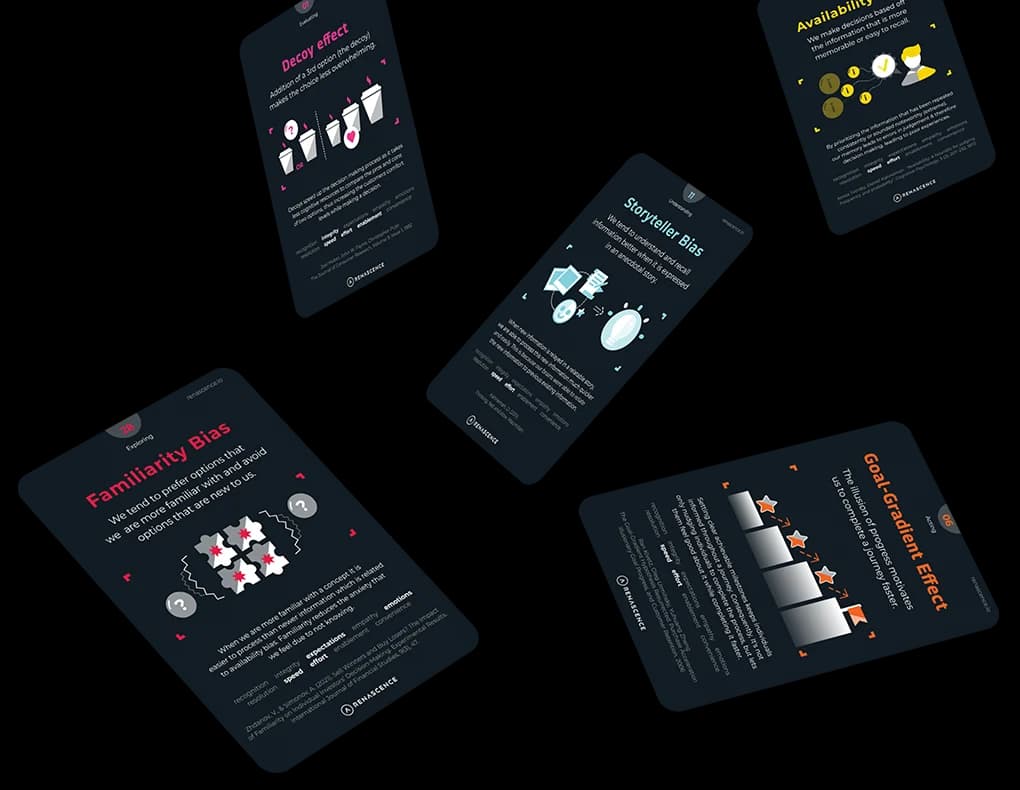
Because it changes what the customer is chasing. In a fragmented system, a customer has two half-finished loyalty journeys and no strong reason to accelerate either. In a unified system, every visit — retail or service — pushes the same number forward. That taps directly into the goal-gradient effect: the well-documented tendency for people to increase effort and frequency as they perceive themselves getting closer to a reward. The effect was formally demonstrated in loyalty contexts by Ran Kivetz, Oleg Urminsky and Yuhuang Zheng in their 2006 study The Goal-Gradient Hypothesis Resurrected: Purchase Acceleration, Illusionary Goal Progress, and Customer Retention, published in the Journal of Marketing Research, which found that customers accelerated their purchasing — and perceived more progress — as they approached a reward threshold, even when the actual distance remaining was identical.
Ulta's merged ledger means a customer three purchases from Platinum status has more ways to close that gap than someone shopping a pure-retail loyalty programme — she can buy a serum, book a brow wax, or do both in the same visit. More paths to the goal line means more occasions where the goal-gradient effect kicks in, and more total transactions captured inside the loyalty system rather than leaking out to a standalone salon or a competitor's counter.
Ulta didn't bolt a rewards card onto a beauty aisle; it built the beauty aisle around the rewards card.
What role does loss aversion play in keeping members active?
Points that expire, or tier status that resets without continued activity, invoke loss aversion — the behavioural-economics finding, first formalised by Daniel Kahneman and Amos Tversky, that losses register roughly twice as painfully as equivalent gains feel pleasurable. A loyalty account with an accumulating balance is not a neutral store of value to most members; it starts to feel owned, in the same way the endowment effect makes people value things more once they possess them. Losing accrued points, or sliding back a tier, feels like forfeiting something already theirs — which is a stronger motivator to keep shopping than the prospect of earning a reward from zero ever was.
This is the quiet discipline embedded in any well-run tiered programme: the threat of loss does more behavioural work than the promise of gain. Retailers often design the "earn" side of a loyalty scheme carefully and leave the "retain" side as an afterthought — a mistake, because the retention mechanics are frequently where the real commercial value sits. Renascence's work on loyalty strategy consistently treats the architecture of loss — expiry windows, tier downgrades, lapsed-member re-engagement — as a primary design surface, not a technical footnote.
How does the Target partnership extend Ulta's experience beyond its own stores?
Ulta operates shop-in-shop locations inside Target stores, placing a curated assortment of Ulta merchandise inside a retailer with vastly higher weekly foot traffic. For CX purposes, the partnership functions as a low-friction trial mechanism: a Target shopper who has never set foot in a standalone Ulta can sample the brand, and in many cases the assortment, without making a dedicated trip. That matters because the biggest barrier to loyalty enrolment isn't persuading people to like a brand — it's getting them through the door in the first place. Lowering the physical and psychological cost of that first encounter is a classic friction-reduction play: fewer steps between curiosity and first purchase means more people ever reach the point where a loyalty pitch is even relevant.
It also reframes where Ulta competes for attention. Rather than fighting purely for dedicated beauty-shopping trips, the partnership inserts the brand into an errand — a grocery run, a household-supplies stop — where beauty wasn't originally on the list. Retailers chasing growth often assume they need more advertising to create demand; Ulta's bet is that demand already exists, and the job is removing the obstacles between that demand and a transaction.
What does Ulta's approach to personalisation get right?
Ulta's app includes GLAMlab, a virtual try-on feature that lets customers preview makeup shades and skincare recommendations digitally before buying. The mechanism matters more than the gloss: it reduces the purchase risk of a prestige product bought sight-unseen — a real friction point in beauty, where shade matching and skin-type suitability drive returns and dissatisfaction — and it generates preference data that feeds back into how the brand recommends products and targets offers.
That feedback loop is consistent with wider findings on personalisation economics. A McKinsey & Company analysis published in November 2021, The Value of Getting Personalization Right — or Wrong — Is Multiplying, found that fast-growing companies generate a significantly larger share of their revenue from personalisation efforts than their slower-growing peers. Ulta's structural advantage is that its personalisation data doesn't come from browsing behaviour alone — it comes from a loyalty ledger that already links purchases, service bookings and app interactions to one identity. Most retailers are still trying to stitch that single view together. Ulta designed its systems around having it from the start.
What can other brands learn from how Ulta structures loyalty and service?
The lessons generalise well beyond beauty retail, particularly for any business that combines product sales with a service component — think opticians, pharmacies, automotive dealers with service bays, or telecom retailers bundling devices and support.
- Treat loyalty as infrastructure, not marketing. A points programme bolted onto a CRM is a discount scheme. A points programme wired into every revenue-generating interaction — retail, service, digital — is a system that shapes behaviour.
- Collapse separate ledgers into one. If your service arm and your retail arm run different loyalty logic, you are splitting a customer's motivation to progress in half, and diluting the goal-gradient effect that drives frequency.
- Design the "loss" side as carefully as the "earn" side. Tier downgrades, points expiry and lapsed-status warnings should be deliberate behavioural interventions, not technical defaults inherited from the loyalty platform vendor.
- Use low-friction channel partnerships to create trial occasions. A shop-in-shop or marketplace placement can do more to expand reach than a standalone marketing budget, because it removes the step of deciding to make a dedicated trip.
- Let digital tools reduce purchase risk, not just add novelty. A try-on or fit tool only earns its keep if it solves a genuine pre-purchase anxiety — shade match, sizing, suitability — rather than functioning as a gimmick.
For a leadership team trying to replicate the mechanics rather than the aesthetics, the sequence matters:
- Audit where loyalty data currently fragments — list every customer-facing system (POS, booking, app, service desk) and map which ones feed a shared profile and which ones sit in isolation.
- Unify the points logic across product and service revenue before adding new tiers or rewards, so the goal-gradient mechanism has the widest possible set of paths to the next threshold.
- Redesign tier mechanics around loss, not just earning — build explicit downgrade warnings and recovery offers rather than silent status resets.
- Identify one high-traffic, low-cost channel for trial — a partnership, pop-up or marketplace presence — that removes a physical or psychological barrier to first contact.
- Instrument any digital tool to reduce a specific, named purchase risk, and track whether it actually lowers returns or cart abandonment before scaling it further.
None of this requires Ulta's scale. A regional retailer with a service counter and a loyalty app can run the same audit and reach the same structural decision: stop running loyalty as a side programme and start running it as the record of the whole relationship.
Where does this leave the rest of retail?
The retailers still treating loyalty as a punch card with extra steps are solving the wrong problem. The real question was never how generous the rewards are — it's how much of the customer relationship the ledger actually sees. Ulta's answer was to make the ledger see almost everything: the haircut, the skincare consult, the impulse lipstick, the trip that started in a Target aisle. Few competitors have matched that breadth, and fewer still have asked why.
Brands chasing the next loyalty redesign would do better to start with an uncomfortable audit of their own data architecture than with a new rewards tier. For teams ready to take that look seriously, Renascence's work in behavioral economics and customer rituals and ceremonies design focuses on exactly this kind of structural question — not what the reward should be, but what the system around it is quietly teaching customers to do. For retailers weighing whether a loyalty overhaul pays for itself, the CX ROI Calculator is a useful starting point before the investment case goes to the board.
Related reading on how other retail brands have built loyalty into their customer experience: how Zara uses scarcity to drive loyalty, what keeps Harrods shoppers returning, and the broader view on retail customer experience transformation.
Further reading
FAQ
Questions we get on this topic
Related reading


Writing on how human behavior shapes the experiences brands deliver — at the intersection of behavioral economics and customer experience.
Stay ahead of CX
Get the Journal in your inbox.
Insights, frameworks and event round-ups from the Renascence team. No spam, ever.