


Customer Loyalty · October 15, 2026
Harrods Customer Loyalty: What Keeps Shoppers Returning
Harrods Rewards trades in status, not discounts. Here's why that distinction has kept the store's best customers enrolled for nearly two decades.

Harrods does not need a points card to get people through its doors on Brompton Road. The window displays alone pull in tourists by the coachload, and the brand's name carries more status than any discount ever could. Which raises an obvious question: why does a store with that kind of pulling power run a loyalty programme at all — and why has it kept customers enrolled for nearly two decades?
The answer is that Harrods Rewards was never really built to buy repeat visits with points. It was built to formalise something the store already did informally: recognise its best customers as insiders rather than shoppers. Harrods Rewards keeps customers coming back because it trades in status and recognition, not discounting — a distinction that matters more in luxury retail than almost anywhere else in customer experience. Understanding why that distinction works is the real lesson for any brand trying to build loyalty that survives beyond the next promotional cycle.
What is Harrods Rewards, and why did it replace a store card?
Harrods launched its Rewards programme in 2008, replacing the store card that had previously anchored the relationship between Harrods and its most frequent shoppers. That single decision tells you most of what you need to know about the strategy behind it. A store card is a credit instrument — useful, but transactional by definition. A rewards programme is a recognition instrument. Harrods made a deliberate choice to move the customer relationship away from "how you pay" and toward "who you are to us," a repositioning designed explicitly to drive customer retention rather than simply facilitate purchases.
That shift matters because it changed what the brand was optimising for. A store card measures creditworthiness. A rewards programme measures engagement, frequency, and — implicitly — identity. Harrods was betting that customers who feel recognised will outspend customers who merely feel financed. It is a quietly radical bet for a department store to make, and it is one that mass retail still struggles to copy convincingly.
Why don't discounts drive loyalty in luxury retail?
Discounting is the default lever in most loyalty design — earn points, redeem for money off, repeat. In mass retail that works because price is part of the value proposition. In luxury retail, discounting can actively damage the thing the customer is paying for.
This is where behavioural economics earns its keep. Thorstein Veblen's foundational observation about conspicuous consumption still holds: for certain categories of goods, visible expense is not a barrier to desirability — it is part of the desirability. A handbag that is permanently available at 20% off has quietly told the market it was never worth full price. Harrods, and the brands it houses, cannot afford that signal. So a loyalty mechanic built around price-cutting would undermine the exact value the store sells.
Loss aversion, the principle Daniel Kahneman and Amos Tversky formalised in their 1979 paper on prospect theory published in Econometrica, explains why the alternative works better. People feel the loss of status more acutely than they feel the gain of a discount. Once a customer has been treated as a recognised insider — invited to a preview, greeted by name, offered a service most shoppers never see — losing that treatment feels like a demotion. That feeling is a far stronger retention force than a percentage off the next purchase, because the customer is now protecting something they have, not chasing something they might get.
How does status substitute for savings in a programme like this?
The mechanism at work is closer to the endowment effect than to a transaction. Once a customer holds a status — tier, recognition, an invitation list — they value it more than an outsider would value the equivalent benefit, purely because it is now theirs to lose. Richard Thaler's work on endowment and the broader literature on the IKEA effect, documented by Michael Norton, Daniel Mochon and Dan Ariely in the Journal of Consumer Psychology in 2012, both point to the same underlying truth: people overvalue what they have helped build or been given ownership of, relative to its objective worth.
Applied to Harrods, this means the programme's real currency is not points — it is belonging. A customer who has spent years accumulating recognition, invitations, and a known relationship with personal shopping staff is not comparing Harrods to a competitor on price. They are protecting a position they have already built. That is a far stickier form of loyalty than a redeemable balance, and it is much harder for a rival to poach with a better offer, because there is no equivalent offer to make. You cannot gift someone else's history with a brand.
This is also why tiered recognition schemes — common across luxury retail, hospitality and aviation — tend to outperform flat discount schemes at the top of the customer pyramid. The tier itself becomes a form of social proof, both to the customer and to the people around them. Recognition is legible in a way a discount voucher is not.
- Discount-based loyalty rewards the transaction and is easily matched by a competitor's next promotion.
- Status-based loyalty rewards the relationship and cannot be matched without replicating years of history.
- Store-card loyalty (Harrods' pre-2008 model) locked in payment convenience but said nothing about who the customer was to the brand.
- Recognition-based loyalty, the model Harrods moved toward, converts spend into identity — which is far more resistant to erosion.
What keeps high-spend customers returning, visit after visit?
The psychology of memory offers a second clue. Kahneman's peak-end rule — the finding, developed with researchers including Barbara Fredrickson in studies published through the 1990s, that people judge an experience largely by its most intense moment and how it ends, not by its average — explains why a single exceptional interaction can outweigh months of ordinary ones.
A department store the size of Harrods cannot make every single visit exceptional. What it can do is engineer a small number of unmistakably peak moments — a personal shopping appointment, an invitation to an event unavailable to the general public, a gesture from staff that a customer did not expect — and let those moments do the disproportionate work of shaping how the whole relationship is remembered. This is precisely the logic behind building deliberate customer rituals and signature moments into a journey rather than leaving every touchpoint to chance. A brand that treats every interaction as equally important ends up with none of them memorable.
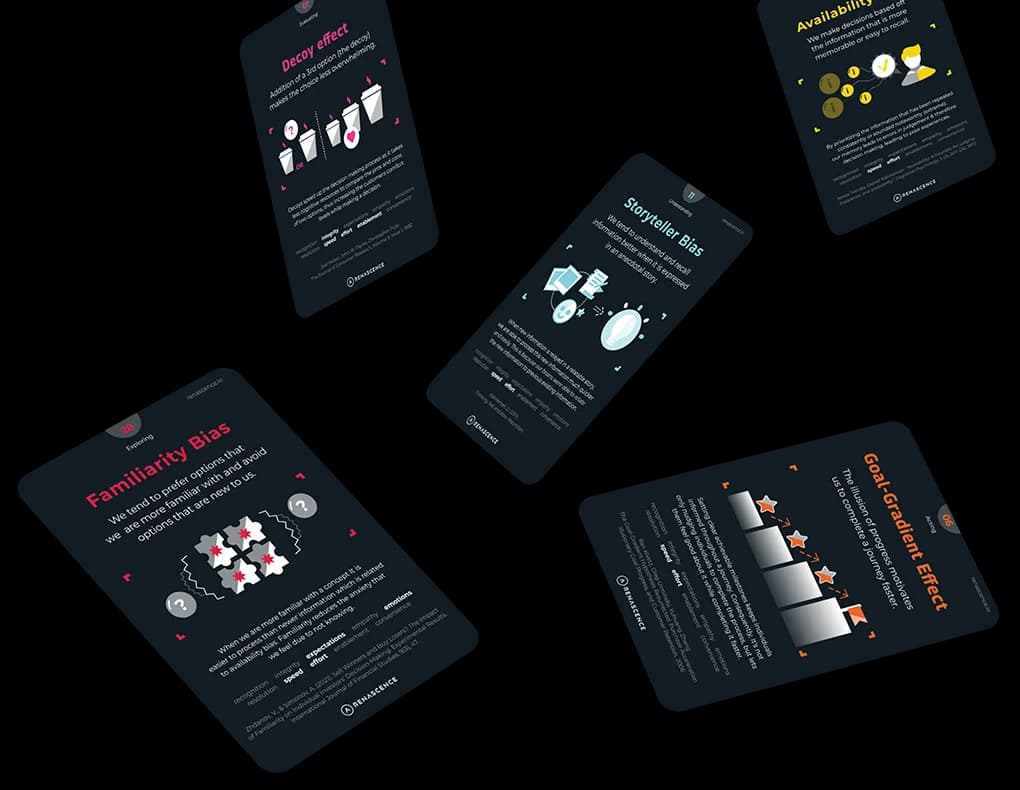
The goal-gradient effect adds a second layer. Clark Hull's original research on effort and motivation, later applied extensively to loyalty design, shows that people accelerate their behaviour as they perceive themselves getting closer to a reward or a recognised status. A tiered programme that makes a customer's progress visible — however that progress is defined — gives them a reason to consolidate spend with one retailer rather than splitting it, simply to keep moving up rather than starting over elsewhere.
What does Harrods Rewards reveal about the limits of standard loyalty metrics?
Most loyalty programmes are judged by redemption rates, points breakage, and incremental basket size — useful numbers for a grocery chain, far less useful for a brand selling identity and access. A customer who redeems nothing may still be the most loyal person on the books, because the value they are extracting is social and experiential rather than financial.
This is a genuine blind spot in how most retailers measure loyalty, and it is worth naming plainly: a programme optimised purely around redemption economics will systematically undervalue its highest-status members, because those members are not there for the redemption. Frederick Reichheld's research for Bain & Company, published by Reichheld and Earl Sasser in the Harvard Business Review article "Zero Defections: Quality Comes to Services" (1990), established that small gains in retention translate into outsized gains in profit across service businesses — but the mechanism behind that profit is rarely the discount itself. It is the reduced cost of acquisition, the referral behaviour, and the willingness to pay full price that comes with a secure relationship.
For a brand like Harrods, the real KPI is not points redeemed. It is whether the customer still feels like an insider the next time they walk through the door — and whether that feeling survives a bad experience, a long queue, or a disappointing member of staff. Status, once granted, has to be continually reconfirmed, or the endowment effect that makes it sticky starts working in reverse.
How can other retailers apply this without Harrods' brand equity?
Few retailers have Harrods' history, footfall, or global name recognition, but the underlying behavioural mechanics are available to anyone willing to design for recognition rather than redemption. The sequence below is how a brand without a 200-year head start can still build the same effect.
- Separate the payment relationship from the recognition relationship. A branded card or app can still exist, but it should not be the only thing that tells a customer they matter. Harrods' 2008 decision to move beyond a pure store card is the template.
- Design at least one genuinely non-purchasable benefit. Access, invitation, or a service that cannot be bought outright at full price creates the kind of status discount alone cannot replicate.
- Make progress visible, not just rewards. A visible tier or milestone exploits the goal-gradient effect far more effectively than a hidden points balance that customers only check at checkout.
- Engineer a small number of peak moments rather than trying to perfect every touchpoint. Resources spent making one interaction unforgettable outperform the same resources spread thin across an entire journey.
- Measure identity, not just redemption. Ask whether your best customers would describe themselves as "a member" or merely "a shopper." The language they use is a reasonably honest proxy for whether status-based loyalty has actually taken hold.
None of this requires a luxury price point. A regional retailer, a bank, or a telecoms provider can build the same recognition architecture at a fraction of the scale — the principle travels even where the product category does not. What it does require is the discipline to stop treating loyalty as a discounting mechanism and start treating it as an exercise in applied behavioural design.
Is recognition-based loyalty right for every brand?
No, and it would be dishonest to suggest otherwise. Commodity categories — fuel, groceries, basic telecoms — are driven more by convenience and price sensitivity than by identity, and customers in those categories often respond better to transparent, simple value exchanges. Loyalty design has to match the category's actual purchase psychology, not borrow a luxury playbook wholesale because it looks elegant on a slide.
What does travel across categories is the underlying lesson about what retention actually protects. Harrods' decision to retire its store card in favour of a recognition programme was, at its core, a bet that long-term value comes from how a customer sees themselves in relation to the brand — not from how much they save on their next purchase. That bet is testable in almost any sector, luxury or otherwise, by asking a blunter question: if you removed every discount from your loyalty programme tomorrow, would your best customers still show up? Harrods built an answer to that question nearly two decades ago, and the fact that the programme has outlasted multiple ownership changes, economic cycles and shifts in luxury retail suggests the answer, for its customer base, is yes.
For retailers designing their own version of that answer, the starting point is rarely the rewards catalogue. It is a clear-eyed look at the full customer journey and an honest audit of where status, recognition and customer archetypes already diverge from how the loyalty mechanics are currently built. Get that alignment right, and the points become almost incidental — a receipt for a relationship, rather than the reason for it.
Renascence works with retail and hospitality brands across the region to redesign customer loyalty programmes around the behavioural drivers that actually sustain spend — recognition, status and memory — rather than the discount mechanics that are easiest to copy and cheapest to abandon.
Further reading
FAQ
Questions we get on this topic
Related reading



Writing on how human behavior shapes the experiences brands deliver — at the intersection of behavioral economics and customer experience.
Stay ahead of CX
Get the Journal in your inbox.
Insights, frameworks and event round-ups from the Renascence team. No spam, ever.