


Customer Loyalty · October 16, 2026
ASOS Customer Loyalty: What Keeps Shoppers Coming Back
ASOS retains shoppers not with points or discounts but by neutralising the fear of a bad purchase through returns, speed and real customer imagery.

ASOS has never run a shop, trained a sales assistant, or let a single customer touch a garment before buying it. Yet it has built one of fashion e-commerce's most stubborn habits: shoppers who order, try half of it on in their bedroom, send most of it back, and order again within the fortnight. That is not an accident of youth demographics or clever advertising. It is a loyalty system engineered around a single insight — that the biggest barrier to buying clothes online is not price, it is the fear of getting it wrong.
ASOS keeps customers coming back by removing the cost of being wrong, not by rewarding them for being right. Free, generous returns, fast delivery subscriptions, and a steady diet of unfiltered customer imagery do more to retain shoppers than any points scheme. The loyalty engine sits upstream of the purchase, in how much risk the customer feels before they click "buy" — and that is where most retailers, fixated on rewards programmes and discount codes, are looking in the wrong place.
What actually keeps ASOS customers coming back?
Three mechanics do the heavy lifting: a returns policy generous enough to neutralise the fear of a bad purchase, a delivery experience fast enough to make waiting feel like a solved problem, and a social feed built from real customers rather than studio models. None of these is glamorous. All three attack the same psychological obstacle — the anxiety of buying something you cannot see, touch, or try on before you pay for it.
This is the behavioural-economics mechanism known as loss aversion: people feel the pain of a loss roughly twice as intensely as the pleasure of an equivalent gain, a finding formalised by Daniel Kahneman and Amos Tversky in their 1979 paper "Prospect Theory: An Analysis of Decision under Risk," published in Econometrica. Buying a dress you've never tried on is, psychologically, a small bet against a loss — wasted money, a wrong size, an item that looks nothing like the photo. ASOS's entire retention model is built to make that bet feel safe before the customer even places it.
Why does ASOS make returns so easy — and why did it have to pull back?
ASOS built its reputation on returns that cost the customer almost nothing: free, unlimited, no interrogation. For a shopper choosing between four sizes of the same top because sizing charts lie, that policy is not a courtesy — it is the thing that makes the purchase possible at all. Remove the fear of a costly mistake, and the customer buys more, tries more, and keeps the retailer in their regular rotation. This is loss aversion working in reverse: when the downside of "getting it wrong" is reduced to almost zero, the perceived risk of the purchase collapses, and the decision shifts from the anxious, deliberate System 2 thinking that stalls online fashion baskets, to the quicker, more confident System 1 click.
But a policy built to erase risk for the customer transfers that risk straight onto the business. Processing, restocking, and shipping a garment that comes straight back out the door is expensive, and a meaningful share of ASOS's customer base has, over the years, ordered multiple sizes of the same item with every intention of returning most of them — a pattern retailers call "wardrobing" or serial returning. ASOS's own published terms and conditions reserve the right to restrict or close accounts with disproportionately high return rates relative to purchases, a policy stance it shares with several other UK online fashion retailers facing the same economics. That tension is instructive: a loyalty mechanic built entirely on removing friction for the customer is not free. It has to be paid for somewhere, and the retailers who get this right are the ones who find the edge case — the top 1–2% of return behaviour — without punishing the other 98% who are simply doing what the policy invites them to do.
That is the contrarian lesson most retailers miss: returns are not the opposite of loyalty. For a category this sensory-dependent, returns are the on-ramp to it. A retailer that treats every return as pure cost will tighten the policy until the risk comes back, the basket shrinks, and the customer drifts to whichever competitor still makes trying clothes on at home feel free.
How does ASOS use social proof instead of traditional advertising?
ASOS's feed is built less on campaign photography and more on customers wearing the clothes themselves — real bodies, real settings, tagged and shared rather than art-directed. This leans on social proof, the behavioural principle popularised by psychologist Robert Cialdini in his 1984 book Influence: people look to the behaviour of others, especially people who look like them, to decide what is safe or desirable to do. A size-16 customer scrolling past a size-6 model in a studio shot learns nothing about how a garment will actually sit on her. The same customer scrolling past another real shopper in a similar body, wearing the same top to a real event, resolves the uncertainty that a stock photo cannot.
This also explains ASOS's long-running commitment to showing a wide range of body types and unretouched imagery across its own campaigns and product photography — a stance that has been publicly noted in UK marketing and retail trade coverage over the years. The commercial logic is straightforward: a customer who can see herself in the image is more likely to trust the fit, more likely to buy without trying first, and less likely to need the return that erodes margin. Representation, in this context, is not only a values statement. It is friction removal, aimed at the exact moment of doubt that stalls a purchase.
What role does the ASOS A-List loyalty scheme play?
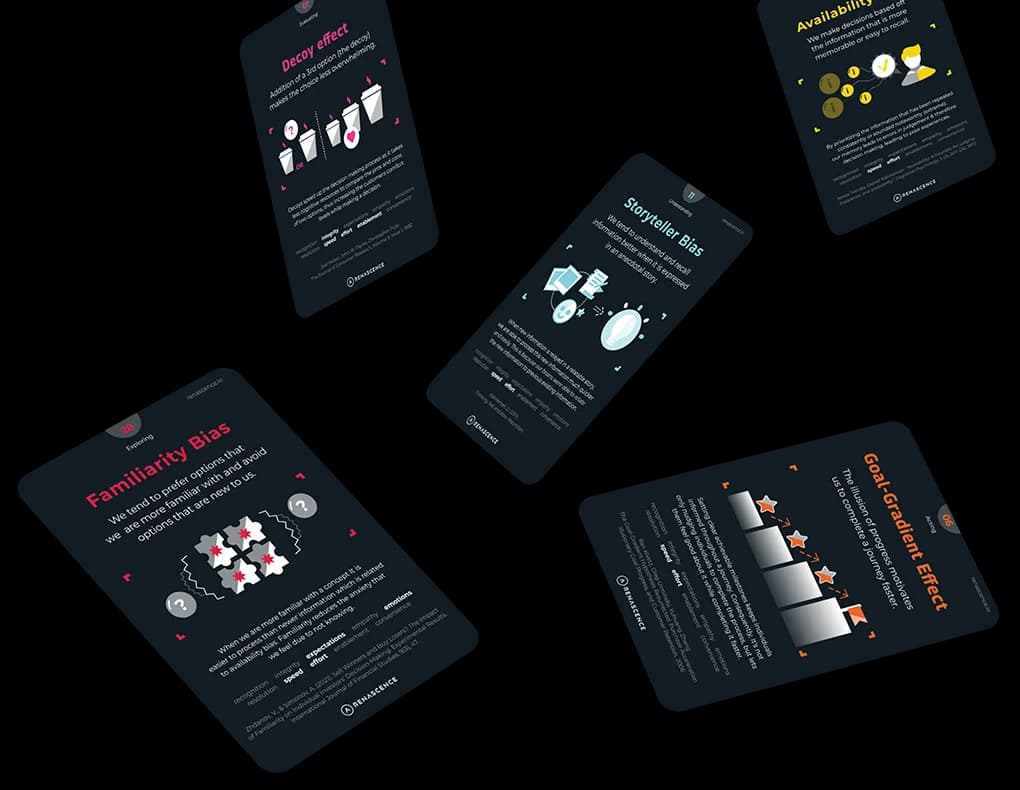
ASOS's A-List rewards customers with points for purchases and other engagement actions, redeemable against future orders. On paper it looks like every other points scheme in retail. What makes a points mechanic work, though, is not the reward at the end — it is the sense of forward motion along the way. This is the goal-gradient effect: people accelerate their effort as they perceive themselves getting closer to a goal, a pattern demonstrated by Ran Kivetz, Oleg Urminsky, and Yuhuang Zheng in their 2006 study "The Goal-Gradient Hypothesis Resurrected: Purchase Acceleration, Illusionary Goal Progress, and Customer Retention," published in the Journal of Marketing Research. Showing a customer "£4 off at 80 points, 20 to go" does more to drive the next purchase than the eventual discount itself.
A-List matters less as a rewards vehicle and more as a retention nudge — a reason to come back to ASOS rather than a competitor stocking the identical third-party brand, because the points balance has a sunk value attached to it. That is the endowment effect at work in a different form: customers tend to overvalue what they already feel they own, including a balance of loyalty points, and are reluctant to walk away from it. A scheme like this does not need to be generous to be effective. It needs to be visible, close to completion, and easy to redeem.
How is ASOS's "Driving Change" turnaround reshaping loyalty?
ASOS has spent the past few years under pressure to turn years of rapid, discount-led growth into a profitable business, running a public multi-year turnaround programme — reported in UK retail and business press as "Driving Change" — focused on cutting costs, trimming unprofitable stock, and leaning harder on its own-label ranges rather than third-party brands bought in bulk and heavily discounted. For loyalty, this is a meaningful pivot. A business built on constant promotional pricing trains customers to wait for the next discount rather than buy at full price — a habit that is cheap to build and expensive to unwind. Shifting the mix toward differentiated own-label product, which cannot be price-compared against five other retailers stocking the identical item, is a loyalty strategy as much as a margin strategy: it gives the customer a reason to come back that has nothing to do with the next voucher code.
The lesson for any CX leader watching this unfold is that a loyalty programme cannot fix a business model built on discount dependency. If the underlying proposition trains customers to delay purchase until the next markdown, no points scheme, however well designed, will produce loyalty that survives a price increase.
What can other retailers learn from the ASOS model?
The specific tactics — free returns, UGC feeds, a points scheme — are not the transferable part. What transfers is the sequencing: find the single largest source of anxiety in the purchase decision, and spend the loyalty budget removing it before spending anything on rewarding repeat behaviour. For ASOS, that anxiety was fit and visual accuracy, because clothing bought unseen carries real financial and emotional risk if it is wrong. For a bank, the equivalent anxiety might be the fear of a hidden fee. For an airline, it might be the dread of a delay with no information. The category changes; the discipline of finding and dismantling the specific fear does not.
- Map the moment of maximum doubt. Identify precisely where in the journey the customer is most likely to abandon or hesitate — for ASOS, that is the size and fit decision at checkout.
- Price the fix against the cost of losing the sale. A generous returns policy looks expensive in isolation; it looks cheap next to the lifetime value of a customer who never buys again because their first order felt risky.
- Replace manufactured proof with real proof. Studio photography reassures no one who doubts their own body in a garment; real customers, visibly similar to the buyer, do.
- Use loyalty points to accelerate, not to bribe. A progress bar nudges the next purchase far more reliably than a generic discount email.
- Watch the edge case without punishing the average customer. The small minority abusing a generous policy should be managed individually, not used as the excuse to tighten the policy for everyone else.
Retailers chasing an ASOS-style loyalty effect often start in the wrong place — a new app feature, a tiered rewards scheme, a louder marketing campaign. The more durable move is structural:
- Audit the journey for the single point where a customer is most likely to feel they might be making a mistake.
- Measure what it currently costs the business to remove that risk, versus what it costs to lose the customer who hesitates and leaves.
- Test a bolder risk-reversal (returns, guarantees, trial periods) against a narrower customer segment before rolling it out broadly.
- Build social proof from genuine customer behaviour rather than curated campaign assets wherever the product category carries fit, size, or performance uncertainty.
Businesses weighing whether a more generous risk-reversal policy would pay for itself can model the trade-off rather than guess at it — the CX ROI Calculator is built for exactly this kind of before-and-after business case. For retailers specifically, the calculus around returns, delivery promises, and loyalty investment sits inside the broader discipline covered in Renascence's work on e-commerce customer experience and digital transformation.
It is worth comparing ASOS against another retailer that has engineered loyalty through an entirely different behavioural lever. Zara builds its loyalty on scarcity — deliberately limited stock that drives urgency and repeat visits — the near-opposite of ASOS's abundance-and-safety-net approach. Both work, because both are built around a clearly identified behavioural trigger rather than a generic rewards programme. Harrods, by contrast, builds loyalty on identity and status rather than risk or scarcity — proof that there is no single template, only a discipline of finding which lever actually moves your specific customer.
Where loyalty design goes from here
The retailers winning repeat business over the next few years will not be the ones running the loudest loyalty campaign. They will be the ones who have quietly done the harder work: finding the exact moment a customer hesitates, pricing out what it costs to remove that hesitation, and building the policy, the proof, and the points scheme around it in that order. ASOS did not invent customer loyalty. It simply refused to make the customer pay for the uncertainty that online fashion creates — and built a habit on top of that refusal.
Renascence works with retail and e-commerce leaders to turn this kind of behavioural diagnosis into a measurable programme — mapping where customers hesitate, designing the risk-reversal that fits the brand, and building the loyalty mechanics that follow rather than lead. If that is the conversation your team needs to have next, our customer loyalty practice and our work in behavioural economics are a good place to start, alongside a structured look at voice of customer strategy to find out exactly where your own customers hesitate before they buy.
Further reading
FAQ
Questions we get on this topic
Related reading



Writing on how human behavior shapes the experiences brands deliver — at the intersection of behavioral economics and customer experience.
Stay ahead of CX
Get the Journal in your inbox.
Insights, frameworks and event round-ups from the Renascence team. No spam, ever.