








Customer Loyalty · October 19, 2026
PwC Future of Customer Experience Survey: Key Findings
PwC's research shows customers pay more for good experience and abandon brands fast after bad ones—exposing why retention metrics mask a loyalty illusion.
Ask a telecoms operator how loyal its customers are, and it will point to a churn rate under five per cent. Ask those same customers whether they would switch tomorrow if a better deal landed in their inbox, and a different number appears. That contradiction is not a measurement error. It is the entire story PwC's customer experience research has been telling for years, and it is the reason the firm's latest instalment carries a title with real teeth: The Loyalty Illusion.
PwC has tracked the distance between what companies believe they deliver and what customers actually feel for the better part of a decade, through its long-running Consumer Intelligence Series. The short answer to what this body of research shows is this: customers reward good experience with a price premium and punish bad experience with abandonment far faster than most executives assume, and the retention numbers companies use to claim victory often disguise inertia rather than genuine preference. That gap between measured loyalty and real loyalty is the subject worth unpacking.
What did PwC's Future of Customer Experience research actually find?
The foundational data point comes from PwC's 2018 report, Experience Is Everything: Here's How to Get It Right, part of its Consumer Intelligence Series published on pwc.com. The study found that 73% of customers point to experience as an important factor in their purchasing decisions, yet only 49% of U.S. customers said the companies they dealt with actually delivered a good one. It also found customers were prepared to pay a premium of up to 16% for products and services that came wrapped in better experience, and — in a finding that still unsettles automation-heavy strategies — 82% of U.S. consumers said they wanted more human interaction in the future, not less.
In 2025, PwC returned to this territory with a report titled The Loyalty Illusion. The title does most of the work on its own. It names, plainly, what CX teams have quietly suspected for years: the metrics boardrooms use to declare victory — retention rate, repeat purchase, loyalty-programme enrolment — measure behaviour, not sentiment. And behaviour under constraint looks identical to behaviour under genuine preference, at least until the constraint disappears.
Why do customers abandon brands they claim to love?
Because love and loyalty are not the same contract. PwC's 2018 research found that 32% of all customers said they would stop doing business with a brand they loved after just one bad experience, a figure that climbed higher after repeated disappointments. That is a remarkably thin margin for brands that spend heavily on advocacy campaigns and Net Promoter Score dashboards.
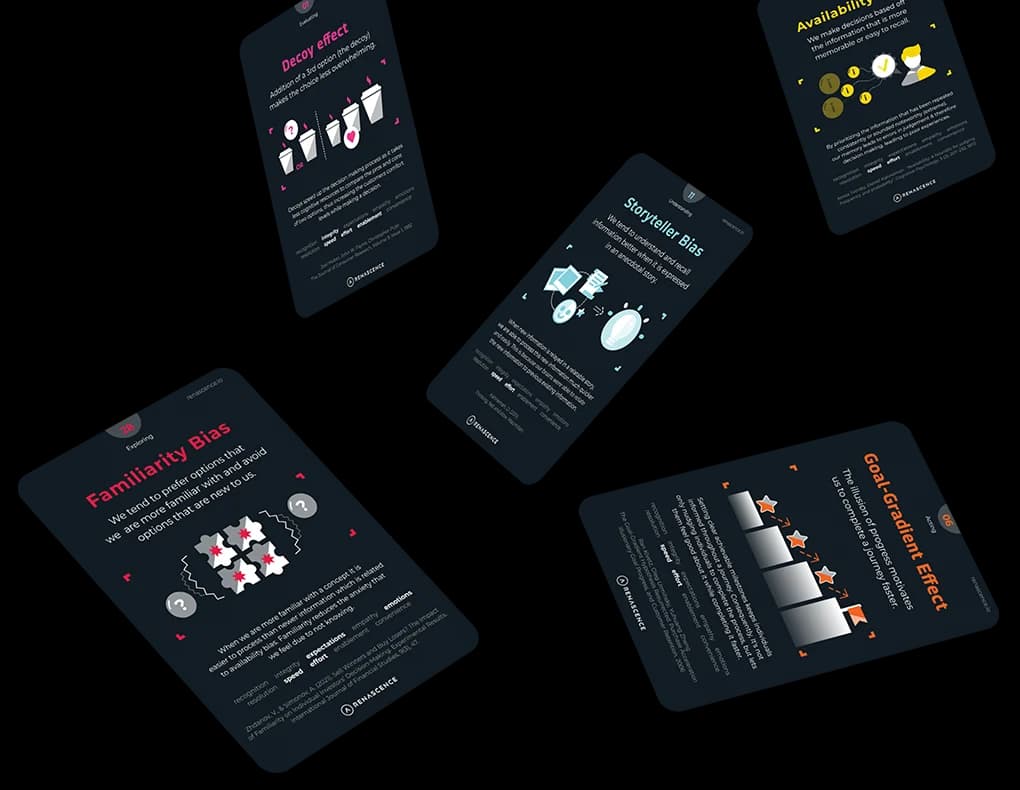
The behavioural explanation sits in the peak-end rule, the finding from psychologist Daniel Kahneman that people judge an experience almost entirely by its most intense moment and how it ends, not by its average quality. The Nielsen Norman Group has documented how this bias governs digital and service experiences alike: a customer can have nine smooth interactions and one broken complaint call, and the complaint call becomes the entire relationship in their memory. A single bad ending can erase years of satisfactory service, because the brain doesn't average experiences — it remembers the spike and the finish.
What is the "loyalty illusion," and why is PwC naming it now?
The loyalty illusion is the gap between a retention metric and a genuine preference — and it exists because most switching is harder than most dissatisfaction. Three behavioural forces hold it in place:
- Status quo bias. People disproportionately favour the current state of affairs, even when a better alternative is objectively available, simply because change requires effort and carries uncertainty.
- Switching costs as sludge. Economist Richard Thaler's concept of "sludge" — friction deliberately or carelessly built into a process — explains why cancelling a subscription takes four clicks and a phone call while signing up takes thirty seconds. That asymmetry isn't incidental; it is often the entire retention strategy.
- The endowment effect. Once a customer has invested points, data, history, or habit into a relationship, they value what they already hold more than an equivalent alternative — which makes leaving feel like a loss, even when the switch would objectively benefit them.
None of these forces require satisfaction. A bank can post a 90% retention rate built almost entirely on the hassle of switching current accounts, not on customers' affection for the brand. That distinction should worry any CXO who reports retention as if it were loyalty. For a longer look at how friction and anchoring shape customer decisions in practice, see our piece on anchoring in customer experience.
This pattern isn't unique to PwC's data. Bain & Company's widely cited 2005 report, Closing the Delivery Gap, found that 80% of companies believed they delivered superior customer experience, while only 8% of their customers agreed. Twenty years and several digital transformations later, that perception gap hasn't closed so much as it has migrated — from "do we deliver good experience" to "does our loyalty actually mean anything."
Does a better experience really command a price premium?
Yes, and PwC's 2018 figure of a premium of up to 16% for products and services delivered with better experience was one of the clearest commercial arguments CX has ever produced. It reframed experience from a cost centre to a pricing lever: customers aren't simply more forgiving of brands that treat them well, they actively pay more for it. That number has been quoted so often precisely because it answers the question every finance director asks before funding a CX initiative — what's the return?
If your organisation is still making that case internally, it's worth running the numbers properly rather than relying on borrowed statistics from any single study. Renascence's own CX ROI Calculator helps leaders quantify the business impact of experience improvements against their own cost base, which tends to be a far more persuasive internal argument than a headline percentage from a global survey.
Why do customers still want a human, even as service goes digital-first?
Because trust, unlike convenience, doesn't automate cleanly. PwC's 2018 finding that 82% of U.S. consumers wanted more human interaction in the future looked counterintuitive at the height of the self-service push. It looks almost prophetic now, as AI agents handle an increasing share of first-line service. The lesson isn't that automation fails — it's that automation succeeds at routine resolution and fails at the moments that carry emotional weight: a complaint, a cancellation, a loss, a mistake the company made.
This is where the peak-end rule and the loyalty illusion intersect. The moment a customer most remembers — and most uses to decide whether a brand deserves continued business — is disproportionately likely to be an escalation. Routing every escalation into a chatbot queue doesn't just frustrate the customer in the moment; it writes the ending of the story they'll tell about you. Brands serious about converting satisfaction into real loyalty need an approach to loyalty that treats the escalation path as a design priority, not an afterthought bolted onto the self-service funnel.
What should CX leaders do about the gap between retention and real loyalty?
Start by assuming your current retention numbers overstate true loyalty, and work backwards from there. A practical sequence looks like this:
- Separate behavioural retention from attitudinal loyalty. Track repeat purchase and churn as one metric, and net sentiment, advocacy, and willingness-to-switch as another. Treat any gap between the two as your real exposure, not noise.
- Audit your own switching costs. Walk the cancellation or account-closure journey yourself. If it takes meaningfully longer or more effort than onboarding, you are retaining customers through friction, not affection — and that is a liability waiting for a competitor to remove it.
- Instrument the moments that end the story. Identify the handful of touchpoints — complaints, cancellations, failures, refunds — that disproportionately shape remembered experience, and protect them from automation shortcuts that save cost but damage the ending.
- Build a proper evidence base. Retention dashboards tell you what customers did. A structured voice-of-customer programme tells you why, and surfaces the quiet dissatisfaction that precedes a switch long before the churn report does.
- Price-test the premium. If experience genuinely commands a premium in your category, prove it with your own data rather than assuming the broad survey figure applies. Controlled pricing or packaging experiments will tell you what your customers will actually pay for a materially better journey.
- Apply behavioural economics deliberately, not accidentally. Every one of the forces propping up the loyalty illusion — status quo bias, sludge, the endowment effect — can be designed for or against the customer. Choosing which side you're on is a strategic decision, not a UX detail, and it's the kind of work best done through a deliberate behavioural economics lens rather than left to whichever team owns the cancellation flow.
What should you measure instead of retention alone?
Retention and churn remain necessary metrics — they tell you what happened. They don't tell you why, or what's coming. A more honest dashboard includes:
- Effortless-exit willingness — would the customer stay if leaving were as easy as joining? This can be approximated through survey questions that explicitly remove the friction variable.
- Recovery sentiment — how customers rate the brand after a resolved complaint, not just an unresolved one. This isolates whether your service recovery builds loyalty or merely stops the bleeding.
- Unprompted advocacy — referrals and reviews that happen without incentive, which correlate far more closely with genuine preference than survey-based NPS alone.
- Premium tolerance — whether customers actually accept price increases without searching for alternatives, a behavioural proxy for real loyalty that's harder to fake than a satisfaction score.
None of these replace retention as a business metric. They exist to stop retention from being mistaken for loyalty, which is the precise mistake PwC's research — from the 2018 price-premium findings to the 2025 naming of the illusion itself — has been pointing at for years.
The uncomfortable truth behind every loyalty metric
Here is the sentence worth keeping on a slide in every CX strategy review: repeat purchase is not loyalty — it is often just the path of least resistance. A loyalty programme measures enrolment. Real loyalty only reveals itself the moment switching becomes easy and the customer stays anyway.
PwC's research arc, from quantifying the price premium of good experience in 2018 to naming the loyalty illusion outright in 2025, traces a single, consistent argument: companies have spent a decade optimising for the metric that's easiest to report, while the metric that actually predicts the future — whether a customer would choose you again, freely, with nothing holding them back — has gone largely unmeasured. The leaders who close that gap first won't just retain more customers. They'll finally know which of their customers were ever loyal at all. If you're not sure where your own organisation sits on that spectrum, a structured look at your CX maturity is a reasonable place to start before the next renewal cycle tells you the hard way.
Further reading
FAQ
Questions we get on this topic
Related reading



Writing on how human behavior shapes the experiences brands deliver — at the intersection of behavioral economics and customer experience.
Stay ahead of CX
Get the Journal in your inbox.
Insights, frameworks and event round-ups from the Renascence team. No spam, ever.