







Customer Experience · November 21, 2026
Notion's Customer Experience Strategy Explained
Notion runs customer experience through its product, templates and ambassadors first, layering sales and success on top only once users are already hooked.

Notion has no call centre to speak of, no loyalty card, and for most of its life, no chief customer officer. It has, instead, a template gallery with thousands of free entries built by its own users, an ambassador network that evangelises the product for nothing more than status and early access, and — more recently — a Chief Revenue Officer whose job touches customer experience as much as sales pipeline. That combination is the real story. Notion's customer experience strategy is not a service model bolted onto a product. It is a product designed so that the experience sells itself, and a commercial structure built to monetise that loyalty once it exists.
The thesis is simple, and it runs against most CX orthodoxy: Notion treats the product itself, and the community around it, as the primary CX channel — with human support and sales layered on only once a user has already fallen for the tool. For a CX leader used to measuring success through service recovery and agent scorecards, that is an uncomfortable but instructive model.
What is Notion's customer experience strategy?
Notion's customer experience strategy is built on product-led growth: the product itself — not a sales team or support desk — drives adoption, retention and advocacy. A generous free tier lowers the cost of trying the tool, a vast library of user-made templates lets new users borrow confidence from others' designs, and a formal ambassador programme turns power users into distribution. Commercial leadership, including Chief Revenue Officer Erica Anderson, then layers a more conventional revenue and customer-success motion on top, aimed at converting that grassroots habit into paid seats and enterprise contracts.
This is a materially different architecture from the one most mid-sized or enterprise brands run. A bank, an airline or a telco builds CX around moments of truth staffed by humans: the branch visit, the call, the complaint. Notion builds CX around moments of use, staffed by nobody — the three seconds between opening a blank page and deciding whether to stay.
Why did Notion put a Chief Revenue Officer in charge of growth, not just sales?
Because for a product-led company, the line between "customer experience" and "revenue" barely exists. Erica Anderson's role as Notion's Chief Revenue Officer reflects a structural truth about PLG businesses: the product generates the demand, so the commercial function's job is to harvest and expand it, not create it from cold outreach. That is a fundamentally different brief from a traditional CRO mandate built around quota-carrying field sales.
Pairing that with a senior customer-success leader — Monica Perez holds a senior customer-success leadership role at the company — signals something CX leaders should note: Notion has not separated "the people who sell" from "the people who keep customers happy" into warring departments. In a product-led model, the two functions share a single KPI, expansion revenue from existing workspaces, which forces commercial and customer-experience thinking to sit in the same room rather than reconcile after the fact in a quarterly business review.
Most enterprises still run sales and CX as separate reporting lines with separate incentives, which is precisely why so many loyalty programmes feel disconnected from the actual product experience. Notion's structure is a quiet rebuke to that separation, and it is worth studying through a customer experience lens rather than a purely commercial one.
How does Notion turn its own users into its support desk and marketing team?
It does this by making the community the product's visible surface, not a side channel. Three mechanisms do the heavy lifting:
- The template gallery. Thousands of free, user-built templates — for habit trackers, OKR dashboards, wikis, CRMs — let a new user copy someone else's finished work instead of starting from a blank page. This is the endowment effect in reverse engineering: once a user has customised a borrowed template with their own data, it feels like theirs, and switching cost rises sharply without Notion ever mentioning lock-in.
- Notion Ambassadors. A formal programme recognises active community members and creators who teach, template-build and answer questions publicly, in exchange for status, swag and early access rather than cash. This runs on reciprocity — a concept central to Robert Cialdini's Influence (1984) — where unpaid generosity from an ambassador earns goodwill that users repay with loyalty and further advocacy, not a transaction.
- Visible social proof. YouTube walkthroughs, Reddit threads and creator content around "my Notion setup" function as a permanent, crowd-generated onboarding flow that the company does not have to staff. New users see thousands of others already using the tool successfully, which is the social proof heuristic doing the convincing a salesperson would otherwise have to do.
None of this is accidental generosity. It is choice architecture applied to community design: make the generous behaviour (sharing a template, answering a forum question) the path of least resistance and the status reward, and the community effectively builds the company's support documentation, marketing collateral and onboarding flow for free.
Why does Notion's free tier do the job most companies pay a service team to do?
Because the free tier is not a discount — it is the primary onboarding mechanism, and onboarding is where most CX programmes quietly fail. Nielsen Norman Group's long-running usability research has repeatedly found that the first minutes of a product experience disproportionately determine whether a user ever returns, a finding central to how the firm frames onboarding design. Notion's free workspace removes the biggest friction point in that window: the decision to pay before you know if the tool fits.
That is a direct application of what Richard Thaler and Cass Sunstein, in Nudge (2008), call the power of the default option. Set the default to "free and unlimited enough to form a habit," and the user never has to make an active, loss-framed decision at the exact moment they are least equipped to evaluate the product's long-term value. Only once the workspace has grown — more pages, more collaborators, more embedded history — does the paid upgrade appear, and by then loss aversion (Kahneman and Tversky's foundational 1979 finding, published in Econometrica, that losses are felt roughly twice as powerfully as equivalent gains) works in Notion's favour rather than against it. The user is no longer deciding whether to buy something new; they are deciding whether to risk losing a workspace they have already built their work into.
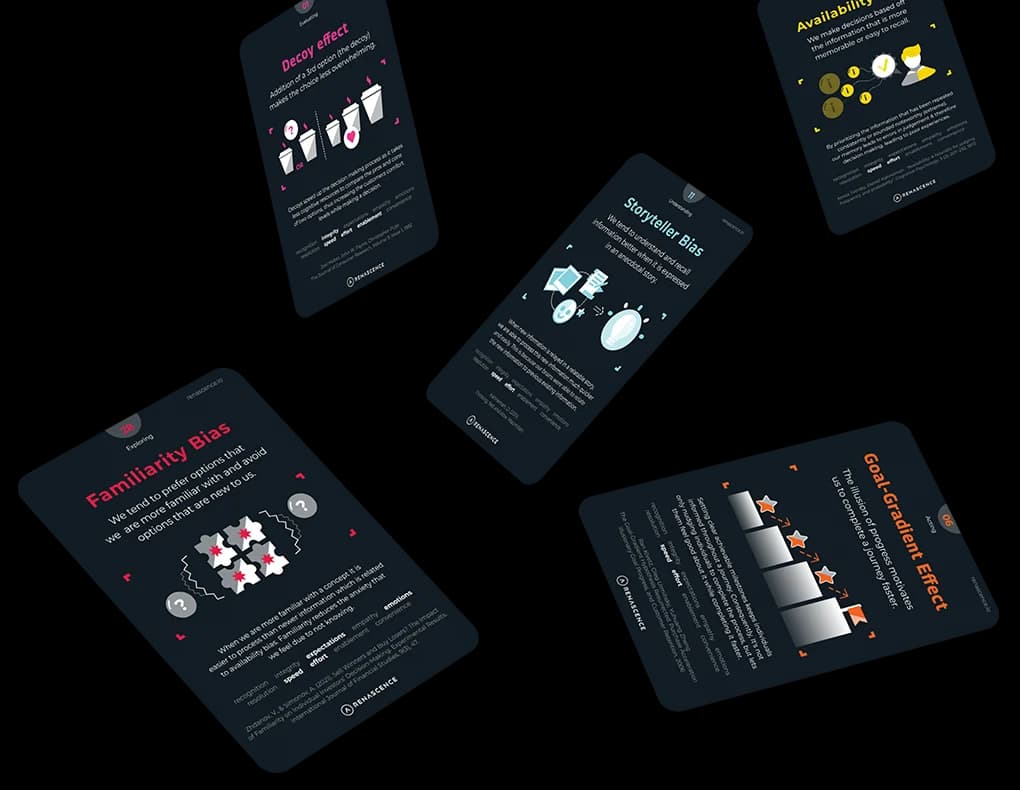
There is a second mechanism at play once a user is inside a workspace: the goal-gradient effect, the well-documented tendency for motivation to increase as people perceive themselves nearing completion of a task. Notion's onboarding checklists and template-driven "getting started" pages give new users a visible, nearly-finished structure to complete rather than an empty canvas to populate from nothing — a subtle but deliberate reduction of the activation energy required to form a habit.
What does customer success actually do once the habit is already formed?
Customer success in a product-led business like Notion is not primarily about rescuing unhappy accounts — it is about noticing which workspaces are ready to expand and removing the friction standing between a happy small team and a bigger, paid enterprise contract. That reframes customer success from a cost centre focused on churn prevention into a growth function focused on expansion within accounts that are already succeeding.
This matters for CX leaders outside the software industry, too. Too many organisations still treat customer success and retention teams purely as damage control — the function that gets called when a complaint escalates — rather than as the team best placed to spot a customer who is thriving and ready for more. Notion's commercial structure, pairing a customer-success leader like Monica Perez with revenue leadership under Erica Anderson, treats growth and satisfaction as the same problem viewed from two angles rather than two separate departments with competing dashboards.
A product-led company does not ask "how do we stop customers leaving?" first. It asks "how do we make leaving feel like losing something, and staying feel like finishing something?" The support ticket is the fallback plan, not the main event.
What can non-software companies actually borrow from this model?
Most organisations cannot replicate a freemium SaaS product, and they should not try. A bank cannot give away free banking, and a hospital cannot give away free healthcare. But the underlying behavioural mechanisms travel well beyond software. Four are worth lifting directly:
- Design the first use, not just the first contact. The equivalent of Notion's template gallery in a retail or banking context is a guided, pre-populated first experience — a pre-filled form, a starter plan, a default configuration — that removes the blank-page problem at account opening, not just at the welcome call.
- Turn satisfied customers into visible proof, deliberately. Ambassador and advocacy programmes work because they are structured, not incidental. A verbal "please refer a friend" is weak; a named community with status and recognition, as Notion runs with its ambassadors, converts goodwill into durable advocacy.
- Let switching cost grow from genuine value, not contractual lock-in. The endowment effect Notion benefits from comes from users building real work into the product, not from punitive exit fees. Loyalty built on a penalty for leaving is brittle; loyalty built on sunk, self-created value compounds.
- Merge the metrics that growth and experience teams chase. If the team measuring satisfaction and the team measuring revenue never look at the same dashboard, expansion opportunities get missed and at-risk accounts get discovered too late.
Translating any of this into an existing organisation is a sequencing problem as much as a strategy one. A practical path looks like this:
- Map the current journey honestly. Identify where your organisation still relies on a human to do what the product or self-service channel could be doing instead — this is the starting point for any serious CX journey redesign.
- Find your "blank page" moment. Locate the single point in onboarding where a customer is most likely to abandon because they do not know what to do next, and design a pre-filled, templated default for it.
- Build a formal advocacy structure, not an informal hope. Decide who your ambassadors are, what status or access they receive, and what behaviour earns it — then measure it like any other channel.
- Align the incentives of growth and success functions. Give customer success and revenue teams a shared metric tied to account health and expansion, not separate scorecards that only meet in a dispute.
- Benchmark where you actually stand before investing further. Use a structured CX maturity assessment to see whether your organisation's current capability can support a product-led or community-led shift, rather than assuming it.
Notion is not alone in running this playbook — Canva's own growth has leaned heavily on a free tier and a template ecosystem for similar behavioural reasons, a comparison worth reading alongside this one in Canva Customer Service: What It Gets Right and Wrong. What separates the companies that sustain this model from those that stall is discipline: the willingness to keep investing in the free, communal layer even once a sales team exists and has every incentive to push users toward paid conversations instead.
Where does this model eventually run into limits?
Community-led growth works brilliantly for individual and small-team adoption, which is exactly where Notion built its base. It gets harder once the buyer is a procurement department rather than an individual user, because enterprise purchasing decisions are made through committees that respond to security certifications, governance controls and service-level agreements — not template galleries. That is likely the real reason a traditional revenue leadership structure has become more prominent inside Notion: the behavioural tricks that convert a solo user into a habitual one do not, by themselves, close a six-figure enterprise contract.
The lesson for CX leaders is not that community-led growth is a universal substitute for sales and service. It is that the two can be sequenced deliberately: let behavioural design and product experience do the work of building habit and advocacy at the bottom of the funnel, then apply conventional relationship-led commercial effort once the account is large enough to need it. Few organisations design that handoff intentionally. Most let habit-driven loyalty and enterprise sales processes develop in separate silos and wonder later why the experience feels disjointed the moment a small team becomes a paying department.
The real takeaway for CX leaders outside software
Notion's model is a reminder that the most expensive part of customer experience — the human service layer — should be reserved for the moments a product genuinely cannot handle itself, not deployed as a universal crutch for weak design. Every free template a user copies, every ambassador who answers a stranger's question in a forum, is customer experience happening without a single employee present. The organisations that will out-compete on experience over the next few years are not the ones who hire the most agents. They are the ones who work out which moments actually need a human, and build everything else — onboarding, advocacy, habit formation — so well that a human was never required in the first place. That shift in loyalty economics, more than any single feature Notion ships, is the part worth stealing, and it is exactly the kind of structural rethink a customer loyalty strategy should be built around rather than bolted onto.
FAQ
Questions we get on this topic
Related reading



Writing on how human behavior shapes the experiences brands deliver — at the intersection of behavioral economics and customer experience.
Stay ahead of CX
Get the Journal in your inbox.
Insights, frameworks and event round-ups from the Renascence team. No spam, ever.