








Customer Experience · November 20, 2026
Canva Customer Service: What It Gets Right and Wrong
Canva's self-service support model cuts effort for routine queries but struggles when customers hit billing disputes or locked accounts and need a human to believe them.

Canva built an empire on removing friction: drag, drop, publish, no design degree required. So it is a little jarring that the moment something goes wrong — a locked account, a disputed charge, a design that vanished before export — many users discover that reaching a human being is the hardest part of the experience.
That contradiction is the story. Canva's customer service is not an afterthought bolted onto a design tool; it is the same philosophy that built the product, applied to support: minimise human contact, maximise self-sufficiency, and let scale do the rest. The approach is a textbook case of designed self-sufficiency — a support model engineered to resolve the easy 90% of problems without a person ever getting involved. It works brilliantly for simple, low-stakes issues. It works badly for the small, high-emotion minority of cases where a customer needs to be believed, not redirected to an article.
What is Canva's customer service model?
Canva runs a digital-first support model: a searchable self-service help centre, community forums where users answer each other's questions, and chat-based support whose speed and availability scale with subscription tier. There is no general consumer phone line. The free tier, used by the overwhelming majority of Canva's user base, is designed to be solved by documentation and community knowledge before it ever reaches a support agent.
This is not an accident of under-investment. It is a deliberate architecture choice that mirrors how Canva built the product itself: remove as many steps as possible between a person and a resolved problem, and reserve scarce human attention for the cases that genuinely need it. Understood this way, Canva's support model is less a cost centre and more an extension of its customer experience strategy — one built for a freemium business where the economics of millions of non-paying users make unlimited live support structurally impossible.
Why does Canva push users toward self-service before a human?
Because the alternative does not scale, and because self-service, done well, genuinely reduces customer effort rather than adding to it. In their influential 2010 Harvard Business Review article Stop Trying to Delight Your Customers, Matthew Dixon, Karen Freeman and Nicholas Toman found that reducing the effort a customer must expend to get a problem solved predicts loyalty far better than trying to wow them with surprises. Their research gave the industry the Customer Effort Score and a durable insight: customers do not want to be delighted by support, they want their problem to disappear with minimum friction.
A well-indexed help centre that answers a question in forty seconds beats a live chat queue that answers it in twenty minutes. Canva's bet is that most support tickets — "how do I resize a template," "why won't this font embed," "how do I remove the background" — are exactly this kind of low-stakes, high-frequency query. Routing them to self-service is not customer neglect; it is effort reduction, correctly applied.
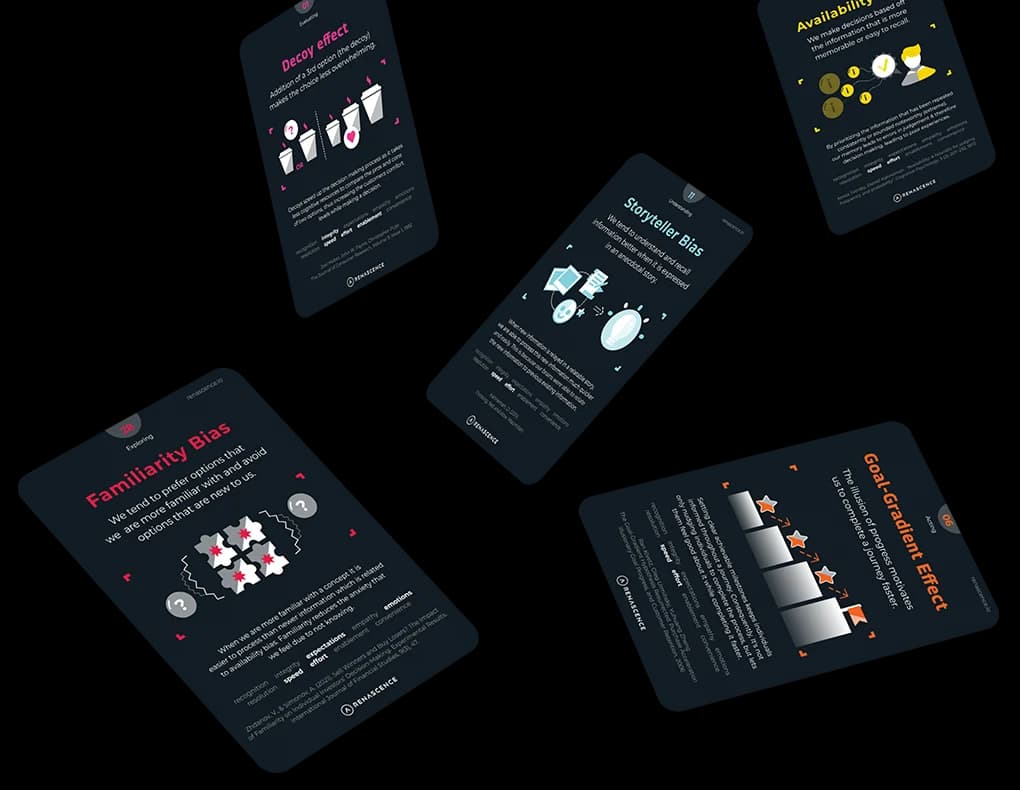
There is a second, quieter mechanism at work: the goal-gradient effect, the behavioural finding that motivation to finish a task intensifies as people perceive themselves nearing completion. A help centre structured around the exact step a user is stuck on — not a generic FAQ, but an article titled for the precise action being attempted — keeps the user inside their own momentum rather than breaking their task to wait in a queue. Canva's documentation is organised around tasks, not departments, which is the right instinct: customers think in jobs-to-be-done, not org charts.
Where does Canva's self-service model actually work well?
For the categories of problem it was built for, the model holds up. Several design choices are worth copying regardless of industry:
- Task-indexed help articles that match the language users actually type, rather than internal product terminology — reducing the cognitive cost of finding an answer.
- A peer community forum that leverages social proof: seeing that thousands of other users hit and solved the same snag is reassuring in itself, independent of the fix.
- Consistency across entry points — the same help content surfaces whether a user searches on web, opens the mobile app, or asks from inside the editor, which protects the CX principle of journey consistency.
- Tiered access that is transparent, not hidden — Pro, Teams and Enterprise subscribers know they are paying partly for faster, closer human support, which is an honest value exchange rather than a bait-and-switch.
This is the part of Canva's model other digital products underinvest in. Many companies build a help centre as a compliance exercise — thin, outdated, written by whoever had time that week. Canva's scale forced it to treat documentation as a product surface in its own right, which is the correct posture for any company serving a large free or low-cost tier, a point explored further in our piece on the zero-price effect in customer experience, where the behavioural stakes of serving non-paying users at scale are examined in more depth.
Where does Canva's customer service break down?
The model is tested hardest exactly where self-service cannot help: billing disputes, account lockouts, unauthorised charges, and situations where the customer's emotional state has already shifted from "confused" to "suspicious." Users across review platforms and community threads consistently describe a specific pattern — a chatbot or automated flow absorbs the first several exchanges, and reaching a human, particularly for free-tier users, takes persistence. For a design query, that persistence is a minor annoyance. For a billing dispute, it reads as the company hiding from accountability.
This distinction matters more than it might seem, and it has a name in behavioural economics. Richard Thaler draws a line between friction and sludge: friction is a reasonable, even necessary, bit of effort that slows a decision down; sludge is friction that exists to someone's benefit at the customer's expense — the extra click deliberately placed between a user and a refund, or a cancellation. There is no public evidence that Canva deliberately engineers sludge. But the structural effect of a tiered, chatbot-first model is the same regardless of intent: the user who needs help most urgently — because money or access is on the line — is also the user with the least direct path to a person who can fix it.
That asymmetry collides with another well-documented bias: loss aversion. Kahneman and Tversky's research established that losses are felt roughly twice as intensely as equivalent gains. A customer disputing a charge is not evaluating the situation calmly; they are experiencing a perceived loss, and every extra step between them and resolution compounds the emotional charge of that loss. A self-service model optimised for low-stakes, low-emotion queries is poorly calibrated for the handful of moments that carry the highest emotional and reputational weight.
This is the structural weak point worth naming plainly: Canva's support model is excellent at solving problems customers barely notice, and comparatively weak at the handful of moments that determine whether a customer trusts the company at all. Those moments — a billing error, a locked account before a deadline, a disputed cancellation — are precisely the ones that get remembered, shared, and written up on review sites, because of the peak-end rule: people judge an entire experience not by its average, but by its most intense point and how it concluded. A smooth year of free design work can be outweighed, in the customer's memory, by one badly handled support ticket at the end.
What can CX and service design leaders learn from Canva's trade-off?
The lesson is not "self-service is bad" or "always offer a phone line." It is that self-service and human escalation are not substitutes for each other — they are two different tools solving two different classes of problem, and conflating them is where companies get hurt. A practical sequence for getting the balance right:
- Segment the ticket volume by emotional stakes, not just topic. A "how do I resize this" query and a "you charged me twice" query may both be two-line tickets, but they carry entirely different emotional loads and need different routing logic.
- Protect a visible, fast human path for the high-stakes minority. Billing, security, and account-access issues should never sit behind the same chatbot gate as a how-to question, regardless of subscription tier.
- Audit the escalation path for sludge, not just friction. Ask whether each extra step genuinely serves the customer or merely protects a support cost line — the honest answer is often uncomfortable.
- Design the ending of every support interaction deliberately. Given the peak-end rule, how a difficult case closes — an apology, a clear explanation, a small gesture of goodwill — matters more than the minutes it took to resolve.
- Treat the help centre as a living product, not static documentation. Update it from real ticket data and community questions on a cadence, the same way a product team ships features.
- Measure effort, not just satisfaction. A Customer Effort Score captures what a star rating hides: whether the customer had to work too hard to get help.
Companies running lean, digital-first support often resist step two because it looks like it breaks the scale logic — more human touch for more customers. It doesn't have to. The fix is not more headcount across the board; it is smarter routing that recognises emotional stakes as a triage signal alongside ticket category, something best designed through a deliberate escalation strategy rather than left to whichever flow the chatbot happened to be built for.
Does Canva's model reflect good or bad customer experience design?
Both, depending on which customer you ask and on which day. Judged purely on efficiency and effort reduction for the bulk of its user base, Canva's digital-first support is a sound, scalable design — closer to disciplined service design than neglect. Judged on the moments that make or break trust, it carries the same risk every scaled self-service model carries: the people with the smallest problems get fast, well-indexed answers, while the people with the biggest problems get the slowest, most frustrating path through the system. That inversion is the real cost, and it rarely shows up in aggregate satisfaction scores because it affects a minority of interactions while shaping a majority of public reviews.
Other digital-first brands have faced the same test and made different trade-offs. N26, for example, had to confront what happens when a purely digital, low-touch model meets a customer in genuine distress over money — a dynamic explored in our analysis of how N26 built trust as a growth engine. The pattern holds across industries: the companies that scale self-service successfully are the ones that never let the scarcest resource — a human who can make a judgement call — disappear entirely from the system, however rare the need for one becomes.
For CX leaders studying Canva's model, the real question to bring back to their own organisation is not "should we add live chat" but "where, specifically, does our effort-reduction logic break down for the customer who is scared, angry, or losing money — and have we actually tested that path, or only the happy one?" Few companies have. Fewer still track it with the same rigour they apply to onboarding funnels or feature adoption, despite the fact that recovery moments carry outsized weight in retention and word of mouth, a relationship our overview of CX's link to profitability lays out in more detail.
Canva's engineers did not set out to design a flawed support system; they set out to solve a scaling problem, and solved most of it well. The gap that remains is not a technology gap — it is a design gap, the kind that shows up only when you map the journey of the customer who is not having a good day. That is a mapping exercise worth doing before the next billing dispute goes viral, not after, and it is exactly the kind of structured customer experience work that turns a self-service model from a cost-saving shortcut into a genuinely resilient one.
The companies that will win the next decade of digital-first support are not the ones that remove humans fastest. They are the ones precise enough to know exactly which four percent of moments still need one — and disciplined enough to never let that four percent get lost in the system built for the other ninety-six.
Further reading
FAQ
Questions we get on this topic
Related reading



Writing on how human behavior shapes the experiences brands deliver — at the intersection of behavioral economics and customer experience.
Stay ahead of CX
Get the Journal in your inbox.
Insights, frameworks and event round-ups from the Renascence team. No spam, ever.