
Employee Experience · August 13, 2026
Why Frontline Attrition Is Really a CX Problem
Every frontline resignation resets a customer relationship to zero. Here's why turnover belongs on the CX dashboard, not just the HR scorecard.

The exit interview always asks the wrong question. HR wants to know why someone is leaving. The question that actually matters is what they are taking with them: the shortcut for calming an angry customer, the workaround for the broken booking system, the tone that turns a complaint into a save. When a frontline employee walks out the door for good, that knowledge walks out with them — and the next customer feels it within a week.
Frontline attrition is a customer experience problem wearing an HR disguise. Every resignation resets a service relationship to zero: a new hire re-learns the workarounds, re-builds the confidence, and re-earns the trust that took the departing employee months to develop — while customers absorb the wobble in real time. Treating turnover as a staffing metric rather than a leading indicator of experience decay is why so many CX transformations stall at exactly the point where they touch the front line.
Why does frontline attrition matter more to CX than to HR?
Because HR measures the cost of the vacancy; the customer feels the cost of the gap. A journey map assumes a competent, motivated person is standing at every touchpoint it describes. Strip that person out every few months and replace them with someone still learning the script, and the map stops describing reality. The service blueprint says "resolve in one call." The reality, with a six-week-old agent, is three transfers and an apology.
This is why employee experience sits upstream of customer experience rather than beside it. You cannot design a consistent, empathetic, low-effort journey on top of a workforce that never stays long enough to become good at it. Every CX principle — resolution, empathy, journey consistency — depends on tenure. Attrition doesn't just cost money. It erodes the very consistency that customer loyalty is built on.
What does frontline turnover actually cost?
More than the recruitment invoice suggests. Gallup's workplace research team estimated that voluntary employee turnover costs U.S. businesses roughly $1 trillion a year, in its 2019 analysis "This Fixable Problem Costs U.S. Businesses $1 Trillion" (Gallup, published on gallup.com) — a figure built from recruiting, onboarding, lost productivity during ramp-up, and the drag on the colleagues left covering the gap. None of that line item is labelled "customer experience," but all of it lands there eventually, in longer queues, shakier resolutions, and managers pulled off the floor to train instead of coach.
Gallup's long-running Q12 meta-analysis of business units worldwide adds the other half of the picture: teams in the top quartile of employee engagement report around 10% higher customer loyalty and engagement scores than those in the bottom quartile, alongside materially lower turnover — a correlation Gallup has tracked across successive editions of its State of the Global Workplace research. Engagement and retention move together, and customer metrics move with both. If you want to know where your NPS is leaking, look at your rota, not just your customer feedback dashboards.
How does losing frontline staff break the customer journey?
It breaks the ending, and endings are what customers remember. Daniel Kahneman's peak-end rule holds that people judge an experience largely by its most intense moment and how it concludes, not by the average of every moment along the way. The frontline is where almost every journey ends — the agent who processes the refund, the technician who finishes the installation, the branch teller who closes out the account change. A nervous, undertrained replacement at that final step doesn't just deliver a mediocre interaction; it recolours the customer's memory of the entire journey that preceded it, however well the earlier digital steps performed.
Institutional memory compounds the damage. A tenured agent has absorbed hundreds of edge cases the process documentation never anticipated: the customer who always calls before a public holiday, the workaround for a system field that mislabels a product. That knowledge is uncodified and non-transferable on short notice. Lose the person, and you lose the fix — often exactly at the handoff points where journeys already tend to break down.
What really drives people to leave the frontline?
Rarely pay alone, though pay sets the floor below which nothing else matters. Above that floor, attrition is usually driven by a small set of recurring, fixable frictions:
- No visible path forward. Frontline roles are often designed as terminal positions with no next rung, which kills motivation for anyone with ambition beyond the current shift.
- Scheduling sludge. Unpredictable shifts and last-minute changes — a form of what Richard Thaler calls "sludge," unnecessary friction imposed on people trying to plan their lives — erode goodwill faster than almost any other single factor.
- Powerlessness at the point of conflict. Agents who cannot bend a policy, waive a fee, or escalate quickly are forced to absorb customer anger with no tools to resolve it, which is exhausting in a way that management rarely sees from a dashboard.
- Invisible effort. Recognition systems built around sales targets alone ignore the harder, less measurable work of de-escalation and empathy — the very work that protects the customer relationship most.
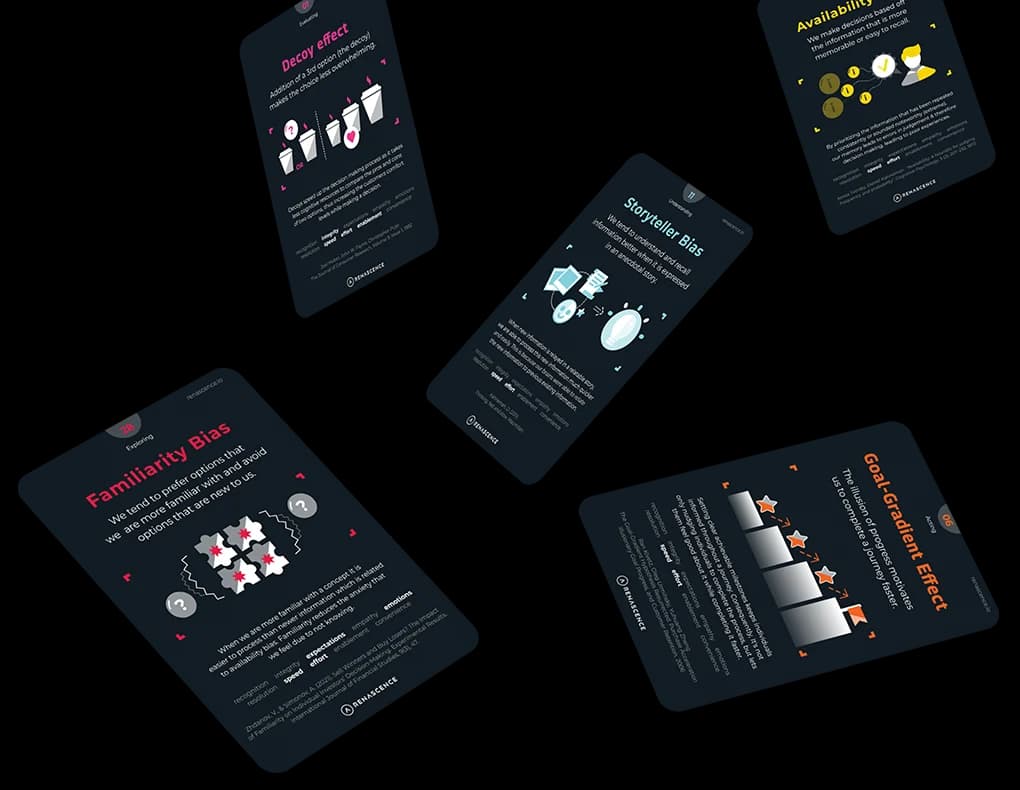
The goal-gradient effect — the well-documented tendency for motivation and effort to increase as people perceive themselves nearing a goal — explains why the first ninety days and the run-up to a promotion or milestone are disproportionately important. Organisations that give new hires no visible milestones between "onboarding" and "senior agent" waste this effect entirely; there is no gradient to climb, so motivation flatlines. Structuring the frontline career path into short, visible stages — with recognition at each one — puts the goal-gradient effect to work instead of leaving it idle.
How do you build a frontline that stays?
Retention on the front line is not a wellness initiative bolted onto the job; it is a design problem, solvable with the same rigour applied to a customer journey. The following sequence is the one we recommend when a client's attrition is visibly denting service quality:
- Map the frontline journey the way you'd map a customer's. Plot the employee's path from application to exit, flagging every moment of friction, confusion, or unmet expectation — the employee-experience mirror of a customer journey map.
- Fix scheduling sludge first. Give people predictable shifts and a real say in swaps before investing in anything else; unpredictability is one of the cheapest frictions to remove and one of the most corrosive to leave in place.
- Push resolution authority down. Give frontline staff a defined, bounded budget of discretion — a refund threshold, a fee waiver, a callback promise — so they can close the loop with a customer without escalating. Powerlessness, not workload, is what burns people out fastest in service roles.
- Build a visible thirty-sixty-ninety day path. Break the first year into short stages with clear, earned milestones, so the goal-gradient effect has something to pull people toward instead of a flat horizon.
- Let the team help design its own process. Involving frontline staff in redesigning a script, a floor layout, or an escalation rule triggers the IKEA effect — people place disproportionate value on things they helped build — and produces fixes that survive contact with real customers, unlike ones designed purely from head office.
- Institutionalise the informal knowledge. Capture the workarounds tenured staff carry in their heads and fold them into training and documentation before those people leave, not after.
- Measure retention next to CX metrics, not apart from them. Put frontline tenure and engagement on the same dashboard as CSAT and resolution time, and use an EX ROI calculator to make the financial case for the board in language finance already trusts.
Governance matters as much as the plays themselves. Retention initiatives that live entirely inside HR, disconnected from the CX function, tend to fade after the first budget cycle. They need the same clear ownership, rituals and decision rights that any serious CX programme requires — someone accountable for the metric, a regular forum to review it, and the authority to act on what it shows.
What does a low-attrition frontline look like in practice?
Two long-standing, widely documented examples illustrate the pattern rather than an exception to it. The Ritz-Carlton has for decades empowered every employee, regardless of level, to spend up to a set discretionary amount to resolve a guest problem on the spot — a well-known plank of its "Gold Standards" service philosophy that removes the powerlessness driver of attrition and, not incidentally, protects the guest experience at the exact moment it is most fragile. Zappos became famous for a related but distinct idea: offering new hires a cash incentive to quit during onboarding if the culture wasn't a fit, a policy popularised by former CEO Tony Hsieh in his account of the company's culture, on the logic that a mismatched hire costs everyone more the longer they stay.
Neither example is a silver bullet transplantable wholesale into a different market or regulatory context. What they share is the underlying design principle: give frontline staff real authority, and be deliberate about who stays rather than accepting whoever survives the first quarter. As Denise Lee Yohn argued in Harvard Business Review's "Design Your Employee Experience as Thoughtfully as You Design Your Customer Experience" (2016), companies that apply the same design discipline to the employee experience that they apply to the customer experience tend to get both right, because the two are built on the same architecture of moments, expectations, and trust.
An organisation that redesigns its customer journey without touching its frontline retention problem has redecorated the house while the foundation is still cracking.
Retention rituals matter here too — a recognised milestone, a small ceremony marking a service save, a visible moment when tenure is acknowledged in front of peers. These function for employees much as signature rituals function for customers: they turn an ordinary moment into a memorable one, and memorable moments are what people stay for.
The organisations that protect customer experience best are rarely the ones with the cleverest script or the newest platform. They are the ones where the person answering the phone has been doing the job long enough to be genuinely good at it — and where staying long enough to get good at it was designed to be the easy choice, not the exception. Fix the front line, and the journey map finally describes what actually happens. Leave it broken, and no amount of downstream CX polish will hide the seam.
Further reading
FAQ
Questions we get on this topic
Related reading



Writing on how human behavior shapes the experiences brands deliver — at the intersection of behavioral economics and customer experience.
Stay ahead of CX
Get the Journal in your inbox.
Insights, frameworks and event round-ups from the Renascence team. No spam, ever.