
Customer Experience · August 12, 2026
Why CX Breaks at the Channel Partner — and How to Fix It
Customers don't distinguish between a brand and its partners — one bad handoff undoes years of trust. Here's how to close the B2B2C experience gap.

The bank spent two years perfecting its branch experience — warm greetings, sub-90-second queue times, a script for every objection. Then a customer called the third-party collections agency the bank had outsourced its overdue accounts to, and the entire relationship collapsed in one rude, scripted-to-the-letter call that technically followed every compliance rule and broke every ounce of trust the branch had built. The customer didn't distinguish between "the bank" and "the agency the bank hired." Nobody outside the org chart ever does.
That is the central fact of partner-delivered experience: the customer's brain does not draw the boundary the balance sheet draws. Whether the interaction happens in a flagship store, a franchisee's counter, a reseller's call centre, or a marketplace seller's chat window, it registers as one relationship with one brand. Consistency across channel partners is not a training problem or a compliance problem. It is a choice-architecture problem — the partner will do whatever is easiest to do, and if the easiest path and the on-brand path aren't the same path, the brand loses every time.
Why does customer experience break down at the channel partner?
It breaks down because brands govern their own front line with obsessive detail and govern their partners with a PDF. The direct channel gets hiring standards, coaching, live monitoring, and a service blueprint. The partner channel — often the majority of revenue in telecoms, automotive, banking distribution, and franchised retail — gets a contract, a logo-usage guide, and an annual business review. The partner has a different P&L, different incentives, and frequently no visibility into what "good" looks like from the brand's own customer-experience programme.
The information gap compounds the incentive gap. A brand's CX team can see every complaint, every survey score, every service-recovery case from its owned channels in near real time. Partner-generated friction often surfaces weeks later, buried in a reseller's aggregate sales report, if it surfaces at all. Consistency and standards is one of the oldest usability heuristics in the discipline — Jakob Nielsen named it as one of his ten core usability principles in 1994 — and it applies with more force, not less, once a third party is holding the pen on the customer's behalf.
What makes B2B2C experience fundamentally different from direct CX?
In a B2B2C model, the brand doesn't own the moment of truth — it lends its promise to someone else who executes it. That someone else has their own culture, their own margin pressure, and their own definition of a good day. A telecom operator's retail partner is graded on activations per hour. A bank's broker network is graded on approvals closed. Neither metric has anything to do with whether the end customer felt respected, informed, or resolved — and yet the brand's Net Promoter Score absorbs the consequence regardless.
This is why managing experience in a B2B2C model requires a different operating logic than managing a direct channel. You are not designing an experience and handing it to your own trained staff to execute. You are designing an experience and asking an independent economic actor, with different goals, to execute it faithfully — usually without the authority to discipline them the way you would discipline an employee.
How do you diagnose inconsistency across a partner network?
You cannot fix what you can't see, and most partner networks are functionally invisible to the brand's CX function. Diagnosis starts with treating every partner-owned touchpoint as part of one continuous journey, not a separate business relationship to be reviewed once a year.
- Independent observation: structured mystery shopping across partner locations and call centres, scored against the same standard used for owned channels — not a softer one.
- Journey mapping that crosses ownership lines: map the full end-to-end journey, flagging exactly which steps a partner controls, so gaps in visibility become gaps in the map itself, not blind spots that get skipped.
- Partner-level voice of customer: segment survey and complaint data by partner node, not just by product or region, so underperforming partners can't hide inside a healthy national average.
- Shadow audits of incentive documents: read the partner's own commission and bonus structure. If it rewards speed of sale over quality of resolution, that document — not the brand's playbook — is what's actually shaping behaviour.
How does choice architecture keep partners on-brand without micromanaging them?
Choice architecture — the deliberate design of the environment in which someone makes a decision — matters more with partners than with employees, because you have less authority to compel and more need to design around human nature. The goal is to make the on-brand action the default, the easy, and the visible one, so partners deliver consistency because it's the path of least resistance, not because they memorised a manual.
Three applications do most of the work:
- Defaults over instructions. A partner's CRM screen that opens on the correct disclosure script, the correct upsell sequence, or the correct escalation path will be followed far more reliably than a rule sitting in a training deck the partner read once, months ago. Richard Thaler and Cass Sunstein's work on nudge theory established that people overwhelmingly stick with whatever is pre-set as the default — so build the brand standard into the system, not the memory.
- Friction on the wrong path, not the right one. If a partner agent can bypass the compliant script in two clicks but the compliant script takes five, they will bypass it under time pressure every time. Thaler's distinction between helpful friction and manipulative "sludge" cuts both ways: the brand's job is to strip friction from the correct behaviour and add it — deliberately — to the shortcut.
- Social proof among partners, not just to customers. Robert Cialdini's research on social proof, detailed in his 1984 book Influence, shows people look to others' behaviour to judge the right course of action under uncertainty. A partner leaderboard showing peer performance on resolution quality — visible to other partners, not just to head office — changes behaviour faster than a compliance memo ever will.
How do you build a partner enablement system that actually holds?
Enablement fails when it's a one-off rollout — a launch webinar, a PDF, a certificate — instead of a system with feedback loops. A partner enablement system that sustains consistency over years, not months, follows a repeatable sequence:
- Define the non-negotiable moments of truth. Not every step in the journey needs uniform delivery. Identify the three or four moments — a complaint, a cancellation attempt, a first purchase — where inconsistency does the most damage to trust, and concentrate governance there first.
- Build the standard into the tool, not the training. Embed scripts, disclosure requirements, and escalation triggers directly into the partner's point-of-sale or CRM system as defaults, so the correct behaviour requires no recall under pressure.
- Certify capability, not attendance. Replace "completed the training" with a scored simulation or live observation before a partner is authorised to handle the moments of truth identified in step one.
- Instrument the touchpoint for feedback. Attach a short, moment-specific survey or a flagged transcript review to every partner-delivered moment of truth, so the brand sees drift within days, not at the annual business review.
- Close the loop visibly. Share partner-level performance data back with partners regularly and specifically — not as a scolding, but as the same operational discipline applied to owned-channel staff.
- Re-certify on a cadence. Standards decay as partner staff turn over and shortcuts spread informally; treat re-certification as routine maintenance, not a crisis response.
None of this works without governance that has actual teeth — someone accountable for partner-delivered experience with the standing to act on what the data shows. That's the argument for a proper CX governance strategy that explicitly names channel partners inside its scope, rather than assuming governance stops at the brand's own walls.
How should partner incentives be designed so the right behaviour is also the easy behaviour?
Most partner underperformance isn't a character flaw — it's an incentive doing exactly what it was built to do. If the commission structure pays for volume and says nothing about resolution quality, a rational partner optimises for volume. Two behavioural mechanisms help redesign incentives so brand consistency and partner self-interest point the same direction.
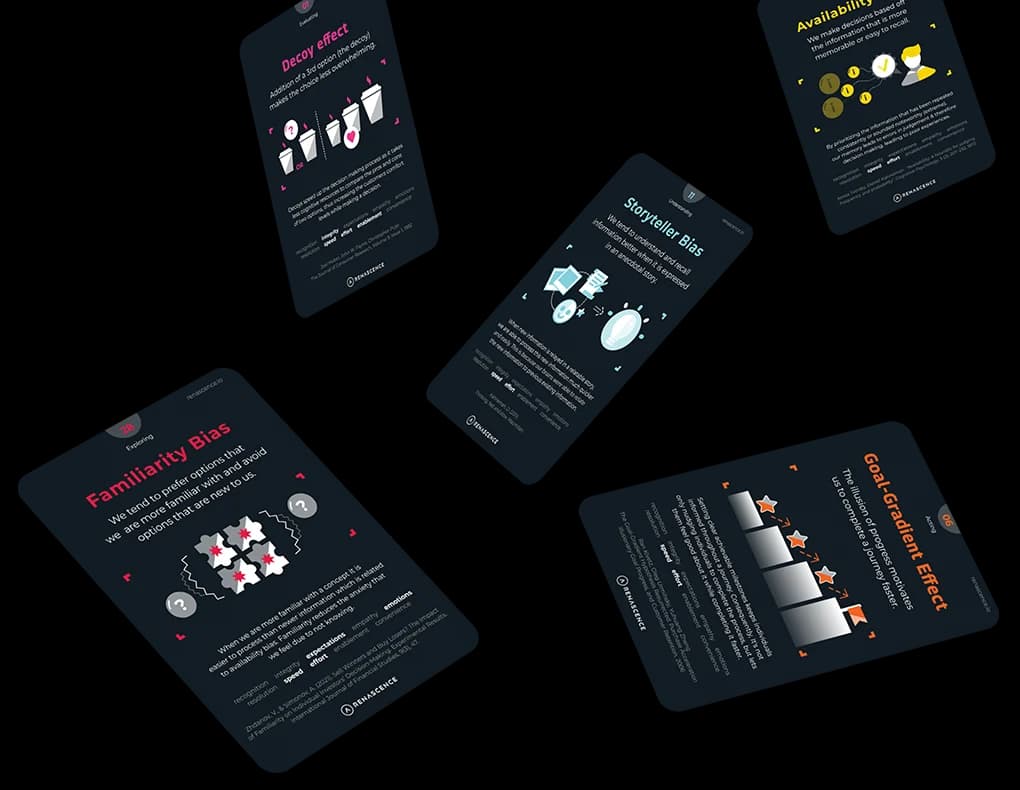
The first is the goal-gradient effect — the well-documented tendency for effort and motivation to intensify as someone nears a reward, first observed in animal learning research and later confirmed in consumer contexts by Ran Kivetz, Oleg Urminsky and Yuhuang Zheng in their 2006 study The Goal-Gradient Hypothesis Resurrected, published in the Journal of Marketing Research. Partner portals that show visible progress toward a quality-linked tier — not just a sales tier — harness that same acceleration for the behaviours that protect the customer, not only the ones that protect revenue.
The second is the endowment effect: people work harder to protect something they already feel they own than to earn something they don't yet have. Partners who are handed a "gold partner" status and told it can be lost defend it more fiercely than partners chasing the same status from zero. Structuring partner tiers as something to protect — with clear, visible criteria tied to end-customer experience scores, not just sales — turns loss aversion into a retention mechanism for the standards that matter.
How do you measure whether partners are actually delivering the brand's experience?
Aggregate NPS or CSAT at the brand level hides exactly the problem you're trying to find. A national score of 42 might conceal one partner delivering 65 and another delivering 8 — and the brand-level number gives no one a reason to fix the second. Experience measurement in a partner network has to be built at the node level from the start.
Consistency isn't the average experience a customer gets from your network. It's the narrowest range of experience your worst-performing partner can deliver — because that's the score your reputation actually carries.
Choosing the right metric matters as much as the granularity. A transactional moment like a complaint resolution calls for a different measure than a relationship check-in, and getting that wrong produces noisy, unusable partner scorecards. The distinctions laid out in NPS, CSAT, and CES: which metric to use when apply with extra force in a partner context, where you often need several metrics running in parallel across different partner touchpoints rather than a single blended number.
It's worth remembering why this discipline pays off. In its 2005 study Closing the Delivery Gap, Bain & Company found that roughly 80% of companies believed they delivered a superior customer experience, while only around 8% of their customers agreed. That gap is a management-blind-spot problem inside a company's own walls — inside a partner network, where the brand has even less direct line of sight, the gap is almost certainly wider, not narrower. Fred Reichheld made a related point in his 2003 Harvard Business Review article The One Number You Need to Grow, arguing that a single well-chosen relationship metric, tracked consistently, tells leadership more than a dashboard of disconnected data. Applied to partners, that means picking one or two experience metrics per moment of truth and tracking them at partner-node level with the same seriousness applied to sales targets.
What should a brand do when a partner simply won't change?
Some partners won't respond to better tools, clearer defaults, or redesigned incentives — usually because the partnership's economics reward the shortcut more than the brand's programme can compensate for. At that point, the honest options are narrow: renegotiate the commercial terms so quality carries real financial weight, invest in direct oversight of that specific partner's highest-risk touchpoints, or accept that the partnership is misaligned enough to reconsider. Brands that skip this step and simply repeat the training tend to discover the same failure a year later, at greater reputational cost.
- Renegotiate commission structures to attach a meaningful share of pay to experience metrics, not only volume.
- Escalate underperforming partners into direct-oversight status for their riskiest moments of truth, even at higher operating cost.
- Use contract renewal cycles as a genuine checkpoint, backed by partner-level data, rather than a formality.
- Be willing to exit partnerships where the economics and the experience standard cannot be reconciled — protecting the brand's promise sometimes costs revenue in the short term.
A brand's promise is only as strong as the weakest hand it lets deliver it. The work of partner experience isn't persuading intermediaries to care as much as head office does — most won't, and expecting them to is where these programmes usually go wrong. The work is building an environment where the easiest, best-incentivised, most default path for a distracted partner on a Tuesday afternoon happens to be the one the brand would have chosen for them. Get the architecture right, and consistency stops depending on goodwill.
Further reading
FAQ
Questions we get on this topic
Related reading



Writing on how human behavior shapes the experiences brands deliver — at the intersection of behavioral economics and customer experience.
Stay ahead of CX
Get the Journal in your inbox.
Insights, frameworks and event round-ups from the Renascence team. No spam, ever.