








Customer Experience · August 7, 2026
Why Customer Experience Is Important in 2026
Switching costs are near zero and expectations are set by the best experiences customers have ever had. Here is why CX is now a structural business imperative.

Most organisations say customer experience matters. Fewer can explain why it matters more in 2026 than it did five years ago — and almost none can articulate the precise mechanisms through which it creates or destroys value. That gap between stated belief and operational understanding is where competitive advantage quietly changes hands.
The short answer: customer experience is important in 2026 because the conditions that once allowed poor experience to coexist with acceptable financial performance have eroded. Switching costs are lower, alternatives are more visible, and customers have been trained by the best experiences they have ever had — not the average ones — to expect that standard everywhere. The organisations that understand this structurally, not just rhetorically, are pulling away from those that treat CX as a department rather than a discipline.
The Conditions Have Changed, Not Just the Vocabulary
A decade ago, a bank could retain a dissatisfied customer through inertia alone. Changing current accounts was genuinely painful — paperwork, direct debit transfers, the risk of something going wrong. That friction was, in effect, a subsidy to mediocrity. Behavioural economists call this the status quo bias: people stick with what they have not because they prefer it, but because switching feels costly relative to the uncertain gain.
That subsidy has been systematically dismantled. Open banking frameworks, number portability, one-click account switching, and the proliferation of digital-first competitors have reduced switching costs to something close to zero in many categories. When the structural lock-in disappears, experience quality becomes the primary retention mechanism. This is not a trend. It is a structural shift, and it is permanent.
The same dynamic is visible in banking and financial services, telecommunications, retail, and increasingly in healthcare and public services. The sectors that digitised fastest also democratised choice fastest — and are now learning that acquisition without retention is an expensive treadmill.
Why "Understanding Customer Experience" Is the Starting Point, Not a Platitude
Customer experience, defined precisely: the sum of perceptions a customer forms across every interaction with an organisation — before, during, and after a transaction — shaped by what they expected and what they actually received. The gap between expectation and reality, not the absolute quality of the interaction, determines whether the experience registers as positive, neutral, or damaging.
That definition matters because it shifts the frame. Experience is not what you deliver; it is what the customer perceives you delivered. A technically flawless process that violates an implicit expectation is a poor experience. A recovery from a genuine failure, handled with speed and empathy, can produce stronger loyalty than if the failure had never occurred — a well-documented phenomenon in service research sometimes called the service recovery paradox.
This is where Daniel Kahneman's peak-end rule becomes operationally useful rather than academically interesting. Kahneman's research demonstrated that people do not evaluate experiences by averaging every moment; they remember the emotional peak (positive or negative) and the ending. A long, smooth interaction that ends badly is remembered as bad. A difficult interaction that resolves brilliantly is remembered as good. The implication for CX design is direct: engineer your endings and your moments of highest emotional intensity with the same rigour you apply to your processes.
"Customer experience is not what you deliver; it is what the customer perceives you delivered. The gap between expectation and reality — not absolute quality — determines whether an interaction creates loyalty or accelerates departure."
The Business Case Is No Longer Contested — But It Is Frequently Miscalculated
The link between customer experience quality and financial performance is well-established in the academic and practitioner literature. Bain & Company's work on the economics of loyalty — including their foundational research on the relationship between Net Promoter Score and revenue growth — has been replicated and extended across industries for two decades. The mechanism is not mysterious: customers who have better experiences buy more, churn less, and refer others, while customers who have poor experiences do the opposite and increasingly say so publicly.
What is frequently miscalculated is the cost side. Organisations tend to measure the cost of CX investment (headcount, technology, training) while systematically underestimating the cost of poor CX: complaint handling, service recovery, churn-driven acquisition spend, and the diffuse brand damage that accumulates when negative word-of-mouth compounds. If you want to quantify where your organisation sits, the CX ROI Calculator is a practical starting point for building an honest business case.
The more important miscalculation is temporal. CX investment produces returns on a lag — improved experience scores this quarter translate into reduced churn and increased wallet share over the next two to four quarters. Organisations that evaluate CX spend on a quarterly P&L basis will always underinvest, because the accounting period is shorter than the causal loop.
Customer Experience Trends Shaping 2026
Several forces are reshaping what good customer experience looks like and what it requires to deliver.
- AI-augmented service, not AI-replaced service. The organisations winning on experience in 2026 are not those that have replaced human interaction with AI, but those that have used AI to make human interaction faster, better-informed, and more consistent. AI handles the transactional; humans handle the emotionally loaded. Getting that boundary wrong — automating moments that require empathy — is one of the most common and costly CX errors being made right now.
- Hyper-personalisation at scale. Customers now expect that an organisation with years of their data will use it to serve them better, not just to market to them more. The expectation is contextual relevance — the right offer, channel, and tone for this customer at this moment — not generic segmentation.
- Experience consistency across channels. The channel-switching customer is the norm, not the exception. An experience that is excellent on the app and poor in the branch is not a partial success; it is a broken promise. Journey-level thinking — mapping experience across the full arc rather than optimising each touchpoint in isolation — is the only structural response to this.
- Employee experience as the upstream driver. There is a well-evidenced relationship between how employees experience their work and how customers experience the organisation. This is not soft sentiment; it is a causal chain. Disengaged employees deliver inconsistent service; consistently poor service drives churn. Organisations that treat employee experience as a downstream consequence of CX strategy, rather than an upstream input, will find their customer metrics stubbornly resistant to improvement.
- Trust and integrity as differentiators. In markets saturated with choice and noise, the organisations customers return to are those they trust to act in their interest. This is partly about data privacy and security, but more fundamentally about whether the organisation's behaviour — in pricing, in complaint handling, in how it communicates — is consistent with what it claims to stand for.
Customer Experience in Banking: A Sector Under Structural Pressure
Banking is worth examining specifically because it illustrates the broader dynamic with unusual clarity. For most of the twentieth century, banks competed primarily on product (rates, terms) and distribution (branch proximity). Experience was largely irrelevant because switching was painful and alternatives were limited.
Neither condition holds today. Digital-native challengers have demonstrated that banking can be fast, transparent, and frictionless. That demonstration has permanently recalibrated customer expectations — not just for digital banks, but for every bank. A customer who opens a savings account in four minutes on a challenger's app does not then accept a forty-five-minute branch visit and a paper form from their incumbent provider without noticing the contrast.
The response from incumbents has often been to digitise the existing process rather than redesign the experience. That is a category error. Digitising a poor process produces a poor digital process. The underlying question — what job is the customer trying to do, and what would make that job effortless? — requires service design thinking, not just technology investment. For a closer look at what this means in practice, the piece on what a customer experience banker actually does day to day is worth reading.
Customer Experience Career Paths and Roles in 2026
The professionalisation of CX as a discipline has accelerated sharply. Five years ago, "Head of Customer Experience" was a title that could mean almost anything. Today, CX roles have developed genuine functional specificity, and the career paths through them are becoming more legible.
The core customer experience roles in 2026 fall into three broad clusters:
- Strategy and governance roles — Chief Customer Officer, VP of Customer Experience, CX Director. These roles own the CX vision, the measurement framework, and the organisational mandate. They sit at or near the executive table and are accountable for experience metrics as business metrics.
- Design and research roles — Journey Designer, Service Designer, UX Researcher, Voice of Customer Manager. These roles produce the maps, insights, and prototypes that make strategy operational. They require a combination of analytical rigour and human empathy that is genuinely rare.
- Operations and delivery roles — CX Manager, Customer Success Manager, Contact Centre Experience Lead. These roles own the day-to-day delivery of the designed experience and the feedback loops that surface where reality diverges from intent.
Customer experience salary ranges in 2026 vary significantly by market, seniority, and sector. In the MENA region, senior CX leadership roles at major banks and telecoms organisations command packages broadly comparable to equivalent marketing or operations leadership positions — a reflection of how seriously the function is now taken at board level. Entry-level and mid-career CX roles have also seen upward pressure as demand for practitioners outpaces supply.
CX job descriptions have evolved to reflect this maturity. The generic "passionate about customers" language is giving way to specific competencies: journey mapping methodology, NPS/CSAT/CES programme design, behavioural economics application, cross-functional stakeholder management, and increasingly, the ability to build a business case for experience investment in financial terms.
Certifications, Books, and Conferences: Building CX Capability in 2026
For practitioners building or deepening their CX capability, the landscape of customer experience certifications, books, and conferences has matured considerably.
On certifications: the most credible programmes in 2026 combine conceptual rigour with practical application. The CCXP (Certified Customer Experience Professional) from the Customer Experience Professionals Association remains the most widely recognised practitioner credential globally, assessed across six competency domains including customer-centric culture, VOC and customer insight, and experience design. For those focused specifically on the behavioural dimension of CX, supplementing a CX credential with structured study in behavioural economics — whether through academic programmes or practitioner-focused training — produces a significantly more differentiated skill set. The debate between formal degrees and certifications for CX practitioners is explored in more depth in the piece on CX design degree vs. certification.
On books: the canon of customer experience and behavioral economics reading that every serious practitioner should engage with includes Kahneman's Thinking, Fast and Slow (the foundational text for understanding how customers actually make decisions), Richard Thaler and Cass Sunstein's Nudge (the applied behavioural design text), Jeanne Bliss's Chief Customer Officer 2.0 (the most practical guide to building a CX function at organisational scale), and Fred Reichheld's The Ultimate Question 2.0 (the NPS methodology, with its limitations honestly examined). These are not aspirational reading lists; they are the intellectual infrastructure of the discipline.
On customer experience conferences in 2026: the major global gatherings — including Qualtrics X4, the CXPA Insight Exchange, and various regional CX summits across MENA and Europe — have shifted their programming to reflect the AI-augmented reality of the field. The most valuable sessions are no longer about whether AI will change CX (settled) but about how to govern the human-AI boundary in service delivery, how to maintain emotional authenticity at scale, and how to build the organisational structures that sustain CX improvement over time rather than producing one-off project results.
Customer Experience Strategies That Actually Hold
Strategy in CX fails most often not at the design stage but at the embedding stage. Organisations produce journey maps, set NPS targets, and launch voice-of-customer programmes — then find, eighteen months later, that scores have barely moved and the maps are gathering dust in a shared drive. The failure mode is almost always the same: CX was treated as a project rather than a management system.
The customer experience strategies that hold share several structural characteristics:
- A clear CX vision that is operationally specific, not aspirationally vague. "We will be the most trusted bank in the region" is not a CX vision; it is a brand aspiration. A CX vision specifies what the experience will feel like at each major moment in the customer relationship and what the organisation commits to doing differently to produce that feeling.
- Measurement that connects experience to business outcomes. NPS alone is not a CX strategy; it is a temperature reading. The organisations that improve CX sustainably connect experience metrics to the financial and operational outcomes they influence — churn rate, resolution rate, product penetration, referral volume — so that CX investment can be defended in the same language as any other business investment.
- Governance that assigns accountability at the touchpoint level. If every department is responsible for CX, no department is responsible for CX. Effective CX governance assigns ownership of specific journeys and touchpoints to specific leaders, with the metrics and authority to act on them.
- A feedback loop that is fast enough to be useful. A voice of customer programme that surfaces insights quarterly cannot respond to a service failure that is happening daily. The operational rhythm of CX measurement needs to match the operational rhythm of service delivery.
- Investment in the people who deliver the experience. Training, tools, and the psychological safety to resolve customer problems without escalating every decision — these are not HR concerns. They are CX strategy, because the experience a customer receives is, in most cases, the experience a frontline employee was equipped and empowered to deliver.
"The customer experience strategies that hold are not the ones with the most sophisticated journey maps. They are the ones with the clearest accountability, the fastest feedback loops, and the deepest investment in the people who actually deliver the experience."
The Behavioural Economics Dimension That Most CX Strategies Miss
Most CX programmes are built on the assumption that customers evaluate experiences rationally — that if you remove enough friction and add enough value, satisfaction scores will rise. That assumption is partially correct and fundamentally incomplete.
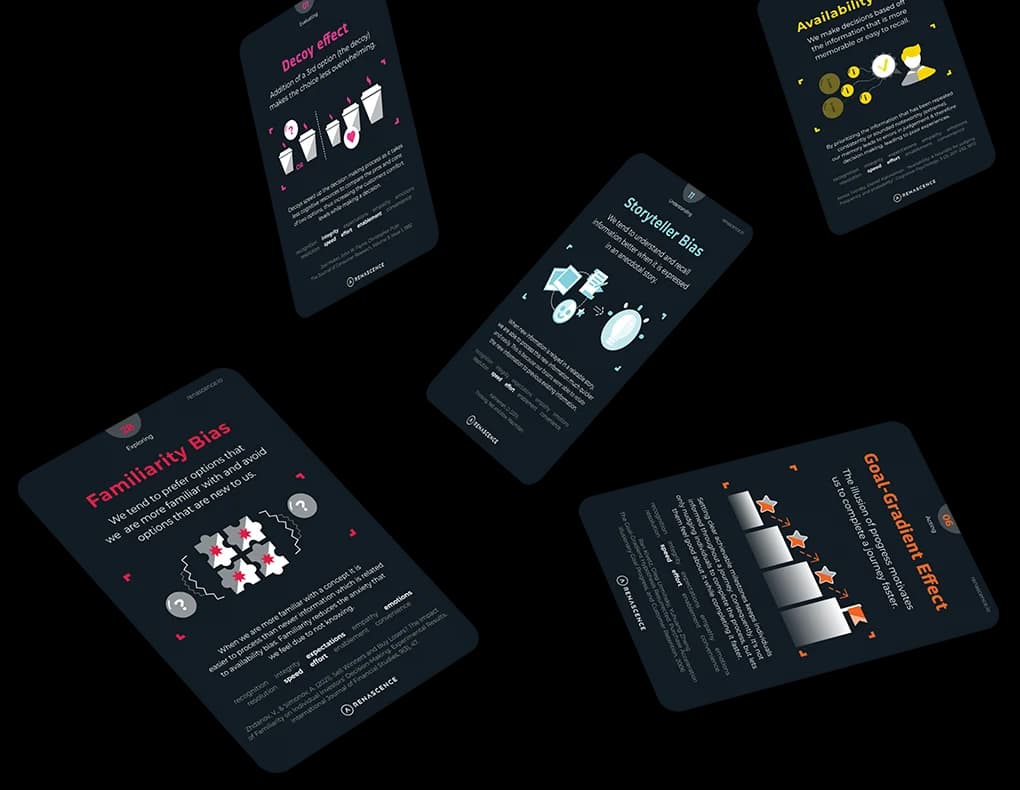
Customers are not rational evaluators; they are cognitive misers operating largely on System 1 — the fast, automatic, emotionally-driven processing mode that Kahneman documented. They are disproportionately influenced by how an experience ends (peak-end rule), by what they stand to lose rather than gain (loss aversion), by what others like them appear to do (social proof), and by the effort an interaction requires relative to their expectation of that effort.
This has direct design implications. A complaint resolution process that is technically fair but feels effortful will be remembered as unsatisfying, even if the outcome was positive. A loyalty programme that frames its benefits as preventing the loss of status rather than gaining rewards will produce stronger retention behaviour. A digital onboarding flow that defaults customers into the right product configuration — rather than presenting an open choice — will produce better outcomes for both the customer and the organisation. These are not tricks; they are the application of how human cognition actually works to the design of human experiences. The behavioural economics lens is not an add-on to CX strategy; it is the mechanism that explains why some well-designed experiences still underperform.
Where to Start If You Are Serious About CX in 2026
The organisations that will be materially better at customer experience in three years are not the ones that launch the most initiatives today. They are the ones that build the diagnostic rigour to understand where they actually are, the strategic clarity to prioritise what matters most, and the organisational discipline to sustain improvement over time rather than cycling through programmes.
That starts with an honest assessment of current CX maturity — not a self-reported survey, but a structured evaluation of capability across the dimensions that drive experience quality: leadership commitment, journey design, measurement systems, employee enablement, and feedback integration. The CX Maturity Assessment is designed precisely for that purpose: an AI-scored diagnostic across twelve building blocks that produces a clear picture of where the gaps are and where to focus first.
Customer experience in 2026 is not important because it is fashionable. It is important because the conditions that once protected organisations from the consequences of poor experience have been removed, and the customers who have been trained by the best experiences they have ever had are now applying that standard everywhere. The organisations that understand this — and build the strategy, structure, and capability to respond — are not just better at CX. They are building a more durable business.
Further reading
FAQ
Questions we get on this topic
Related reading



Stay ahead of CX
Get the Journal in your inbox.
Insights, frameworks and event round-ups from the Renascence team. No spam, ever.