








Customer Experience · August 6, 2026
Turning Customer Centricity Into Work Your Team Actually Enjoys
Most CX programmes die not from budget cuts but because the work itself becomes joyless. Here's how to design the experience of doing customer centricity so teams sustain it.

Most customer centricity programmes die quietly. Not from budget cuts or board indifference, but from something more mundane: the people running them stop caring. The workshops become box-ticking. The journey maps gather dust. The NPS reviews turn into performance theatre. The ambition was real; the experience of doing the work was not.
This is the problem nobody names directly. The business case for customer centricity is well-established — organisations that systematically orient decisions around customer needs outperform those that do not, across retention, revenue, and referral. The harder question is not why to do it, but how to make the doing of it sustainable when the work is complex, the results are slow, and the people responsible have a hundred other priorities competing for their attention.
The answer sits at the intersection of behavioural economics and service design: if you engineer the experience of doing customer centricity with the same rigour you apply to the customer experience itself, the work becomes self-reinforcing. Teams that enjoy the process sustain it. Teams that dread it abandon it — even when they believe in the goal.
Customer centricity fails not because organisations lack conviction, but because they design the work itself to be joyless. Fix the experience of the work, and you fix the output.
Why the standard approach to customer centricity drains teams
The conventional model for implementing customer centricity looks roughly like this: commission a journey mapping exercise, run a series of workshops, produce a report with recommendations, assign owners, and track progress in a quarterly governance meeting. Each of these steps is defensible in isolation. Together, they create a programme that feels like administration rather than craft.
Three structural problems compound each other. First, the feedback loop is too long. Teams do the work — mapping, analysing, designing — but the signal that it mattered arrives months later, buried in an NPS trend line that is influenced by a dozen other variables. Behavioural economics is clear on this: motivation requires timely, legible feedback. When the connection between effort and outcome is obscured, even genuinely motivated people disengage.
Second, the work is framed as problem-finding rather than possibility-building. Every touchpoint review surfaces pain points. Every gap analysis reveals what is broken. This is necessary, but a steady diet of deficit-framing activates what Daniel Kahneman's dual-process model would recognise as System 2 vigilance — exhausting, effortful, and emotionally unrewarding. People can sustain it for a sprint; they cannot sustain it for a transformation.
Third, individual contribution is invisible. In most CX programmes, the unit of accountability is the team or the department. The person who redesigned a single touchpoint, who spotted a behavioural pattern in the feedback data, who rewrote a policy to remove a piece of friction — their fingerprints are not on the output. The endowment effect, well-documented in behavioural economics research, tells us that people value things more when they feel ownership over them. A programme that strips individual ownership from the work strips the motivation that comes with it.
What does it actually mean to make customer centricity enjoyable?
Enjoyable is not the same as easy. The goal is not to remove the intellectual challenge or the discomfort of confronting organisational dysfunction. It is to ensure that the experience of doing the work — the meetings, the tools, the rituals, the feedback mechanisms — is designed to produce engagement rather than attrition.
Three conditions, drawn from both motivation research and service design, are necessary:
- Progress visibility: Teams need to see movement, not just milestones. The difference is granularity — a milestone is "complete journey mapping for the onboarding stage"; progress visibility is watching a touchpoint score improve from a −2 to a +1 after a specific intervention.
- Authorship: Individuals need to be able to point to something and say "I made that better." This is not about recognition programmes; it is about structuring the work so individual contribution is legible.
- Meaningful contact with the customer: The most powerful motivator in customer centricity work is direct exposure to real customers — their words, their frustration, their delight. When this is absent, the work becomes abstract and the motivation theoretical.
These are not soft considerations. They are design requirements for a sustainable programme.
How to redesign customer centricity activities so people want to do them
The following approach is not a methodology in the academic sense. It is a set of design moves — each grounded in a behavioural mechanism — that change the texture of the work.
1. Replace the annual journey review with a living map
The annual journey mapping exercise is the single most demoralising ritual in CX. Teams spend weeks producing an artefact that is accurate for approximately one quarter before it begins to drift from reality. The effort is enormous; the shelf life is short; the sense of futility is palpable.
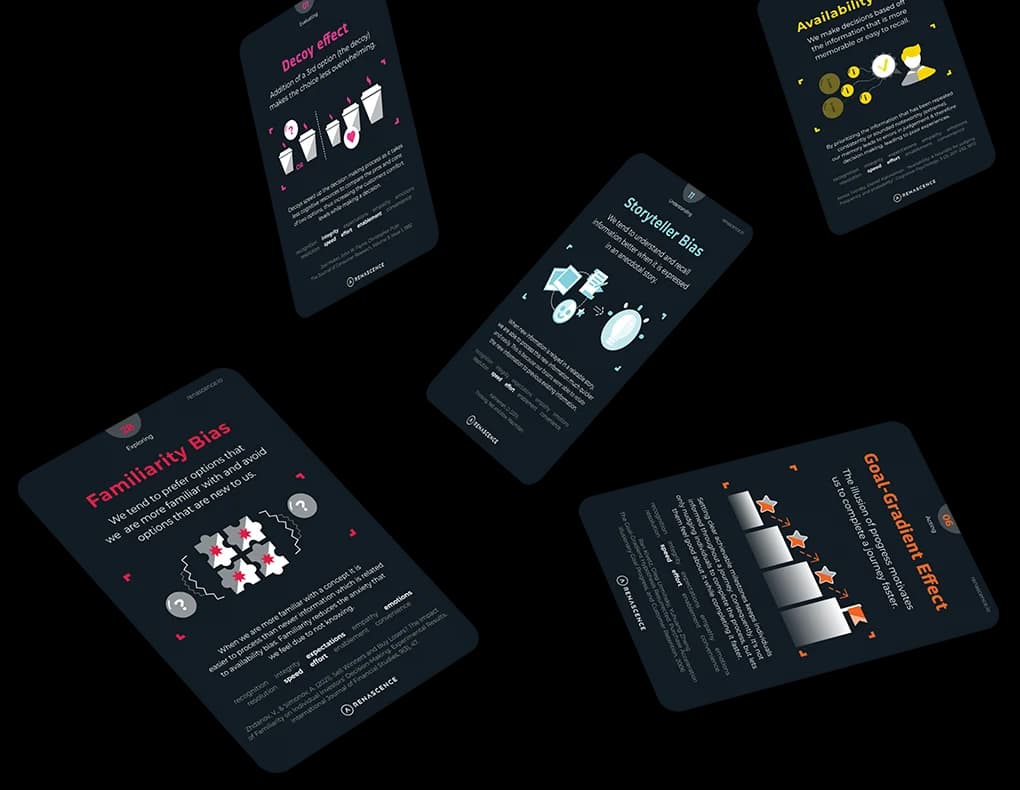
A living map — one that is updated continuously as customer feedback, operational data, and frontline observations flow in — changes the relationship between the team and the work. It is never finished, which means it is never stale. Each update is a small act of authorship. The goal-gradient effect, identified in research on motivation, shows that people accelerate effort as they approach a goal; a living map creates a perpetual sense of proximity to a better version of the journey, which sustains momentum rather than exhausting it.
Structurally, this means assigning touchpoint ownership at an individual level, setting a cadence for micro-updates (fortnightly is usually workable), and making the current state of the map visible to the whole team at all times — not locked in a consultant's deck.
2. Make the score visible and personal
Metrics matter, but the metrics most CX programmes use are too aggregated to drive individual behaviour. An organisation-level NPS score tells a frontline team member almost nothing about the impact of their specific decisions. The feedback loop is too diffuse.
The design move here is to push scoring down to the touchpoint level, and to connect individual ownership to individual scores. When a team member owns a touchpoint and can see its experience score shift in response to their interventions, the feedback loop becomes personal and timely. This is the difference between a thermometer and a thermostat: one tells you the temperature, the other responds to your actions.
For organisations building this capability, a CX maturity assessment is a useful starting point — it establishes a baseline across the dimensions of customer centricity and makes the gap between current and target state concrete rather than impressionistic.
3. Design for peak moments in the work itself
The peak-end rule, one of Kahneman's most robust findings, holds that people evaluate an experience based on its most intense moment and its ending — not its average. This applies to the experience of doing CX work just as it applies to the experience of being a customer.
Most CX programmes are designed around averages: a steady cadence of workshops, reviews, and governance meetings, none of which is particularly memorable. The design move is to engineer deliberate peaks — moments in the programme that are genuinely engaging, surprising, or emotionally resonant.
Examples of engineered peaks in CX work include: a "customer immersion day" where the whole team spends time with real customers (not watching a video of them, but actually talking to them); a "before and after" reveal where a redesigned touchpoint is shown alongside the original and the team can see the difference they made; a deliberate celebration of a specific improvement, not a generic "well done" but a precise acknowledgement of what changed and why it mattered.
These moments are not decoration. They are structural features of a programme that sustains engagement over time.
4. Use customer voice as a motivational tool, not just a diagnostic one
Most organisations collect customer feedback and route it to analysts, who distil it into themes, which become recommendations, which become action plans. By the time the person who could act on the feedback sees it, it has been processed into abstraction.
The design move is to create direct, unmediated contact between team members and customer voice — verbatim comments, recorded calls, video testimonials, in-person conversations. The behavioural mechanism here is the affect heuristic: emotional responses to concrete human stories drive behaviour far more powerfully than statistical summaries. A team member who has heard a customer describe the frustration of a broken process will redesign it with a different quality of attention than one who has seen it represented as a data point.
A well-structured voice of customer strategy does not just feed the analytics function — it creates regular, structured moments of customer contact for the people doing the CX work.
5. Build rituals, not just processes
A process is a sequence of steps designed to produce an output. A ritual is a sequence of steps that carries meaning. The distinction matters because rituals create belonging, shared identity, and a sense of participation in something larger than the task at hand.
Customer centricity programmes that last tend to have rituals embedded in them: a weekly "customer moment" at the start of team meetings, where someone shares a piece of customer feedback and the team discusses it; a monthly "fix one thing" sprint where a single friction point is identified and resolved; a quarterly "customer day" where normal operations pause and the team focuses entirely on the customer perspective.
These are not expensive or time-consuming. They are consistent, named, and protected from the pressure of other priorities. Their value is not in the content of any single instance but in the cumulative effect of repetition — they make customer centricity a habit of mind rather than a project.
For organisations looking to formalise this approach, customer rituals and ceremonies as a design discipline offers a structured way to embed these moments into the operating rhythm of the business.
The role of leadership in making the work enjoyable
None of the above design moves will hold if leadership treats customer centricity as a programme to be managed rather than a practice to be modelled. The most powerful signal a leader sends is behavioural: do they engage with customer feedback personally, or do they delegate it entirely? Do they attend the customer immersion sessions, or do they send a representative? Do they celebrate specific improvements, or do they acknowledge only aggregate metrics?
The behavioural economics concept of social proof is relevant here: people look to the behaviour of those around them — particularly those with status — to calibrate what is expected and valued. When senior leaders visibly engage with customer centricity work, they signal that it is worth engaging with. When they do not, no amount of programme design compensates.
This is also where the connection between employee experience and customer centricity becomes most concrete. Teams that feel their work is seen, valued, and consequential deliver better customer experiences — not because they are told to, but because the conditions for genuine engagement are present. The upstream driver of customer centricity is almost always the quality of the experience of the people doing the work.
Common mistakes that make customer centricity activities feel like punishment
Even well-intentioned programmes make design errors that undermine engagement. The most common:
- Overloading the governance layer. When customer centricity becomes primarily a reporting and governance exercise — monthly decks, quarterly reviews, annual audits — the people closest to the customer spend their time producing documentation rather than improving experiences. The work becomes about the programme, not the customer.
- Measuring activity rather than impact. Tracking how many journey maps were produced, how many workshops were run, or how many touchpoints were reviewed creates a perverse incentive to generate activity rather than change. Teams learn to perform customer centricity rather than practise it.
- Treating training as a one-time event. A two-day customer centricity training programme, however well designed, does not change behaviour. Capability builds through repeated practice, feedback, and application — not through a single intervention. Organisations that invest in bespoke training programmes designed for sustained application see different outcomes than those that run a workshop and move on.
- Separating the people who design the experience from the people who deliver it. When CX strategy is produced by a central team and handed to frontline teams for execution, the people doing the delivering have no ownership over the design. The endowment effect works in reverse: they did not make it, so they do not value it, and they do not sustain it.
- Ignoring the emotional arc of the programme itself. A customer centricity transformation that begins with a high-energy launch, descends into months of difficult analytical work, and ends with a report nobody reads has a terrible peak-end profile. The ending, in particular, is what people remember — and a report is not a memorable ending.
What a well-designed customer centricity programme actually feels like
It feels like craft. The people doing the work have a clear sense of what they are trying to improve, a visible signal when they have improved it, and a direct connection to the customers whose lives they are affecting. The governance is light enough not to dominate the work. The rituals are consistent enough to create shared identity. The peaks are designed deliberately enough to be genuinely memorable.
It also feels like progress. The research by Teresa Amabile and Steven Kramer, published in the Harvard Business Review in 2011, found that the single most powerful driver of positive inner work life is making progress in meaningful work — even small, incremental progress. Customer centricity work, properly designed, offers this in abundance: every touchpoint improved, every friction removed, every piece of customer feedback acted upon is a unit of progress. The design challenge is making that progress visible and attributable.
Organisations that get this right do not need to motivate their teams to care about customers. The work itself does that.
The business case runs through the team's experience
There is a direct line between the experience of the people doing customer centricity work and the experience of the customers they serve. It runs through attention, through ownership, through the quality of decisions made by people who are engaged rather than exhausted.
The CX implementation roadmap for any organisation serious about customer centricity should include, as a first-order design consideration, the experience of the internal team doing the work. Not as a wellbeing gesture, but as a strategic requirement. Programmes that are enjoyable to run get run. Programmes that are not get quietly abandoned — and the customers, who never knew the programme existed, simply continue to have the experience the organisation was too drained to improve.
Design the work well, and the work sustains itself. That is not a soft principle. It is the most practical thing you can do for your customers.
Further reading
FAQ
Questions we get on this topic
Related reading



Stay ahead of CX
Get the Journal in your inbox.
Insights, frameworks and event round-ups from the Renascence team. No spam, ever.