









Behavioral Economics · August 10, 2026
The Endowment Effect: Why Customers Fight to Keep What You Gave Them
Free trials, loyalty tiers and saved profiles all trigger the endowment effect — the bias that makes people overvalue what they already possess. Here's how to design with it ethically.
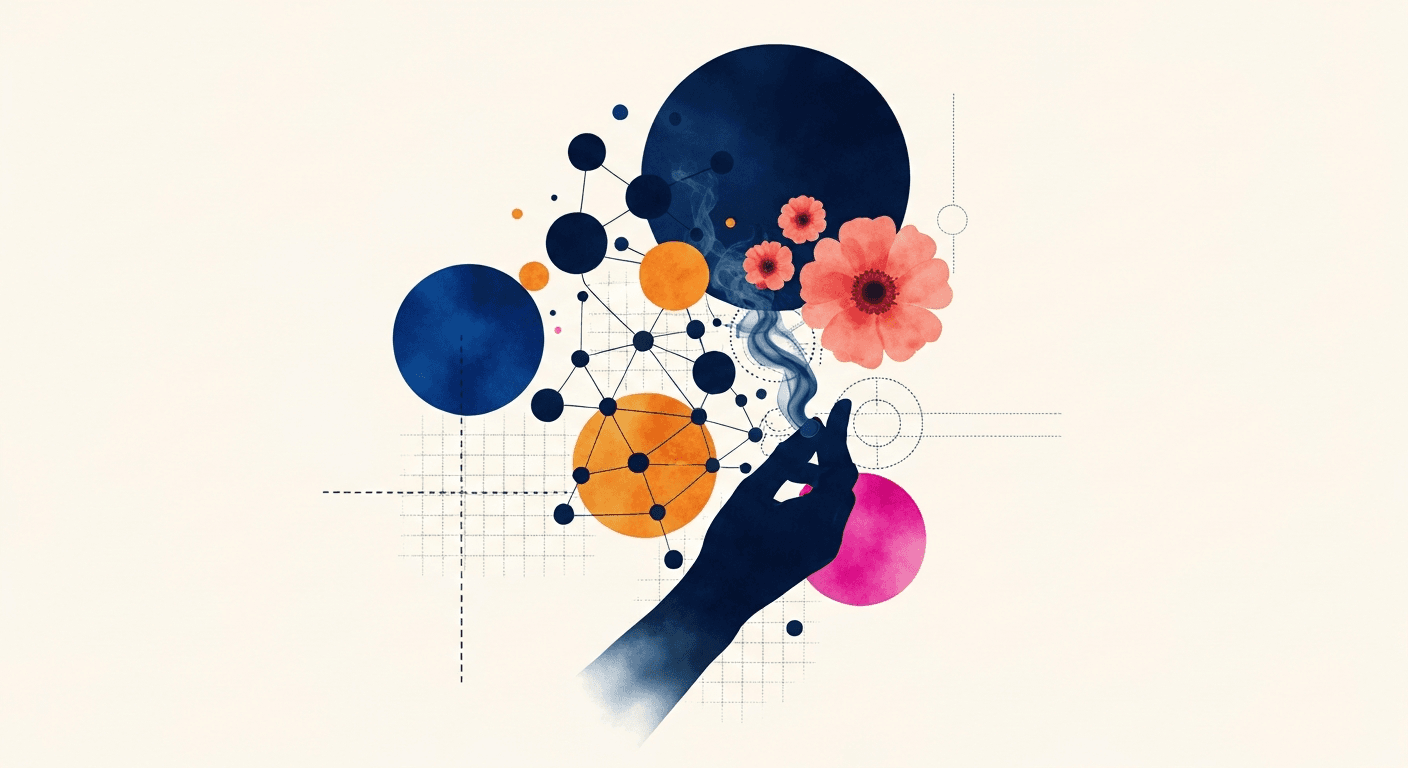
Give someone a free trial of your product for thirty days, then ask them to cancel it, and watch what happens. They won't reason about features versus price. They'll feel a small, disproportionate loss — as though something that was already theirs is being taken away. That feeling has a name, and understanding it is the difference between designing a journey that earns loyalty and one that quietly manipulates people into staying.
The endowment effect describes a simple but stubborn quirk of human judgment: once we possess something, even briefly, we value it more than we would if we were deciding whether to acquire it from scratch. It was named by the economist Richard Thaler in his 1980 paper "Toward a Positive Theory of Consumer Choice", published in the Journal of Economic Behavior & Organization, and confirmed experimentally a decade later by Daniel Kahneman, Jack Knetsch and Thaler in their now-famous 1990 mug study, published in the Journal of Political Economy. Participants given a coffee mug demanded roughly twice as much to sell it as other participants were willing to pay to buy an identical one. Ownership, not utility, had moved the price.
That single finding has quietly reshaped how the best-designed customer journeys are built — and how the worst ones trap people. This article makes the case that the endowment effect is one of the most powerful, most misused levers in customer experience design, and that the line between a nudge and a trap is drawn by exactly one thing: whether the customer can walk away as easily as they walked in.
What is the endowment effect, and why does it happen?
The endowment effect is the tendency to assign greater value to something simply because you own it, rather than because of its actual utility or market price. It is a close cousin of loss aversion — the finding from Kahneman and Amos Tversky's 1979 prospect theory, published in Econometrica, that losses loom roughly twice as large in our minds as equivalent gains. Giving something up feels like a loss, even if you never truly needed it, and losses are what the brain is wired to avoid.
Three mechanisms drive it in practice:
- Reference-point shift. The moment you take possession of something, your mental "baseline" moves. Anything below that baseline now registers as a loss, not merely a foregone gain.
- Loss aversion. Because losses are felt more sharply than equivalent gains, giving something back carries more emotional weight than never having had it.
- Self-association. Ownership attaches an object, a service, or even a status tier to identity. A frequent-flyer's gold status is not just a discount — it is a small piece of how they see themselves.
A related but distinct effect worth naming here is the IKEA effect, documented by Michael Norton, Daniel Mochon and Dan Ariely in their 2012 study "The IKEA Effect: When Labor Leads to Love," published in the Journal of Consumer Psychology. Where the endowment effect is triggered by simple possession, the IKEA effect is triggered by effort — people who assemble their own furniture, or configure their own product, value it more precisely because they built it. In CX terms, ownership makes people reluctant to lose something; labour makes them love what they made. Journeys that combine both — give the customer something, then let them customise it — compound the attachment.
Why does the endowment effect matter more in customer experience than in retail?
Retail economics treats the endowment effect as a pricing curiosity — why sellers overvalue what they're selling, why buyers undervalue what they're buying. Customer experience treats it as something bigger: a structural force that shapes the entire arc of a relationship, from onboarding to renewal to cancellation.
Every subscription, every loyalty tier, every saved profile, every piece of user-generated content is a small act of endowment. The customer isn't just using your product; across a journey they accumulate points, history, preferences, and configurations that become psychologically theirs. This is why churn resistance often has little to do with product quality — a customer who has spent three years building a playlist library, a loyalty tier, or a customised dashboard is defending an investment, not evaluating an alternative from zero. Switching costs in digital services are rarely just financial. They are behavioral, and the endowment effect is usually the engine.
This is also why the effect cuts both ways so sharply. Used well, it builds durable, felt loyalty. Used carelessly, it becomes the psychological equivalent of a locked door dressed up as a welcome mat.
How does the endowment effect show up in real customer journeys?
Once you know to look for it, the endowment effect is everywhere in journey design — often disguised as something else entirely.
- Free trials. The trial isn't really about letting customers "try before they buy." It is about letting them own before they decide, so that cancelling feels like losing a benefit rather than declining a purchase.
- Loyalty points and status tiers. A balance of points or a tier badge is an endowed asset. Airlines and hotel groups design status expiry deliberately to trigger loss aversion at the point of renewal — this is a core mechanic behind why loyalty programme design works as a retention tool, not just a rewards mechanic.
- Saved carts and wish lists. An item sitting in a cart for a week starts to feel half-owned. E-commerce journeys that surface "items waiting for you" are leaning on exactly this psychology.
- Personalisation and configuration. Once a customer has tuned settings, built a profile, or trained a recommendation engine, that accumulated context becomes an asset they don't want to abandon — echoing the IKEA effect as much as pure endowment.
- Progress and streaks. A learning app streak or a fitness milestone functions as an endowed achievement; breaking it triggers a loss response disproportionate to its practical value.
None of this is inherently manipulative. A loyalty tier that rewards genuine engagement, or a personalisation feature that genuinely improves service, creates real value alongside the psychological attachment. The design choice that matters is what happens next — at the point where the customer might leave.
When does the endowment effect turn into a dark pattern?
The endowment effect becomes unethical the moment it is paired with friction engineered to exploit it rather than inform it. Behavioral economists distinguish between friction, which slows a decision so a customer can think, and sludge — a term Richard Thaler used in a 2018 essay for Behavioral Scientist to describe friction deliberately introduced to stop people doing something in their own interest, such as cancelling a subscription.
Combine an endowed asset with sludge and you get the pattern regulators have spent the past decade dismantling: sign-up in two clicks, cancellation buried behind a phone call, a retention offer, and three confirmation screens designed to make the customer re-experience the "loss" of everything they've built up. This is precisely the harm the US Federal Trade Commission targeted in its Negative Option Rule, finalised in 2024, which requires that cancelling a subscription be no harder than starting one.
The commercial risk isn't only regulatory. Customers who feel trapped by their own accumulated investment don't become loyal — they become resentful, and resentment shows up later as public complaints, negative word of mouth, or a mass exit the moment a competitor removes the friction. The endowment effect can buy you time, but it cannot buy you advocacy. Only a genuinely better experience does that.
How should you design for the endowment effect ethically?
The test for any use of the endowment effect is simple: does it deepen a relationship the customer would choose anyway, or does it merely raise the emotional cost of leaving a relationship that no longer serves them? Design toward the first, never the second.
- Make ownership real before you make it emotional. Give customers something of genuine, demonstrable value — a working feature, a meaningful discount, a status that unlocks real service — before you rely on attachment to retain them. Attachment to a hollow perk collapses the first time it's tested.
- Let customers build something, not just receive something. Personalisation, configuration, and saved preferences generate the IKEA effect alongside the endowment effect, and that combination produces attachment customers actually endorse when asked directly.
- Audit every exit point for hidden sludge. Map the cancellation, downgrade, or unsubscribe journey with the same rigour applied to onboarding. If exiting takes more steps, more channels, or more time than joining, that asymmetry is the tell.
- Frame loss honestly, not manufactured. It is fair to remind a customer what they'll lose by cancelling a loyalty tier — that's accurate information. It is not fair to invent urgency, hide the true balance, or bury the real consequence behind vague language.
- Measure attachment, not just retention. A high renewal rate paired with a low Net Promoter Score or rising complaint volume is a warning sign that customers are staying because leaving is hard, not because staying is good. Track both together.
- Re-earn the endowment periodically. Status and points decay in value if customers never redeem them. Prompt redemption and renewal of benefits regularly, so the asset stays psychologically — and actually — alive.
This is also where the discipline of applied behavioral economics earns its keep in journey design: it turns "customers seem loyal" into a testable hypothesis about which specific moment created the attachment, and whether that attachment is durable or merely sticky.
Where does the endowment effect fail to apply — and why does that matter?
The endowment effect is not universal, and treating it as a guaranteed lever is a common design mistake. Several conditions weaken or eliminate it:
- Low personal relevance. Commodities and interchangeable goods — a generic SIM card, a basic delivery slot — rarely trigger strong ownership attachment because there's nothing to personally identify with.
- Short or shallow possession. A one-click free trial that a customer never actually uses generates far less attachment than one they engage with meaningfully; the effect is proportional to lived experience, not to the trial's mere existence.
- Perceived unfairness. If customers believe an endowed benefit — points, tier status, a "loyalty price" — was manipulated or devalued unilaterally, the attachment can flip into anger rather than reluctance to leave. This is a common trigger behind loyalty-programme backlash when providers quietly reduce redemption value.
- High-trust switching alternatives. When a competitor makes switching visibly effortless — data portability, matched status, a frictionless onboarding — the psychological cost of leaving drops even if the endowed asset is real, because the loss is no longer total.
This is a useful corrective to the more simplistic behavioral-economics content in circulation, which tends to present the endowment effect as an automatic retention trick. It isn't. It is conditional, decays without reinforcement, and reverses into resentment when customers sense the attachment is being weaponised rather than earned. The sharper diagnostic question for any CX leader isn't "are we using the endowment effect?" — it's "would our customers describe what they've built with us as an asset, or as a trap?"
Mapping where genuine ownership sits in a journey — versus where friction is masquerading as loyalty — is exactly the kind of structural diagnosis that separates a defensible retention strategy from a fragile one. Renascence's work on customer journey mapping and CX governance exists precisely to surface that distinction before regulators, review sites, or a sharper competitor surface it for you.
What should CX leaders take from this?
The endowment effect will keep shaping how customers feel about what they've built with you, whether you design for it deliberately or not. The only real choice is whether that attachment is something your customers would defend in public, or something they'd quietly resent if a friend asked them about it. Build journeys where staying is a decision customers would make even with a frictionless exit in front of them — that is the only version of loyalty worth measuring, and the only version that survives contact with a better offer down the road.
If you want to know whether your own journeys are generating durable attachment or disguised friction, a structured look at where customers accumulate value — and where they get stuck trying to leave — is a useful place to start; Renascence's CX Maturity Assessment is built for exactly that kind of diagnostic. For a closer look at how attachment compounds (or doesn't) over time, see our related analysis of emotional loyalty versus transactional loyalty, and our field notes on finding the bottlenecks that actually hurt customers — often the same friction points that turn healthy endowment into hidden sludge.
Further reading
FAQ
Questions we get on this topic
Related reading


Writing on how human behavior shapes the experiences brands deliver — at the intersection of behavioral economics and customer experience.
Stay ahead of CX
Get the Journal in your inbox.
Insights, frameworks and event round-ups from the Renascence team. No spam, ever.