

Customer Loyalty · August 10, 2026
Emotional Loyalty vs Transactional Loyalty: What Actually Compounds
Points and perks buy short-term behaviour, not commitment. Here's why emotional loyalty—not discounts—is what keeps customers when a cheaper option appears.
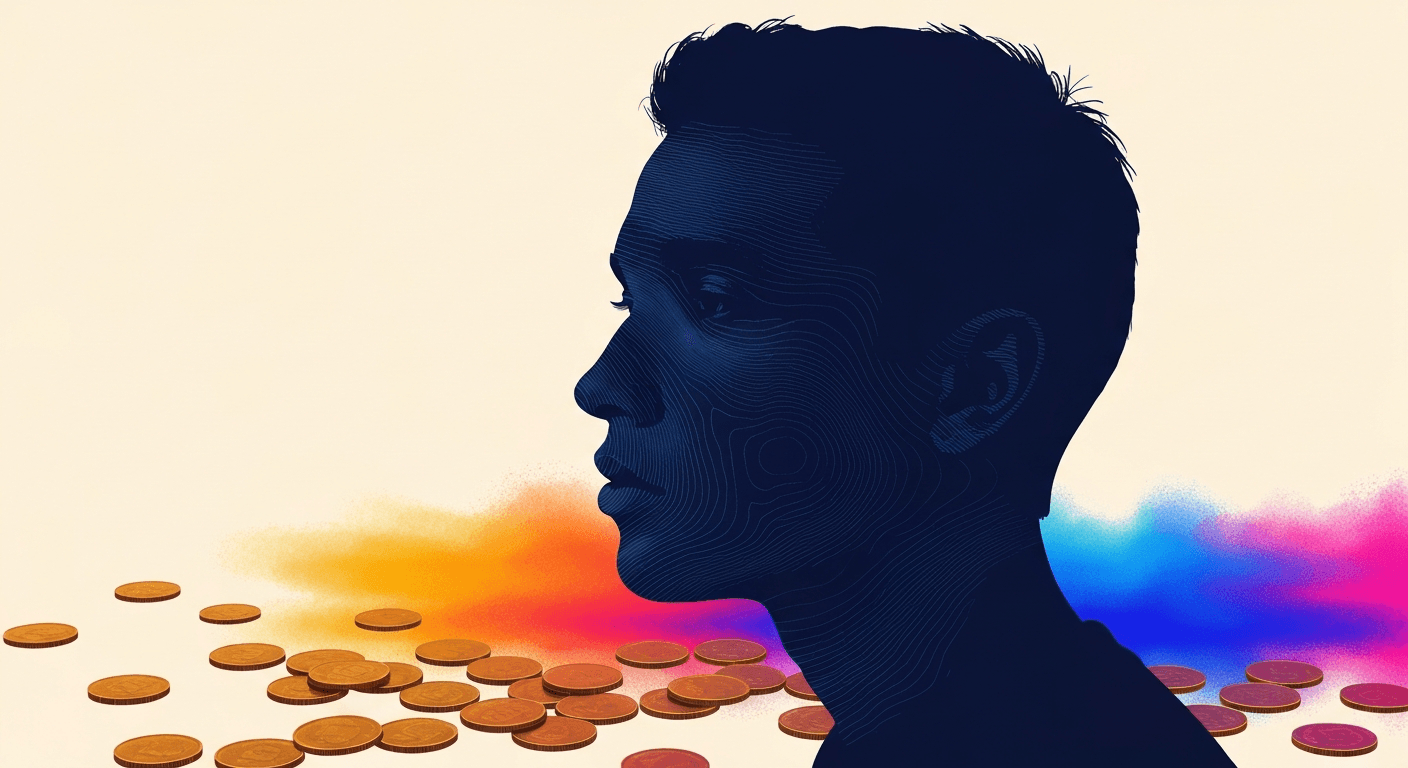
A frequent flyer with Gold-tier status once told me she'd just switched airlines to save eleven dollars on a domestic fare. Eleven dollars. She had thousands of miles sitting in that account, a lounge pass in her wallet, and priority boarding she'd earned over three years of quarterly trips. None of it mattered the moment a cheaper option appeared on the screen. That's the tell. If a customer will trade years of accumulated "loyalty" for the price of a sandwich, what you built was never loyalty at all — it was a discount habit wearing a loyalty programme's clothing.
Transactional loyalty is rented; emotional loyalty is owned. Transactional loyalty is the customer's response to your incentives — points, cashback, tier perks — and it evaporates the instant a competitor's incentive is marginally better. Emotional loyalty is the customer's response to how you made them feel — respected, understood, occasionally delighted — and it survives a price increase, a service hiccup, even a genuinely better deal down the street. Most loyalty programmes optimise for the first because it's measurable and fast. The businesses that compound value over a decade optimise for the second, and use the first only as scaffolding.
What's the real difference between emotional and transactional loyalty?
Transactional loyalty is behavioural compliance bought with a reward; emotional loyalty is a relationship the customer chooses to protect even when a cheaper or more convenient alternative exists. You can spot the difference with one question: if a competitor matched your price and your points tomorrow, would the customer still choose you? If the honest answer is no, you've been renting attention, not earning commitment.
This isn't a semantic distinction — it shows up in the ledger. In their influential 2015 Harvard Business Review article "The New Science of Customer Emotions", Scott Magids, Alan Zorfas and Daniel Leemon, drawing on research conducted with the analytics firm Motista, found that customers who were emotionally connected to a brand were more than twice as valuable as customers who described themselves as merely "highly satisfied." Satisfaction is a transactional metric — it measures whether the last interaction met expectations. Emotional connection measures whether the relationship itself has become part of how the customer sees themselves. Those are different economies entirely.
Why do points-based loyalty programmes struggle to create real loyalty?
Points programmes struggle because they train customers to shop the reward, not the relationship — and that training generalises to your competitors the moment they offer a better rate. A punch card or a tiered-points scheme is, functionally, a discount deferred and gamified. It works brilliantly at changing short-term behaviour: goal-gradient effects (the well-documented tendency to accelerate effort as a reward gets closer) explain why customers suddenly buy more coffee when they're two stamps from a free one. But goal-gradient effects reset to zero once the reward is claimed, and they transfer instantly to whichever brand runs the next attractive scheme.
The deeper problem is that points programmes are easy to copy and easy to compare. A rational customer — or even a mildly attentive one — can calculate the cash value of your tier structure in about ninety seconds. Once loyalty becomes a spreadsheet exercise, you're competing on the one dimension where the largest, most cash-rich competitor always wins. Airlines, banks and supermarkets all learned this the hard way: what actually makes a loyalty programme work is rarely the redemption catalogue.
- Points are transferable attention. They reward the transaction, not the relationship, so they're loyal to whoever pays best.
- Points are transparent. Because their value is calculable, they invite comparison shopping rather than discouraging it.
- Points depreciate. Once a customer redeems, the psychological account resets — there's no accumulated emotional residue carried forward.
- Points are imitable. Any competitor with a marketing budget can match your tier structure within a quarter.
How does behavioural economics explain why discounts don't build lasting loyalty?
Discounts fail to build loyalty because they change the reference point the customer measures you against — and once the discount stops, the customer doesn't feel neutral, they feel a loss. This is loss aversion at work, the finding from Daniel Kahneman and Amos Tversky's prospect theory (first published in Econometrica, 1979) that losses are felt roughly twice as intensely as equivalent gains. A customer who has been trained to expect 20% off doesn't experience full price as "normal" — they experience it as a 20% loss, even though nothing was ever truly theirs to lose. You haven't earned gratitude. You've engineered resentment with a delay timer on it.
Emotional loyalty works differently because it isn't priced. There's no reference point to violate, because the customer isn't tracking a running tally of pounds saved — they're tracking whether the relationship still feels like it did the day they fell for it. This is where the endowment effect becomes useful in the other direction: once a customer has invested time, identity, or emotional history into a brand relationship — not points, but actual memories — they value that relationship more than an objective outside observer would, and they resist giving it up. A customer with three years of a brand's birthday messages, a concierge who remembers their preferences, or a staff member who recognises them by name has endowed something a competitor cannot simply outbid.
Daniel Kahneman's peak-end rule, detailed in Thinking, Fast and Slow (Farrar, Straus and Giroux, 2011), adds the mechanism for how those memories form: people judge an experience overwhelmingly by its emotional peak and its ending, not its average. A loyalty programme built entirely on rational value accumulation has no peaks — every interaction is roughly as forgettable as the last. Emotional loyalty requires designing at least one moment in the journey that spikes — a genuine surprise, a resolved crisis handled with grace, an unscripted kindness — because that is the moment the customer's memory actually retains.
What does emotional loyalty actually look like in practice?
Emotional loyalty looks like a customer defending your brand unprompted, forgiving a mistake without demanding compensation, and choosing you even when the numbers say they shouldn't. It shows up less in surveys and more in behaviour under pressure — what a customer does when your price rises, when a competitor launches a flashy alternative, or when something goes wrong.
Consider two customers who both experience a delayed order. The transactionally loyal customer calculates the inconvenience, checks whether the compensation offered matches their perceived loss, and decides whether the deal still holds. The emotionally loyal customer is disappointed, but their disappointment is filtered through an existing reservoir of goodwill — they give the brand the benefit of the doubt because the relationship has a history worth protecting. This is the practical value of what CX teams call a customer experience strategy built around consistency rather than campaigns: it stockpiles goodwill for the day you inevitably need it.
Retail and hospitality brands that succeed at this rarely talk about points at all in their strongest customer stories. They talk about being remembered, being trusted with something personal, or being treated well when things went wrong rather than when things went right. That's not an accident — it's designed. Service teams that are trained to recognise and act on emotional loyalty triggers, not just transactional milestones, produce customers who talk about the brand the way they'd talk about a good friend, not a good deal.
Can you actually measure emotional loyalty, or is it just a feeling?
You can measure emotional loyalty, but not with the metrics most loyalty dashboards default to. Redemption rate, points liability, and tier migration all measure transactional health — useful operationally, but blind to the relationship itself. Three proxies get closer to the real thing:
- Unprompted advocacy. Referral rates, organic reviews, and social mentions that occur without an incentive attached measure whether customers are choosing to represent your brand, not being paid to.
- Price elasticity at the individual level. Track how much a price increase actually erodes retention among your highest-tenure customers versus your newest ones. Emotionally loyal customers show measurably lower elasticity — they absorb price change that transactional customers won't.
- Share of wallet after a service failure. The single clearest signal. Frederick Reichheld's research for Bain & Company, first published in the Harvard Business Review article "Zero Defections: Quality Comes to Services" (1990), established the now widely cited finding that even small improvements in customer retention rates can produce disproportionately large gains in profitability, because retained customers cost less to serve and buy more over time. That maths only holds up if the retention is real — driven by the customer wanting to stay, not by an exit barrier or an unredeemed points balance.
Lifetime value modelling makes the distinction concrete. A transactionally loyal customer's LTV is fragile — it's built on a margin the next competitor's promotion can erase in a single billing cycle. An emotionally loyal customer's LTV is compounding — it grows through referrals, forgiveness, and a willingness to try new products from a brand they already trust. Teams building the business case for this shift can use a CX ROI calculator to translate retention and advocacy gains into figures a finance committee will actually sit still for.
How do you build emotional loyalty without throwing away the transactional mechanics that work?
You don't need to abandon points, tiers, or cashback — you need to stop treating them as the whole strategy and start using them as the entry fee for a relationship you then have to earn properly. The programme gets people in the door. Only the experience keeps them from leaving through it.
- Separate the mechanics from the meaning. Keep the points structure simple and fair, but stop marketing it as the reason to be loyal. It's the baseline, not the pitch.
- Design for at least one emotional peak in the journey. Identify the moment in your customer's path — onboarding, a service recovery, a milestone — where a genuine, well-executed surprise is possible, and build the operational capability to deliver it consistently, not as a one-off gesture.
- Give frontline teams the authority to be human. Emotional loyalty is built or destroyed in unscripted moments. Staff need real discretion — within clear limits — to fix a problem generously rather than defensively.
- Map the journey for where trust is won or lost, not just where transactions happen. A customer journey mapped around emotional stakes rather than purchase funnels reveals different priorities than a conversion-focused map.
- Track price elasticity and unprompted advocacy alongside redemption metrics. If your dashboards only show transactional health, you're managing half the relationship blind.
- Recognise loyalty archetypes, not just tiers. A points tier tells you how much someone has spent; a behavioural archetype tells you why they keep coming back — information that changes how you should treat them next. Frameworks like CX archetypes exist precisely to make that distinction actionable.
- Audit for sludge before adding more perks. Richard Thaler's concept of sludge — unnecessary friction that erodes goodwill — is often hiding in redemption processes, cancellation flows, and terms-and-conditions fine print. Removing it does more for emotional loyalty than adding another reward tier ever will.
Where does behavioural economics fit into loyalty strategy design?
Behavioural economics matters here because loyalty is fundamentally a decision made under emotion, not a spreadsheet comparison, however much loyalty programmes pretend otherwise. Loss aversion explains why discounts backfire once withdrawn. The endowment effect explains why relational investment — memory, recognition, history — is stickier than financial investment. The peak-end rule explains why one well-designed moment outweighs a hundred adequate ones. Applying these concepts deliberately, rather than defaulting to whatever the loyalty-tech vendor's template offers, is the difference between a programme that manages transactions and a strategy that manages relationships. Renascence's work in behavioural economics exists precisely at that seam — translating what's known about how people actually decide into how loyalty programmes are actually designed.
Software has a role here too, but only as an enabler of judgement, not a replacement for it. Modern loyalty management platforms can track elasticity, tier migration and redemption in real time — the operational half of the picture. The strategic half — deciding which moments deserve a peak, which frictions count as sludge, which customers are worth the discretion your frontline team just used — still has to be designed on purpose.
A loyalty programme tells you what a customer will do for a reward. Only the relationship tells you what they'll do without one.
The airline that lost my Gold-tier acquaintance over eleven dollars didn't lose her to a better airline. It lost her to its own arithmetic — a programme so thoroughly transactional that the customer had, quite reasonably, learned to think like an accountant rather than feel like a guest. The businesses that will matter most over the next decade are the ones that treat their loyalty scheme as the opening move, not the entire game — and that spend the harder, slower effort building the kind of relationship a competitor's spreadsheet can't touch.
Further reading
FAQ
Questions we get on this topic
Related reading



Writing on how human behavior shapes the experiences brands deliver — at the intersection of behavioral economics and customer experience.
Stay ahead of CX
Get the Journal in your inbox.
Insights, frameworks and event round-ups from the Renascence team. No spam, ever.