
Customer Loyalty · October 1, 2026
Why Community Beats Discounts as a Loyalty Strategy
Points programmes plateau because rational rewards invite rational comparison. Community compounds loyalty because leaving means losing belonging, not just a balance.

Harley-Davidson sells motorcycles. It has also, for more than four decades, sold something far harder to copy: a reason for strangers to ride six hours through the rain to sit in a car park with people they've never met. The Harley Owners Group didn't start as a marketing stunt — it became one because riders kept turning up anyway. That's the tell. The loyalty wasn't engineered by a points table. It was built by the group itself.
Most loyalty programmes are still trying to buy affection with discounts. Community does something a discount cannot: it makes leaving feel like losing a part of your social life, not just forfeiting a balance. That's the thesis of this piece, and it's the gap between the loyalty programmes that quietly plateau and the ones that compound.
What does "building community as a loyalty strategy" actually mean?
Community-as-loyalty means designing the customer relationship around belonging to a group with shared identity, rather than around transactions with a points ledger. The brand becomes the convener — of a forum, a club, a ritual, a shared cause — and loyalty becomes a by-product of social connection, not a direct exchange for it. The customer stays not because the next reward is close, but because the people and identity around the brand are theirs now.
This isn't a replacement for a points programme — most mature loyalty strategies run both. But treating community as decorative (a Facebook group bolted onto a tier system) rather than structural (the thing the whole relationship is organised around) is where most brands leave the real value on the table.
Why do points-based loyalty programmes plateau?
Because points are easy to match and hard to love. A points balance is rational currency — it triggers System 2, the deliberate, calculating part of the mind that compares your airline's miles against a competitor's. Rational currency invites rational comparison, and rational comparison is exactly where a brand loses, because somewhere there is always a marginally better rate.
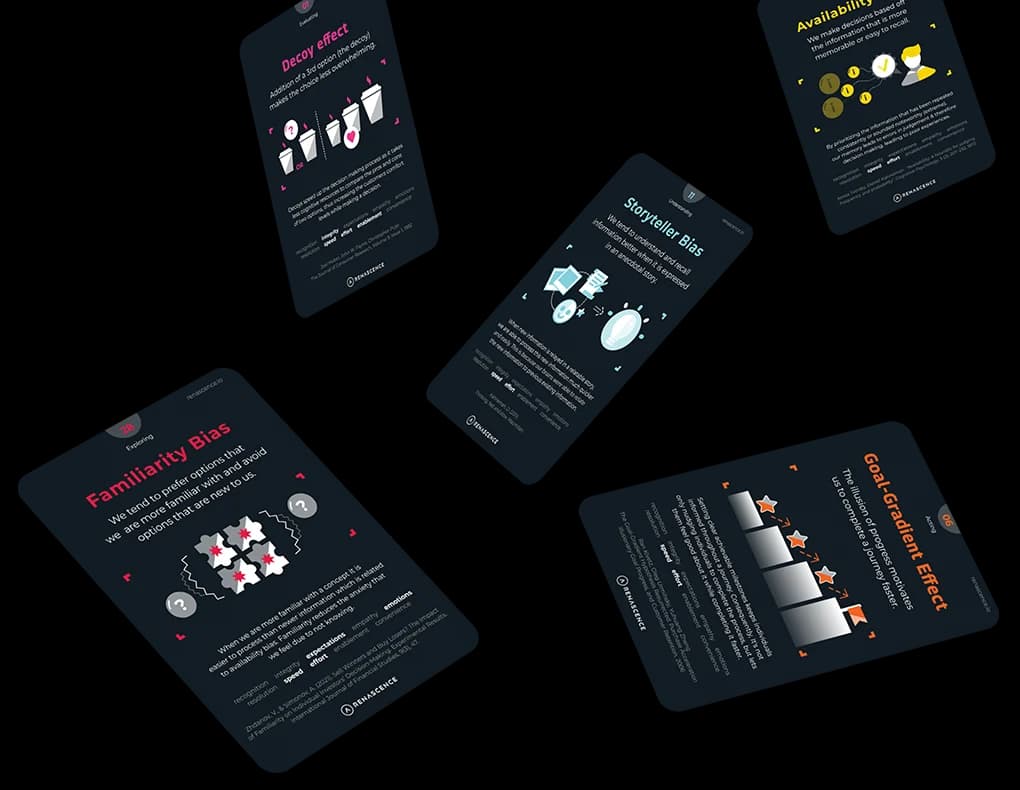
Points programmes do work on one behavioural lever reliably: the goal-gradient effect — the tendency to accelerate effort as a reward gets closer. Ran Kivetz, Oleg Urminsky and Yuhuang Zheng demonstrated this directly in a 2006 field experiment on café loyalty cards, published in the Journal of Marketing Research: customers given a 10-stamp card framed with two "bonus" stamps already filled in — making it functionally identical to an 8-stamp card — completed their purchases noticeably faster than those on the plain 8-stamp version. The illusion of progress, not the progress itself, drove the behaviour.
That's a genuinely useful mechanism. But it has a ceiling. Once the card is stamped, the motivation resets to zero. There's no carry-over emotional residue — no reason the customer should feel anything about the brand between redemptions. Community doesn't reset. A person's standing in a group, their history with other members, their sense of "I'm one of these people" — that persists whether or not they bought anything this month.
What makes community a stronger loyalty lever than discounts?
Three behavioural mechanisms do the heavy lifting, and none of them are about price.
Social proof. Robert Cialdini's foundational work in Influence: The Psychology of Persuasion (1984) established that people look to the behaviour of others — especially people like them — to decide how to act. A community makes other customers' enthusiasm visible: the forum thread, the leaderboard, the shared photo. That visible enthusiasm does more to retain a wavering customer than a 10% voucher, because it answers a question discounts can't touch — "do people like me actually rate this?"
Reciprocity and identity fusion. When a brand gives a community real agency — a voice in what gets made, a platform to be seen, a cause to belong to — members tend to give back loyalty, advocacy and tolerance for the brand's mistakes that a pure transaction never earns. Lego's community platform, where members submit and vote on set ideas that occasionally become real products, works on exactly this logic: contribute meaningfully, and the group (and the brand) feels partly yours. That's a close cousin of the IKEA effect — people value things more when they've had a hand in making them — applied to the brand relationship itself rather than a flat-pack shelf. We've written more on how this co-creation dynamic lifts perceived value in this piece on the IKEA effect.
Switching cost is social, not just financial. Leaving a points programme costs you a balance. Leaving a community costs you relationships, status, and a slice of identity. Behavioural economics would file this under loss aversion, but it's worth being precise: it isn't the loss of the brand people fear, it's the loss of the group that happened to form around it.
A discount is a transaction a competitor can beat tomorrow. A community is a social identity a competitor cannot copy at any price.
This is also where emotional connection earns its keep as a commercial metric, not just a soft one. Harvard Business Review's 2015 article "The New Science of Customer Emotions" by Scott Magids, Alan Zorfas and Daniel Leemon argued that customers who feel genuinely connected to a brand — not merely satisfied with it — deliver meaningfully more value over the relationship's lifetime than those who simply rate their last interaction highly. Community is one of the most reliable mechanisms available for manufacturing that connection deliberately, rather than hoping it arrives on its own.
How do you actually build a brand community that drives retention?
Community can't be announced into existence with a press release and a hashtag. It has to be designed, seeded and maintained with the same discipline as any other part of the customer journey. A practical build sequence looks like this:
- Find the existing cluster before you build the platform. Most brands already have informal pockets of devoted customers — a WhatsApp group of enthusiasts, a subreddit, a regional meet-up nobody at head office knows about. Find them first. Building a shiny official community app while ignoring the scrappy group that already exists is how brands end up with two dead forums instead of one living one.
- Give the community a reason to talk to each other, not just to you. A support ticket queue isn't a community. A space where members answer each other's questions, show off results, or debate a shared interest is. The brand's job is to host and occasionally nudge, not to dominate every thread.
- Hand over real creative or decision-making stakes. Voting on the next product variant, co-writing house rules, nominating members for recognition — anything that gives people visible authorship inside the group deepens the reciprocity loop described above.
- Build rituals, not just events. A one-off launch party generates a day of enthusiasm. A recurring ritual — an annual rally, a monthly challenge, a signature welcome for new members — generates a calendar entry people plan their year around. We go deeper into this distinction in our work on customer rituals and ceremonies.
- Recognise status inside the group, publicly. Founding-member badges, named mentions, early access to new ideas — these cost the brand very little and buy a disproportionate amount of goodwill, because status recognition inside a peer group is a currency money can't substitute for.
- Protect the community from becoming a sales channel. The fastest way to kill a community's loyalty value is to flood it with promotions. If every post from the brand is an offer, members correctly conclude the "community" was a marketing list wearing a costume.
Where a brand's customer base is diverse — different motivations, different definitions of "belonging" — it helps to design for more than one kind of member rather than a single generic persona. Mapping those differences properly, through tools like CX archetypes, stops a community strategy from being built for the loudest voice in the room rather than the full membership.
What are the risks of leaning on community for loyalty?
Community-led loyalty isn't a free win, and it's worth naming where it goes wrong before recommending it to a board.
- It's slow. A points balance is live the day the card is issued. A genuine community takes months or years of unglamorous moderation, event-running and relationship-tending before it produces a retention effect worth measuring.
- Unmoderated communities turn toxic faster than brands expect. A forum without clear norms and active, visible moderation becomes a liability — complaints amplify, cliques form, and new members feel unwelcome. The brand is accountable for the tone of a space it chose to create.
- Exclusivity can tip into exclusion. Status tiers and founding-member privileges build strong loyalty among insiders, but they can alienate the mainstream customer who never felt invited in. The design has to widen the circle over time, not just reward the first hundred members forever.
- It's genuinely hard to scale across cultures and languages. A ritual that lands in one market can feel forced or culturally off in another. Community strategies built for a single headquarters mindset tend to fail the moment they're copy-pasted elsewhere.
- It needs its own operating budget and owner. A community left to "whoever has time" in the marketing team dies quietly. It needs a named owner, a moderation cadence and a reporting line — much like any other part of customer experience operations.
How do you measure whether community is actually driving loyalty?
This is where most community initiatives fall apart under board scrutiny — not because they aren't working, but because they're measured with the wrong instrument. A follower count or an engagement rate tells you the community exists. It doesn't tell you whether it's retaining revenue.
The metrics that matter sit closer to the commercial core of loyalty itself:
- Retention and churn differential between community members and non-members with otherwise similar profiles — the cleanest proxy for whether belonging is actually buying time.
- Lifetime value uplift for active community participants versus the base, tracked over at least one full purchase cycle, not a single quarter.
- Advocacy behaviour — referrals, user-generated content, unprompted reviews — which tends to rise well before the loyalty effect shows up in revenue, acting as an early indicator.
- Participation depth, not just reach — how many members post, answer each other, or attend rituals, versus how many simply joined and went quiet.
Because the financial case for community can take time to mature, it helps to build the baseline case early and revisit it on a schedule — not wait a year and hope the board remembers why the budget was approved. A structured CX ROI calculation run before and after a community launch gives you the comparison point you'll need when someone asks whether the forum paid for itself. The same financial logic behind recurring behaviour applies whether you're running a loyalty community or a rewards ledger, which is why operations teams increasingly run both inside a single loyalty management platform rather than treating community as a side project with its own spreadsheet.
Where behavioural economics and community design meet
The uncomfortable truth for loyalty teams is that the behavioural principles underneath community-building — social proof, reciprocity, identity-based loss aversion — are the same principles that make cults, fan bases and professional associations sticky, and they were documented long before anyone attached them to a CRM. Brands that treat these as design inputs, rather than happy accidents, get a durable advantage: competitors can always undercut a price, but they cannot retroactively insert themselves into a decade of shared rituals, inside jokes and group status that a customer already has. That's precisely the kind of structural thinking we apply when we help organisations design loyalty strategies built around belonging rather than discounting, and it's where a behavioural economics lens earns its place at the loyalty table rather than staying a marketing footnote.
The loyalty that outlasts the next better offer
Every points programme is one competitor's better rate away from irrelevance. Every community is one shared ritual, one inside joke, one sense of "these are my people" away from being irreplaceable. Brands that understand this stop asking "how do we reward the next purchase" and start asking "what would make leaving feel like losing a friendship." That's a harder question to answer with a spreadsheet — and exactly why so few competitors bother to try.
Further reading
FAQ
Questions we get on this topic
Related reading



Writing on how human behavior shapes the experiences brands deliver — at the intersection of behavioral economics and customer experience.
Stay ahead of CX
Get the Journal in your inbox.
Insights, frameworks and event round-ups from the Renascence team. No spam, ever.