








Customer Experience · August 8, 2026
The Core Customer Experience Fundamentals Explained
A practitioner's guide to what customer experience actually means, why it behaves the way it does, and what it takes to build it as a genuine organisational capability.

Most organisations that struggle with customer experience are not short of data, tools, or stated intent. They are short of a shared understanding of what customer experience actually is — and what it demands of the people, processes, and decisions that shape it every day. That gap, more than any technology deficit, is what separates the organisations customers remember from the ones they abandon.
This article is a practitioner's guide to the fundamentals: what customer experience means with precision, why it behaves the way it does, and what it takes to build, staff, and sustain it as a genuine organisational capability rather than a department or a dashboard.
What Customer Experience Actually Means
Customer experience is the sum of every perception a customer forms across their entire relationship with an organisation — before they buy, during the transaction, and long after it. It is not a channel, a score, or a service team. It is the accumulation of moments: some designed, many accidental, a few decisive.
The distinction between service and experience matters here. Service is what you do for a customer at a specific moment. Experience is what they remember, feel, and tell others about. A bank can process a mortgage application flawlessly — correct documents, on-time approval — and still leave the customer feeling anxious, confused, and undervalued throughout. The service was fine. The experience was not.
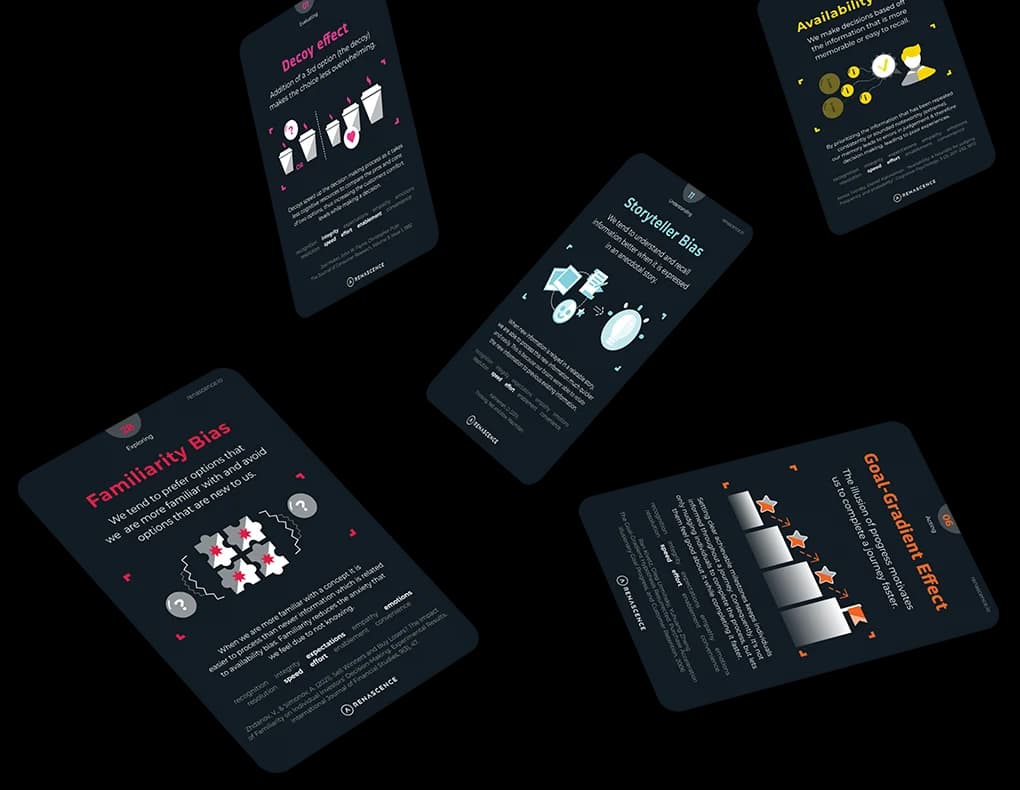
Daniel Kahneman's peak-end rule explains much of this. Customers do not average their experience across every touchpoint; they remember the emotional peak (positive or negative) and the ending. A single moment of genuine empathy at the right point in a journey can outweigh dozens of competent but forgettable interactions. Designing for memory, not just execution, is one of the most underused levers in customer experience strategy.
"Customer experience is not what you deliver. It is what customers remember, feel, and repeat to others. Those three things are rarely the same as your internal quality metrics."
Why Understanding Customer Experience Requires a Systems View
One of the most persistent mistakes in CX practice is treating experience as a front-line problem. If the call centre scores poorly, retrain the agents. If the app frustrates users, fix the UX. These interventions are necessary but insufficient, because the experience a customer has is almost always the downstream output of upstream decisions: policy design, process architecture, incentive structures, technology choices, and — most powerfully — culture.
A customer who waits three days for a complaint to be resolved is not suffering because the agent was unhelpful. They are suffering because no one designed an escalation path, or because the system requires manager sign-off for any refund above a threshold, or because the frontline team was never given the authority to act. The experience is the symptom; the system is the cause.
This is why mature CX organisations invest in journey mapping as a diagnostic tool, not a decoration. A well-constructed journey map reveals where the system breaks before the customer tells you. It makes invisible friction visible — the three-step verification process that feels proportionate internally but insulting to a long-standing customer, the confirmation email that arrives after the customer has already panicked and called in.
Loss aversion, another principle from behavioural economics, compounds the problem. Customers weight negative experiences roughly twice as heavily as equivalent positive ones. A single friction point does not merely fail to delight; it actively erodes the credit built by previous good interactions. Organisations that ignore this asymmetry consistently underestimate how much damage a single bad moment can do.
The Core Dimensions of Customer Experience Strategy
A coherent customer experience strategy operates across four interconnected dimensions. Understanding all four — and the relationships between them — is what separates a genuine CX capability from a collection of isolated initiatives.
1. The Customer Journey
Every customer relationship follows a journey: awareness, consideration, purchase, onboarding, use, renewal or churn, and advocacy or complaint. Each stage contains multiple touchpoints — moments where the customer interacts with the organisation directly or indirectly. Not all touchpoints carry equal weight. Some are moments of truth: interactions where the customer's perception of the organisation is formed or fundamentally revised. Identifying those moments and designing them with intent is the foundation of journey-led CX.
2. The Emotional Arc
Across the journey, customers move through an emotional arc — anticipation, confidence, frustration, relief, satisfaction, disappointment. Most organisations map the functional steps of a journey without mapping the emotional state at each step. That omission is costly. A customer applying for a home loan is not just completing a document checklist; they are navigating one of the most financially significant and emotionally charged decisions of their life. The process that treats them as a compliance task rather than a person in a high-stakes moment will lose them — not at the moment of friction, but at the moment of renewal.
3. The Voice of the Customer
Customer experience without customer feedback is interior decoration. A Voice of Customer strategy captures what customers actually think, feel, and need — through surveys, interviews, behavioural data, complaints, social listening, and frontline observation — and routes that intelligence to the people and processes that can act on it. The failure mode here is not a lack of data; most organisations are drowning in feedback. The failure is the absence of a closed loop: feedback that is collected, reported, and then ignored because no one owns the action.
4. The Enabling Organisation
Customer experience is ultimately a cultural and structural question. Who owns CX decisions? What authority do frontline teams have to resolve issues? How is CX performance measured, and how does it connect to individual and team incentives? These questions determine whether a CX strategy lives or dies. An organisation can have the best journey maps in the industry and still deliver a mediocre experience if the people executing those journeys are disempowered, under-trained, or measured on metrics that reward speed over quality.
Customer Experience Roles and Career Paths in 2026
The CX profession has matured considerably. What was once a loosely defined cluster of service and marketing roles has developed into a distinct discipline with its own career architecture, specialisations, and — increasingly — salary benchmarks that reflect the strategic value of the function.
The most common customer experience roles span a spectrum from strategic to operational:
- Chief Experience Officer (CXO) / Chief Customer Officer (CCO): Owns the customer strategy at board level. Responsible for aligning the entire organisation around customer outcomes. This role exists in fewer than a third of large organisations, which is itself a diagnostic.
- Head of Customer Experience / VP of CX: Translates strategy into programmes, governs the CX measurement framework, and manages cross-functional relationships with product, operations, and technology.
- Customer Experience Manager: The operational engine of CX — running journey improvement projects, managing feedback loops, and coordinating between frontline teams and leadership. For a detailed view of what this role actually involves day to day, see what a Customer Experience Manager actually does.
- CX Analyst / Insights Manager: Translates customer data — NPS, CSAT, CES, behavioural analytics — into actionable insight. The bridge between measurement and decision-making.
- Service Designer: Designs the processes, systems, and touchpoints that deliver the experience. Works at the intersection of customer needs, operational capability, and technology.
- Customer Experience Trainer / Learning Designer: Builds the internal capability that sustains CX improvement over time. Often undervalued; always critical.
Customer experience salary benchmarks in 2026 vary significantly by market, sector, and seniority. In the MENA region, CX leadership roles at the Head or VP level in financial services and telecommunications typically command competitive packages that reflect the function's growing strategic weight — though specific figures depend on organisation size, ownership structure, and the maturity of the CX function. For sector-specific benchmarking, the customer experience banker salary data for 2026 offers a useful reference point for financial services professionals.
Customer Experience in Banking: A Sector That Illustrates the Stakes
Banking is one of the most instructive sectors for understanding CX fundamentals, because the stakes are unusually high and the failure modes are unusually visible. Customers do not choose a bank the way they choose a restaurant. The relationship is long, financially consequential, and emotionally loaded. Trust, once lost, is rarely recovered.
The intersection of banking and behavioural economics is particularly rich. Banks routinely deploy choice architecture — the order and framing of product options — without acknowledging that they are doing so, and without designing it to serve the customer's actual interests. Default settings on investment products, the placement of overdraft options, the language used in rejection letters: each of these is a behavioural intervention. The question is whether it is a deliberate and ethical one.
Banks that lead on CX tend to share a few characteristics: they have invested in journey mapping at the product design stage (not just as a post-launch audit), they give frontline staff meaningful authority to resolve complaints without escalation chains, and they measure customer effort — how hard it is to do business with them — alongside satisfaction. Customer Effort Score (CES) is often a more predictive indicator of churn than NPS in high-frequency, transactional relationships.
Customer Experience Certifications and Learning in 2026
The professional development landscape for CX has expanded. The most widely recognised certifications include those offered by the Customer Experience Professionals Association (CXPA), which administers the Certified Customer Experience Professional (CCXP) designation. The CCXP is competency-based, requiring demonstrated experience across six domains: customer-centric culture, VOC and customer insight, experience design and improvement, metrics and measurement, organisational adoption and accountability, and CX strategy.
Beyond formal certification, the most effective CX practitioners tend to combine structured learning with applied practice. A certification provides a framework; real capability comes from using it on live problems. Organisations that invest in bespoke training programmes — built around their specific journeys, customer base, and maturity level — typically see faster capability uplift than those relying on generic off-the-shelf content.
The best books on customer experience worth reading in 2026 include Kahneman's Thinking, Fast and Slow (not a CX book, but the most important one for understanding how customers actually make decisions), Richard Thaler and Cass Sunstein's Nudge (the foundational text on choice architecture), and Colin Shaw and John Ivens' Building Great Customer Experiences, which remains one of the clearest practitioner frameworks available. For service design specifically, Marc Stickdorn and Jakob Schneider's This Is Service Design Thinking is the standard reference.
Customer Experience Trends Shaping 2026
Three structural shifts are defining how CX is practised right now.
AI as a CX Capability, Not a CX Channel
The conversation about AI in customer experience has moved past chatbots. The more consequential application is AI as an analytical and design capability: using large language models to synthesise customer feedback at scale, identify journey failure patterns faster than any human analyst could, and generate improvement hypotheses for human review. The risk is that organisations use AI to automate the wrong things — the moments that require human empathy — while underusing it on the analytical work where it genuinely excels.
Employee Experience as the Upstream Variable
The connection between employee experience and customer experience is not a soft claim. Frontline staff who feel disempowered, under-resourced, or disconnected from organisational purpose deliver worse experiences — not because they lack skill, but because the system they are operating in does not support them. Investing in employee experience is not a separate agenda from CX; it is one of the highest-leverage CX investments an organisation can make.
CX Maturity as a Competitive Differentiator
As CX tools and methodologies become more widely available, the differentiator shifts from access to execution. Organisations that have built genuine CX maturity — embedded governance, closed feedback loops, cross-functional accountability, and a culture that treats customer insight as a decision-making input rather than a reporting exercise — are pulling away from those that treat CX as a project. Assessing where your organisation sits on that spectrum is the starting point for any serious improvement effort. The CX Maturity Assessment is a useful diagnostic for teams that want an honest read on their current state.
Customer Experience Conferences in 2026
The professional conference circuit for CX in 2026 includes a range of events worth tracking. The CXPA Insight Exchange remains the most practitioner-focused global gathering. Forrester's CX Summit (North America and EMEA editions) tends to attract enterprise buyers and technology vendors, making it useful for benchmarking and vendor evaluation. In the MENA region, sector-specific events in financial services, government, and retail have increasingly incorporated CX as a central theme rather than a side track — reflecting the region's growing investment in service quality as a competitive and national priority.
The value of conferences is less in the keynotes and more in the peer conversations: what is actually working, what has failed quietly, and where the profession is genuinely moving versus where it is performing movement. Go with specific questions and leave with specific contacts.
How to Build a Customer Experience Capability That Lasts
The organisations that sustain CX improvement over time share a common architecture. It is not complicated, but it requires discipline to maintain.
- Define the experience you are trying to create — not in generic terms ("we want customers to feel valued") but in specific, observable terms tied to your customer segments and their actual jobs to be done.
- Map the journeys that matter most — identify the three to five journeys that have the greatest impact on satisfaction, loyalty, and revenue, and understand them in detail before spreading effort across everything.
- Measure what predicts behaviour — NPS is a useful indicator but a poor diagnostic. Complement it with CES (effort) and CSAT at specific touchpoints, and connect your CX metrics to operational and financial outcomes so the link between experience and value is visible to leadership.
- Close the feedback loop — every piece of customer feedback should have a clear owner, a defined response protocol, and a mechanism for feeding insight back into design decisions. Feedback without action is worse than no feedback: it signals to customers that their input is performative.
- Build cross-functional governance — CX cannot be owned by one team. The CX governance model needs to define who makes decisions, who has authority to act, and how CX performance is reported and rewarded across the organisation.
- Invest in frontline capability continuously — training is not an event; it is an ongoing investment in the people who deliver the experience in real time. The quality of that investment shows up directly in customer interactions.
The Fundamentals Are Not a Starting Point — They Are the Whole Game
There is a temptation in CX to treat the fundamentals as the basics you move past once you are sophisticated enough. The opposite is true. The organisations with the most advanced CX capabilities are the ones that have mastered the fundamentals at scale: they understand their customers' journeys with precision, they measure what matters, they close feedback loops reliably, and they have built cultures where improving the customer experience is everyone's job, not a department's.
The tools change. The channels multiply. AI reshapes what is possible. But the underlying logic — that customers remember how you made them feel, that trust is built in moments and lost in them too, and that the system produces the experience — does not change. Getting that right is not the beginning of the work. It is the work.
If you are assessing where your organisation stands against these fundamentals, Renascence's customer experience practice works with organisations across MENA to build the capability, governance, and culture that sustained CX improvement requires. The starting point is always an honest diagnosis — and that conversation is worth having sooner rather than later.
Further reading
FAQ
Questions we get on this topic
Related reading



Stay ahead of CX
Get the Journal in your inbox.
Insights, frameworks and event round-ups from the Renascence team. No spam, ever.