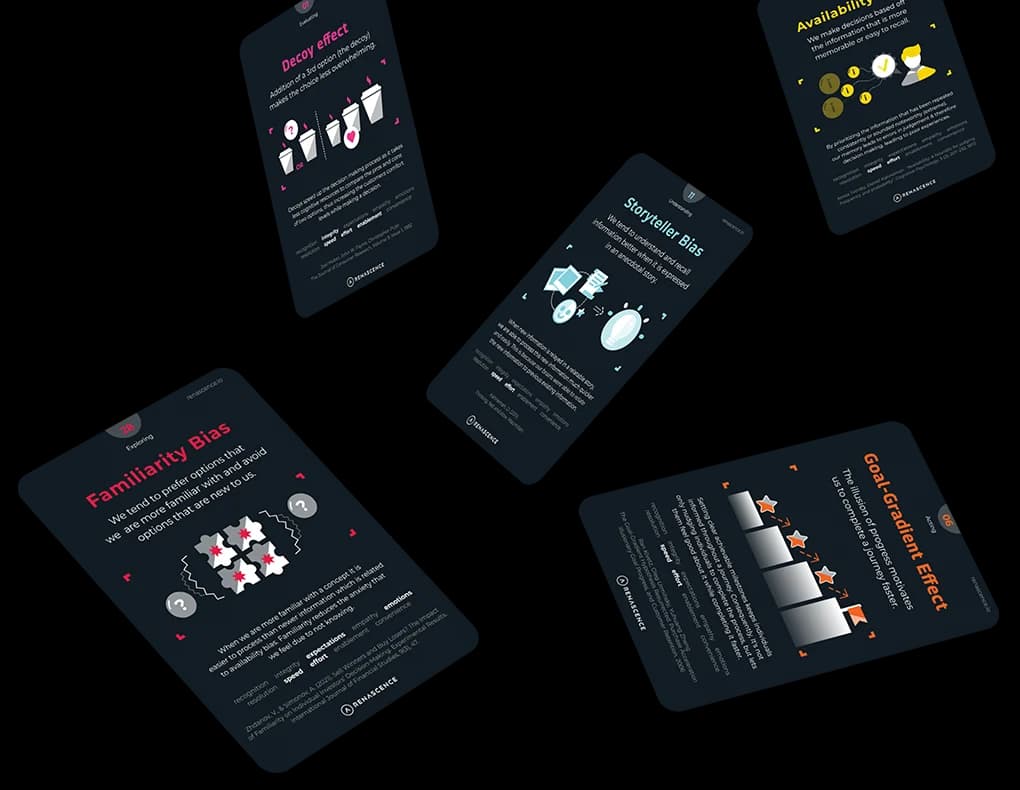

Customer Experience · October 14, 2026
Selfridges' Customer Journey: The CX Lessons Behind the Theatre
Selfridges has spent over a century engineering emotion before commerce. Here's the behavioural mechanics behind its journey — and what other brands can copy.

Walk into Selfridges on Oxford Street and the first thing you meet is not a till, a sign, or a sales assistant steering you toward a seasonal promotion. It is scent, light, and spectacle — a hall built to make you feel something before you have decided to buy anything. That sequencing is not accidental. It is the oldest trick in department-store history, and Selfridges has spent more than a century refining it.
The thesis is simple, and it is the reason Selfridges still matters as a CX case study more than 115 years after it opened: Selfridges does not sell merchandise primarily through price or range. It sells an emotional state, engineered deliberately through the sequence, pacing, and sensory texture of the visit — and it updates that engineering constantly so the store never goes stale. Harry Gordon Selfridge, who opened the store in 1908, is widely credited with building the business around the idea that retail should excite the mind and engage the senses, treating a trip to buy a hat or a bottle of scent as an experience worth having for its own sake. Every generation of the business since has had to answer the same question: how do you keep that promise alive when customers have infinite choice and zero patience?
What makes Selfridges' customer experience different from other department stores?
Selfridges built its journey around sensory sequencing and theatre rather than transactional efficiency: it greets shoppers with perfume and spectacle before utility, lets them browse and touch without pressure to buy, and treats every floor as a stage rather than a shelf. That founding choice — delight first, commerce second — still shapes how the store is laid out and run today.
At the turn of the twentieth century, most British shops kept merchandise behind counters, guarded by clerks who fetched items on request. Selfridge inverted that model. He put goods within arm's reach, encouraged customers to browse without obligation, and placed the perfume hall near the entrance so that scent — the sense most tightly wired to emotion and memory — was the first impression a visitor received. That is a textbook application of what behavioural scientists now call the affect heuristic: people judge an experience, and often a whole brand, based on the feeling it produces in the first moments, then reason backwards to justify that feeling. Selfridge didn't have the vocabulary for it in 1908. He understood the mechanism anyway.
How did Harry Gordon Selfridge invent "retail theatre"?
Selfridge turned the shop window and the shop floor into stages for spectacle, generating word of mouth and foot traffic the way a theatre generates reviews and repeat audiences — and in doing so, he effectively invented what the industry now calls retail theatre. One of the clearest examples: after Louis Blériot made the first flight across the English Channel in July 1909, Selfridges displayed his monoplane in the store, drawing enormous crowds who came to see the aircraft and stayed to shop. The lesson behind that stunt still holds: a display that gives people a reason to tell someone else about it does more for footfall than a markdown ever will. That is social proof in its purest retail form — crowds draw crowds, and a queue outside a window is its own advertisement.
Selfridge is also widely credited, alongside a handful of contemporaries, with popularising the maxim "the customer is always right." Whatever its precise origin, the phrase did real behavioural work inside his business: it gave frontline staff a standing instruction to resolve disputes in the shopper's favour rather than escalate or argue. In modern service-design terms, that is a deliberate removal of friction at the point of complaint — the single moment in a journey where trust is most fragile and most expensive to repair. Renascence's own work on customer crisis management rests on the same logic: the recovery moment is where loyalty is won or lost, not the moment everything went smoothly.
Why does Selfridges reinvent its Christmas windows every year?
Selfridges has built a reputation for unveiling its Christmas shop and festive window displays unusually early in the retail calendar, well ahead of most competitors, and for changing the theme every year rather than repeating a winning formula. The behavioural logic is worth naming explicitly. Launching early exploits the goal-gradient effect — the well-documented tendency for motivation and spending to intensify as people perceive themselves getting closer to a goal, in this case the holiday itself. Arrive at the destination early and you simply extend the runway over which that momentum compounds.
Changing the theme every year serves a second, related purpose: it defeats habituation. A static display loses its power to generate attention after the first encounter; a shopper has seen it, filed it away, and stopped looking. A new theme resets the novelty bias that makes human attention disproportionately responsive to change, forcing even loyal customers to look again rather than walk past on autopilot.
- Sensory sequencing: perfume and spectacle precede product, setting the emotional tone before any purchase decision is made.
- Theatre over transaction: windows, installations, and store events designed to be talked about, not just looked at.
- Frontline empowerment: staff authorised to resolve problems in the customer's favour, reducing the cost of a complaint.
- Deliberate novelty: seasonal and format changes timed to beat habituation rather than simply repeating what worked.
How has Selfridges modernised the department-store journey for digital-era shoppers?
Selfridges has kept its physical stores relevant in the online-shopping era by treating the building itself as rotating content — concession formats, concept spaces, and sustainability initiatives that change often enough to give a shopper a reason to return even when the product range is broadly stable. The department-store model that made Selfridge famous was built for an era with no competing channel; the version of that model that survives today has to compete with same-day delivery and infinite scroll, and it does so by selling something a screen cannot: a physical environment worth visiting in person.
The store has leaned into dedicated spaces organised around a customer need rather than a product category — a beauty hall built as a destination rather than a row of counters, and a wellness-oriented space addressing fit and body confidence as a journey problem rather than a merchandising one. It has also publicly committed to sustainability-linked retail formats, encouraging resale, rental, and repair alongside new purchase, which reframes the store's role from pure seller to curator of ways to consume responsibly. None of this changes the core mechanism Selfridge established in 1908. It just applies it to problems his era didn't have: screen fatigue, sustainability pressure, and a shopper who has already researched the product online before setting foot in the building.
This is the pattern worth borrowing, and it is where the service design discipline earns its keep: a strong experience is not one perfect moment, it is a system of touchpoints — arrival, browsing, fitting, paying, returning, complaining — each deliberately designed to reinforce the same emotional promise. Map that system the way Selfridges has mapped its floors, and consistency stops being an accident.
What is the peak-end rule, and how does Selfridges apply it?
The peak-end rule, identified by psychologist Daniel Kahneman and colleagues in their research on how people remember experiences, holds that we judge an episode almost entirely by its most intense moment and by how it ends — not by its average quality or duration. Selfridges' entire physical choreography is a peak-end machine. The peak is manufactured deliberately: a theatrical window, an unexpected installation, a sensory hit of scent and light that nothing in a competitor's catalogue can replicate online. The ending is managed just as carefully, through the service-recovery culture Selfridge built into the business from day one — because a shopper who leaves frustrated remembers the frustration, no matter how good the first twenty minutes felt.
A store survives price competition by selling things more cheaply. It survives digital competition by making the trip itself the product — and that only works if the peak and the ending are both designed on purpose, not left to chance.
This is the point most retailers miss when they benchmark themselves against Selfridges on range or price. The comparison that matters is structural: does your journey have an engineered peak, and does it end on a note the customer chooses to remember? Most journeys are measured only in aggregate satisfaction scores, which flatten exactly the moments that peak-end theory says matter most. A brand serious about this should be mapping the emotional arc of its own journey with the same rigour Selfridges applies to a shop floor — our CX journeys work exists precisely to make that arc visible rather than assumed.
What can other companies learn from Selfridges' customer journey?
The lessons scale down from a flagship Oxford Street store to a regional bank branch, an airline lounge, or an e-commerce checkout. None of them require Selfridges' budget. They require Selfridges' discipline about sequencing.
- Design the first sensory impression on purpose. Decide what a customer sees, hears, or feels in the first ten seconds of contact — a lobby scent, a greeting script, a loading screen — rather than leaving it to whichever channel happens to onboard them.
- Give frontline staff the authority to resolve disputes immediately. Every escalation step between a complaint and a resolution is friction a competitor's customer never has to endure.
- Refresh the experience on a visible cycle. Pick a cadence — seasonal, quarterly, annual — and change something customers can see and talk about, even if the core offer stays the same.
- Engineer one deliberate peak per journey. Identify the single touchpoint with the most potential for delight and overinvest in it; a mediocre peak caps how the entire journey is remembered.
- Protect the ending as carefully as the opening. A returns process, a final invoice, or a farewell message carries disproportionate weight in how the whole relationship is recalled.
- Treat physical and digital touchpoints as one choreography, not two channels. A customer who researches online and buys in store should feel like they're continuing one story, not starting over.
None of this works as a one-off campaign. It requires the kind of governance that keeps a brand promise consistent across hundreds of touchpoints and thousands of staff — which is exactly the gap our CX governance strategy work is built to close, and why a mature customer experience function needs to own the whole arc, not just the survey at the end of it.
Is Selfridges' model relevant for brands outside luxury retail?
Yes — the mechanisms are universal even though the aesthetics are specific to luxury retail. A regional telecom provider is never going to install a Blériot monoplane in its lobby, but it can still decide, deliberately, what the first thirty seconds of a store visit or app session feels like. A healthcare provider is never going to compete on spectacle, but it can still apply the same service-recovery logic Selfridge built into "the customer is always right" — empower the person closest to the complaint to fix it without escalation. The specific tactics belong to Selfridges and to luxury retail. The underlying behavioural principles — the affect heuristic, the peak-end rule, novelty bias, the goal-gradient effect — belong to anyone willing to study how people actually remember an experience rather than how a satisfaction score summarises it.
Other legacy retailers offer useful points of comparison here. Galeries Lafayette's approach to loyalty shows how a European department store builds long-term relationships rather than one-off spectacle, which is a complementary half of the same problem Selfridges solves through theatre. Reading the two side by side makes clear that a durable retail experience needs both: moments dramatic enough to be remembered, and a relationship consistent enough to be trusted.
The experience is the strategy, not the decoration on top of it
Selfridge's original insight has outlived every retail format invented since 1908 because it was never really about shopping. It was about attention — about understanding, a century before anyone had a name for loss aversion or the affect heuristic, that people remember how a place made them feel long after they've forgotten what they bought. The stores that are still winning that argument today are the ones still willing to treat the customer journey as something worth designing on purpose, moment by moment, rather than something that simply happens between a marketing campaign and a sale.
That is the real inheritance of Selfridges' approach: not the windows, not the plane, not even the phrase about the customer being right — but the underlying conviction that an experience engineered with intent will always outlast one left to chance. For leaders trying to work out where their own journey has peaks worth building and endings worth protecting, that conviction is the whole brief.
Further reading
FAQ
Questions we get on this topic
Related reading

Writing on how human behavior shapes the experiences brands deliver — at the intersection of behavioral economics and customer experience.
Stay ahead of CX
Get the Journal in your inbox.
Insights, frameworks and event round-ups from the Renascence team. No spam, ever.