








Customer Loyalty · November 22, 2026
Progressive Customer Loyalty: What Keeps Customers Coming Back
Starbucks' filling star and stamp cards reveal why progressive loyalty mechanics outperform flat discounts: progress, not generosity, drives repeat purchases.

Open the Starbucks app anywhere in the world and the same small animation plays: a star fills in, a progress bar inches forward, and a free drink appears nine purchases away, then eight, then seven. Nobody is forcing a customer to keep tapping that app. The progress bar is doing the forcing — and it is doing it more effectively than any discount ever could.
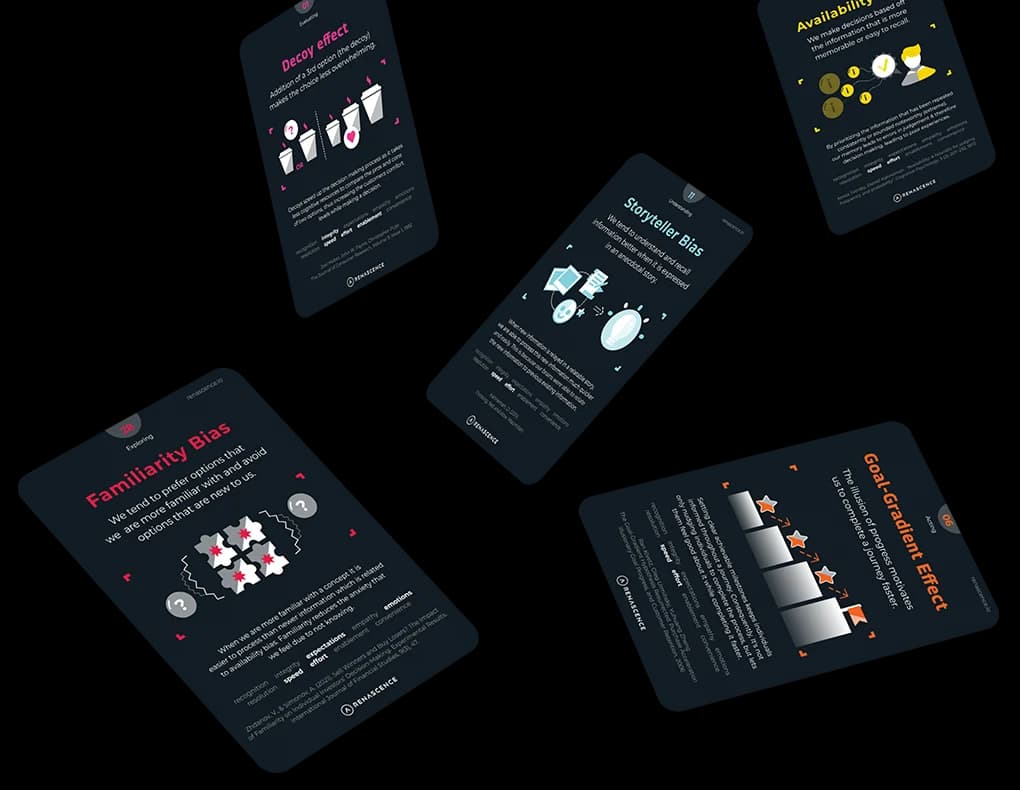
That is the quiet secret of progressive customer loyalty: it keeps people coming back not because the reward is generous, but because it converts a single purchase decision into a visible, incremental journey toward a goal. The mechanism is behavioural, not financial. Customers accelerate as they near a reward (the goal-gradient effect), work harder when they believe they have already made progress (the endowed progress effect), and protect status they feel they already own (loss aversion). A loyalty scheme that ignores these mechanics is just a discount with extra paperwork. One that is built around them becomes a habit engine.
What is progressive customer loyalty, and how is it different from a simple discount card?
Progressive customer loyalty is a loyalty structure in which every qualifying action visibly moves the customer closer to a reward or status tier, rather than simply accumulating toward a flat, one-off discount. A stamp card that fills in, a star count that climbs, or a spend threshold that unlocks a named tier are all progressive mechanics. A blanket "10% off your next order" is not — it offers value without a sense of movement, and movement is the entire point.
The distinction matters because the two formats trigger different psychology. A flat discount is evaluated once, rationally, and forgotten. A progressive mechanic is evaluated continuously, and each purchase is reframed not as "did I need this coffee" but "how close am I now". That reframing is what keeps the customer transacting even when the marginal reward is small. It is also why well-designed customer loyalty strategy increasingly looks less like a rewards catalogue and more like a piece of behavioural engineering layered onto the customer journey.
Why do customers speed up as they get closer to a reward?
Customers accelerate their purchasing as they approach a loyalty goal because of the goal-gradient effect: the closer any organism is to a reward, the more effort it exerts to reach it. The effect was first documented by the psychologist Clark Hull in the 1930s, who observed rats running faster through a maze the nearer they got to the food reward at the end.
The marketing application of this is well documented. In a 2006 study published in the Journal of Marketing Research titled "The Goal-Gradient Hypothesis Resurrected: Purchase Acceleration, Illusionary Goal Progress, and Customer Retention," the researchers Ran Kivetz, Oleg Urminsky and Yuhuang Zheng tracked customers enrolled in a café loyalty programme and a car wash loyalty programme. They found that the rate of purchase visibly increased as customers approached the free reward, and — critically — that the acceleration could be reproduced artificially simply by making customers feel further along than their actual spend justified.
That last finding is the one worth sitting with. The acceleration was not driven by the size of the reward at the end. It was driven by the perceived proximity to it. This is why a ten-stamp card with two stamps already filled in outperforms a comparable eight-stamp card with none filled in, even though the required effort is identical. Progress, not generosity, is the lever.
Why does giving customers a head start make them finish faster?
Customers who are given artificial progress toward a reward complete the task faster and at higher rates than customers who must start from zero, even when the real number of required actions is the same. This is the endowed progress effect, documented by Joseph Nunes and Xavier Drèze in a 2006 study published in the Journal of Consumer Research. In their now-widely cited car wash experiment, one group of customers received a loyalty card requiring eight stamps to earn a free wash, with no stamps pre-filled. A second group received a card requiring ten stamps — but with two stamps already stamped on issue. Both groups needed eight more washes to reach the reward. The group that had been given a head start completed their cards significantly faster, and a larger share of them finished at all.
The lesson for loyalty design is almost uncomfortably simple: a customer who has done nothing yet but feels they have already started is more motivated than a customer who has genuinely done nothing and knows it. This is why some of the strongest-performing onboarding flows hand new members a welcome bonus of points or a partially filled progress bar the moment they sign up, rather than making them earn their first mark from a blank slate. It converts enrolment itself into the opening act of a journey already in motion — a principle that belongs as much in customer journey design as it does in loyalty marketing.
Why do status tiers matter more than the points themselves?
Tiers outperform flat points schemes because they attach an identity to the customer, and identities are far harder to give up than balances. Sephora's Beauty Insider programme is a clear public example of this structure: membership is free and automatic, a mid-tier called VIB unlocks at a defined annual spend threshold, and the top Rouge tier unlocks at a considerably higher one, each carrying its own named perks. The customer is not simply accumulating points toward a product. They are maintaining a rank.
That rank is defended, not just pursued. Prospect theory, developed by Daniel Kahneman and Amos Tversky and recognised by the Nobel committee's 2002 economic sciences award to Kahneman, established that losses are felt roughly twice as intensely as equivalent gains. Applied to loyalty, this means the fear of being demoted from a status tier motivates spending far more powerfully than the prospect of being promoted to it in the first place. Airlines have understood this for decades, which is why status match periods and year-end "requalify or lose it" notices generate disproportionate spikes in activity. The tier was never really about the lounge access. It was about not losing what already felt owned.
This is also where progressive loyalty connects to retention economics more broadly. In his landmark 2003 Harvard Business Review article "The One Number You Need to Grow," Fred Reichheld argued that loyalty and profitable growth are tightly linked because retained, engaged customers cost less to serve and refer others at a higher rate. A tier structure that customers actively defend is, in effect, a retention mechanism dressed up as a rewards catalogue.
Why do progressive loyalty programmes fail?
Most progressive loyalty programmes do not fail because the behavioural mechanics are wrong. They fail because operations and finance quietly undermine them after launch. The common failure modes are predictable:
- Goalpost moving. Points requirements for rewards get raised to control liability, and existing members experience it as a broken promise, not a policy update.
- Redemption sludge. The economist Richard Thaler's concept of "sludge" — friction deliberately or carelessly placed in a process — shows up when earning points is one tap but redeeming them requires a phone call, a code, or an expiry date nobody tracked.
- Invisible progress. A points balance buried three screens deep in an app cannot trigger a goal-gradient effect, because the customer never sees how close they are.
- Reward irrelevance. A reward that does not match what the customer actually wants breaks the emotional logic of the journey, no matter how well the progress mechanic is designed.
- No recovery path. A customer who loses status through no clear fault of their own — a missed renewal window during a life event, for instance — becomes a detractor rather than a lapsed member, unless there is a built-in escalation path to make it right.
Every one of these is a service-design failure layered on top of a sound behavioural idea. The fix rarely requires a new rewards catalogue. It requires rebuilding the mechanics of the journey itself.
How do you design a progressive loyalty programme that actually works?
Building a loyalty mechanic that genuinely compounds requires treating it as a piece of experience architecture, not a marketing promotion. The sequence below reflects how the behavioural evidence above should translate into an operating design:
- Give every new member a head start. Pre-load a portion of the first tier or stamp card on sign-up, rather than starting everyone from zero — the endowed progress effect means this single design choice raises completion rates more than almost any discount would.
- Make progress visible at the moment of the transaction, not buried in a separate app screen checked once a month. The goal-gradient effect only fires if the customer can see the gap closing in real time.
- Engineer a deliberate near-miss zone just before each reward threshold — a reminder, a small nudge, or a limited-time double-point event — to exploit the acceleration phase rather than leaving it to chance.
- Layer status on top of points. Points alone are a transaction log; a named tier with visible peer signalling (a black card, a coloured badge, early access) converts a balance into an identity worth defending.
- Protect the promise. Treat any change to earning rates or redemption thresholds as a trust event, not a cost-control memo, and communicate it with enough notice that existing members do not feel retroactively penalised.
- Design the redemption moment with the same rigour as the earning moment. A reward that is hard to claim erases the goodwill built across every purchase that led to it — this is where service design discipline, not marketing copy, decides whether the programme feels generous or feels like sludge.
- Measure the mechanic, not just the membership number. Track completion rates near thresholds, redemption friction, and tier churn separately from headline sign-up volume, since sign-ups say nothing about whether the behavioural engine is actually firing.
Programmes that skip straight to step seven — measuring enrolment and calling it loyalty — are the ones that quietly plateau. The number that matters is not how many people joined. It is how many people accelerated.
What should leaders take from this?
A loyalty programme is not a reward. It is a piece of choice architecture that tells the customer a story about where they stand and how close they are to the next chapter. Starbucks did not build the most generous rewards scheme in retail; coffee is cheap to give away and the free drink is a rounding error on the transaction. What it built is a progress narrative that customers choose to keep participating in, purchase after purchase, because the gap keeps visibly closing.
The organisations that get this right treat the behavioural mechanics — goal-gradient acceleration, endowed progress, loss-averse status defence — as design inputs from day one, alongside the loyalty infrastructure that tracks and honours them. The ones that get it wrong bolt a points balance onto an existing transactional relationship and wonder, eighteen months later, why engagement flattened despite a healthy marketing budget. The difference was never the size of the carrot. It was whether the customer could see, clearly and constantly, how close they already were.
The next competitive edge in loyalty will not come from richer rewards catalogues — most categories have already saturated that lever. It will come from whoever designs the clearest, most honestly maintained sense of progress, and resists the short-term temptation to move the goalposts once customers are three stamps from the finish line.
Further reading
FAQ
Questions we get on this topic
Related reading


Writing on how human behavior shapes the experiences brands deliver — at the intersection of behavioral economics and customer experience.
Stay ahead of CX
Get the Journal in your inbox.
Insights, frameworks and event round-ups from the Renascence team. No spam, ever.