








Customer Loyalty · November 22, 2026
LG Customer Loyalty: What Keeps Buyers Coming Back
LG's MyLG Rewards program rewards referrals and reviews, not just purchases, turning a once-a-decade appliance buy into an ongoing relationship.

Ask a customer when they last thought about their refrigerator brand, and most will shrug. Appliances are bought once, then ignored for a decade — which makes "customer loyalty" an odd thing to claim for a washing-machine maker. Yet LG Electronics runs one of the more interesting loyalty mechanics in durable goods: a points program that pays customers not just for buying, but for talking, reviewing and referring.
That distinction is the whole story. LG's MyLG Rewards program keeps customers engaged by rewarding behaviours that happen between purchases — referrals and reviews — rather than relying on repeat buying, which in an appliance category might happen only once every several years. It is a loyalty model built for infrequent purchase cycles, not for the weekly-coffee economics that most loyalty theory assumes.
That single design choice is worth unpacking, because most of the loyalty literature — and most loyalty programs — are built for categories with short purchase cycles: groceries, coffee, airlines, hotels. Appliance and electronics brands have had to improvise. LG's improvisation offers a genuine lesson for any business selling something customers buy rarely but talk about often.
What is the MyLG Rewards program and how does it work?
MyLG Rewards is a free loyalty program run through LG.com, where members earn points for purchases, for referring friends, and for leaving product reviews. Points accumulate inside a member account and can be redeemed inside the LG ecosystem, giving customers a reason to return to LG's digital properties well before their next appliance purchase is due.
The mechanism is simple on its face. What makes it worth studying is what it is actually optimising for. A points-per-dollar scheme alone would do little in a category where the next "dollar" might not arrive for years. By attaching points to referrals and reviews, LG has built a loyalty engine that runs on advocacy, not transaction frequency. It rewards the behaviours that actually drive new demand in a category where word-of-mouth and product research matter more than impulse repurchase.
Why don't appliance brands have an obvious loyalty problem to solve?
Here is the uncomfortable truth most loyalty programs ignore: classic loyalty mechanics assume frequency. Punch-card logic — buy nine, get the tenth free — only works if there is a tenth purchase on any realistic horizon. A refrigerator, a washing machine, a television: these are considered purchases, researched over weeks, made every few years at most. There is no "tenth coffee" coming.
This is precisely why most durable-goods and electronics brands either skip loyalty programs altogether or default to generic extended-warranty upsells that do nothing for emotional attachment. The category's economics push brands towards one of two strategies: compete purely on price and specs at the moment of purchase, or find a way to stay relevant to the customer during the long, quiet years between purchases.
LG chose the second path. MyLG Rewards is less a discount mechanism than a retention bridge — a reason for the relationship to continue existing when there is nothing to sell.
How does LG turn a once-a-decade purchase into continuous engagement?
The answer sits in behavioural economics, specifically in two well-documented effects that reward schemes exploit deliberately.
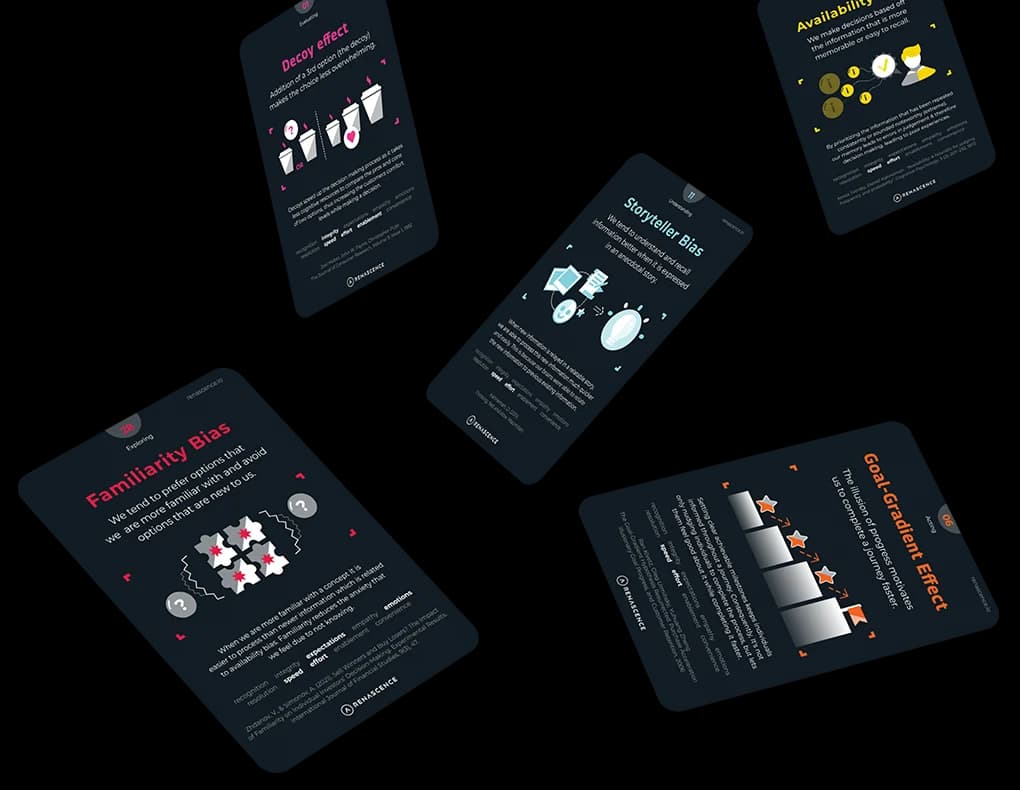
The first is the goal-gradient effect — the finding, first resurrected for marketing contexts by Ran Kivetz, Oleg Urminsky and Yuhuang Zheng in their 2006 study "The Goal-Gradient Hypothesis Resurrected," published in the Journal of Marketing Research, that people accelerate effort as they perceive themselves getting closer to a reward. A visible points balance creeping toward a redemption threshold does exactly this: it turns an abstract loyalty relationship into a concrete, trackable goal, which nudges customers to take one more qualifying action — write that review, send that referral link — to close the gap.
The second is the endowment effect, the principle described by Richard Thaler in his 1980 paper "Toward a Positive Theory of Consumer Choice" in the Journal of Economic Behavior & Organization, which holds that people value something more once they feel they own it. A points balance sitting in an account functions the same way a loyalty-card stamp does: it is technically worthless until redeemed, but once accrued, customers are reluctant to let it lapse by switching brands or ignoring the relationship. The points themselves become a small, owned asset the customer doesn't want to walk away from.
Put together, these two effects do something clever for a long-cycle category: they manufacture short-term psychological stakes inside a relationship that has no natural short-term transaction to anchor itself to.
Why are referrals and reviews the right behaviours to reward?
Rewarding referrals and reviews isn't an arbitrary choice — it targets the two forms of evidence that matter most to someone researching a considered purchase. Social proof, the principle popularised by psychologist Robert Cialdini in his book Influence, explains why a peer's review or recommendation carries more persuasive weight than brand advertising: people take cues on what to do from what others like them have already done, especially under uncertainty. For a refrigerator or a television — products most buyers research for days before committing — third-party reviews and personal referrals function as the trust shortcut that closes the sale.
There is a reciprocity dimension too. A customer who receives a referral reward, however small, feels a mild social debt discharged by having helped a friend make a good decision — and a small debt discharged in the brand's favour, since the company facilitated the introduction. None of this requires the customer to buy anything again. It only requires them to keep talking, which is the one behaviour appliance brands most need and can least force through traditional advertising.
This is also why the reward structure matters more than the reward size. A modest points payout for a review does more for a long-cycle brand than an equivalent discount on the next purchase, because the discount is redeemable only on an event that may be years away. The review reward is redeemable against engagement with the brand's ecosystem now — keeping LG's digital presence, and by extension its other product categories, in front of a customer who has no pending appliance need at all.
What can other long-purchase-cycle brands copy from this model?
The lesson generalises well beyond consumer electronics. Automotive, real estate, education, and big-ticket home services all share the same structural problem: the next transaction is too far away for frequency-based loyalty to work. Brands in these categories can borrow LG's logic directly.
- Reward advocacy, not just spend. If the next purchase is years out, build the points economy around referrals, reviews, and content the customer generates now — not a repurchase that may never come on a useful timeline.
- Make the points balance visible and progressing. A static account does nothing; a visible bar closing in on the next reward tier triggers the goal-gradient effect and keeps the customer returning to check progress.
- Treat the review as a transaction in its own right. A genuine, detailed review is valuable inventory for every future shopper in the category — price it like one.
- Design the redemption to pull customers back into the ecosystem, not out of it. Redemption against accessories, service credits or adjacent product categories keeps the relationship inside the brand rather than leaking value to a third party.
- Separate "loyalty" from "transaction frequency" in your own measurement. If your CX scorecards still assume purchase cadence as the loyalty proxy, they're measuring the wrong thing for a considered-purchase category.
Brands building this kind of program from scratch typically need a clear view of where the behavioural gaps sit before they design the reward structure — which is exactly the diagnostic work behind a CX maturity assessment, run before deciding which behaviours are worth paying for.
Where does a points-for-advocacy model break down?
It is worth being honest about the limits here, because a reward-for-review scheme carries its own risk. Pay customers to leave reviews and you invite two failure modes: reviews written to chase points rather than to inform, and a customer base that associates the brand relationship with transactional point-chasing rather than genuine preference.
The guard against both is the same: the points program has to sit on top of a product and service experience that earns advocacy honestly. A referral reward cannot manufacture an endorsement a customer doesn't believe; it can only make an existing positive experience slightly more likely to be voiced. If the underlying journey — delivery, installation, after-sales service, repair turnaround — is weak, no reward structure survives contact with a bad review written anyway. This is the same trap that undoes many loyalty programs across categories: the incentive is asked to do the work that customer experience design should have done first.
That's also why the strongest version of this model treats points as a layer on top of service quality, not a substitute for it. Appliance ownership involves genuine moments of truth — installation, breakdown, warranty claims — that shape whether a customer has anything positive to say at all. A loyalty points balance does not survive a bad repair experience; it just gives the customer a reason to notice the bad experience a little sooner, since they were paying closer attention to the relationship.
How should a brand sequence a program like this?
Brands considering a similar model shouldn't start with the points table. The sequencing matters more than the reward values, and getting it backwards is the most common reason these programs underperform.
- Map the real purchase cycle first. Identify how long customers genuinely go between transactions in the category, and design the loyalty mechanic around that interval rather than importing a frequency model from a different industry.
- Audit the service journey for moments worth talking about. A referral economy only works if the underlying experience gives customers something authentic to say — find and fix the moments that would otherwise generate silence or complaint.
- Identify the two or three behaviours, beyond purchase, that actually drive new demand. For LG, that's reviews and referrals; for another category it might be user-generated content, community participation, or renewal of a service contract.
- Build visible progress into the reward structure. A points balance that doesn't visibly move toward something loses its behavioural pull within weeks.
- Route redemption back into the ecosystem. Redemption options should deepen the relationship — accessories, adjacent products, service credits — rather than functioning as a one-off cash-out.
- Measure advocacy, not just enrolment. Track review volume and quality, referral conversion, and repeat engagement with the program itself — enrolment numbers alone say nothing about whether the behavioural design is working.
Brands that skip straight to step four — picking reward values before understanding the purchase cycle or the service gaps — tend to launch loyalty programs that look busy and change nothing, because the incentive isn't attached to a behaviour the customer actually controls or cares about.
What does this say about loyalty in considered-purchase categories generally?
The deeper point is that loyalty, in Frederick Reichheld's sense from his landmark 2003 Harvard Business Review article "The One Number You Need to Grow", was never really about repeat purchase frequency — it was always about whether a customer would vouch for you to someone else. Reichheld built an entire measurement system, the Net Promoter Score, around that single willingness to recommend. LG's MyLG Rewards program simply pays for the behaviour Reichheld's metric only measures. It closes the loop between sentiment and action: instead of asking "would you recommend us?" in a survey, it gives the customer a concrete, rewarded reason to actually do it.
That is the real takeaway for any brand in a long-cycle category — automotive, real estate, education, enterprise technology. The absence of frequent repurchase is not the absence of a loyalty opportunity. It is a signal that the loyalty opportunity has moved upstream, into advocacy, reviews and referral, and that the brands who notice this before their competitors do will own the word-of-mouth channel long before the next purchase cycle even opens. Brands serious about building this kind of behavioural infrastructure into their customer journeys, rather than bolting on a points plugin, will find the groundwork — mapping where advocacy moments actually occur — covered under customer loyalty strategy and CX journey design.
The quiet advantage of designing for the years in between
Most loyalty thinking still assumes the customer is coming back soon. LG's bet is on the opposite assumption: that the real competitive battle in a long-cycle category is fought in the years when nobody is buying anything, through the reviews they leave and the people they tell. Brands that keep optimising for the next transaction will keep missing the much larger opportunity sitting in the silence between purchases — and the ones who finally notice it, as LG has, will own the conversation long before the sale is even back on the table.
Further reading
FAQ
Questions we get on this topic
Related reading



Writing on how human behavior shapes the experiences brands deliver — at the intersection of behavioral economics and customer experience.
Stay ahead of CX
Get the Journal in your inbox.
Insights, frameworks and event round-ups from the Renascence team. No spam, ever.