


Mystery Shopping · October 15, 2026
Mystery Shopping vs Customer Surveys: What's the Real Gap?
Mystery shopping audits whether service was delivered to standard; surveys capture how customers felt. Confusing the two skews CX dashboards and bonuses.

A branch scores 4.6 out of 5 on the post-visit survey. The same branch fails six of the eight standards on that month's mystery shop. Both numbers are correct. Neither is lying. This is the moment most CX teams discover they've been treating two fundamentally different instruments as if they measured the same thing — and built a dashboard, and sometimes a bonus structure, on the confusion.
Mystery shopping and customer surveys answer different questions: mystery shopping tells you whether the service you designed was actually delivered against a defined standard, while surveys tell you how customers felt about, and remember, the experience they received. One is an audit of execution. The other is a measure of perception. Used alone, each gives you half a service blueprint. Used together — and mapped onto the same journey — they tell you where the gap between design intent and lived reality actually sits.
What's the real difference between mystery shopping and customer surveys?
Mystery shopping is observational and criterion-based. A trained shopper, briefed against a scripted scenario, moves through a touchpoint and scores it against a checklist built from your service standards: did the agent greet within 30 seconds, offer the upsell, follow the escalation script, close with the brand-mandated line. It measures compliance to a designed process, captured by someone trained to notice what a real customer might miss.
A customer survey is self-reported and perception-based. It asks an actual customer, after the fact, how they felt — usually via NPS, CSAT or CES — and leaves the definition of "good" entirely up to them. It measures the emotional residue of an experience, filtered through memory, mood, and whatever happened right before they picked up the phone to answer it.
Put bluntly: mystery shopping checks whether your people did the thing. Surveys check whether the customer cared that they did. A branch can nail every item on the mystery shop checklist and still generate a mediocre CSAT score, because the checklist didn't include "the agent sounded bored" — and that's often the detail the customer actually remembers.
Why do mystery shopping scores and survey scores disagree so often?
They disagree because they're sampling different things at different moments, scored by different judges, against different definitions of success — and once you map that out, the divergence stops looking like a measurement error and starts looking like useful signal.
- Different judge: the mystery shopper is trained and briefed; the real customer is neither. A shopper notices a missed compliance step; a customer notices the tone of voice.
- Different standard: mystery shopping scores against your internal definition of "correct." Surveys score against the customer's own, often unstated, expectation — shaped by the last best experience they had, in any industry, not just yours.
- Different timing: the mystery shop happens in the moment, scored against a script. The survey is answered minutes, hours or days later, and recall is never a faithful transcript. It's a reconstruction.
- Different motivation: shoppers are paid to be thorough and critical. Customers answering a survey are often rushing, filtering through fatigue, or responding to the single worst or best thing that happened — not the whole journey.
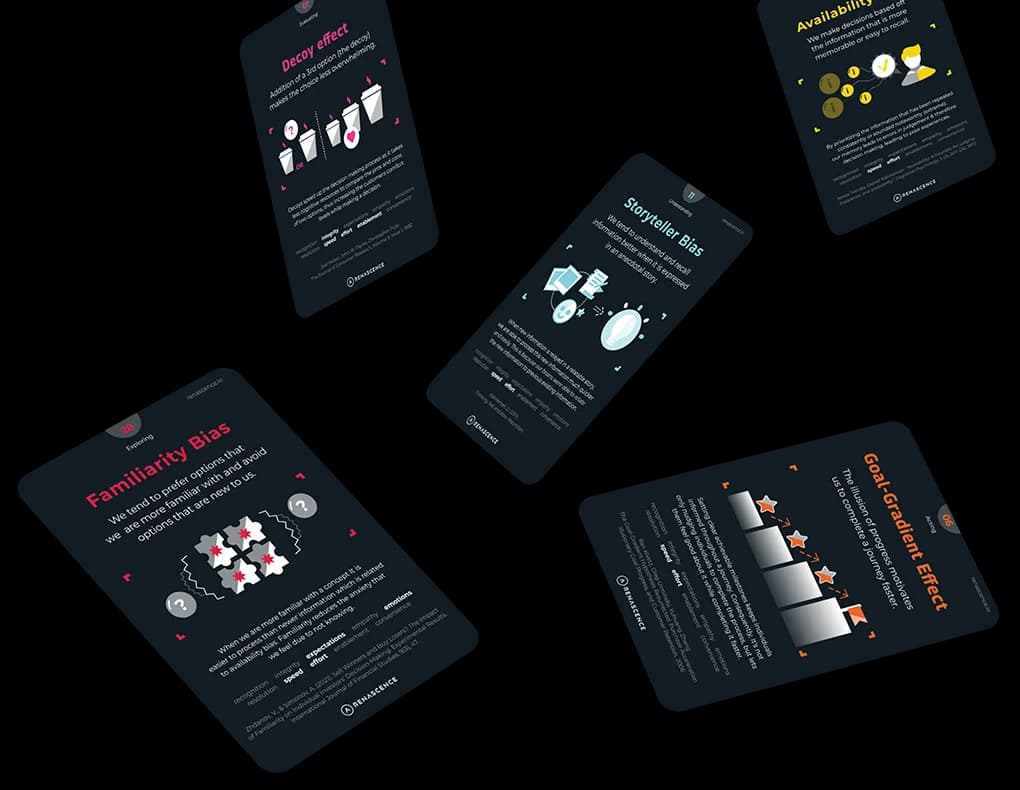
That last point is where behavioural economics earns its place in this conversation. Daniel Kahneman and colleagues demonstrated, in a study on colonoscopy patients published as "When More Pain Is Preferred to Less: Adding a Better End" (Kahneman, Fredrickson, Schreiber & Redelmeier, Psychological Science, 1993), that people don't rate an experience by its average — they rate it by its peak moment and how it ended. That's the peak-end rule, and it explains why a customer can sail through eleven correctly executed, checklist-perfect touchpoints and still leave a middling survey score because touchpoint twelve — the one where the refund took an extra week — dominates the memory. The mystery shopper, scoring in real time against a checklist, has no mechanism to weight the ending more heavily. The customer's memory does it automatically, every time.
What does each method actually measure well?
Mystery shopping is the right instrument when you need to know whether a standard is being followed, consistently, across locations or channels, independent of how the customer happened to feel that day. It's the audit layer. It catches the things customers often don't consciously register but that shape their experience anyway — a missed cross-sell opportunity, a skipped compliance disclosure, an inconsistent brand script between your Dubai branch and your Riyadh one. If you've invested in designing a service standard, mystery shopping is how you find out whether the frontline is actually running it, not whether they think they're running it.
Surveys are the right instrument when you need to know whether the standard itself is any good — whether following the script actually produces a customer who's satisfied, loyal, or willing to recommend you. A team can be 98% compliant on a mystery shop checklist built around a process designed five years ago that no longer matches customer expectations. Jakob Nielsen made a version of this point at Nielsen Norman Group in his widely cited piece "First Rule of Usability? Don't Listen to Users" (Nielsen Norman Group, August 2001): what people say and what people do are frequently two different data sets, and Nielsen's advice was to trust what people do over what they say. Surveys capture the "say." Mystery shopping, properly designed, captures the "do." A service designer who only has one of the two is working half-blind.
How should mystery shopping and surveys be combined on a service blueprint?
The fix isn't choosing a winner. It's running both methods against the same journey map, at the same touchpoints, and placing the results side by side on the blueprint so the gap between "executed" and "felt" becomes visible rather than buried in two separate reports that nobody cross-references.
Here's the sequence I run with clients who are trying to reconcile the two for the first time:
- Map the journey into stages, steps and touchpoints first. Before you commission either study, you need the blueprint — the backstage and frontstage actions, systems, and standards behind each customer-facing moment. Without it, both mystery shopping and survey data land as disconnected scores with no shared geography.
- Tag every touchpoint with its intended standard. This becomes the mystery shop checklist — the operational definition of "correct" for that specific moment, pulled from your actual service design, not a generic customer service checklist.
- Attach the survey question closest to that touchpoint, not just the end-of-journey NPS. A single relationship survey at the end of the journey tells you almost nothing about which specific step caused the dip. Transactional, touchpoint-level feedback does.
- Run both instruments across the same sample window. Comparing a mystery shop from March against survey data from June guarantees you'll be comparing two different operational realities, not two lenses on the same one.
- Plot both scores on the blueprint, touchpoint by touchpoint. You're looking for three patterns: high compliance/high satisfaction (the standard works, keep it), high compliance/low satisfaction (the standard is wrong, redesign it), and low compliance/high satisfaction (the standard is unnecessary, or your frontline has found a better workaround worth formalising).
- Investigate the low-compliance/high-satisfaction cells before you discipline anyone. This is the pattern teams most often punish by accident. Sometimes the frontline has quietly improved on a script that was written by someone who never worked the counter.
- Feed the reconciled view into the roadmap, not two separate ones. A single prioritised list of touchpoint fixes, ranked by the size of the gap and the emotional weight of the moment, is worth more than a mystery shop scorecard and a CSAT dashboard that nobody has ever opened side by side.
This is, in essence, service blueprinting doing the job it was invented for: making the invisible machinery behind a customer-facing moment visible enough to manage. If that discipline is new to your organisation, it's worth building the service design capability properly rather than retrofitting it onto existing scorecards.
Where does each method fail on its own?
Used in isolation, both methods create a specific, predictable blind spot — and both blind spots are expensive if they go unchecked.
- Mystery shopping alone optimises for compliance, not outcomes. Frontline teams learn to perform for the audit rather than for the customer, a version of the Hawthorne effect where behaviour under observation diverges from behaviour unobserved — because word travels about what the "mystery shop script" looks like, and staff start reciting lines rather than reading the room.
- Surveys alone optimise for the vocal and the extreme. Response rates skew toward customers who were either delighted or furious; the quietly disappointed majority, who simply reduce their spend or quietly churn, rarely fill in a survey at all. You end up designing around the loudest 15%, not the representative 85%.
- Surveys alone are vulnerable to recall distortion. Because of the peak-end effect, a customer's score reflects the sharpest moment and the final moment of a journey — not an honest average of every touchpoint along the way. Treating a single CSAT number as a verdict on the entire journey, rather than on its peak and its ending, routinely misdirects improvement budgets toward the wrong step.
- Mystery shopping alone can't measure emotional register. A checklist can confirm the agent said the right words. It cannot reliably confirm the agent meant them — and tone is frequently the actual variable driving the survey score three steps later.
How do you decide which method to prioritise when budgets are tight?
Prioritise mystery shopping when you're rolling out a new standard, script or process and need to know whether the frontline is executing it before you trust the customer-facing data at all. Prioritise surveys, especially at the transactional level, when the standard has been stable for a while and the real question has shifted from "is this being done" to "is this still the right thing to do." Mature CX functions eventually stop choosing and run both as a permanent pairing — but if you're building the capability for the first time, sequence it: audit first, listen second, then run them concurrently once you trust that what's being measured and what's being delivered are describing the same journey.
A practical diagnostic: if your voice of customer programme is producing scores that swing wildly between locations with no obvious operational explanation, that's usually a sign the standard itself isn't being consistently delivered — which means you need the audit layer before you can trust the perception layer. If your audits are coming back clean month after month while survey scores quietly erode, the standard has probably gone stale and needs redesigning, not re-enforcing.
What role does behavioural economics play beyond the peak-end rule?
There's a second bias worth naming: the availability heuristic, the tendency to judge a whole experience by whichever details come to mind most easily rather than by a complete, balanced recollection. A customer answering a survey two days after a branch visit isn't running a full audit of memory — they're reaching for whatever surfaced first, usually the most emotionally charged moment. Mystery shopping, by contrast, has no memory problem because it's scored in real time — but it has the opposite risk: it can be exhaustive to the point of measuring things the customer never consciously notices at all, and missing the one thing that actually moved their feelings. Good service design treats both biases as design inputs, not measurement noise. If the ending of a journey is disproportionately memorable, redesign the ending deliberately — the closing line at a branch counter, the final screen in an app checkout, the tone of the last email in a complaint resolution — because that's the moment survey scores are quietly built on.
What should actually sit on the blueprint?
By the time mystery shopping and survey data are reconciled, your blueprint should carry three layers at every touchpoint: the designed standard, the compliance score against it, and the customer's felt response to it. That's the difference between a journey map that looks finished and one that's actually been pressure-tested against both how the business intended it to work and how a real customer experienced it. Teams that skip this reconciliation tend to discover the gap the expensive way — through churn data, not through design review. For a structured look at how that gap forms and widens over time, it's worth reading our piece on closing the gap between the designed journey and the delivered one, and for a deeper comparison of qualitative listening methods, customer interviews versus surveys covers the adjacent question of when a structured conversation beats a structured questionnaire.
If you're not yet sure how mature your current measurement stack actually is — whether you're running one instrument where you need two, or two instruments that have never been introduced to each other — a structured look at your CX maturity is a faster way to find out than another round of scorecards.
The honest answer
Neither method tells you the truth about your service. Each tells you a true thing, from a different angle, about a different layer of it. The organisations that get this right stop asking which score to trust and start asking what the gap between the two scores is telling them — because that gap, more than either number alone, is where the next redesign is hiding. Build the blueprint first, run both instruments against it, and let the disagreement between them do the diagnostic work neither one can do alone. If your mystery shopping programme and your customer feedback management live in separate reports today, that's the first thing worth fixing — not the scores themselves.
Further reading
FAQ
Questions we get on this topic
Related reading



Writing on how human behavior shapes the experiences brands deliver — at the intersection of behavioral economics and customer experience.
Stay ahead of CX
Get the Journal in your inbox.
Insights, frameworks and event round-ups from the Renascence team. No spam, ever.