
Customer Experience · October 14, 2026
Closing the gap between the designed journey and the delivered one

Walk the floor of any contact centre the week after a journey-mapping workshop and you will find the map pinned to a wall nobody reads, while the agents keep doing exactly what they did before. The map was never wrong, exactly. It just described a journey that the organisation was never built to deliver.
That gap — between the experience a team designs on a whiteboard and the one a customer actually lives through — is where most CX investment quietly dies. The gap exists because journey maps describe intent, while the systems, scripts, incentives and handoffs behind the scenes determine delivery — and most organisations only ever design the first one. You cannot close a gap you have never mapped on both sides. That is the argument of this piece, and it is the whole job of service blueprinting: not a prettier journey map, but the engineering drawing underneath it.
What is the gap between the designed journey and the delivered one?
The designed-versus-delivered gap is the difference between the customer journey an organisation intends — captured in a journey map, a vision deck, a set of brand promises — and the journey customers actually experience once frontline staff, legacy systems, third-party partners and internal incentives get involved. It shows up as the moment a beautifully worded "proactive communication" promise collapses into a customer refreshing a tracking page for three days, because nobody designed the operational mechanism behind the words.
Lynn Shostack named this problem in her 1984 Harvard Business Review article "Designing Services That Deliver," arguing that services fail not for lack of good intentions but for lack of a technical blueprint — the same way a building fails without structural drawings, no matter how good the architect's sketch looks. Forty years on, the diagnosis still holds. Most organisations have a sketch. Very few have a blueprint.
Why do journey maps fail to predict the real experience?
Journey maps fail to predict reality because they are built from the customer's vantage point only, which means they capture what should happen without capturing what makes it happen — or what stops it from happening. A journey map shows "customer receives delivery confirmation." It does not show that confirmation depends on three systems syncing correctly, a warehouse team manually overriding a stuck order, and a courier partner whose SLA was negotiated two years before the map was drawn.
This is the structural flaw in treating the journey map as the finished artefact rather than the first act. The Nielsen Norman Group draws the distinction cleanly: a journey map represents the customer's experience, while a service blueprint represents the business processes that produce that experience, including frontline actions, backstage actions, and the support systems underneath both. Skip the blueprint and you have designed a promise with no mechanism attached to it.
There is a behavioural reason this gap persists longer than it should, too. Leadership teams experience the finished journey map as a resolved decision — the workshop happened, the sticky notes came down, the deck was approved. That sense of closure is a mild form of the affect heuristic at work: the good feeling generated by a well-facilitated mapping session gets transferred onto a judgement about operational readiness, when the two have nothing to do with each other.
What is a service blueprint and how does it close the gap?
A service blueprint closes the gap by adding three layers beneath the customer's journey that a journey map never shows: frontline actions (what staff actually do or say), backstage actions (what happens out of customer sight), and support processes and systems (the technology, policy and data that make the backstage actions possible). Where a journey map answers "what does the customer experience," a blueprint answers "what, specifically, has to be true inside the organisation for that experience to occur, every time, at scale."
Running a blueprinting exercise properly is a sequence, not a single workshop. In practice, it looks like this:
- Anchor on one journey, one persona, one scenario. Blueprinting the whole customer lifecycle in one pass produces a diagram nobody can use. Pick a specific journey — "a customer disputes a charge," not "the banking relationship" — and a specific scenario within it.
- Map the customer's visible actions and emotional state first, using real voice-of-customer evidence rather than assumption. This is the layer that resembles a conventional journey map, and it should already exist if you have done the upstream work properly.
- Draw the line of visibility — the boundary between what the customer sees and what they do not — and place every frontline action your staff take directly beneath each customer step.
- Add the line of internal interaction and plot backstage actions: the handoffs between departments, the manual workarounds, the approvals that nobody put on the original roadmap but that happen every single day.
- Add the line of implementation and name every system, policy, script, and third-party contract that the backstage actions actually depend on — including the ones that were never designed with this journey in mind.
- Time-stamp and stress-test each handoff. This is where the gap becomes visible: a frontline promise of "same-day resolution" sitting directly above a backstage process with a 48-hour SLA is not a documentation error. It is the gap itself, drawn in ink.
- Score the friction, not just the flow. For every touchpoint, note where the backstage reality forces a frontline employee to improvise, apologise, or go around the system. Those are your priority fixes — they are where the designed promise and the lived delivery diverge furthest.
The output is not a diagram for the boardroom wall. It is an operating document that process owners, IT, and frontline leads should all recognise as an honest description of how work actually moves — which is precisely why most organisations resist building one. A journey map can be aspirational. A blueprint cannot lie without getting caught the first time someone tries to follow it.
Where does the gap actually form?
The gap rarely forms where leadership expects it to — at the big, visible moments. It forms in the small handoffs nobody designed on purpose: the warm transfer that becomes a cold one, the exception process that becomes the default process because the "normal" path was built for a customer who doesn't actually exist.
Three structural causes show up again and again in blueprinting work:
- Frontline discretion fills design vacuums. When a blueprint doesn't specify what an agent does in an edge case, the agent invents a policy on the spot — and invents a different one each time, because there is no shared standard to invent from.
- Incentives point the wrong way. A call centre measured purely on average handle time will always under-deliver on a journey map's promise of "we take the time to understand your situation," because the metric and the promise are structurally at odds. No amount of training fixes a scorecard that rewards the opposite behaviour.
- Legacy systems were built for a different journey. Many "digital transformation" promises collapse against a core system designed a decade before the journey map existed, forcing backstage staff into manual workarounds that the customer-facing promise never accounted for.
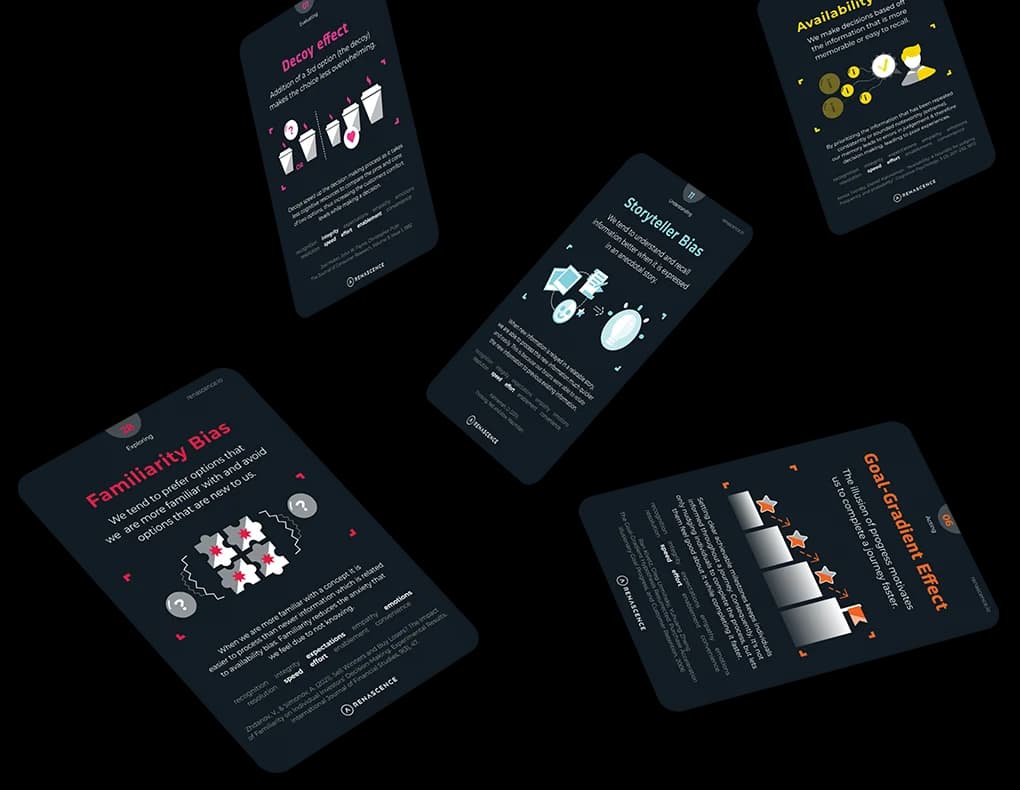
Behavioural economics explains why the gap tends to widen under pressure rather than narrow. Ran Kivetz, Oleg Urminsky and Yuhuang Zheng's 2006 study in the Journal of Marketing Research, "The Goal-Gradient Hypothesis Resonates Across Service Industries," found that effort and motivation intensify as people perceive themselves nearing a goal. Customers near the end of a journey — the final mile of a delivery, the last step of an onboarding flow — are more impatient and more sensitive to friction than they were at the start, precisely when backstage systems are most likely to hand them off to an overworked human who has had no say in how the previous nine steps were designed. The blueprint is what tells you where that handoff sits, and whether it is strong enough to survive a customer who is almost out of patience.
How do you measure the gap once you've mapped it?
You measure the gap by comparing what the blueprint says should happen against independently observed delivery — never by asking the team that owns the process to self-report. Three sources do the real work:
- Direct observation of delivery against the blueprint's frontline and backstage layers, which is the entire premise of structured mystery shopping: an outside observer following the designed journey step by step and flagging exactly where lived reality departs from the script.
- Operational data at each handoff — SLA adherence, exception volumes, override rates — read against the blueprint's line of implementation, so a missed promise can be traced to a specific system or policy rather than blamed on "the team."
- Customer-reported friction, gathered close to the moment it happens rather than in a quarterly survey, and triangulated against the blueprint so a spike in complaints can be pinned to a named touchpoint rather than a vague sentiment score.
This is also where the metric trio earns its keep, provided you resist treating any single number as the whole truth. Bain & Company's 2005 report Closing the Delivery Gap found that while the large majority of companies believed they delivered a superior customer experience, only a small fraction of their customers agreed — the delivery gap given a number, two decades before the term became fashionable in CX circles. The lesson has not aged: internal confidence and external delivery are measured on different instruments, and a blueprint is what lets you compare them honestly rather than argue about them anecdotally.
A CX maturity assessment is a useful companion exercise here, because it tests whether the organisational conditions for closing the gap even exist — governance, data, incentives — before you spend further effort blueprinting a journey that structural weaknesses will undermine regardless. Renascence's CX Maturity Assessment scores an organisation across the building blocks that determine whether a blueprint gets acted on or filed.
What breaks when you try to close the gap?
Most attempts to close the gap fail for predictable, avoidable reasons rather than exotic ones:
- Blueprinting becomes a one-off workshop rather than a living document, so it is accurate on the day it is drawn and wrong within a quarter, once a system changes or a policy is quietly amended.
- Ownership sits with CX, not operations. A blueprint that the process owners didn't help build and don't maintain is a diagram, not an operating standard — it has no authority to change anyone's behaviour.
- Leaders fix the symptom at the line of visibility
- Nobody accounts for loss aversion among the staff who have to change. Frontline teams experience a redesigned process as the loss of a familiar workaround before they experience it as the gain of a better system, a dynamic well documented by Daniel Kahneman and Amos Tversky's work on loss aversion. Change management that ignores this will meet quiet resistance no blueprint can overcome on its own, which is why closing the gap is as much a change management exercise as a design one.
- The fix stops at diagnosis. A blueprint that identifies forty broken handoffs and produces no roadmap is a more detailed way of staying stuck.
The last point deserves its own discipline. A blueprint earns its keep only when every identified gap becomes a prioritised, owned initiative — which is precisely the translation step between diagnosis and delivery that CX implementation roadmaps exist to force. Diagnosis without a roadmap is theatre with better props.
How do you keep the designed and delivered journeys in sync over time?
You keep them in sync by treating the blueprint as infrastructure, not output — something owned jointly by service design and operations, revisited every time a system, policy, or frontline process changes, not once a year in a review deck. A few practices make this durable:
- Assign a blueprint owner outside the design team — ideally an operations lead with the authority to flag when a system change will break a documented handoff before it ships, not after customers notice.
- Re-run the observation layer quarterly, not annually, on the journeys that carry the highest emotional stakes — the ones where the peak-end rule, Daniel Kahneman's finding that people judge an experience largely by its most intense moment and its ending rather than its average, means a single broken handoff near the close of the journey will define the customer's entire memory of it, however well everything before it went.
- Feed frontline exception data back into the blueprint deliberately, since the workarounds staff invent to cope with a weak backstage process are usually the clearest signal of exactly where the blueprint needs to change next.
Organisations that treat journey maps and blueprints like the Selfridges teams who engineer theatre into specific, deliverable moments rather than a vague brand feeling tend to close this gap fastest — worth studying in our piece on Selfridges' customer journey and the CX lessons behind the theatre. The common thread is operational specificity: nothing in a strong experience is left to vague good intentions, because every promise has a mechanism drawn underneath it.
A journey map tells you what you meant to promise. A service blueprint tells you whether your organisation is actually capable of keeping it.
None of this replaces good customer research — a blueprint is only as honest as the voice-of-customer evidence and operational data that feed it, which is why pairing blueprinting work with disciplined voice of customer strategy matters more than the diagramming exercise itself. The blueprint is the translation layer. The evidence is what gives it the right to exist.
Closing the gap is a discipline, not a deliverable
The organisations that genuinely close the gap between designed and delivered journeys are not the ones with the most polished journey maps. They are the ones who have accepted that a map is a hypothesis, and a blueprint is how you test it against the unglamorous machinery — the scripts, the systems, the SLAs, the Tuesday-afternoon exceptions — that customers actually meet. Build the blueprint, own it jointly, revisit it on a cycle shorter than your patience for surprises, and the gap stops being a mystery you discover in a complaint and becomes a variable you manage on purpose.
If your organisation has strong journey maps but no blueprint underneath them, that is usually the first and cheapest fix available — and it is where our service design work typically starts: not redesigning the promise, but drawing the mechanism that finally lets you keep it.
Related reading



Writing on how human behavior shapes the experiences brands deliver — at the intersection of behavioral economics and customer experience.
Stay ahead of CX
Get the Journal in your inbox.
Insights, frameworks and event round-ups from the Renascence team. No spam, ever.