








Service Design · July 19, 2026
Journey Mapping Tools: From Free Templates to AI Platforms
Most journey mapping projects fail not from lack of empathy but from the wrong tool. This guide covers the full landscape — free templates to AI-native platforms — and the behavioral mechanics that determine whether a map produces insight or decoration.

Most journey mapping projects fail before the first sticky note hits the wall. Not because the team lacks empathy, and not because the customer data is thin — but because the tool was chosen for the wrong reason, or the practice was bolted onto an existing process rather than designed from scratch. The result is a beautiful artefact that nobody uses, a workshop that produces consensus but not change, and a slide deck that ages quietly in a shared drive.
The question worth asking in 2026 is not "which journey mapping tool should we buy?" It is "what does a journey mapping practice actually need to do — and which tools, free or paid, simple or sophisticated, are genuinely built for that?" The answer changes depending on whether you are a solo CX practitioner at a fast-growing SMB, a transformation lead at a regional bank, or a service-design team running cross-functional workshops across multiple markets.
This guide covers the full landscape: from free templates and lightweight apps to AI-native platforms and CRM-integrated solutions. It also addresses the one thing most tool comparisons skip — the behavioral mechanics that determine whether a journey map produces insight or just decoration.
What Journey Mapping Software Actually Needs to Do
A journey map is, at its core, a structured argument. It argues that the customer experiences the world in a particular sequence, feels particular things at particular moments, and encounters particular failures at particular points. The tool that hosts that argument needs to do three things well: capture the structure of the journey, surface the emotional arc, and connect the insight to action.
Most tools do the first reasonably well. Fewer do the second. Almost none do the third without significant manual effort.
When evaluating any journey mapping software — whether you are comparing enterprise platforms or looking for affordable journey mapping solutions for a small team — apply this filter:
- Structure: Can the tool represent stages, steps, and touchpoints in a way that mirrors how customers actually move, not just how internal departments are organised?
- Emotion: Does the tool have a mechanism for capturing and visualising the emotional arc — not as a decorative wavy line, but as a scored, comparable signal?
- Action: Can insights from the map flow directly into a roadmap, a backlog, or an improvement initiative — or does everything have to be exported, reformatted, and re-explained?
- Collaboration: Does the tool support real workshop dynamics, including asynchronous contribution, role-based access, and multi-stakeholder input?
- Integration: Can it connect to the CRM, VoC, or analytics stack the organisation already uses — or does it live in isolation?
With that filter in place, the landscape sorts itself into four broad categories.
Category One: Free Templates and Whiteboard Tools
The entry point for most teams is a free template — either a downloadable spreadsheet, a Miro or Mural board, or a Figma file. These are genuinely useful for a first journey mapping workshop, for teams with no dedicated CX budget, or for practitioners who want to move fast without a procurement cycle.
The strengths are obvious: zero cost, immediate availability, and enough flexibility to adapt to almost any context. Miro, in particular, has become the default whiteboard for collaborative journey mapping workshops, and its template library includes several serviceable journey map formats.
The limitations are equally obvious. A whiteboard is not a database. The moment the workshop ends, the map is a static image. There is no scoring engine, no emotional arc calculation, no way to flag a moment of truth programmatically, and no connection to a roadmap. Every subsequent update requires someone to manually edit the board — which means most boards are never updated at all.
For journey mapping for small businesses or early-stage CX programmes, free tools are a legitimate starting point. They are not a destination.
Category Two: Dedicated Journey Mapping Apps
The mid-market is populated by tools built specifically for journey mapping: platforms such as Smaply, UXPressia, and Custellence. These offer structured templates, persona management, and some degree of emotional-arc visualisation. They are a meaningful step up from a whiteboard, and their pricing is accessible enough for most teams.
What they typically lack is a scoring methodology. The emotional arc in most dedicated journey mapping apps is a freehand drawing — you drag a line up or down based on gut feel. That is better than nothing, but it is not a defensible signal. When a CFO asks why a particular touchpoint needs investment, "the line dips here" is not an answer.
They also tend to be disconnected from the broader CX stack. Data from customer feedback, mystery shopping, or VoC programmes has to be manually imported and positioned against the map. CRM integration is limited or absent. The result is a tool that is excellent for workshop facilitation and stakeholder communication, but weak on the analytical side.
For teams running regular CX journey design work and needing a professional output to share with leadership, dedicated journey mapping apps are a solid choice. For teams that need the map to drive operational change, they require significant supplementation.
Category Three: CRM-Integrated Journey Mapping
The most underused category in the market is CRM-integrated journey mapping — tools that connect the map directly to customer data, interaction history, and pipeline activity. Salesforce, for instance, has invested in this space through its Trailhead learning platform.
The Salesforce Trailhead Journey Mapping module is a free, self-paced online learning resource comprising five units and taking approximately 30 minutes to complete. Its units walk through adding journey mapping to a solution toolbox, defining intention and audience, starting a journey map, running a journey mapping workshop, and crafting the final map. The module is aimed at Salesforce administrators, architects, designers, developers, marketers, and UX professionals — in other words, practitioners who are already inside the Salesforce ecosystem and want to embed journey thinking into their existing workflow.
What is instructive about the Trailhead approach is its framing. The module positions journey mapping not as a standalone design exercise but as a component of Relationship Design — a human-centred design practice that focuses on social connections and shared values. That framing matters. It positions the map as a tool for understanding how customers relate to a business over time, not just how they navigate a process. The module also identifies a set of concrete benefits: better cross-team alignment, more strategic resource allocation, deeper understanding of customer pain points, increased empathy, and a stronger case for innovation.
These are the right benefits to name. They are also the benefits that most journey mapping projects fail to deliver — not because the tool is wrong, but because the practice is not embedded in the right organisational context. A 30-minute module is a useful orientation; it is not a substitute for a structured service design practice.
The broader lesson from the CRM-integrated category is this: when journey mapping lives inside the system where customer data already lives, the map stays alive. It is updated by real interactions, not by someone manually editing a board. That is a fundamentally different relationship between the map and the organisation — and it is where the field is heading.
Category Four: AI-Native CX Design Platforms
The most significant development in the journey mapping tool landscape in recent years is the emergence of AI-native platforms — tools where artificial intelligence is not a feature bolted on, but a core part of the workflow. This is the category that changes what is possible for practitioners who want to move from journey mapping as a workshop activity to journey mapping as a continuous management practice.
René Studio, built by Renascence, sits in this category. It is an AI-native customer experience design platform that turns journey mapping from an opinion-driven exercise into something you can map, measure, score, and improve with the rigour a finance team applies to a P&L. The core workflow moves through five stages: Map, Score, Analyse, Improve, and Deploy.
The mapping layer structures every journey as Stages → Steps → Touchpoints, with each touchpoint capturing channel, the customer's job-to-be-done, pain points, and highlights. The scoring layer applies EXIS — the Experience Impact Score, running from −5 to +5 — a transparent, deterministic engine that replaces the freehand emotional arc with a quantified signal. The analysis layer plots the EXIS scores across the journey and automatically flags Moments of Truth. The improvement layer connects weak touchpoints to a categorised Solutions library and converts them into tracked Roadmap initiatives with owners, priorities, and deadlines. The deployment layer maintains a Current → Future → Deployed lifecycle so design intent and operational reality stay connected.
The embedded AI assistant, René, can scaffold a full journey from a prompt — useful for teams starting from scratch or exploring a new customer segment. Critically, René always shows a confirm card before changing the workspace, which means practitioners stay in control of the map rather than having AI make silent edits.
For teams exploring AI in journey mapping as a serious operational capability rather than a novelty, this is the architecture worth understanding: structured data, scored moments, and an improvement pathway that connects the map to the work.
The Behavioral Economics Problem That Every Tool Ignores
Here is the insight that most journey mapping tool comparisons miss entirely: the map is not the problem. The problem is what happens to the map after the workshop.
Daniel Kahneman's peak-end rule — the finding that people judge an experience primarily by its most intense moment and its final moment, not by an average of all moments — has a direct implication for journey mapping practice. If the workshop itself is the most intense and final moment of the journey mapping process, that is what the team will remember. The map becomes the output, not the input. The workshop becomes the event, not the beginning of a practice.
This is why so many journey maps end up in shared drives. The peak-end rule works against the practitioner who designs a great workshop but fails to design what comes after it. The fix is not a better tool — it is a better process architecture. The tool needs to support a workflow that continues beyond the workshop: regular review cadences, ownership of individual touchpoints, connection to VoC data, and a roadmap that is visible to the people responsible for delivery.
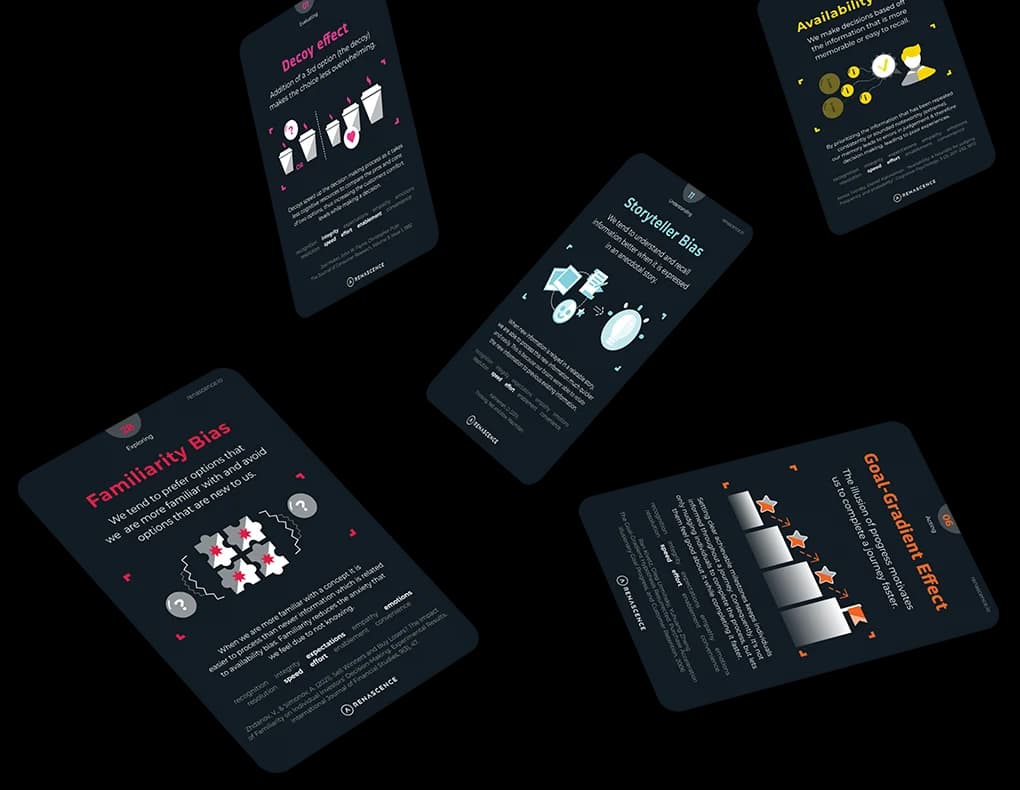
There is also a goal-gradient effect worth considering. People accelerate effort as they approach a goal. A journey map that shows progress — touchpoints moving from red to amber to green, roadmap items shifting from planned to deployed — activates this effect in the teams responsible for improvement. A static map in a slide deck does not. This is one of the strongest behavioral arguments for choosing a tool that has a live improvement layer, not just a mapping canvas.
Understanding these mechanisms is part of what behavioral economics applied to CX actually means in practice — not just knowing the names of the effects, but designing systems that work with them rather than against them.
How to Run a Journey Mapping Workshop That Produces Change, Not Consensus
The tool is a supporting actor. The workshop design is the lead. Here is a structured approach to journey mapping workshops in 2026 that is built around producing action, not just alignment:
- Define the scope before the room fills up. Agree on the specific customer segment, the specific journey, and the specific outcome the workshop is meant to produce. A workshop with an undefined scope produces a map with an undefined use.
- Bring evidence, not opinions. Every touchpoint assessment should be grounded in real data — VoC, mystery shopping findings, complaint data, NPS verbatims. Opinions are a starting point; evidence is what makes the map defensible.
- Score every touchpoint. Whether you use a proprietary scoring engine or a simple agreed scale, every touchpoint needs a number. This is what allows you to prioritise, compare, and track change over time.
- Identify moments of truth explicitly. Not every touchpoint is equal. The workshop should surface the two or three moments that disproportionately shape the customer's overall perception — the peaks and the end, per Kahneman's rule.
- Assign ownership before the room empties. Every identified improvement needs an owner, a deadline, and a connection to the tool or system where it will be tracked. If ownership is not assigned in the room, it will not be assigned at all.
- Schedule the follow-up before the workshop ends. The next review date — ideally 30 days out — should be in calendars before participants leave. The workshop is not the end of the process; it is the beginning of a delivery cycle.
This structure applies whether the team is using a free Miro template or an AI-native platform. The behavioral architecture of the process matters more than the sophistication of the software. That said, a tool that supports steps four, five, and six natively will consistently outperform one that requires manual workarounds for each of them.
Choosing the Right Tool for Your Context
The honest answer to "which journey mapping tool is best?" is: it depends on what you are trying to manage, not just what you are trying to map.
If you are running a one-off discovery workshop with a cross-functional team and need to produce a shareable artefact quickly, a free template or a whiteboard tool is the right choice. If you are building a repeatable journey mapping practice across multiple customer segments and need professional outputs for senior stakeholders, a dedicated journey mapping app earns its subscription. If your organisation runs on Salesforce and you want journey thinking embedded in the CRM workflow, the Trailhead module is a useful foundation — and the broader Salesforce ecosystem offers integration paths worth exploring. If you are building a CX management capability where the map needs to drive measurable improvement over time, an AI-native platform with a scoring engine and a live roadmap is the appropriate investment.
The mistake is choosing a tool for its features rather than for its fit with the practice you are actually capable of sustaining. A sophisticated platform used badly produces worse outcomes than a simple template used well. CX implementation roadmaps fail not because the tools are wrong, but because the organisational capability to use them is not in place.
For teams assessing where they currently sit — and therefore which tool tier is appropriate — the CX Maturity Assessment is a useful starting point. It scores maturity across twelve building blocks of CX capability, which gives a clearer picture of whether the organisation is ready for a sophisticated platform or needs to build foundational practice first.
The Map Is Not the Work
The most important thing to understand about journey mapping in 2026 is that the field has matured past the point where producing a map is the goal. The map is the beginning of the work, not the end of it.
The tools that will define the next generation of CX practice are the ones that treat the map as living data — scored, owned, connected to evidence, and linked to a delivery mechanism. The tools that will continue to produce beautiful artefacts that nobody uses are the ones that treat the map as a document.
Choosing between them is not primarily a technology decision. It is a decision about what kind of CX practice you are building — one that produces insight, or one that produces change. Those are different ambitions, and they require different tools, different processes, and different levels of organisational commitment.
The good news is that the behavioral mechanics of change — goal-gradient, peak-end, loss aversion applied to the cost of inaction — all work in favour of the practitioner who designs a journey mapping practice with a clear improvement pathway. The map that shows progress, touchpoint by touchpoint, is the map that keeps the organisation engaged. That is not a feature request. It is the whole point.
If you are building or rebuilding a customer experience programme and want to understand which tools and practices fit your current maturity level, the conversation starts with an honest assessment of where you are — not where you aspire to be.
Further reading
FAQ
Questions we get on this topic
Related reading


Stay ahead of CX
Get the Journal in your inbox.
Insights, frameworks and event round-ups from the Renascence team. No spam, ever.