
Organizational Transformation · August 13, 2026
Executive Sponsorship for CX: Why It Fails and How to Win It
CX sponsorship collapses because teams pitch it like a favour, not a funded governance role. Here's how to win backing that survives a budget cut.

Every CX leader has heard a chief executive say "customer experience matters to us" in a town hall, then watched that same executive reallocate the CX budget to a product launch six months later. The sponsorship was never real. It was applause, not investment — and applause doesn't survive the first budget cycle.
Here is the uncomfortable truth: executive sponsorship for CX rarely fails because leadership doesn't believe in customer experience. It fails because CX teams ask for sponsorship the way they'd ask for a favour — with a story, a journey map, and a plea for support — instead of the way finance asks for capital: with a case, a number, and a seat at the table with consequences attached. Executive sponsorship that survives is a governance role with named accountability and a budget line, not a slide someone nodded at in a steering meeting. Win it like you'd win any other investment decision, and it holds. Win it as a mood, and it evaporates the moment margins tighten.
What does executive sponsorship for CX actually mean?
A real sponsor does three things a fan doesn't: they put their name against a target, they unblock resources when a function head says no, and they show up when the metric is red, not just when it's green. Anything short of that is advocacy, not sponsorship — useful, but not durable.
Most CX programmes confuse the two because advocacy is easy to get and sponsorship is hard. An executive will happily say kind things about customer-centricity in an all-hands. Getting that same executive to defend the CX budget in a cost-cutting round, or to sit on a CX governance structure with a defined vote, is a different negotiation entirely. The first costs them nothing. The second costs them political capital, and people spend political capital only on things they're confident will pay them back.
Why do CX programmes lose sponsorship even when leaders say yes?
Sponsorship erodes because of three predictable, well-documented behavioural patterns — not because executives are fickle. Understanding them changes how you ask.
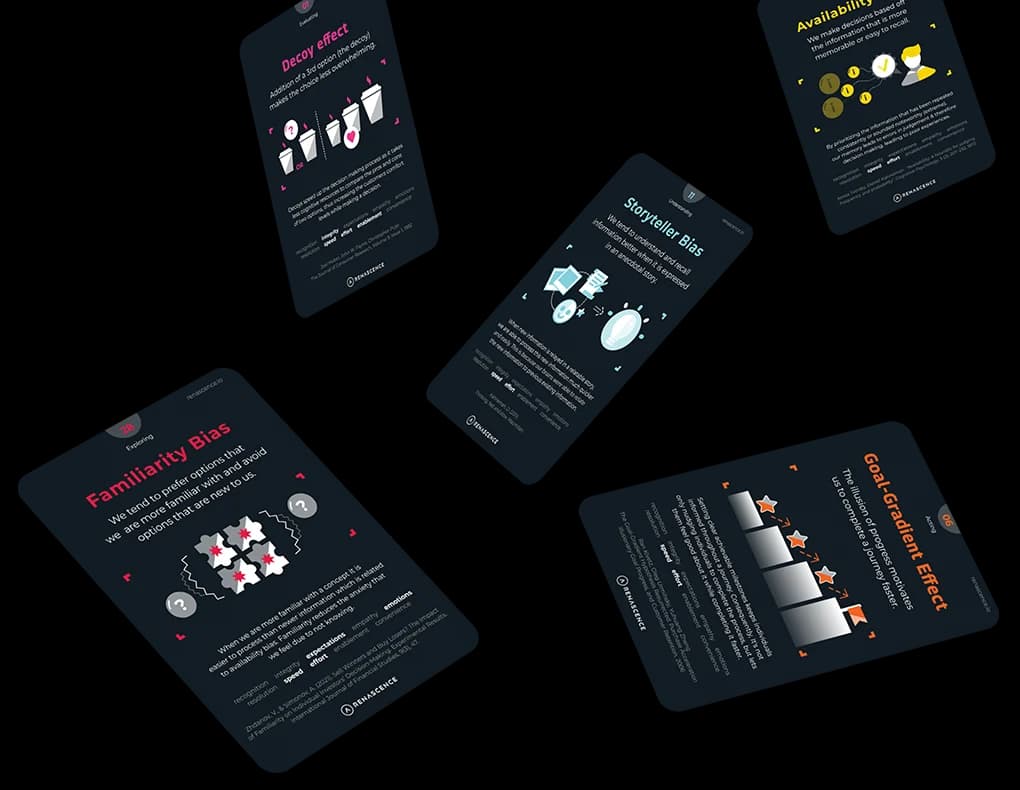
The first is status quo bias: decision-makers systematically overweight the comfort of the current arrangement relative to the uncertain gains of a new one, even when the new arrangement is objectively better. This was formalised by Richard Thaler, Daniel Kahneman and Jack Knetsch in their 1991 paper "Anomalies: The Endowment Effect, Loss Aversion, and Status Quo Bias," published in the Journal of Economic Perspectives. A CX transformation asks an executive to disrupt reporting lines, budget ownership and pet metrics that already work well enough for them personally. Unless the ask is framed against a cost of inaction, the default — do nothing — wins by default, literally.
The second is loss aversion, the finding — central to Kahneman's work and detailed in his 2011 book Thinking, Fast and Slow — that people feel the pain of a loss roughly twice as intensely as the pleasure of an equivalent gain. Most CX pitches are built entirely on gain-framing: "we could delight more customers," "we could raise NPS." That framing is weak precisely because it competes against a certain, immediate loss to the executive — budget, headcount, control — for an uncertain future gain to the customer. Flip the frame to what the business is already losing — churn, cost-to-serve, repeat complaints eating frontline capacity — and you're now asking the executive to avoid a loss, not chase a gain. That's a far easier "yes."
The third is simpler and more organisational: diffusion of responsibility. When CX sits everywhere — a bit in marketing, a bit in operations, a bit in the contact centre — it belongs to no one, and an executive can always assume someone else is sponsoring it. This is why so many programmes have a sponsor on paper and an orphan in practice.
A sponsor who only shows up when the metric is green was never sponsoring the programme. They were sponsoring the good news.
How do you build a business case an executive can't walk away from?
You build it the way the finance function would build it — in the language of risk and return, not the language of empathy. This doesn't mean stripping the customer out of the story; it means putting a number on what happens to the business when the customer is ignored.
Bain & Company's 2005 report Closing the Delivery Gap found that 80% of companies believed they delivered a superior customer experience, while only 8% of their customers agreed. That gap is the case, right there: it tells an executive their internal dashboard is lying to them, and that the loss is already happening whether or not they fund a fix. Use that tension deliberately — it reframes the ask from "please invest in something nice" to "your current numbers are probably wrong, and here's the cost of finding out the hard way."
A business case that lands with a CFO or CEO typically does the following:
- Names the loss already occurring — cost-to-serve from repeat contacts, churn among high-value segments, escalation volume eating frontline hours — rather than only the upside of an improved score.
- Ties the metric to a P&L line the executive already owns, not a satisfaction index invented by the CX team.
- Quantifies a range, not a promise — a credible band of impact built on the business's own data, not a borrowed industry benchmark passed off as certain.
- Shows the cost of the status quo over a fixed horizon — twelve to eighteen months — so inaction has a visible price tag, not just an invisible one.
- Asks for a decision, not a discussion — a specific budget, a specific governance seat, a specific first milestone.
If you're short on internal data to build that range, a structured diagnostic closes the gap faster than another workshop. A CX ROI calculation against your own churn and service-cost figures gives you a number to defend in the room, rather than a benchmark borrowed from someone else's industry and someone else's customers.
What does real governance look like once you have a sponsor?
Sponsorship that isn't structured into governance decays within two quarters. The fix is mechanical, not motivational: give the sponsor a formal seat with defined authority, not an invitation to a quarterly update. In practice, that means building the operating model before you build the roadmap.
- Name one accountable executive, not a committee. Shared accountability is diffused accountability; when three leaders co-sponsor, none of them owns the downside.
- Attach the role to a decision right, not a briefing slot — the sponsor approves trade-offs between CX investment and competing priorities, rather than being told what was decided.
- Put the programme's metrics on the same scorecard the sponsor is personally measured against. If CX success doesn't touch their own bonus criteria, it will always lose to something that does.
- Set a standing cadence with a hard rule: the sponsor attends in person when the metric is red, not only when there's good news to present.
- Build an escalation path so friction discovered on the front line reaches the sponsor within days, not at the next scheduled review.
- Publish the roadmap with named owners and dates, so sponsorship has something concrete to be measured against rather than a vague mandate to "champion CX."
This is where most programmes underinvest. They spend months on journey maps and almost no time on the operating model that keeps a sponsor tethered to the outcome. A structured implementation roadmap with named owners does more for sponsorship longevity than any stakeholder-engagement deck, because it turns a belief into a set of dates someone can be held to.
John Kotter's 1995 Harvard Business Review article, "Leading Change: Why Transformation Efforts Fail," made a point that still holds three decades later: transformations stall without a powerful enough guiding coalition, and even a strong one loses steam without a structure that institutionalises the change beyond the sponsor who launched it. CX transformation is not exempt from that pattern — it's arguably more exposed to it, because CX gains are often slower to show up on a balance sheet than a cost-cutting programme's savings.
Where does the frontline fit into sponsorship?
A sponsor who never hears from the frontline is sponsoring a report, not a reality. Escalations, repeat complaints and attrition among service staff are leading indicators of where the customer experience is actually breaking — often months before it shows up in a satisfaction score. If your sponsor's only exposure to CX is a quarterly dashboard, they're one budget cycle away from deciding it isn't working, because nothing they see connects to the operational strain their own teams are under. This is also why frontline attrition deserves a seat at the sponsorship conversation — the connection between the two is closer than most steering committees realise, as we've argued in why frontline attrition is really a CX problem.
How do you keep a sponsor engaged after the launch?
The launch is the easy part — everyone wants to be photographed at the ribbon-cutting. The real test is month nine, when the initial energy has gone and the metric hasn't moved as fast as the kickoff deck implied it would.
This is where the goal-gradient effect — the well-documented tendency for effort and engagement to intensify as people perceive themselves nearing a finish line — works against long transformation timelines unless you engineer it deliberately. A eighteen-month CX transformation feels, to a busy executive, like a finish line that never gets closer. The fix is to break it into visible interim wins the sponsor can point to inside a single quarter: a resolved escalation category, a measurable drop in repeat contacts on one journey, a fixed broken step in onboarding. Each one moves the perceived finish line closer and gives the sponsor something real to defend in their own leadership meetings.
Three habits keep sponsorship alive past the honeymoon period:
- Report in the sponsor's currency — cost avoided, revenue protected, complaint volume down — never in CX-team jargon like satisfaction indices divorced from a financial outcome.
- Bring bad news early and with a plan attached. Sponsors disengage from surprises, not from problems; a problem with a fix already in motion keeps their confidence intact.
- Rotate the win. Don't let every "we improved something" story come from the same function — a sponsor needs to see the effort is organisation-wide, not a pet project of one department.
Change management discipline matters more here than almost anywhere else in the programme, because sustaining sponsorship over eighteen months is itself a change-management problem — it requires the same stakeholder mapping, resistance planning and reinforcement mechanics you'd apply to any other large-scale shift. Treating it as a managed change programme, rather than an ongoing charm offensive, is what separates sponsors who last from sponsors who quietly stop attending.
What are the warning signs a sponsorship is already gone?
Sponsorship rarely ends with a formal withdrawal. It ends quietly, and the signals are consistent enough to watch for:
- The sponsor sends a deputy to steering meetings more often than they attend themselves.
- CX metrics disappear from the executive's own scorecard or leadership presentations.
- Budget requests that once moved in weeks start taking months, with no explicit rejection — just delay.
- The programme is referenced in the past tense in internal communications ("the work we did on…") before it has actually concluded.
- Other functions stop treating CX asks as binding, because they've noticed the sponsor no longer enforces them.
Catch any two of these together and the sponsorship is not fragile — it's already gone. The response is not a re-pitch; it's a recheck of whether the original business case still holds against the organisation's current priorities, and a fresh, tighter ask if it doesn't. A CX maturity assessment at this point is often more persuasive than another advocacy conversation, because it replaces a stalled relationship with fresh evidence.
The sponsorship you actually want
The goal was never a sponsor who likes customer experience. It's a sponsor who treats the customer P&L with the same discipline they'd apply to any other capital allocation — someone who defends the number when it's inconvenient, not just when it's flattering. Build the case in the language of loss avoided, not gain hoped for. Build the governance so the role has teeth, not just a title. Do that, and sponsorship stops being something you win once in a kickoff meeting and becomes something the organisation simply assumes, the way it assumes a finance director owns the budget. That's the version worth building toward — and it's worth testing where your own organisation currently stands before your next funding cycle forces the question. A structured CX assessment, or a conversation with our team at Renascence, is a sound place to start.
Further reading
FAQ
Questions we get on this topic
Related reading



Writing on how human behavior shapes the experiences brands deliver — at the intersection of behavioral economics and customer experience.
Stay ahead of CX
Get the Journal in your inbox.
Insights, frameworks and event round-ups from the Renascence team. No spam, ever.