Behavioral Economics · April 13, 2025
Behavioral Economics Is More Than Just Numbers
At first glance, behavioral economics looks like a subfield of economics—anchored in equations, probabilities, and experiments. But dig deeper, and you’ll find something more powerful. Behavioral economics is a lens for understanding how people feel, decide, trust, and act in real life.
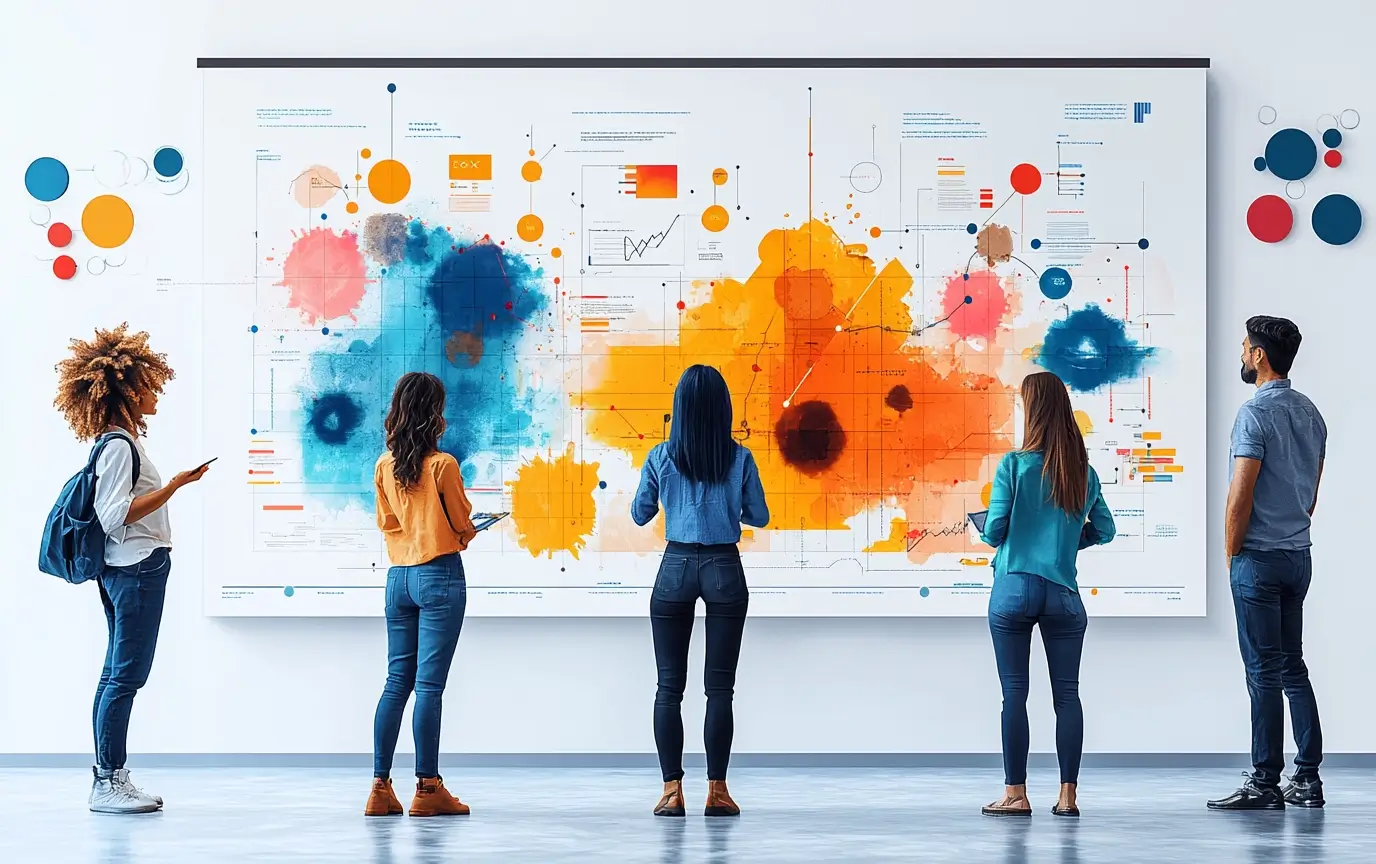
At first glance, behavioral economics looks like a subfield of economics—anchored in equations, probabilities, and experiments. But dig deeper, and you’ll find something more powerful. Behavioral economics is a lens for understanding how people feel, decide, trust, and act in real life.
It’s not just about predicting choices. It’s about designing systems, services, and experiences that work with the reality of human nature—not a theoretical version of it.
This article explores how behavioral economics evolved from statistical roots into a social science of emotion, culture, and meaning. We’ll show how governments, businesses, and CX/EX leaders apply BE not just to optimize—but to empathize.
The Misconception: Behavioral Economics as Just Experiments and Biases
Early behavioral economics gained traction through its clear, replicable experiments—many of which focused on quantifiable bias:
- Prospect Theory quantified how people evaluate risk and loss.
- Anchoring studies showed how random numbers influence decisions.
- Ultimatum Games revealed fairness norms in financial offers.
- Framing effects were statistically modeled across survey responses.
While these findings were crucial, they also led many to believe that BE is just a science of nudges and numbers.
But the leading voices in the field—like Kahneman, Thaler, and Sunstein—have long argued otherwise. In fact, Daniel Kahneman repeatedly emphasized that human decision-making is more emotional and memory-driven than previously believed.
BE was never just about quantifying irrationality. It was about understanding the lived experience of choice.
This broader view is now embraced by leading institutions:
- The OECD refers to BE as a “decision-making science for context-sensitive public design.”
- The World Bank calls behavioral economics a tool for building “adaptive and inclusive systems.”
- In CX strategy, BE is now used for emotion recognition, ritual design, and experience choreography—not only for optimizing conversion rates.
Behavioral Economics in CX and EX: Designing for Emotion, Not Just Logic
Customer and employee experience (CX and EX) work has embraced behavioral economics not just to “fix friction” but to design emotion into systems. This is where BE moves far beyond numbers.
Real-world examples:
- Etihad Guest (UAE) redesigned its loyalty program to emphasize status identity and reward anticipation, using temporal framing and emotional feedback. The result: higher monthly redemptions and increased net promoter scores.
- Aldar Academies (Abu Dhabi) integrated BE into staff onboarding journeys—not through incentives, but through recognition rituals and symbolic gifts that aligned with cultural values. Retention among new teachers rose 19% in one year.
- Misk Foundation (KSA) uses BE to design youth career guidance—framing paths in aspirational, identity-driven language. Rather than pushing information, they structure discovery as a storytelling experience.
These are not spreadsheet optimizations. They are emotional architectures—built with real behavioral insight into identity, memory, and motivation.
At Renascence, we’ve seen this firsthand. Our behavioral frameworks guide everything from feedback loops and service journeys to employee rituals and trust systems. Numbers matter—but only when they reveal the feelings behind them.
The Evolution: From Nudge Theory to Behavioral Design
The biggest sign that behavioral economics is more than just numbers? It’s being rebranded as behavioral design—a field that mixes psychology, design thinking, sociology, and cultural insight.
Key shifts:
- From nudge theory to behaviorally intelligent systems
- From optimizing behavior to designing for dignity, memory, and identity
- From statistical tests to ethnography, emotion mapping, and narrative research
In 2022, Harvard’s Behavioral Insights Group published a report titled “Designing With People in Mind”, urging governments and organizations to focus not only on what works, but why it feels right. The report stressed the need for:
- Ethical alignment
- Cultural embedding
- Feedback-centered iterations
Behavioral economics has entered the design room—not just the economics department. It's now applied in:
- UX Design (e.g., Apple Wallet prompts using goal gradient theory)
- Service Blueprinting (e.g., bank journey redesigns using friction bias and trust heuristics)
- Employee Enablement (e.g., onboarding rituals shaped by behavioral closure techniques)
This isn’t a pivot away from science. It’s a maturation of the field—integrating feeling with function.
Real Applications: Beyond Numbers in Government and Public Policy
Behavioral economics is now foundational in public service transformation, especially across the Middle East, Europe, and Asia. But its most successful deployments don’t rely solely on numbers—they use BE to humanize policy.
Real examples:
- Dubai Police redesigned their feedback and complaint response systems using fairness bias, peak–end rule, and emotional tone. Escalation rates dropped and satisfaction increased in digital channels.
- UK NHS “Better Conversations” Campaign used BE to train clinicians in emotional signaling and conversational reframing—not just procedure adherence. It improved patient trust and health compliance.
- Rwanda’s Clean Water Messaging focused on identity and community status, not just statistics—resulting in higher adoption of safe water practices in rural areas, as documented by the World Bank.
What these examples prove is that statistical nudges are only one part of the equation. Long-term change happens when behavioral economics is applied through human stories, emotional rituals, and culturally respectful design.
Behavioral Economics and the Architecture of Trust
One of the most underappreciated contributions of behavioral economics is its role in designing trust, especially in environments of uncertainty, complexity, or perceived risk. Trust is not purely rational. It’s behavioral, emotional, and often subconscious.
Real-world insights from BE on trust:
- Trust is formed through consistent cues: Brands and leaders build trust not by logic, but by repeating emotionally reliable behaviors.
- Status and fairness matter: In employee experience, perception of fairness—even more than outcomes—drives whether people stay or disengage.
- Transparency reduces suspicion—but so does tone: Behavioral research from the World Bank and the OECD shows that clear, respectful language reduces resistance even when policies are strict.
Real examples:
- Emirates NBD improved trust in its mobile app by redesigning default prompts and language tone during error messages and downtimes—applying salience and emotional regulation theory. Customer complaints during outages decreased by 24% in 2023.
- Abu Dhabi Department of Economic Development embedded status recognition rituals into licensing programs for entrepreneurs. Behavioral framing boosted program satisfaction by emphasizing empowerment and dignity, not just process efficiency.
These interventions work because behavioral economics isn’t used for persuasion—it’s used for alignment between emotional expectation and institutional delivery.
How Firms Like Renascence Expand Behavioral Economics Into Experience Systems
Global consultancies like BCG, Deloitte, and McKinsey integrate BE into leadership, digital, and policy design. But they often focus on the structural or analytical level.
Renascence goes a step further. We embed behavioral economics into human-centered rituals, cultural narratives, and emotional choreography—especially in the GCC and wider Middle East.
Here’s how we differ:
- We move beyond default nudges and use behavioral economics in service design, feedback management, and employee onboarding to shape memory and meaning.
- We use cognitive bias mapping tools, such as those integrated into Rebel Reveal, to help organizations diagnose emotional frictions—not just behavioral gaps.
- Our Compass CX framework merges customer experience with behavioral economics, translating abstract theory into real rituals, emotional cues, and trust-building touchpoints.
- We don’t just train teams in BE—we help them build experience rituals grounded in status, closure, social proof, empathy, and effort reduction.
This is behavioral economics as design language, not academic discipline.
Culture, Emotion, and the Limits of Universal Biases
Another reason behavioral economics is more than just numbers is because biases don’t always operate the same way across cultures. What works in London may fail in Riyadh. Emotional triggers in Singapore may not resonate in Casablanca.
For example:
- Fairness bias is universal—but how fairness is interpreted differs. In tribal cultures, group-based recognition often trumps individual merit.
- Choice overload might frustrate consumers in the West, but in markets where choice represents status or empowerment, it may be welcomed.
- Loss aversion can be framed around material loss in some markets—but around honor or social reputation in others.
Renascence’s experience across UAE, Saudi Arabia, and Qatar confirms this. We’ve redesigned CX and EX journeys using locally adapted behavioral strategies—combining research with deep contextual listening.
In doing so, we’ve found that behavioral truth exists—but behavioral translation is essential.
Final Thought: Behavioral Economics Is About Humans—Not Just Behavior
Numbers matter. Evidence matters. But in the end, behavioral economics is not about bias scores or lab studies. It’s about designing systems that feel right, act fairly, and honor the way people actually think, feel, and choose.
At its best, BE isn’t a formula. It’s a form of empathy.
At Renascence, we use behavioral economics to build rituals, journeys, strategies, and cultures that reflect emotional nuance, cognitive patterns, and social belonging. Whether we're designing a Voice of Customer system, an employee recognition experience, or a national service design strategy, the goal is always the same:
Make people feel understood—not just managed.
Behavioral economics is more than just numbers.
It’s how we make economics—and experience—human.
Related reading


Writing on how human behavior shapes the experiences brands deliver — at the intersection of behavioral economics and customer experience.
Stay ahead of CX
Get the Journal in your inbox.
Insights, frameworks and event round-ups from the Renascence team. No spam, ever.