







About

The consultancy born at the intersection of behavioral economics and human experience.

René Studio
AI EXPERIENCE STUDIO

The CX design platform we built from a decade of client work.

Explore René Studio
Mysterya
MYSTERY AUDITS, LIVE

Mystery audits we run, scored live for every location.

Explore Mysterya
NOW HIRING

Join a team reshaping how the world experiences brands.

View open roles →

COMPANY

GROW WITH US

CONNECT

Services

Comprehensive CX and management consulting for enterprise brands.

René Studio
AI EXPERIENCE STUDIO

Every engagement, mapped and scored in one AI workspace.

Explore René Studio
Mysterya
MYSTERY AUDITS, LIVE

Mystery shopping, scored and evidenced in real time.

Explore Mysterya
ALL SERVICES

Explore the full range of CX & management consulting services.

Browse all services →

CORE

SPECIALIST

Solutions

Structured solutions that turn CX ambition into measurable outcomes.

René Studio
AI EXPERIENCE STUDIO

Map, score and fix the journeys we redesign, with AI.

Explore René Studio
Mysterya
MYSTERY AUDITS, LIVE

Check the experience you designed is delivered.

Explore Mysterya
ALL SOLUTIONS

Explore every CX solution we offer.

Browse solutions →

STRATEGY & GOVERNANCE

DESIGN & DELIVERY

CULTURE & EXPERIENCE

Industries

A decade of CX transformation across the region's defining sectors.

René Studio
AI EXPERIENCE STUDIO

Sector-ready journeys, scored by AI in minutes.

Explore René Studio
Mysterya
MYSTERY AUDITS, LIVE

Mystery audits tuned to your sector, scored live.

Explore Mysterya
ALL INDUSTRIES

See how we work across every sector.

Browse industries →

BUILT ENVIRONMENT

FINANCE & TECH

PEOPLE & MOBILITY

Products

Proprietary tools, platforms, and AI that power CX transformation.

René Studio
AI EXPERIENCE STUDIO

Design, score and fix customer journeys with AI.

Explore René Studio
Mysterya
MYSTERY AUDITS, LIVE

Audit every location and act on what you find.

Explore Mysterya
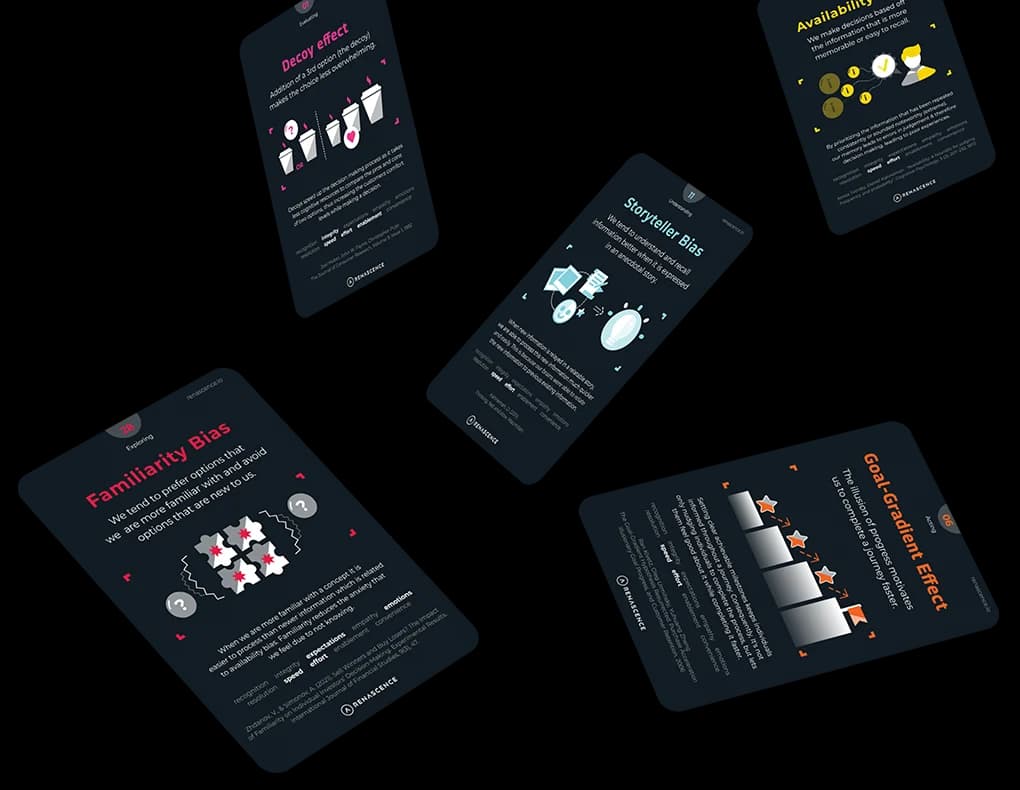
REBELDECK A · 36 FORCES

The forces that shape how humans experience the world.

Explore REBEL Reveal →
ALL PRODUCTS

Explore the full Renascence product ecosystem.

Browse products →

PLATFORMS

AI & TECHNOLOGY

LEARNING & FRAMEWORKS

CX TOOLKIT

Opinion

Insights, research, and conversations at the frontier of CX.

René Studio
AI EXPERIENCE STUDIO

Turn what you read into a journey you can score.

Explore René Studio
Mysterya
MYSTERY AUDITS, LIVE

See what customers really experience, visit by visit.

Explore Mysterya
ReadExperience JournalArticles & research on CX, behavior, and transformation.Watch & listenExperience LoomOur video podcast on CX & behavior.CuratedCX NewsIndustry news that matters in CX, minus the noise.

Latest articles

Latest episodes

Latest news

Hub

Free tools, templates, and resources to advance your CX practice.

René Studio
AI EXPERIENCE STUDIO

Design, score and fix customer journeys with AI.

Explore René Studio
Mysterya
MYSTERY AUDITS, LIVE

Every visit, every location, every score. Live.

Explore Mysterya
THE MANIFESTOBurn the Deck.
Ten Virtues. Zero Excuses.Start reading →
THE HUB

Every free tool, template and resource in one place.

Visit the Hub →

AI TOOLS

FREE TOOLS

LEARNING

CULTURE

AI · 19 October 2026

Google Suncatcher: testing AI data centres in orbit

Google's Suncatcher project will launch a fridge-sized experimental satellite on a SpaceX Falcon 9 on 1 October to test AI computing in orbit on solar power, per The Decoder.

Newsdesk
Curated briefing · 2 min read

What happened

Google is testing whether AI computing infrastructure can run in orbit on solar power. Its "Suncatcher" project, as reported by The Decoder, is preparing a fridge-sized experimental satellite for launch on a SpaceX Falcon 9 on 1 October.

The initiative aims to move part of the energy-intensive work of AI data centres off the ground. The scale of the challenge is steep. According to the reporting, matching the output of a single 1-gigawatt data centre on Earth would require around 10,000 satellites.

The timeline is also long. Jeff Bezos has suggested it could take around 20 years before orbital data centres become cheaper than ground-based ones. The October launch is therefore best read as an early technical test rather than a sign of imminent commercial deployment.

Why it matters

For leaders in AI and digital transformation, the story shows how seriously a major AI operator is considering the physical limits of computing, including power, land, cooling and cost. Organisations have tended to treat data centre capacity as a fixed input. Projects like this suggest that where and how AI workloads run may become a strategic variable, with consequences for latency, resilience and data governance.

The gap between ambition and economics is the more useful signal. Even if the technology proves workable, the operational model would be radically different from today's facilities. Teams planning long-range AI infrastructure should expect that the hardest questions will be about maintenance, reliability and unit cost, not launch capability alone.

By the numbers

  • 1 October: planned launch date for the experimental, fridge-sized satellite on a SpaceX Falcon 9.
  • Around 10,000: satellites needed to match a single 1-gigawatt data centre on Earth, according to the reporting.
  • 20 years: Jeff Bezos's estimated timeframe before orbital data centres could beat ground-based ones on cost.

The Renascence take

Most coverage will focus on the orbital novelty. The more instructive lesson is about sequencing: a bold infrastructure bet should be tested against its riskiest assumption before anyone builds at scale.

The headline is about putting data centres in space, but the real signal is the mismatch between the ambition and the unit economics. A 10,000-satellite system is a service-design problem as much as a launch problem, because every failure has to be detected, serviced or replaced. Customer-obsessed operators should ask which customer or operational outcome a speculative bet protects, then fund small experiments with explicit cost thresholds that would trigger a go or no-go decision.

Sources

This briefing was written by our Newsdesk, synthesising reporting from the outlets below. Follow the links for the original coverage.

FAQ

Questions we get on this topic

According to The Decoder's reporting, the experimental fridge-sized satellite is planned for launch on a SpaceX Falcon 9 on 1 October.

The reporting estimates that around 10,000 satellites would be needed to match the output of a single 1-gigawatt data centre on Earth.

Jeff Bezos has suggested it could take around 20 years before orbital data centres become cheaper than ground-based facilities.

No. The October launch is best read as an early technical test rather than a sign of imminent commercial deployment.

Stay ahead of CX

Get the signal, not the noise.

The stories shaping customer experience — plus the Journal and Experience Loom — in your inbox.