







About

The consultancy born at the intersection of behavioral economics and human experience.

René Studio
AI EXPERIENCE STUDIO

The CX design platform we built from a decade of client work.

Explore René Studio
Mysterya
MYSTERY AUDITS, LIVE

Mystery audits we run, scored live for every location.

Explore Mysterya
NOW HIRING

Join a team reshaping how the world experiences brands.

View open roles →

COMPANY

GROW WITH US

CONNECT

Services

Comprehensive CX and management consulting for enterprise brands.

René Studio
AI EXPERIENCE STUDIO

Every engagement, mapped and scored in one AI workspace.

Explore René Studio
Mysterya
MYSTERY AUDITS, LIVE

Mystery shopping, scored and evidenced in real time.

Explore Mysterya
ALL SERVICES

Explore the full range of CX & management consulting services.

Browse all services →

CORE

SPECIALIST

Solutions

Structured solutions that turn CX ambition into measurable outcomes.

René Studio
AI EXPERIENCE STUDIO

Map, score and fix the journeys we redesign, with AI.

Explore René Studio
Mysterya
MYSTERY AUDITS, LIVE

Check the experience you designed is delivered.

Explore Mysterya
ALL SOLUTIONS

Explore every CX solution we offer.

Browse solutions →

STRATEGY & GOVERNANCE

DESIGN & DELIVERY

CULTURE & EXPERIENCE

Industries

A decade of CX transformation across the region's defining sectors.

René Studio
AI EXPERIENCE STUDIO

Sector-ready journeys, scored by AI in minutes.

Explore René Studio
Mysterya
MYSTERY AUDITS, LIVE

Mystery audits tuned to your sector, scored live.

Explore Mysterya
ALL INDUSTRIES

See how we work across every sector.

Browse industries →

BUILT ENVIRONMENT

FINANCE & TECH

PEOPLE & MOBILITY

Products

Proprietary tools, platforms, and AI that power CX transformation.

René Studio
AI EXPERIENCE STUDIO

Design, score and fix customer journeys with AI.

Explore René Studio
Mysterya
MYSTERY AUDITS, LIVE

Audit every location and act on what you find.

Explore Mysterya
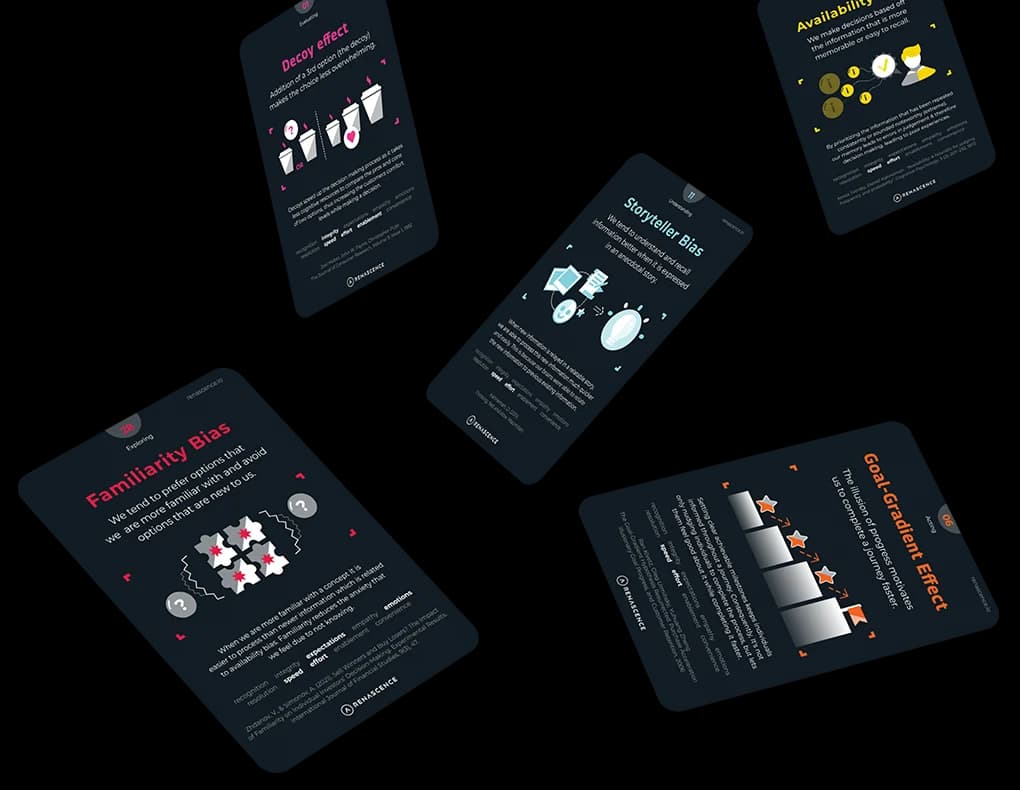
REBELDECK A · 36 FORCES

The forces that shape how humans experience the world.

Explore REBEL Reveal →
ALL PRODUCTS

Explore the full Renascence product ecosystem.

Browse products →

PLATFORMS

AI & TECHNOLOGY

LEARNING & FRAMEWORKS

CX TOOLKIT

Opinion

Insights, research, and conversations at the frontier of CX.

René Studio
AI EXPERIENCE STUDIO

Turn what you read into a journey you can score.

Explore René Studio
Mysterya
MYSTERY AUDITS, LIVE

See what customers really experience, visit by visit.

Explore Mysterya
ReadExperience JournalArticles & research on CX, behavior, and transformation.Watch & listenExperience LoomOur video podcast on CX & behavior.CuratedCX NewsIndustry news that matters in CX, minus the noise.

Latest articles

Latest episodes

Latest news

Hub

Free tools, templates, and resources to advance your CX practice.

René Studio
AI EXPERIENCE STUDIO

Design, score and fix customer journeys with AI.

Explore René Studio
Mysterya
MYSTERY AUDITS, LIVE

Every visit, every location, every score. Live.

Explore Mysterya
THE MANIFESTOBurn the Deck.
Ten Virtues. Zero Excuses.Start reading →
THE HUB

Every free tool, template and resource in one place.

Visit the Hub →

AI TOOLS

FREE TOOLS

LEARNING

CULTURE

Retail · 19 November 2026

Surveillance pricing ban: New York City Council passes law 44-5

New York City Council has banned surveillance pricing by a 44 to five vote, with violations carrying a $1,000 fine. A separate state-level bill that also prohibits the practice is awaiting the governor.

Newsdesk
Curated briefing · 2 min read

What happened

New York City has banned surveillance pricing after the City Council passed the measure 44 to five. A separate state-level bill that also prohibits the practice is before the governor, according to a New York Times report carried by Retail Customer Experience.

Surveillance pricing involves retailers setting prices with algorithms that draw on individual consumer habits and demographics. Under the city law, violations could attract a fine of $1,000.

New York is not acting alone. Maryland became the first US state to outlaw surveillance pricing in grocery stores, and to bar the use of personal data to set potentially higher prices, in March. New Jersey followed in August with a ban on using data to set and change prices in retail establishments. Pennsylvania lawmakers are considering Senate Bill 1205, which would ban dynamic pricing, and Minneapolis is weighing restrictions on surveillance-pricing technology in food retail.

Why it matters

Personalised pricing sits at the intersection of data, algorithms and customer trust. Many organisations have invested in pricing engines that adjust offers in real time, often with little visibility for the customers affected. This wave of legislation signals that the way such systems use behavioural and demographic signals is now a matter for regulators, not only for commercial teams.

For leaders in experience, AI and digital transformation, the implication is operational. Pricing models will need clearer governance, documented data inputs and the ability to explain why two customers may see different prices. Retailers that treat this as a compliance exercise alone may find the experience consequences harder to manage.

By the numbers

  • 44 to five: the New York City Council vote enacting the ban.
  • $1,000: the potential fine for violations under the city law.
  • March: when Maryland became the first US state to outlaw surveillance pricing in grocery stores.
  • Senate Bill 1205: the Pennsylvania proposal that would ban dynamic pricing.

The Renascence take

Most coverage will frame this as a pricing story. We think it is really a story about fairness perception. When customers sense that the price in front of them has been shaped by who they are rather than what they are buying, trust erodes quickly, and it is hard to rebuild.

The underlying principle is that people tolerate price differences they can understand, but resent ones they cannot explain. Algorithmic personalisation that feels opaque will be read as exploitation, whatever the intent behind it. A customer-obsessed operator should audit which data points feed its pricing logic, test whether any of them act as proxies for demographic traits, and be ready to explain price differences in plain language before a regulator or a journalist asks.

Sources

This briefing was written by our Newsdesk, synthesising reporting from the outlets below. Follow the links for the original coverage.

FAQ

Questions we get on this topic

The City Council passed a measure 44 to five banning surveillance pricing, in which retailers set prices using algorithms that draw on individual consumer habits and demographics.

Violations of the city law could attract a fine of $1,000, according to reporting by the New York Times carried by Retail Customer Experience.

Maryland became the first US state to outlaw surveillance pricing in grocery stores in March, and New Jersey followed in August with a ban on using data to set and change retail prices. Pennsylvania is considering Senate Bill 1205, and Minneapolis is weighing restrictions in food retail.

Pricing models may need clearer governance, documented data inputs and the ability to explain why two customers may see different prices. Experience leaders may need to treat these systems as a matter for regulators as well as commercial teams.

Stay ahead of CX

Get the signal, not the noise.

The stories shaping customer experience — plus the Journal and Experience Loom — in your inbox.