





About

The consultancy born at the intersection of behavioral economics and human experience.

René Studio
AI EXPERIENCE STUDIO

The CX design platform we built from a decade of client work.

Explore René Studio
Mysterya
MYSTERY AUDITS, LIVE

Mystery audits we run, scored live for every location.

Explore Mysterya
NOW HIRING

Join a team reshaping how the world experiences brands.

View open roles →

COMPANY

GROW WITH US

CONNECT

Services

Comprehensive CX and management consulting for enterprise brands.

René Studio
AI EXPERIENCE STUDIO

Every engagement, mapped and scored in one AI workspace.

Explore René Studio
Mysterya
MYSTERY AUDITS, LIVE

Mystery shopping, scored and evidenced in real time.

Explore Mysterya
ALL SERVICES

Explore the full range of CX & management consulting services.

Browse all services →

CORE

SPECIALIST

Solutions

Structured solutions that turn CX ambition into measurable outcomes.

René Studio
AI EXPERIENCE STUDIO

Map, score and fix the journeys we redesign, with AI.

Explore René Studio
Mysterya
MYSTERY AUDITS, LIVE

Check the experience you designed is delivered.

Explore Mysterya
ALL SOLUTIONS

Explore every CX solution we offer.

Browse solutions →

STRATEGY & GOVERNANCE

DESIGN & DELIVERY

CULTURE & EXPERIENCE

Industries

A decade of CX transformation across the region's defining sectors.

René Studio
AI EXPERIENCE STUDIO

Sector-ready journeys, scored by AI in minutes.

Explore René Studio
Mysterya
MYSTERY AUDITS, LIVE

Mystery audits tuned to your sector, scored live.

Explore Mysterya
ALL INDUSTRIES

See how we work across every sector.

Browse industries →

BUILT ENVIRONMENT

FINANCE & TECH

PEOPLE & MOBILITY

Products

Proprietary tools, platforms, and AI that power CX transformation.

René Studio
AI EXPERIENCE STUDIO

Design, score and fix customer journeys with AI.

Explore René Studio
Mysterya
MYSTERY AUDITS, LIVE

Audit every location and act on what you find.

Explore Mysterya
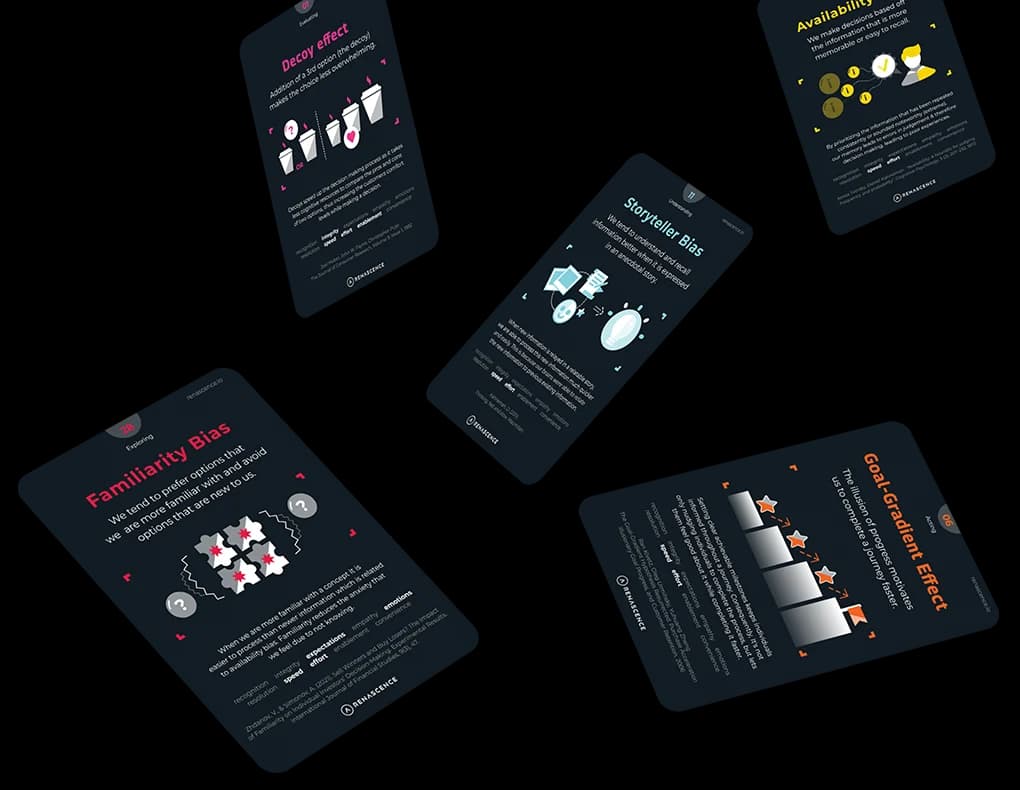
REBELDECK A · 36 FORCES

The forces that shape how humans experience the world.

Explore REBEL Reveal →
ALL PRODUCTS

Explore the full Renascence product ecosystem.

Browse products →

PLATFORMS

AI & TECHNOLOGY

LEARNING & FRAMEWORKS

CX TOOLKIT

Opinion

Insights, research, and conversations at the frontier of CX.

René Studio
AI EXPERIENCE STUDIO

Turn what you read into a journey you can score.

Explore René Studio
Mysterya
MYSTERY AUDITS, LIVE

See what customers really experience, visit by visit.

Explore Mysterya
ReadExperience JournalArticles & research on CX, behavior, and transformation.Watch & listenExperience LoomOur video podcast on CX & behavior.CuratedCX NewsIndustry news that matters in CX, minus the noise.

Latest articles

Latest episodes

Latest news

Hub

Free tools, templates, and resources to advance your CX practice.

René Studio
AI EXPERIENCE STUDIO

Design, score and fix customer journeys with AI.

Explore René Studio
Mysterya
MYSTERY AUDITS, LIVE

Every visit, every location, every score. Live.

Explore Mysterya
THE MANIFESTOBurn the Deck.
Ten Virtues. Zero Excuses.Start reading →
THE HUB

Every free tool, template and resource in one place.

Visit the Hub →

AI TOOLS

FREE TOOLS

LEARNING

CULTURE

AI · 3 November 2026

Google AI Overviews: 1 in 9 Factual Claims Lack Source Support

A PsyPost-reported analysis found more than 10 percent of factual claims in Google's AI search summaries are not backed by their cited sources, roughly one in nine. The finding raises trust and verification questions for AI-generated answers.

Newsdesk
Curated briefing · 2 min read

What happened

An analysis reported by PsyPost has found that more than 10 percent of the factual claims in Google's AI search summaries are not backed by the sources cited alongside them, which works out at roughly one in nine generated claims. The feature in question, AI Overviews, gives direct answers to a very large audience of searchers.

The reporting also says the summaries alter how information flows through search. Because the answers appear directly on the results page, they can bypass traditional search rankings, so the original web publishers whose material feeds those answers may receive fewer visits and less revenue.

The finding points to a gap between how confidently AI summaries present information and how reliably their citations support it. Because the study is reported through a single outlet, the scope of its methodology should be read with that in mind.

Why it matters

AI summaries are becoming the first point of contact between people and information, which makes the reliability of the answer itself a core part of the product experience. When a claim sits next to a citation, users reasonably assume it has been checked. If a meaningful share of those claims are unsupported, the citation becomes a credibility signal that may be stronger than the evidence behind it.

For organisations deploying AI to answer customer or citizen questions, the lesson is structural. Generated answers need provenance that can be verified, not just links that look authoritative. The same dynamic also affects the wider digital ecosystem, since publishers, service providers and search platforms all depend on the value flowing back to whoever created the underlying content.

By the numbers

  • More than 10 percent of factual claims in the analysed AI search summaries are not supported by their cited sources.
  • One in nine generated claims lacks source support, according to the reported analysis.
  • Billions of searchers are reported to receive direct answers from AI Overviews.

The Renascence take

Most readers will focus on the headline error rate, but the more important issue is how users interpret a citation. People rarely check the source behind a neat, confident summary, so a visible reference quietly does the work of trust. That is a classic credibility heuristic, and it means that a small verification gap can carry a large experience cost.

A citation is a promise, and most users treat it as proof without ever clicking through. Operators should audit AI-generated answers claim by claim, measure how often the cited source actually supports the statement, and show that evidence in the interface. Where a claim cannot be verified, the experience should say so plainly rather than let a reference imply certainty it has not earned.

Sources

This briefing was written by our Newsdesk, synthesising reporting from the outlets below. Follow the links for the original coverage.

FAQ

Questions we get on this topic

A PsyPost-reported analysis found that more than 10 percent of factual claims in Google's AI search summaries are not backed by the sources cited alongside them, which is roughly one in nine generated claims.

Users reasonably assume a claim next to a citation has been checked, so a citation can function as a trust signal that is stronger than the evidence behind it. This makes unverified claims a credibility and experience issue.

The reporting says billions of searchers are reported to receive direct answers from AI Overviews, though the figure is as reported by the source outlet.

Operators might audit AI-generated answers claim by claim, measure how often cited sources support each statement, and show that evidence in the interface, saying plainly when a claim cannot be verified.

Stay ahead of CX

Get the signal, not the noise.

The stories shaping customer experience — plus the Journal and Experience Loom — in your inbox.