







About

The consultancy born at the intersection of behavioral economics and human experience.

René Studio
AI EXPERIENCE STUDIO

The CX design platform we built from a decade of client work.

Explore René Studio
Mysterya
MYSTERY AUDITS, LIVE

Mystery audits we run, scored live for every location.

Explore Mysterya
NOW HIRING

Join a team reshaping how the world experiences brands.

View open roles →

COMPANY

GROW WITH US

CONNECT

Services

Comprehensive CX and management consulting for enterprise brands.

René Studio
AI EXPERIENCE STUDIO

Every engagement, mapped and scored in one AI workspace.

Explore René Studio
Mysterya
MYSTERY AUDITS, LIVE

Mystery shopping, scored and evidenced in real time.

Explore Mysterya
ALL SERVICES

Explore the full range of CX & management consulting services.

Browse all services →

CORE

SPECIALIST

Solutions

Structured solutions that turn CX ambition into measurable outcomes.

René Studio
AI EXPERIENCE STUDIO

Map, score and fix the journeys we redesign, with AI.

Explore René Studio
Mysterya
MYSTERY AUDITS, LIVE

Check the experience you designed is delivered.

Explore Mysterya
ALL SOLUTIONS

Explore every CX solution we offer.

Browse solutions →

STRATEGY & GOVERNANCE

DESIGN & DELIVERY

CULTURE & EXPERIENCE

Industries

A decade of CX transformation across the region's defining sectors.

René Studio
AI EXPERIENCE STUDIO

Sector-ready journeys, scored by AI in minutes.

Explore René Studio
Mysterya
MYSTERY AUDITS, LIVE

Mystery audits tuned to your sector, scored live.

Explore Mysterya
ALL INDUSTRIES

See how we work across every sector.

Browse industries →

BUILT ENVIRONMENT

FINANCE & TECH

PEOPLE & MOBILITY

Products

Proprietary tools, platforms, and AI that power CX transformation.

René Studio
AI EXPERIENCE STUDIO

Design, score and fix customer journeys with AI.

Explore René Studio
Mysterya
MYSTERY AUDITS, LIVE

Audit every location and act on what you find.

Explore Mysterya
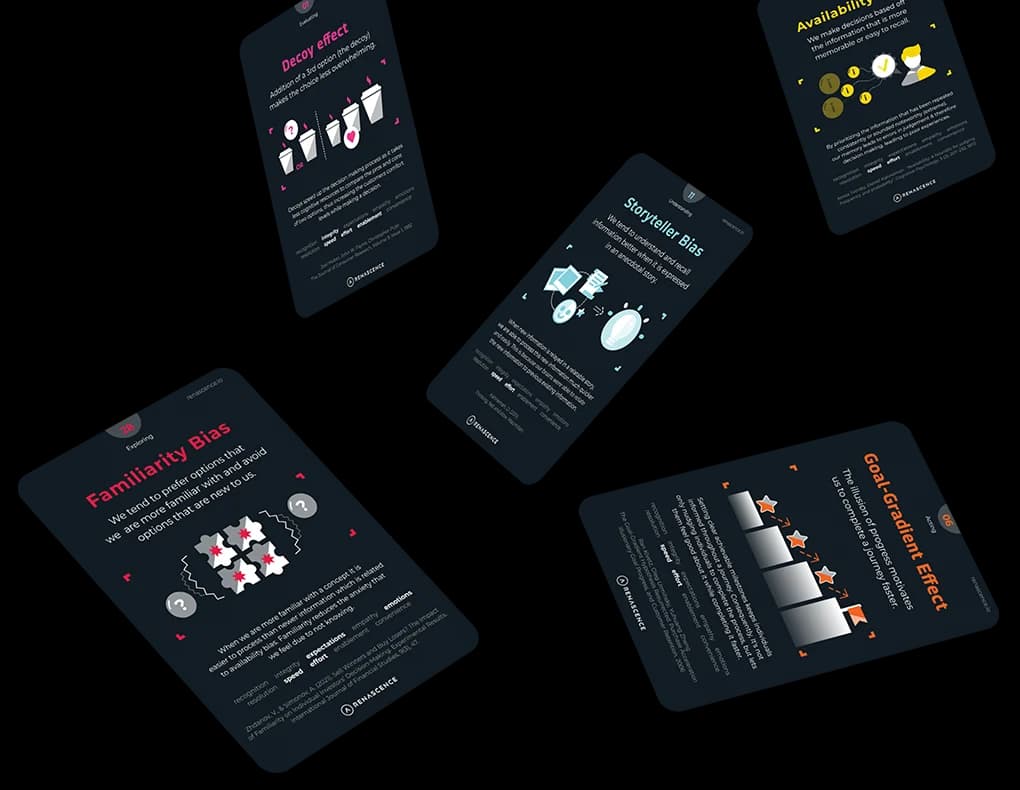
REBELDECK A · 36 FORCES

The forces that shape how humans experience the world.

Explore REBEL Reveal →
ALL PRODUCTS

Explore the full Renascence product ecosystem.

Browse products →

PLATFORMS

AI & TECHNOLOGY

LEARNING & FRAMEWORKS

CX TOOLKIT

Opinion

Insights, research, and conversations at the frontier of CX.

René Studio
AI EXPERIENCE STUDIO

Turn what you read into a journey you can score.

Explore René Studio
Mysterya
MYSTERY AUDITS, LIVE

See what customers really experience, visit by visit.

Explore Mysterya
ReadExperience JournalArticles & research on CX, behavior, and transformation.Watch & listenExperience LoomOur video podcast on CX & behavior.CuratedCX NewsIndustry news that matters in CX, minus the noise.

Latest articles

Latest episodes

Latest news

Hub

Free tools, templates, and resources to advance your CX practice.

René Studio
AI EXPERIENCE STUDIO

Design, score and fix customer journeys with AI.

Explore René Studio
Mysterya
MYSTERY AUDITS, LIVE

Every visit, every location, every score. Live.

Explore Mysterya
THE MANIFESTOBurn the Deck.
Ten Virtues. Zero Excuses.Start reading →
THE HUB

Every free tool, template and resource in one place.

Visit the Hub →

AI TOOLS

FREE TOOLS

LEARNING

CULTURE

AI · 19 October 2026

German Courts Hold Google Liable for AI Overviews Errors

A German court in Aachen has held Google liable for false claims in its AI Overviews, following a earlier Munich ruling. Courts increasingly treat AI-generated answers as the platform's own content.

Newsdesk
Curated briefing · 2 min read

What happened

A German court in Aachen has held Google liable for false claims made by its AI Overviews, applying the same reasoning as a earlier Munich ruling on liability for AI search answers. In the Aachen case, the AI feature attributed criminal offences to a doctor, although the offences in question involved someone else.

Google had appealed the Munich decision, then settled the matter instead of pursuing the appeal, according to The Decoder. The Aachen ruling suggests that the settlement has not changed the direction of the case law. A consistent legal view appears to be forming across German courts: AI-generated answers are treated as Google's own content rather than as material it merely displays.

Why it matters

For any organisation deploying AI to answer questions, the legal position is becoming clearer. A generated answer is treated as the provider's statement, which moves accountability from the underlying model to the business that publishes its output. Accuracy in AI-written summaries is therefore a question of legal exposure as well as user trust.

The cases also show how AI search changes the experience of being described online. A person named in a generated answer has little direct control over what the system says about them. That makes error reporting, correction routes and visible sourcing central design questions for platforms and for regulated sectors such as healthcare, where a false attribution can cause real harm.

The Renascence take

Most coverage will frame this as one company's legal problem. The more useful reading is about default trust. When an AI answer sits above the links, users read it as the platform's own voice, and the courts are now reaching the same conclusion.

The behavioural principle underneath is simple: people trust the first answer they are shown and rarely check where it came from. Designing for that means treating every generated summary as a published claim, with a clear correction path, visible sourcing and a named owner who can act on errors. Operators who wait for courts to set the standard will pay for that gap in complaints, escalations and reputational repair. The better move is to audit the AI-generated answers about your customers, people and services now, before a ruling makes that audit compulsory.

Sources

This briefing was written by our Newsdesk, synthesising reporting from the outlets below. Follow the links for the original coverage.

FAQ

Questions we get on this topic

The Aachen court held Google liable for false claims made by its AI Overviews. The feature had attributed criminal offences to a doctor, although the offences involved someone else.

The Aachen court applied the same reasoning as an earlier Munich ruling on liability for AI search answers. Google had appealed the Munich decision but later settled the matter instead of pursuing the appeal, according to The Decoder.

German courts are treating AI-generated answers as the provider's own statements, which shifts accountability from the underlying model to the business publishing the output. Accuracy in AI summaries therefore carries legal exposure as well as trust implications.

Renascence suggests auditing AI-generated answers about customers, people and services now, and treating each generated summary as a published claim with a clear correction path, visible sourcing and a named owner for errors.

Stay ahead of CX

Get the signal, not the noise.

The stories shaping customer experience — plus the Journal and Experience Loom — in your inbox.