





About

The consultancy born at the intersection of behavioral economics and human experience.

René Studio
AI EXPERIENCE STUDIO

The CX design platform we built from a decade of client work.

Explore René Studio
Mysterya
MYSTERY AUDITS, LIVE

Mystery audits we run, scored live for every location.

Explore Mysterya
NOW HIRING

Join a team reshaping how the world experiences brands.

View open roles →

COMPANY

GROW WITH US

CONNECT

Services

Comprehensive CX and management consulting for enterprise brands.

René Studio
AI EXPERIENCE STUDIO

Every engagement, mapped and scored in one AI workspace.

Explore René Studio
Mysterya
MYSTERY AUDITS, LIVE

Mystery shopping, scored and evidenced in real time.

Explore Mysterya
ALL SERVICES

Explore the full range of CX & management consulting services.

Browse all services →

CORE

SPECIALIST

Solutions

Structured solutions that turn CX ambition into measurable outcomes.

René Studio
AI EXPERIENCE STUDIO

Map, score and fix the journeys we redesign, with AI.

Explore René Studio
Mysterya
MYSTERY AUDITS, LIVE

Check the experience you designed is delivered.

Explore Mysterya
ALL SOLUTIONS

Explore every CX solution we offer.

Browse solutions →

STRATEGY & GOVERNANCE

DESIGN & DELIVERY

CULTURE & EXPERIENCE

Industries

A decade of CX transformation across the region's defining sectors.

René Studio
AI EXPERIENCE STUDIO

Sector-ready journeys, scored by AI in minutes.

Explore René Studio
Mysterya
MYSTERY AUDITS, LIVE

Mystery audits tuned to your sector, scored live.

Explore Mysterya
ALL INDUSTRIES

See how we work across every sector.

Browse industries →

BUILT ENVIRONMENT

FINANCE & TECH

PEOPLE & MOBILITY

Products

Proprietary tools, platforms, and AI that power CX transformation.

René Studio
AI EXPERIENCE STUDIO

Design, score and fix customer journeys with AI.

Explore René Studio
Mysterya
MYSTERY AUDITS, LIVE

Audit every location and act on what you find.

Explore Mysterya
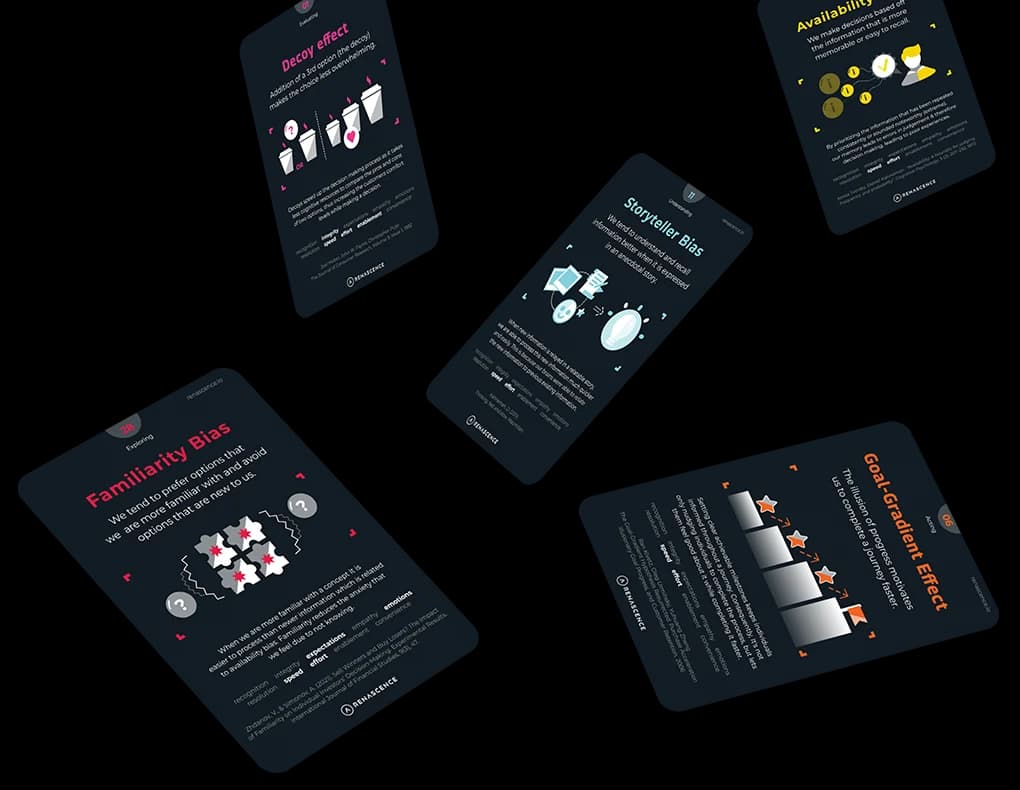
REBELDECK A · 36 FORCES

The forces that shape how humans experience the world.

Explore REBEL Reveal →
ALL PRODUCTS

Explore the full Renascence product ecosystem.

Browse products →

PLATFORMS

AI & TECHNOLOGY

LEARNING & FRAMEWORKS

CX TOOLKIT

Opinion

Insights, research, and conversations at the frontier of CX.

René Studio
AI EXPERIENCE STUDIO

Turn what you read into a journey you can score.

Explore René Studio
Mysterya
MYSTERY AUDITS, LIVE

See what customers really experience, visit by visit.

Explore Mysterya
ReadExperience JournalArticles & research on CX, behavior, and transformation.Watch & listenExperience LoomOur video podcast on CX & behavior.CuratedCX NewsIndustry news that matters in CX, minus the noise.

Latest articles

Latest episodes

Latest news

Hub

Free tools, templates, and resources to advance your CX practice.

René Studio
AI EXPERIENCE STUDIO

Design, score and fix customer journeys with AI.

Explore René Studio
Mysterya
MYSTERY AUDITS, LIVE

Every visit, every location, every score. Live.

Explore Mysterya
THE MANIFESTOBurn the Deck.
Ten Virtues. Zero Excuses.Start reading →
THE HUB

Every free tool, template and resource in one place.

Visit the Hub →

AI TOOLS

FREE TOOLS

LEARNING

CULTURE

Banking · 16 October 2026

OSERA: Six Banks Pool Costs to Patch Shared Open Source Software

Six of the world's largest banks have agreed to share the cost of patching common open source libraries through OSERA, a FINOS-run initiative. Its first 100 days were reviewed in Prague, with more than 50 Spring and Java projects patched.

Newsdesk
Curated briefing · 2 min read

What happened

Six of the world's largest banks have agreed to stop paying separately to patch the same open source libraries. The arrangement, known as OSERA, is run through the FINOS foundation, and its first 100 days were reviewed by FINOS Executive Director Gabriele Columbro at a session in Prague, as reported by Diginomica.

According to the review, the initiative has produced a published remediation standard that sets out how shared vulnerabilities should be handled. Participants have also patched more than 50 Spring and Java projects, updating them to the versions that institutions actually run in production rather than to upstream releases that may not match their environments.

The update also addressed a more basic question: why banks need a collective approach at all. The answer rests on a common pattern in which many large institutions depend on the same open source components, so each bank has historically funded similar fixes in isolation.

Why it matters

For leaders in digital transformation, OSERA points to a shift in how regulated organisations manage their software supply chain. Open source now underpins much of the core technology in financial services, and the cost and speed of keeping it secure has become an operational concern rather than a purely technical one. Pooling remediation work could free engineering capacity for customer-facing products while giving institutions a more consistent security baseline.

The model also matters for how organisations collaborate. Shared standards and shared patching create a common reference point that smaller partners, vendors and internal teams can build on. That makes the initiative a useful case study for any sector where many organisations rely on the same modern infrastructure, from public-sector platforms to telecoms.

By the numbers

  • Six of the world's largest banks have agreed to share the cost of patching common open source libraries.
  • 100 days is the period covered by the initiative's first review, presented by FINOS in Prague.
  • More than 50 Spring and Java projects have been patched to the versions institutions run.

The Renascence take

Most coverage will treat OSERA as a cost story. The more useful reading is that it is a trust story, and trust in digital services depends on invisible decisions made deep in the stack. Customers will never see a library update, but they feel the outcome when a service is stable, secure and consistent across channels.

The real lesson is that the banks have turned a hidden operational burden into a shared service, which is what good service design does for visible journeys. Operators who still fund identical fixes in isolation are paying a premium for invisibility. The practical step is to map which dependencies sit behind your customer journeys, identify where competitors and peers share the same exposure, and ask whether collaboration would lower risk and cost faster than another internal project.

Sources

This briefing was written by our Newsdesk, synthesising reporting from the outlets below. Follow the links for the original coverage.

FAQ

Questions we get on this topic

OSERA is an arrangement in which six of the world's largest banks share the cost of patching common open source libraries, run through the FINOS foundation. Its first 100 days were reviewed by FINOS Executive Director Gabriele Columbro, as reported by Diginomica.

Many large institutions depend on the same open source components, so each bank had historically funded similar fixes in isolation. Pooling remediation work aims to free engineering capacity and give institutions a more consistent security baseline.

According to the 100-day review, participants have patched more than 50 Spring and Java projects, updating them to the versions institutions actually run in production.

Stay ahead of CX

Get the signal, not the noise.

The stories shaping customer experience — plus the Journal and Experience Loom — in your inbox.