
Change Management · August 10, 2026
Why CX Change Management Fails Without an Operating Model
CX transformations don't die on launch day — they die in the quiet reversion to old habits. Here's why change management must rewire governance and workflow, not just messaging.

The rebrand launched on schedule. The journey maps were beautiful, the training deck ran to ninety slides, and the CEO stood on stage and called it a new era for the customer. Eighteen months later, the call centre still read from the same script it used before the transformation began, the branch staff still escalated the same complaints the same slow way, and the only thing that had genuinely changed was the logo on the intranet. This is not a rare story. It is the default outcome of CX programs that mistake a launch for a transformation.
Change management for CX programs fails most often not because the strategy is wrong, but because it is treated as a communications exercise instead of an operating discipline. Journey maps, vision statements and training sessions tell people what should change. They do almost nothing to change what people actually do on a Tuesday afternoon when the queue is long and the old habit is faster than the new one. Real CX change management rewires governance, incentives, workflows and defaults — the machinery that produces behavior — not just the messaging that describes the ambition.
Why do CX transformation programs fail even when leadership fully backs them?
They fail because sponsorship at the top rarely survives the journey down to the front line intact. A CEO's enthusiasm in a town hall does not automatically become a supervisor's willingness to override a productivity target, or a system administrator's willingness to reprioritize a backlog ticket for a "soft" CX fix. John Kotter's landmark analysis of corporate change efforts, published as "Leading Change: Why Transformation Efforts Fail" in the Harvard Business Review in 1995, found that the majority of the change programs he studied failed to achieve their stated objectives — and the pattern he identified, chiefly a failure to anchor change in daily systems and short-term wins, still describes most stalled CX programs three decades later.
Executive backing buys air cover. It does not buy behavior. The gap between the two is where CX transformations quietly die — not in a dramatic failure, but in a slow reversion to the mean as the new journey map gathers dust and the old habits, still rewarded by the old incentives, reassert themselves.
What does change management actually mean inside a CX program?
Inside a CX program, change management means the deliberate redesign of four things that sit underneath any customer-facing behavior: governance (who decides and who is accountable), incentives (what gets measured and rewarded), workflow (what the system makes easy or hard to do), and narrative (what people believe the change is for). Most CX programs invest heavily in the fourth and almost nothing in the first three.
That imbalance is understandable — narrative is cheap and visible, while governance and incentive redesign are slow and politically expensive. But narrative without the other three is theatre. A CX governance strategy that clarifies decision rights, a revised incentive structure that rewards resolution over speed, and a workflow that removes the extra six clicks required to do the new "right" thing will outperform a beautifully produced launch video every time.
Why doesn't frontline training change frontline behavior?
Training changes what people know. It rarely changes what they do, because knowing and doing are governed by different systems. Daniel Kahneman's dual-process framework, laid out in Thinking, Fast and Slow, is useful here: most frontline behavior runs on System 1 — fast, automatic, habitual — while training speaks to System 2, the slow, deliberate, reasoning mind. A three-hour workshop can update what an agent consciously believes about customer-centricity. It cannot, on its own, override the automatic script that fires the moment the call connects and the queue counter is visible on screen.
What actually shifts System 1 behavior is repetition inside the real workflow, under real conditions, with real consequences — not a classroom simulation. This is why role-play in a training room so often fails to transfer: the room has no queue, no angry customer, and no supervisor watching average handle time. Effective CX change management treats training as necessary but insufficient, and pairs it with:
- In-the-flow coaching — supervisors who reinforce the new behavior at the moment it happens, not weeks later in a review.
- Removed friction — deleting the steps that make the old habit faster than the new one, because no amount of motivation beats a shorter path.
- Visible early wins — a handful of fast, credible improvements that make the new behavior feel worth the effort, rather than an act of faith.
- Peer proof — colleagues who have already made the switch successfully, because social proof moves frontline staff faster than management memos ever will.
How should a CX program office be governed so change survives contact with the org chart?
Most CX programs are governed as projects: a steering committee, a launch date, a project closure report. Most CX change, by contrast, needs to be governed as an operating capability with a permanent home, a standing mandate, and a budget that does not expire when the initial rollout ends. A program governed like a project dies the moment the project team disbands, because nobody is left with the authority — or the job description — to keep enforcing the new behavior against the gravitational pull of the old one.
A durable CX program office typically needs three things a temporary task force does not have:
- A named accountable owner above the functional silos — someone who can arbitrate when a marketing KPI and a service KPI point in opposite directions, because they will, repeatedly.
- Decision rights written down, not assumed — who can approve a journey redesign, who can veto it, and who simply needs to be informed. Ambiguity here is where good CX decisions go to die in committee.
- A standing review cadence tied to the operating calendar — quarterly business reviews, budget cycles, and performance calibrations, not a separate CX calendar nobody else attends.
This is the difference between a change management function bolted onto a transformation and one built into how the company runs itself. The first produces a launch. The second produces a habit.
What role do defaults and incentives play in making new behavior stick?
People do not generally act against their incentives out of good intentions for long, and they rarely fight their way past a badly designed default. Richard Thaler and Cass Sunstein's concept of choice architecture, set out in their 2008 book Nudge, applies as much inside an organization as it does to customers: the way a workflow is defaulted determines behavior more reliably than the values printed on the wall behind it. If the system's default is to log a complaint as "resolved" the moment a ticket is closed, agents will optimize for closing tickets — regardless of what the customer charter says about first-time resolution.
Loss aversion compounds the problem. Kahneman and Tversky's original prospect theory research, published in Econometrica in 1979, established that people weigh potential losses roughly twice as heavily as equivalent gains — which is precisely why a frontline manager who fears losing their handle-time bonus will quietly protect the old process even after publicly endorsing the new one. Change management that ignores this dynamic is asking people to absorb a felt loss in exchange for an abstract future gain, and then acting surprised when adoption stalls.
The fix is not more persuasion. It is redesigning the default and the incentive so the new behavior is the path of least resistance and the path of least regret:
- Change what the system defaults to, not just what the policy recommends.
- Rebuild the scorecard before the rollout, not after the complaints arrive — measuring resolution and effort, not just speed.
- Protect early adopters from short-term metric dips caused by doing the new thing properly, so the incentive does not silently punish the exact behavior the program is trying to encourage.
How should you sequence a CX change program so it doesn't collapse under its own ambition?
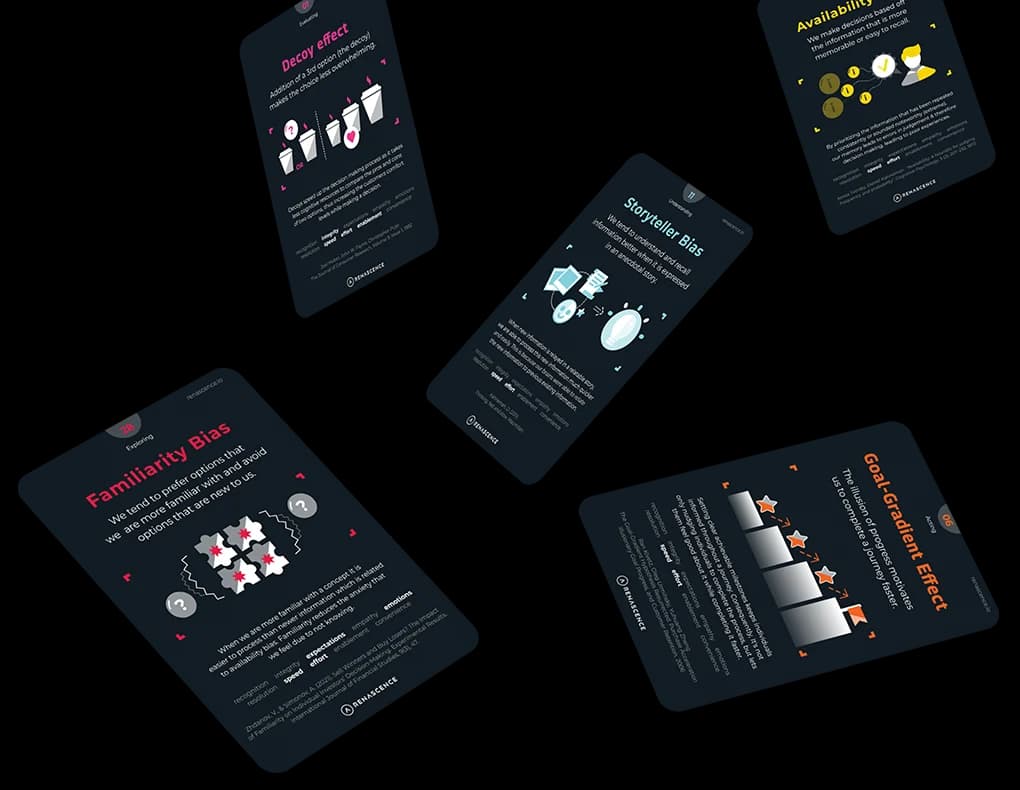
Most CX transformations fail from breadth, not from a bad idea. A program that tries to redesign every journey, retrain every team, and rewire every incentive in one wave creates a change surface too large for any organization to absorb, and it collapses into fatigue before it produces a single durable habit. The goal-gradient effect — documented by Ran Kivetz, Oleg Urminsky and Yuhuang Zheng in their 2006 study "The Goal-Gradient Hypothesis Resurrected" published in the Journal of Marketing Research, which found that effort and motivation intensify as people perceive themselves nearing a goal — is as true of employees adopting new behavior as it is of customers chasing a loyalty reward. A visible, near-term milestone pulls people through the hard middle of a change; a distant, abstract end-state does not.
A sequence that respects this looks like the following:
- Pick one high-visibility moment of truth, not the whole journey. Fix the touchpoint customers already complain about loudest, so the win is legible to everyone, inside and outside the organization.
- Redesign the incentive and the default before the training. Training a new behavior into a system still rewarding the old one guarantees relapse.
- Run it with one team, in one location, for one measured cycle. A contained pilot produces real data and a credible story faster than a company-wide mandate produces adoption.
- Publish the result — good or middling — before scaling. Social proof compounds fastest when the proof is recent, specific, and comes from a peer team rather than a slide from head office.
- Scale in waves tied to operating units, not all at once. Each wave should absorb the lessons of the last one, including what broke.
- Fold the new behavior into the standing scorecard and QBR cycle. If it is not on the recurring agenda six months after launch, it is already reverting.
This is where a documented CX implementation roadmap earns its keep — not as a Gantt chart for the sake of one, but as the artifact that keeps a multi-wave rollout honest about sequencing instead of trying to do everything in wave one.
What breaks first — and how do you catch it early?
Every CX change program breaks somewhere. The organizations that recover are the ones watching for the break, not the ones surprised by it. The earliest and most reliable warning signs are:
- Middle-management silence. Frontline supervisors say little in reviews and comply only on days someone senior is watching — a near-certain sign the new behavior has not survived contact with their own performance targets.
- Metric migration. Handle time or ticket volume improves while satisfaction or resolution quietly worsens — the classic sign a team has learned to game the new scorecard rather than adopt the new behavior.
- Exception creep. "Just this once" workarounds multiply, each individually reasonable, collectively rebuilding the old process under a new name.
- Training attendance without behavior change. Completion rates look strong while floor observation shows the same old script — proof that the classroom and the queue remain two different worlds.
Catching these requires direct observation, not just dashboard review. A structured mystery shopping program or periodic floor audit will surface the gap between the reported adoption rate and the lived one weeks before a customer satisfaction score confirms it — and by then the fix is far cheaper than the one that follows a public failure.
How do you know the change has actually taken hold?
A CX change has taken hold when it survives the departure of the person who championed it. That is the honest test, and most programs never clear it because they were never designed to be championship-independent. Three practical signals matter more than any post-launch survey:
- The new behavior shows up in onboarding, not just in the transformation deck. If new hires learn the old way by shadowing a tenured colleague, the change has not reached the operating layer.
- The new metric is defended in budget season. A behavior that finance is willing to fund and protect in a tight year is a behavior that has become part of how the business runs, not an initiative competing for airtime.
- Frontline staff explain the "why," not just the "what." Compliance with a new script is fragile. Understanding of the customer problem the script solves is durable, because it survives edge cases the script did not anticipate.
Prosci's benchmarking research on organizational change, published across successive editions of its Best Practices in Change Management studies, has consistently identified active, visible sponsorship — not communication volume — as the single largest contributor to whether a change effort sticks. That finding maps directly onto CX: the programs that hold are the ones where a named leader keeps showing up to defend the new behavior in the rooms where trade-offs actually get made, long after the launch party is over.
The transformation nobody photographs
The CX programs worth remembering rarely have a dramatic launch moment at all. They have a supervisor who stopped overriding the new escalation rule after the third week, a scorecard that quietly started rewarding resolution instead of speed, and a new hire eighteen months later who has no idea there was ever another way to do the job. That absence of drama is the actual evidence of success — proof that the new behavior stopped being an initiative and became, simply, how things are done here. Building that kind of change is slower and less photogenic than a rebrand. It is also the only version that survives.
If your organization is somewhere between the launch deck and the lasting habit, Renascence's change management practice works specifically on that gap — governance, incentive redesign, and the operating cadence that keeps a CX transformation alive after the project team moves on. Assessing where the current program stands is a reasonable first step; the CX Maturity Assessment gives a structured read on which of governance, incentives, workflow or narrative is the weak link before you invest further in any one of them. For programs already past the pilot stage, a closer look at where journeys actually fail customers is a natural next read: finding and fixing moments of truth in the customer journey. And because CX change rarely survives without the people delivering it feeling the shift themselves, it is worth pairing any transformation roadmap with a hard look at employee experience — the upstream driver of every customer behavior a program is trying to change downstream.
Further reading
FAQ
Questions we get on this topic
Related reading



Writing on how human behavior shapes the experiences brands deliver — at the intersection of behavioral economics and customer experience.
Stay ahead of CX
Get the Journal in your inbox.
Insights, frameworks and event round-ups from the Renascence team. No spam, ever.