
Customer Experience · August 10, 2026
Why Customer Lifetime Value Should Be CX's North Star Metric
Satisfaction scores can rise while your most valuable customers quietly leave. Here's why CLV, not NPS or CSAT, is the metric that should guide CX strategy.

A regional bank once told me its Net Promoter Score had climbed for three straight quarters. Everyone was pleased. Nobody had noticed that its highest-value customers — the ones with mortgages, savings accounts and a business line all under one roof — were quietly closing accounts at a faster rate than the year before. The satisfaction score was rising because the bank had gotten very good at making transactional moments pleasant: a smiling teller, a fast app, a polite complaints team. It had gotten no better, and arguably worse, at keeping its most valuable relationships alive.
That is the trap of treating sentiment as the finish line. Customer lifetime value (CLV) — the total profit a business can expect from a customer over the entire relationship — is a better north star for customer experience than satisfaction or advocacy scores, because it is the only metric that forces CX teams to think in years rather than moments, and in money rather than mood. Satisfaction tells you how someone felt about the last interaction. CLV tells you whether the relationship is worth protecting, growing, or letting go.
What is customer lifetime value, and why should CX teams care about it?
Customer lifetime value is the projected net profit a customer generates for the business across the full span of the relationship, discounted for the fact that money and loyalty both erode over time. In its simplest form, it is average purchase value multiplied by purchase frequency multiplied by customer lifespan, then adjusted for retention costs and margin. The formula is less important than the discipline it imposes: it asks CX leaders to stop optimising for the next survey and start optimising for the next decade.
CX has spent two decades chasing the metric trio — NPS, CSAT and Customer Effort Score. Each has real diagnostic value, and each has a structural weakness: they measure perception at a single moment, not economic behaviour over time. A customer can rate an interaction nine out of ten and still leave within the year because a competitor undercut the price, or because the tenth interaction — the one that never got surveyed — was the one that broke trust. CLV closes that gap. It is the metric that connects the experience you design to the revenue the business books.
Why do satisfaction scores fail as a north star metric?
Satisfaction scores fail as a north star because they are snapshots of a moving, biased target, not a running total of economic loyalty. Three problems compound.
First, recency and intensity distort recall. Daniel Kahneman's peak-end rule — established in a 1993 study by Kahneman, Barbara Fredrickson, Charles Schreiber and Donald Redelmeier published in Psychological Science, in which patients undergoing colonoscopies rated a longer but gentler-ending procedure as less unpleasant than a shorter, harsher one — shows that people judge an experience by its peak and its ending, not its average. A customer who had eight forgettable months and one brilliant service recovery in month nine will often report high satisfaction, even if their spend has been quietly declining the whole time. The survey captures the ending. It misses the trend.
Second, satisfaction is easy to game and hard to audit. A team under pressure to hit a quarterly NPS target can nudge the survey timing, the sample, or the wording without changing a single thing about the underlying experience. Revenue retained is much harder to fake.
Third — and this is the point worth sitting with — Frederick Reichheld built the Net Promoter Score in the first place as a proxy for growth, not a replacement for it. In his 2003 Harvard Business Review article "The One Number You Need to Grow", Reichheld linked promoter behaviour to actual revenue growth across the companies he studied. The score was meant to be a leading indicator of lifetime value. Most organisations kept the indicator and quietly dropped the value it was supposed to indicate.
How does loss aversion explain why churn stays invisible until it is too late?
Loss aversion — the finding from Daniel Kahneman and Amos Tversky's 1979 prospect theory, published in Econometrica, that losses are felt roughly twice as intensely as equivalent gains — cuts both ways in the CLV story, and CX teams tend to only see one side of it.
Customers experience loss aversion sharply. A price increase, a removed benefit, or a service failure after years of reliability registers as a loss against an established reference point, and it triggers an emotional reaction disproportionate to the actual harm. This is why a loyal customer of eleven years can walk away over a fee dispute worth less than the cost of the phone call to resolve it — the money was never the point; the sense of being taken for granted was.
Businesses experience loss aversion too, but backwards. A pipeline of new logos feels like a gain, so it gets budget, attention and boardroom airtime. Retention feels like an absence of loss, which is psychologically flat — nothing to celebrate, no headline to write. That asymmetry is why acquisition marketing routinely outspends retention marketing, even though the economics run the other way. Frederick Reichheld's research for Bain & Company, first published in the September–October 1990 Harvard Business Review article "Zero Defections: Quality Comes to Services", found that increasing customer retention rates by five percentage points could increase profits by 25 to 95 percent, depending on the industry. CLV is what makes that arithmetic visible inside the organisation, because it puts a number on the customer who didn't leave — not just the one who did.
How do you calculate CLV in a way CX leaders can actually act on?
A CLV model does not need to be a data-science project before it becomes useful. A working version that a CX team can build with finance in a few weeks looks like this:
- Define the time horizon. Choose a realistic lifespan for the customer relationship — three years for a subscription business, ten for a mortgage holder — rather than an arbitrary default.
- Establish average revenue per customer, per period. Segment this by cohort; a customer acquired through a discount promotion rarely behaves like one acquired through referral.
- Apply gross margin, not revenue. A high-spending customer with expensive service demands can be worth less than a modest one who rarely calls support.
- Model retention probability period over period. This is where journey data earns its keep — churn is rarely random, and its predictors usually sit in specific touchpoints, not general sentiment.
- Discount future value to the present. A dollar of profit five years from now is worth less than one today; ignoring this overstates the value of long, low-margin relationships.
- Segment by CLV tier, not by demographics. The customer worth protecting most urgently is rarely who marketing assumes it is.
Renascence's own CX ROI Calculator is built on this same logic in miniature: it forces a CX investment case to state its assumptions about retention and margin explicitly, rather than hiding behind a satisfaction delta that finance has no way to price.
What CX investments actually move lifetime value?
Not every improvement moves CLV, and that is precisely why the metric is useful — it discriminates. In practice, four categories of CX work reliably shift lifetime value rather than just sentiment:
- Onboarding design. The first ninety days set the reference point against which every future interaction is judged; a strong start raises the baseline for everything that follows.
- Service recovery at genuine moments of truth. Fixing a failure well can raise loyalty above where it stood before the failure occurred — but only if the recovery is fast, generous and free of friction, because a slow recovery compounds the original loss.
- Reducing effort at high-frequency, low-emotion touchpoints. Bill payments, renewals and account updates rarely delight anyone; they just need to stop costing attention the customer would rather spend elsewhere.
- Consistency across channels. A customer who gets a different answer from the app, the call centre and the branch starts discounting everything the brand tells them — including its prices.
Identifying which of these apply to a given business starts with finding where the emotional arc of the journey actually breaks, not guessing from a dashboard. That is the work we describe in more detail in Finding and Fixing Moments of Truth in the Customer Journey — the touchpoints worth fixing first are the ones with the highest concentration of both emotional weight and revenue at stake, not the ones generating the most complaint tickets.
How does the goal-gradient effect turn loyalty programs into retention engines?
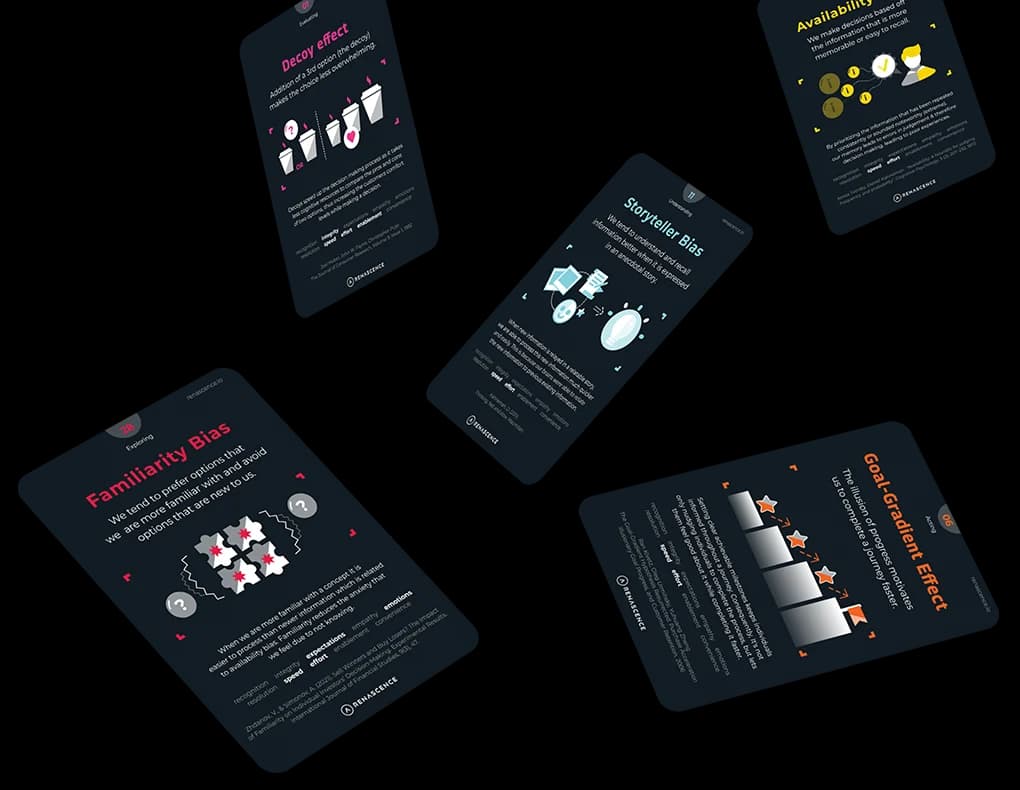
The goal-gradient hypothesis — the finding, most famously demonstrated by Ran Kivetz, Oleg Urminsky and Yuhuang Zheng in their 2006 study published in the Journal of Marketing Research, that people accelerate effort as they perceive themselves closer to a reward — is the single most underused behavioural lever in loyalty design. In that study, customers given a coffee loyalty card that appeared to already have two stamps completed it faster than customers given a card requiring the same number of additional purchases but with no head start.
Applied to CLV, the implication is precise: tiered loyalty programmes that show visible, near-term progress toward the next reward extend customer lifespan more reliably than programmes that simply accumulate points into the distance. A customer who can see they are "two stays from Gold" behaves differently from one who is told they have "4,200 of 10,000 points." The first framing borrows urgency from proximity; the second buries it in arithmetic. This is also where the endowment effect compounds the mechanism — status a customer has already earned feels like something they own, and losing it on renewal feels like a loss, not a missed gain, which is precisely the asymmetry that keeps people renewing rather than switching. We explore that dynamic further in The Endowment Effect: Why Customers Overvalue What They Already Own.
What's the real argument for CLV as a governance tool, not just a metric?
Here is the contrarian part. Most organisations treat CLV, when they use it at all, as a reporting output — a number finance calculates after the fact to justify a retention budget. That is a waste of the metric's real power. CLV should sit upstream, as a filter through which every CX investment decision passes before it gets funded.
Concretely: when a CX team proposes a new initiative — a redesigned complaints process, a self-service portal, a concierge tier — the first question should not be "will this raise CSAT?" It should be "which CLV segment does this protect or grow, and by how much?" This reframes prioritisation entirely. A change that lifts satisfaction for the median customer by half a point but does nothing for the top-decile relationships that generate most of the margin is a bad trade, however well it tests in a survey. A change that is barely noticed by most customers but removes the single friction point causing defection among the highest-value cohort is worth funding twice over.
Embedding that discipline requires CLV to live in CX governance — in the steering committee that approves the roadmap — rather than in a quarterly analytics deck nobody outside finance reads. It also requires the CX function to be structured around a real customer experience strategy that names which segments the business is actually trying to keep, rather than a generic ambition to "delight every customer," which is both impossible and economically indifferent to which customers matter most.
How do you make CLV the actual north star, not a slide in a deck?
Turning CLV from an idea into an operating discipline takes a deliberate sequence, not a single dashboard launch:
- Build the model with finance, not around it. A CLV figure that finance doesn't trust will never survive contact with a budget cycle.
- Segment the base by value, not just behaviour. Know which 20% of customers generate the majority of margin before designing a single journey improvement.
- Map journeys against value tiers. The onboarding path for a high-CLV segment should look and feel deliberately different from the path for a low-margin, high-volume one — not worse, but designed against a different economic reality, an approach we build out in detail through CX journey mapping.
- Track CLV delta, not just CLV level. The direction of travel for each segment tells you whether this quarter's initiatives are working before the annual number confirms it.
- Report CLV alongside NPS and CSAT, never instead of them. Sentiment metrics remain useful diagnostics for what is happening; CLV is the verdict on whether it matters.
None of this replaces the emotional craft of good service design — it disciplines where that craft gets applied. A business that understands its loyalty economics can afford to be generous in the moments that count, because it knows precisely which moments those are. That is the proper role of behavioural economics and customer loyalty strategy working together: not manipulation, but precision about where warmth pays for itself.
The relationship you can't see is the one you're losing
Satisfaction scores tell you how a customer feels today. Lifetime value tells you whether you'll still have them in three years, and what that will have been worth. A business that only measures the first will keep celebrating rising scores while its best relationships quietly wind down — smiling all the way to the exit. The organisations that get this right treat every experience decision as a bet on a number they can actually calculate, defend and improve. That discipline, more than any survey, is what separates a company that is merely liked from one that is genuinely difficult to leave.
If your CX roadmap is still prioritised by sentiment rather than value, it may be worth starting with a clear-eyed CX assessment before the next budget cycle locks in another year of well-intentioned guesswork.
Further reading
FAQ
Questions we get on this topic
Related reading



Writing on how human behavior shapes the experiences brands deliver — at the intersection of behavioral economics and customer experience.
Stay ahead of CX
Get the Journal in your inbox.
Insights, frameworks and event round-ups from the Renascence team. No spam, ever.