








Customer Experience · September 2, 2026
Reducing handoffs that frustrate customers

Watch a customer repeat their account number for the third time in an eleven-minute call and you are not watching a training failure. You are watching a process failure with a human face on it. The agent isn't incompetent — the system handed them a customer with no context, and the customer is now paying the toll for a broken seam between departments.
That toll is real, and it compounds. Every handoff — from digital to human, from frontline to specialist, from sales to service — asks the customer to re-establish who they are, what they want, and how far they've already got. The thesis of this piece is simple: the number of handoffs in a process predicts customer frustration more reliably than the speed of any single step in it. Fix the seams before you fix the stations. Most operations teams do the opposite — they optimise each department in isolation and wonder why satisfaction scores don't move.
What exactly counts as a customer handoff?
A handoff is any point where responsibility for the customer's request passes from one person, team, system, or channel to another. It happens when a call gets transferred, when a web form gets routed to a back-office queue, when a sale is closed and "operations" takes over fulfilment, or when a complaint escalates from tier one to tier two. The handoff itself isn't the problem — some transfers are necessary and even reassuring, like being moved to a specialist who clearly knows more than the first person you spoke to. The problem is the silent handoff: the one where context, history, and commitment don't travel with the customer, and they arrive at the next station as a stranger.
This is where service design and process mapping do the same job from different ends. Service design starts from the customer's felt experience and works backward to the operating model. Process mapping starts from the operating model and works forward to what the customer actually feels. When the two disciplines meet at the handoff, you get an honest diagnosis instead of a guess.
Why do handoffs frustrate customers more than delays do?
A customer will usually forgive a queue. They will rarely forgive being asked to explain themselves twice. That asymmetry isn't random — it's behavioural, and it has a name.
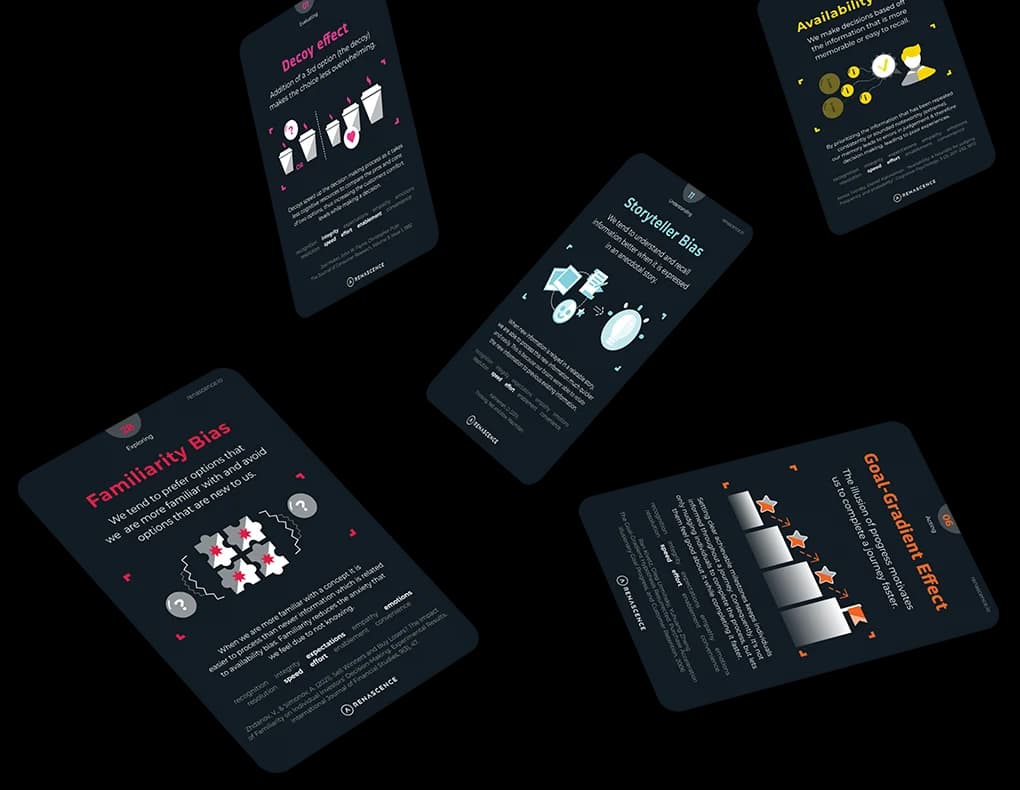
In 2006, marketing researchers Ran Kivetz, Oleg Urminsky, and Yuhuang Zheng published a study in the Journal of Marketing Research demonstrating what they called the goal-gradient hypothesis: people accelerate their effort and engagement as they perceive themselves getting closer to a goal — and they disengage sharply when that sense of proximity is disrupted. A loyalty-card holder who believes they are three stamps from a free coffee behaves differently to one who believes they are eight stamps away, even when the actual distance is identical. Translate that into a service journey: a customer who has just spent nine minutes establishing their problem with agent one feels close to resolution. Handed to agent two with no context, that perceived proximity resets to zero. It doesn't matter that objectively they're closer to a fix than when they started. Subjectively, they've just lost ground — and loss aversion means that felt regression stings more than the equivalent delay would have.
This is also why customer effort, not customer delight, is the better lens for operational design. In their July–August 2010 Harvard Business Review article "Stop Trying to Delight Your Customers," Matthew Dixon, Karen Freeman, and Nicholas Toman argued that reducing the effort a customer must expend does more for loyalty than surprising them with a gesture ever will — and repeated self-explanation across handoffs was one of their clearest examples of effort that drives customers away. Their research, conducted with the Corporate Executive Board, found that having to re-explain an issue was one of the strongest predictors of low customer effort scores across the service interactions they studied.
A customer will forgive almost any delay. They will rarely forgive being made to prove, twice, that they already told you who they are.
How do you find the handoffs that are actually hurting you?
You cannot fix what you haven't mapped, and most organisations dramatically underestimate how many handoffs live inside a single journey. A mortgage application that looks like three steps on a website can involve seven internal handoffs by the time it touches credit, compliance, underwriting, and disbursement. The discovery work is not glamorous, but it's where the real diagnosis happens — and it's a different exercise from the journey maps most CX teams already have on the wall.
Run it as a deliberate audit, not a workshop exercise that produces a pretty diagram and nothing else:
- Pull the actual data before you talk to anyone. System logs, call transfer records, ticket reassignment histories, and CRM ownership changes tell you where handoffs happen far more reliably than staff memory does. People underreport handoffs they've normalised.
- Build a swimlane process map, not a journey map. A journey map shows what the customer experiences; a swimlane map shows who does what, in what order, and where the baton passes between lanes. Overlay the two and every silent handoff becomes visible as a lane change with no accompanying context transfer.
- Time-stamp the seams, not just the stations. Measure how long a request sits idle between the moment one team finishes its part and the next team picks it up. This "dwell time in the seam" is usually where the real delay hides — not inside anyone's actual task time.
- Shadow real transactions end to end. Sit through the same customer request across every department it touches, in the order the customer experiences it, not the order the org chart suggests. Most operations leaders have never watched their own process from a single customer's seat.
- Ask what travels with the customer, and what doesn't. At each handoff, document exactly what context, history, and commitments transfer to the receiving team, and what gets lost. This is the single most diagnostic question in the whole exercise.
- Count the handoffs per journey and benchmark them against effort scores. Once you can say "this journey has nine handoffs and a Customer Effort Score of 6.2, that journey has three and scores 2.1," you have a business case, not an opinion.
This is closely related to formal journey mapping work, but it deliberately zooms into the connective tissue between stages rather than the stages themselves. The Nielsen Norman Group's guidance on service blueprinting makes a similar point: a blueprint's real value lies in the "line of internal interaction," the boundary that shows where support functions must coordinate to deliver a single front-stage moment. That line is where most handoff failures actually live.
What separates a necessary handoff from a broken one?
Not every handoff should be removed. Routing a fraud investigation to a specialist team is a good handoff — the customer wants an expert, not a generalist pretending to be one. The goal isn't zero handoffs; it's zero silent
- The customer can feel the reason for it. "You need our specialist for this" reads as care. A transfer with no explanation reads as a bounce.
- Context travels automatically, not by customer repetition. The receiving party already has the history, the case notes, and the commitments made — the customer's role is to confirm, not to re-narrate.
- Someone remains accountable for the outcome, not just the task. A handoff without an owner is how requests disappear into queues. Ownership should follow the case, not just the current task step.
- It genuinely adds capability the previous station lacked. If the receiving team does exactly what the sending team could have done, the handoff exists because of an org chart, not because of the customer's need.
- It doesn't reset the customer's sense of progress. Given the goal-gradient effect, the receiving team should open with how far the customer has already come — "I can see you've already verified your identity and submitted the documents" — rather than starting from zero.
Any handoff that fails two or more of these tests is a candidate for removal, automation, or absorption into a single accountable role — the classic "one-and-done" resolution model that most effort-reduction strategies chase without naming the actual mechanism.
How do you actually redesign a process to remove or absorb handoffs?
Once the audit is done, the redesign options are fairly predictable — the discipline is in choosing correctly rather than defaulting to whichever is politically easiest.
Consolidate ownership. The most durable fix is often structural: give one role — a case owner, a relationship manager, a dedicated specialist — end-to-end accountability for categories of request that currently bounce across three or four departments. This is uncomfortable because it cuts against specialisation, which is precisely why it works: specialisation optimises for departmental efficiency, not customer continuity.
Make context portable before you make people faster. If a handoff must exist, the fix is rarely "train the second agent better." It's ensuring the case file, prior conversation, and stated commitment move automatically into whatever system the next team uses. A shared case view that shows what the customer has already said and been promised removes the re-explanation tax even when the human transfer stays exactly as it was.
Use a warm handoff, not a cold one, wherever a transfer is unavoidable. A warm transfer — where the first person briefs the second while the customer is still present or immediately notified — preserves the sense of continuity that a cold, silent transfer destroys. It costs a little more time up front and saves considerably more in repeat contacts and frustration downstream.
Build an escalation path with a floor, not just a ceiling. Many organisations design escalation for complexity going up, but not for context coming back down when an issue is resolved. A clean escalation strategy defines both directions: when a case moves up, and how the resolution and its reasoning flow back to whoever the customer considers their main point of contact.
Redesign the underlying process, not just the interface. A slicker web form in front of the same seven-department fulfilment chain doesn't reduce handoffs — it just hides them behind a nicer front door until the customer hits the first human being. This is why process redesign has to happen at the operating-model level, not the UI level, before digital investment pays off.
Where does operational excellence actually meet the customer?
Operations teams tend to measure themselves on throughput, cost per transaction, and adherence to SLA — all legitimate, none of them capturing what a handoff actually costs. A process can hit every internal target and still generate a stream of frustrated customers, because the targets were set per department, and the customer doesn't experience departments. They experience one continuous request that either flows or stutters. This is the uncomfortable truth process owners have to sit with: a handoff that looks efficient on an org chart can still be the single most expensive moment in the customer's entire journey, because its cost shows up downstream — in repeat contacts, in escalations, in churn — rather than on the balance sheet of the team that caused it. Attribution failure, not lack of effort, is usually why handoffs survive redesign after redesign.
Fixing this requires operations and CX to share a single measurement, not two parallel scorecards. Effort scores, dwell time in the seam, and handoff count per journey belong on the same dashboard as first-contact resolution and cost per case. Organisations that have done meaningful groundwork on customer experience maturity tend to have already worked out that culture and structure, not just process diagrams, decide whether handoffs get fixed or quietly rebuilt six months later — a point explored in Culture as CX Strategy: Aligning Values to Customer Promises. If a team's incentives reward closing a ticket rather than resolving a customer, they will keep transferring problems no matter how well you map the process.
The channel dimension deserves the same discipline. A customer who starts a request on an app and finishes it on the phone is living through a handoff too, even if no human being is involved — and the same rules apply: context should travel, and progress should be visible rather than reset. That's the argument made in more detail in Designing Omnichannel Journeys That Actually Feel Seamless, and it's worth reading alongside any handoff audit, because digital-to-human transitions are where silent handoffs hide most successfully — precisely because no one thinks of a channel switch as a "transfer" at all.
What should you do next?
Start with the audit, not the fix. Most organisations want to jump straight to "let's build a single customer view" or "let's hire a case manager" before they've actually counted how many handoffs exist and where the context is dying. Count first. A maturity assessment or a structured mapping exercise will tell you whether your handoff problem is a training issue, a systems issue, or an org-design issue — and those three diagnoses have completely different fixes, none of which work if applied to the wrong problem.
The organisations that get this right stop treating handoffs as background noise and start treating them as the actual unit of customer experience design. Every seam in a process is a small test of whether the company remembers who the customer is. Pass enough of those tests in a row, and the customer never notices the machinery at all — which, in operations, is the closest thing to a compliment you'll ever get.
Further reading
Related reading



Writing on how human behavior shapes the experiences brands deliver — at the intersection of behavioral economics and customer experience.
Stay ahead of CX
Get the Journal in your inbox.
Insights, frameworks and event round-ups from the Renascence team. No spam, ever.