








Service Design · September 6, 2026
Operational Excellence in Service Delivery: Close the Real Gap
Efficient processes and excellent ones are not the same thing. Here's why operational excellence in service delivery demands process mapping, not just faster SLAs.

Walk the back office of any service organisation with a "customer-first" mission statement on the wall, and you will usually find the opposite of what that wall promises: a handoff that takes four days because two departments use different systems, an approval chain built for a risk event that stopped happening years ago, a queue that exists only because nobody owns the decision to remove it. The customer never sees these things. They only feel them — as a wait, a repeated form, a shrug from a frontline agent who is as trapped by the process as they are.
That gap is the whole story. Operational excellence in service delivery is not a cost programme or a dashboard of internal efficiency metrics — it is the discipline of designing the back-end process so that what the customer experiences is intentional, not accidental. Most organisations run operations that are efficient by an internal measure and hostile by a lived one. Closing that gap, not shrinking headcount or shaving average handling time, is what operational excellence is actually for.
What does operational excellence mean in service delivery?
Operational excellence in service delivery is the consistent alignment of process, people and technology so that every operational decision serves the customer's outcome as reliably as it serves the organisation's cost base. It is measured not by whether a process is fast or cheap in isolation, but by whether it removes effort, uncertainty and delay from the customer's side of the transaction. A process can hit every internal SLA and still be operationally mediocre if the customer has to chase, repeat themselves, or wait through silence to get there.
This is a narrower and harder definition than the one most transformation decks use. It refuses to treat "efficient" and "excellent" as synonyms. A call centre that closes 95% of tickets within its target time is efficient. If a third of those closures require the customer to call back the next day because the first agent couldn't see the full account history, it is not excellent — it has simply moved the cost of the broken process onto the customer, where nobody in the building is measuring it.
Why do operationally efficient companies still deliver poor experiences?
Because efficiency and experience are optimised on different sides of the counter, and most organisations only instrument one of them. In its 2005 study Closing the Delivery Gap, Bain & Company found that 80% of companies believed they delivered a superior customer experience, while only 8% of their customers agreed. That 72-point gap has never been a data problem — it is a design problem. The internal view is built from process metrics: turnaround time, cost per transaction, first-contact resolution rate. None of these metrics ask what the process felt like to sit through.
The mechanism behind the gap is straightforward. Every operational process was designed by someone, for some reason, at some point in time — usually to manage risk, control cost, or fit a system constraint. Those reasons rarely disappear from the process even after they stop being true. A verification step added after a fraud incident a decade ago survives long after the fraud vector has been closed elsewhere, because removing a control feels riskier than keeping one, even a useless one. This is loss aversion operating inside the organisation rather than the customer: the operations team weighs the visible risk of removing a step much more heavily than the invisible, diffuse cost of the friction it creates for every customer who passes through it.
How does process mapping reveal the bottlenecks customers actually feel?
Process mapping reveals bottlenecks by making the invisible sequence of handoffs, waits and decisions visible on one page — at which point the gap between the "designed" process and the "lived" one becomes impossible to ignore. Most organisations discover, the first time they map a journey end to end, that nobody had ever seen the whole thing before. Each department owned its slice and assumed the rest worked fine.
A proper process map for service delivery does two things a project status update never does. First, it timestamps every step, so idle time — the gap between when a task could start and when it actually does — becomes as visible as active work time. In most back-office processes, idle time dwarfs active time; the actual work might take twenty minutes spread across a five-day cycle. Second, it distinguishes a step that adds value for the customer from a step that only adds value for the organisation's internal control needs. Not every internal step deserves to survive contact with the customer's patience.
This is also where process mapping and service blueprinting diverge in a useful way. A process map documents the operational sequence; a service blueprint, as defined by the Nielsen Norman Group, layers that sequence against the customer's visible actions and emotional state, separating the "front stage" the customer sees from the "back stage" that produces it. Renascence's view is that you need both: the blueprint tells you where the customer feels pain, the process map tells you which operational cause is producing it. For a deeper comparison of when to reach for each, see our piece on journey mapping versus service blueprinting.
Common bottleneck patterns worth hunting for
- The silent handoff — work passes between teams or systems with no visibility to the customer or to the next team, so nobody notices the file has sat untouched for two days.
- The orphaned control — an approval or verification step that was built to manage a risk that has since been mitigated elsewhere, but was never removed.
- The re-entry tax — the customer, or an internal agent, re-keys information that already exists in another system because the two do not talk to each other.
- The batch delay — a task that could be processed the moment it arrives is instead held until a scheduled daily or weekly run, for the operational convenience of the back office.
- The escalation void — there is no defined owner for exceptions, so anything outside the standard path drifts until someone senior enough notices and intervenes manually.
Every one of these patterns is invisible on a standard operations dashboard, because dashboards measure throughput and cost per unit, not the experience of being the unit that got stuck. This is precisely why process discovery has to involve walking the actual process — sitting with the agents, watching a file move, timing the real gaps — rather than relying on the documented, idealised version of "how it works."
What's the real difference between a bottleneck and a moment of truth?
A bottleneck is an operational fact — a point where volume, capacity or a decision rule slows the flow of work. A moment of truth is a psychological fact — a point where the customer forms or revises their judgement of the whole relationship. The two overlap constantly, but they are not the same thing, and conflating them causes organisations to fix the wrong bottlenecks first.
Not every delay matters equally to the customer. Kahneman's peak-end rule tells us that people judge an experience overwhelmingly by its most intense point and its ending, not by the average of every step along the way. A five-minute wait buried in the middle of an otherwise smooth process barely registers. The same five-minute wait at the point of final confirmation — will the payment go through, will the claim be approved — gets remembered as the defining feature of the whole interaction. Operational excellence, properly practised, prioritises fixing the bottlenecks that sit at a peak or an end over the ones that are merely the slowest on a spreadsheet. This is a resourcing decision as much as a design one: the sequencing of a service design and process re-engineering effort should follow where the customer's judgement is actually formed, not where the internal process happens to be most congested.
How does the goal-gradient effect explain why extra steps kill satisfaction?
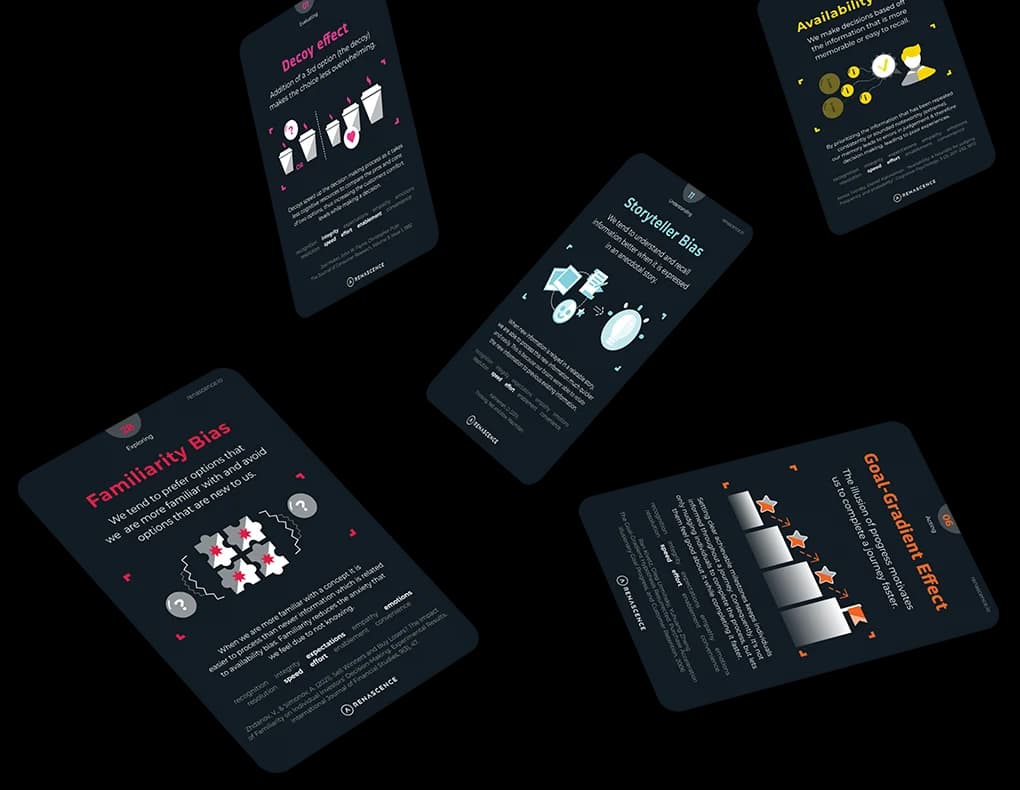
The goal-gradient effect explains why customers tolerate friction differently depending on how close they believe they are to finishing — which means the same extra step can be nearly invisible early in a process and infuriating near the end. In a 2006 study published in the Journal of Marketing Research, Ran Kivetz, Oleg Urminsky and Yuhuang Zheng found that people accelerate their effort and engagement as they perceive themselves nearing a goal, and that even illusory progress — a head start that isn't really a head start — measurably changes behaviour. The corollary for service operations is uncomfortable: an unnecessary verification step inserted at step two of a five-step onboarding journey is a minor irritation; the identical step inserted at step four, just before the customer expected to be done, reads as a broken promise. This is one of the clearest reasons operational redesign cannot be done purely from a process-efficiency lens. The sequence of steps matters as much as their number. Two processes with identical total effort will produce very different satisfaction scores depending on whether the effort is front-loaded, when the customer has the least invested and the most patience, or back-loaded, when the customer believes they are nearly finished and any new obstacle feels like a bait-and-switch.
How do you actually run an operational discovery to find these problems?
Operational discovery is the structured process of walking a service end to end — with the people who deliver it and the systems that support it — to surface where the designed process and the lived one diverge. Done properly, it follows a repeatable sequence rather than an ad hoc audit.
- Select the journey, not the department. Pick a complete customer outcome — opening an account, resolving a claim, onboarding a new tenant — that crosses at least two internal teams. Bottlenecks live in the handoffs between departments, so a discovery scoped to a single team will miss them by design.
- Map the process as it actually runs, not as the manual says it runs. Interview the frontline staff who execute the process daily, and shadow at least one live case from start to finish. Documentation reflects intent; observation reflects reality, and the two are rarely the same.
- Timestamp every handoff. Record when a task arrives at each stage and when work on it actually begins. The delta is idle time, and idle time is almost always the largest single component of a customer's total wait — far larger than the active work itself.
- Tag each step by who it serves. Classify every step as customer-value, risk-control, or legacy — a step that exists only because it always has. Legacy steps are the highest-value target for removal, because they carry cost and friction with no offsetting benefit to anyone.
- Overlay the emotional and behavioural read. Identify where each bottleneck sits relative to the customer's expectations — early, mid-journey, or near the perceived finish line — using the goal-gradient and peak-end principles above to prioritise fixes by psychological weight, not just operational size.
- Prototype the fix against the constraint that created the step. Before removing or redesigning a control, confirm the original risk it addressed and how that risk is or isn't managed elsewhere. This protects against reintroducing the very problem the step was built to solve.
- Pilot, measure, and roll forward with ownership attached. A fix without a named owner and a review date reverts within a quarter. Operational excellence dies quietly through ownership drift far more often than through a single bad decision.
This sequence is deliberately closer to process design than to a compliance audit. The goal is not a report documenting where things go wrong; it is a redesigned, owned process that behaves differently the next time a customer walks through it.
Where do operational excellence programmes usually go wrong?
They go wrong when they optimise the metric they can measure easily instead of the outcome they actually want. Average handling time, cost per transaction and first-pass yield are all real and worth tracking — but none of them account for what happens after the transaction closes on the internal system and before the customer feels resolved. A ticket can be marked "resolved" the moment an agent updates a status field, while the customer is still waiting for the refund, the callback, or the confirmation email that never arrives. The internal record and the customer's reality diverge, and most operational excellence programmes are built entirely on the internal record.
The second common failure is treating operational excellence as a one-time project rather than a standing capability. A process is re-engineered, the metrics improve for two quarters, and then new exceptions, new regulatory requirements and new system patches accumulate quietly until the process has drifted back to where it started. This is why mature organisations pair process redesign with a CX governance structure that reviews operational health on a fixed cadence, rather than waiting for customer complaints to force another audit.
An operation can be efficient and still be unkind. Operational excellence is what happens when someone finally asks whether the process was built for the customer's outcome or for the department's convenience — and has the authority to change the answer.
How do you turn operational excellence into a lasting design discipline?
You turn it into a discipline by giving it the same status as financial control: a named owner, a recurring review, and a mandate that spans departmental boundaries. Most operational failures in service delivery are not caused by a single bad process step — they are caused by the absence of anyone with the authority to see the whole journey and act on it. Individual teams optimise their own segment perfectly and hand the customer a broken whole.
Three structural moves make this durable rather than another initiative that fades after the first steering committee loses interest:
- Assign end-to-end ownership. Someone — a journey owner, not a departmental head — should be accountable for the full customer outcome, with the authority to require change from any team that touches it.
- Build the customer's felt experience into the operational scorecard. Idle time, rework rate and re-contact rate belong on the same dashboard as cost and throughput, not in a separate customer-experience report that operations leadership never reads.
- Re-run discovery on a cadence, not just after a complaint spike. Processes drift. A journey that was excellent eighteen months ago has likely accumulated three or four new exceptions since, each individually justified and collectively corrosive.
None of this requires a large transformation budget to start. It requires the willingness to map one real journey honestly, tag every step by who it actually serves, and remove the ones that survive only out of institutional habit. That is a smaller undertaking than most operations leaders assume, and a far more valuable one than the efficiency programme currently sitting on their roadmap.
The bottom line
Every customer complaint about being made to wait, repeat themselves, or chase an answer is, underneath, an operational design decision someone made and nobody has revisited. Operational excellence in service delivery is the standing commitment to keep revisiting those decisions — not once, in a project, but continuously, as the discipline that determines whether the experience on the wall matches the one at the counter. Organisations that treat it that way stop discovering their broken processes through complaints and start finding them on their own terms, which is the only version of operational excellence worth having.
If you want a structured read on how your own operation compares before you commit to a redesign, our CX Maturity Assessment is a useful starting point, and our service design practice picks up exactly where discovery like this leaves off — turning the map of what's broken into a process built to hold up under real volume.
Further reading
FAQ
Questions we get on this topic
Related reading



Writing on how human behavior shapes the experiences brands deliver — at the intersection of behavioral economics and customer experience.
Stay ahead of CX
Get the Journal in your inbox.
Insights, frameworks and event round-ups from the Renascence team. No spam, ever.