








Customer Experience · November 3, 2026
McDonald's Customer Experience Strategy: Inside McDonald's > NEXT
McDonald's has named a Global Chief Restaurant Experience Officer for the first time. Here's what the new McDonald's > NEXT strategy signals about CX ownership.

A Big Mac takes roughly ninety seconds to assemble to spec. Getting a customer to come back for a second one is the harder engineering problem — and McDonald's has just handed it to a named executive for the first time.
In late 2026, McDonald's introduced "McDonald's > NEXT," a strategy that extends the "Accelerating the Arches" plan the company launched in 2020 under chief executive Chris Kempczinski. The new phase is overseen by Kempczinski, newly titled Global Chief Restaurant Experience Officer Jill McDonald, and global chief information officer Brian Rice. That pairing of names matters more than the slogan: McDonald's has now made restaurant experience a distinct executive mandate, not a function scattered across marketing, operations and IT. The specifics of the strategy's four pillars have not been fully detailed in public reporting at the time of writing, so this piece focuses on what is confirmed — the leadership structure and its lineage — and reads it through the lens of customer experience design and behavioural economics.
What is McDonald's > NEXT?
McDonald's > NEXT is the name McDonald's gave its latest strategic phase in late 2026, positioned as a continuation of "Accelerating the Arches" rather than a replacement for it. The company has confirmed the strategy is led jointly by Kempczinski, Jill McDonald in her new Global Chief Restaurant Experience Officer role, and Brian Rice as global chief information officer. Beyond that leadership trio and the framing as a four-pillar strategy, McDonald's has not yet made the full pillar detail public. That gap is worth sitting with rather than papering over: a company the size of McDonald's does not create a global experience title on a whim, and the structure tells you where the next few years of investment are likely to land even before the pillar names are confirmed.
What is already clear is the intent behind the title. Pairing a restaurant-experience chief with a chief information officer at the top of a named strategy is a statement that physical service design and digital infrastructure are now treated as one problem, not two departments that occasionally meet in a steering committee.
Why build on "Accelerating the Arches" instead of starting fresh?
Because the original 2020 strategy worked well enough that scrapping it would have destroyed internal momentum for no reason. "Accelerating the Arches" was built around three commitments: maximise marketing, commit to the core menu, and double down on what McDonald's called the "3 D's" — Digital, Delivery and Drive Thru. That framework gave franchisees and operators a stable set of priorities for half a decade, which is an eternity in restaurant strategy.
There is a behavioural reason continuity beats reinvention here. Employees and franchise operators anchor on whatever strategic language leadership repeats most often; change the vocabulary every eighteen months and you force a costly re-learning cycle before anyone executes anything. By naming the new phase "> NEXT" rather than inventing an unrelated label, McDonald's signals evolution, not rupture — a choice-architecture decision as much as a branding one. It keeps the mental model intact for the people who actually run the counters and kitchens, which is where any CX strategy either survives contact with reality or dies.
Why does a "Chief Restaurant Experience Officer" title matter?
Because titles are budget signals before they are anything else. When a company elevates "restaurant experience" to a standalone global officer role, it is telling every regional president and franchise group that experience now has a seat with the same weight as finance, marketing or operations — and a single accountable owner rather than a shared responsibility that quietly belongs to no one.
This matters because diffuse ownership is where most customer experience programmes quietly fail. A queue-time problem sits between operations and technology. A menu-complexity problem sits between marketing and the kitchen. A loyalty-app glitch sits between IT and customer service. Without one named executive empowered to resolve those cross-functional disputes, the easiest path is always to leave the friction in place and blame the neighbouring department. Renascence sees this pattern constantly in CX governance work across the region: maturity rarely stalls for lack of ideas. It stalls for lack of a single throat to choke when the idea needs three departments to agree.
What behavioural economics explains why McDonald's experience design works?
Two mechanisms do most of the heavy lifting in a quick-service environment: the peak-end rule and the goal-gradient effect.
The peak-end rule, established by Daniel Kahneman and colleagues in their 1993 study "When More Pain Is Preferred to Less: Adding a Better End" (published in Psychological Science), found that people judge an experience almost entirely by its most intense moment and how it ends — not by its average quality or duration. Applied to a drive-thru, this means the exact second of order confirmation and the handover at the window carry disproportionate weight in how a customer remembers the whole visit, regardless of how long they waited beforehand. A restaurant-experience strategy that treats drive-thru speed as a single average metric is measuring the wrong thing; it is the variance at the peak moment of friction and the quality of the final handoff that shape repeat visits.
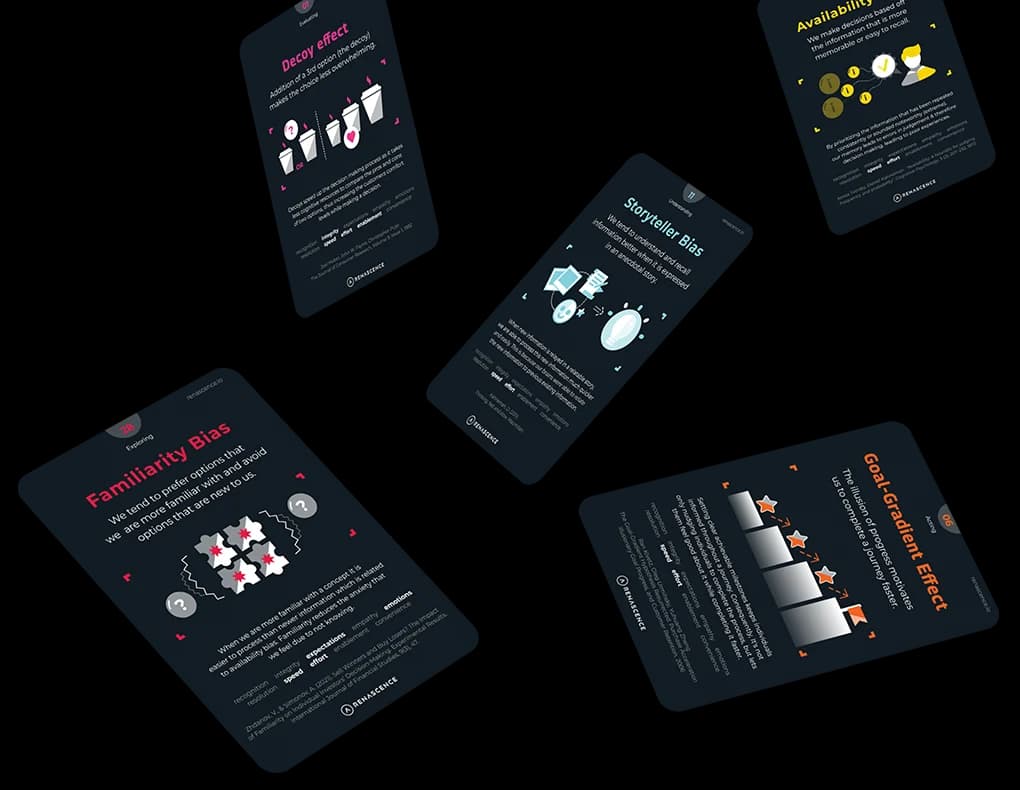
The goal-gradient effect, documented by Ran Kivetz, Oleg Urminsky and Yuhuang Zheng in their 2006 study "The Goal-Gradient Hypothesis Resurrected" (Journal of Marketing Research), found that people accelerate their effort and spending as they perceive themselves closer to a reward. This is the mechanical engine behind every points-based loyalty app, McDonald's MyMcDonald's Rewards included: a visible progress bar toward a free item does not just track behaviour, it actively provokes more of it. A loyalty app, stripped of its branding, is a goal-gradient machine wearing a mascot.
Neither mechanism requires a restaurant to be McDonald's-sized to work. Any brand running a loyalty programme is already using one; the question is whether it is designed deliberately or accidentally.
How does digital ordering reduce friction — or quietly create new sludge?
Digital ordering can cut queue time, but it can just as easily introduce what the economist Richard Thaler termed "sludge" — friction deliberately or carelessly added to a process, the mirror image of a helpful nudge. A kiosk that removes a human queue but buries the value-meal option three screens deep has not reduced effort; it has relocated it from the body to the mind, and cognitive effort is often the more punishing kind. Matthew Dixon, Karen Freeman and Nicholas Toman made the broader case for this in their 2010 Harvard Business Review article, "Stop Trying to Delight Your Customers," arguing that reducing customer effort predicts loyalty more reliably than attempts to delight. A restaurant chain operating at McDonald's scale lives or dies on exactly this trade-off, repeated billions of times a year across kiosks, apps, drive-thru lanes and delivery platforms.
The warning signs of digital sludge are consistent across industries, not unique to quick-service restaurants:
- Default upsell friction — prompts that require extra taps to decline rather than accept, which exploit inertia instead of genuine preference.
- Menu depth without hierarchy — digital menus that mirror the physical board's clutter rather than using choice architecture to surface the items most customers actually want first.
- App-only promotions that punish walk-ins — a discount gated behind an app download adds a real barrier for the customer who simply wants a coffee, trading one segment's convenience for another's irritation.
- Silent failure states — an order that fails to sync between kiosk and kitchen screen with no visible acknowledgement is the digital equivalent of a server who ignores a raised hand.
None of this is specific to McDonald's; it is the generic risk every brand assumes when it digitises a previously human handoff. The brands that manage it well treat every customer journey as something to be mapped stage by stage, with friction tracked at the touchpoint level rather than inferred from an aggregate satisfaction score that hides exactly where the pain lives.
What can other brands copy from McDonald's > NEXT, without copying McDonald's?
The confirmed facts here are modest — a strategy name, a leadership trio, a lineage back to 2020 — but the underlying logic generalises well beyond fast food. Any organisation weighing whether experience deserves its own executive mandate can follow a comparable sequence:
- Audit where experience ownership currently sits. Map every customer-facing friction point against the department that controls it. If more than half the list has no single accountable owner, governance is the actual bottleneck, not the ideas.
- Decide whether experience needs a dedicated seat at the top table. This is not automatic for every business, but once experience issues routinely require cross-functional arbitration, a shared-responsibility model stops being fast enough.
- Keep the strategic vocabulary stable across leadership changes. Extending a known framework, as McDonald's did by building "> NEXT" on "Accelerating the Arches," preserves the organisational learning a brand-new label would erase.
- Identify the one or two moments that disproportionately shape memory. Apply the peak-end rule deliberately: find the worst peak of friction and the final handoff in the journey, and fix those two before chasing marginal gains everywhere else.
- Audit digital tools for sludge, not just adoption. A high app download rate does not mean the app is removing effort; it may simply mean the discount was large enough to force the download. Measure effort directly, not proxy enthusiasm.
The sequence above is deliberately generic, because the lesson from McDonald's > NEXT is structural rather than tactical: experience earns a seat at the leadership table once the cost of not having one becomes visible in the numbers, not before. Businesses waiting for a perfect case study to justify that investment are usually waiting for permission they could grant themselves with a proper CX maturity assessment.
It is also worth noting what this move says about scale economics. A single basis point of improvement in drive-thru conversion or app retention is worth a vastly different sum to a chain operating tens of thousands of restaurants than it is to a regional operator with a dozen sites. That does not make the underlying behavioural mechanisms different — loss aversion, friction and the peak-end rule operate identically regardless of footprint — but it does explain why a company of McDonald's size can justify a dedicated global officer for restaurant experience while a smaller operator might embed the same accountability in a general manager's existing remit. The principle scales down even where the org chart does not. Brands in the hospitality and quick-service space wrestling with exactly this trade-off, including those weighing digital ordering against walk-in experience, will find the same friction patterns described in Renascence's look at how choice architecture drives loyalty at Nando's.
What should a CX leader watch for next?
The honest answer is: the pillar detail McDonald's has not yet disclosed. A restaurant-experience officer paired with a chief information officer points toward investment in the connective tissue between physical service and digital ordering — kitchen display systems, kiosk interfaces, app personalisation, delivery integration — rather than toward any single channel in isolation. Whether that investment shows up as faster drive-thru times, smarter loyalty mechanics, or redesigned restaurant layouts will only become clear as the four pillars are confirmed publicly. What is already instructive, regardless of the detail, is the governance signal: experience got its own chief because leaving it distributed had become more expensive than concentrating it.
That is the part every CX leader outside the fast-food business can act on immediately, with or without a Big Mac in hand.
For organisations weighing a similar move — consolidating experience ownership under one accountable leader, or rebuilding a customer experience strategy around behavioural principles rather than guesswork — the starting point is rarely a new title. It is an honest map of where today's friction actually lives, and the discipline of applying behavioural economics deliberately rather than by accident.
Strategies age. Titles get renamed every few years, frameworks get refreshed, slogans get retired. What survives each cycle, at McDonald's and everywhere else, is whichever brand made the peak moment and the final handoff genuinely better — because that is the only part of the experience the customer actually remembers on their way out the door.
Further reading
FAQ
Questions we get on this topic
Related reading



Writing on how human behavior shapes the experiences brands deliver — at the intersection of behavioral economics and customer experience.
Stay ahead of CX
Get the Journal in your inbox.
Insights, frameworks and event round-ups from the Renascence team. No spam, ever.