
Customer Experience · March 31, 2025
How to Use Customer Experience (CX) Research to Improve CX
Customer Experience (CX) isn’t just about what brands believe—they’re delivering. It’s about what customers perceive, remember, and feel. And in 2026, assumptions are expensive. That’s why CX research is no longer optional—it’s mission-critical.

Customer Experience (CX) isn’t just about what brands believe—they’re delivering. It’s about what customers perceive, remember, and feel. And in 2026, assumptions are expensive. That’s why CX research is no longer optional—it’s mission-critical.
The companies that grow, retain, and inspire loyalty don’t guess—they research. They listen, map, test, and optimize using quantitative data, behavioral insight, and emotional feedback loops. But CX research is not just surveys and NPS scores. It’s a toolkit of methodologies that, when applied strategically, uncover truths you didn’t know you were ignoring.
This article will walk you through how to use CX research to improve your entire experience ecosystem—from touchpoints to tone, journeys to journeys’ end.
The Role of Research in Modern CX
In a customer-centric business, research is the foundation upon which every CX decision is built. It allows you to:
- Understand what customers are experiencing vs. what you intended
- Reveal gaps in expectations, effort, or emotional resonance
- Validate your Customer Experience Strategy
- Prioritize initiatives based on real, not assumed, friction
In essence, CX research helps teams see the invisible—emotions behind silence, motivations behind drop-offs, and patterns across segments.
Renascence integrates research as a core CX ritual, embedding insight loops at every design and delivery phase. Whether through journey-based analytics, ethnography, or behavioral testing, research is always present—because what gets ignored, gets broken.
If CX is your map, research is your compass.
Types of CX Research: Quant, Qual, and Behavioral
CX research comes in multiple flavors—and each serves a different purpose.
Quantitative Research:
- Surveys (CSAT, NPS, CES)
- Analytics dashboards
- Clickstream data
- A/B testing
Use when you want to measure what’s happening at scale, identify patterns, and benchmark.
Qualitative Research:
- In-depth interviews
- Usability testing
- Open-text feedback analysis
- Field observations
Use when you need to understand why something is happening—customer emotion, intent, confusion, etc.
Behavioral Research:
- Eye tracking
- Heatmaps
- Implicit association tests
- Behavioral journey analytics
Use when you want to understand non-verbal behavior, decision-making triggers, and unconscious friction.
Renascence combines all three in layered CX diagnostics—ensuring that we hear what customers say, observe what they do, and analyze how they decide.
The magic happens when all three lenses converge on a single truth.
Using VoC Programs to Gather Actionable Insight
Voice of Customer (VoC) is one of the most powerful forms of CX research—but only when it’s designed and governed correctly.
A strong VoC program:
- Captures data across journeys and channels (not just post-purchase)
- Mixes structured (rating-based) and unstructured (comment) feedback
- Tags responses by CX pillar (e.g., Speed, Resolution, Empathy)
- Closes the loop with clear ownership and action rituals
Platforms like Medallia, Qualtrics, and AskNicely can provide infrastructure—but the insight lies in how you frame the questions, where you place them, and who hears the results.
Renascence helps clients map VoC feedback directly to CX touchpoints. For example, if “Enablement” is a strategic focus, we’ll embed VoC triggers where customers often get stuck and measure how confident they feel before and after intervention.
VoC is not a dashboard. It’s a conversation—and it must feel like one.
Mapping the Customer Journey Through Research
Customer journey maps should not be guesswork. They should be built on research-driven insights, reflecting real paths, not internal assumptions.
There are three core steps:
- Discovery: Interview real customers across segments and use observational tools to document actual behaviors.
- Mapping: Use findings to create visualizations of journey stages, touchpoints, emotions, and friction zones.
- Validation: Test your map with real customers, and adapt as journeys evolve.
Tools that assist include:
- Smaply and UXPressia for journey mapping
- Lucidchart for process mapping
- Dovetail and UserTesting for qualitative analysis
Renascence layers behavioral tagging into journey maps, identifying where biases, fears, and emotional triggers influence decisions.
A journey map without research is just fiction in a nice font.
Ethnographic and Observational Research
Sometimes, customers can’t articulate their pain. That’s when ethnographic and observational research becomes essential.
This means:
- Watching customers use your product or service in context
- Identifying non-verbal signs of confusion, hesitation, or frustration
- Observing workarounds or hacks that signal unmet needs
Example: A retail bank observed users navigating a mobile app during morning commutes. Insight? Glare on screens caused sign-in errors, which customers misattributed to poor UX. The solution wasn’t technical—it was visual contrast redesign.
Renascence uses observational research across industries—from hospitality check-ins to clinic wayfinding. It often reveals the gap between what brands think they deliver and what customers actually experience.
What customers don’t say is often more revealing than what they do.
Leveraging Micro-Experiments to Test and Iterate
Not all research has to be long-form or resource-heavy. Sometimes, the most impactful insights come from small, well-structured experiments embedded into live CX environments.
Micro-experiments include:
- A/B testing different email subject lines for re-engagement
- Testing placement of CTAs or feedback triggers on webpages
- Varying tone in customer service scripts across segments
- Experimenting with different escalation paths for high-friction moments
The value lies in being nimble, measurable, and intentional. These tests allow CX teams to:
- Discover what works best without overhauling the entire system
- Validate assumptions made during journey design
- Build data literacy across departments by showcasing cause and effect
At Renascence, we guide brands to design CX experiments tied to specific Customer Experience pillars. For instance, if “Speed” is a concern, we test tweaks in FAQ structure. If “Resolution” is weak, we pilot tone variations in complaint replies.
A UAE-based ecommerce company ran micro-tests on checkout flow messaging—one version focused on urgency (“Limited stock”), the other on social proof (“10 people bought this today”). The latter produced a 14% higher conversion rate, revealing a hidden motivation pattern in the audience.
CX research doesn’t always require a lab—just a mindset of curiosity and iteration.
Researching Emotions: The Hard Data Behind Soft Signals
CX is emotional. Yet many organizations treat emotion as “unmeasurable.” Not true.
Modern research techniques make it possible to detect, interpret, and design around emotion—often with surprising precision.
Methods include:
- Sentiment analysis on unstructured data (chats, reviews, calls)
- Facial expression analysis during usability testing
- Emotion-tagging of feedback using AI (e.g., Clarabridge, Medallia Discover)
- Behavioral journey analytics that capture frustration loops
Renascence uses emotion scoring to measure how customers feel at each stage—not just what they do. This often reveals critical friction points missed by operational data.
For example, a real estate developer found that while post-handover satisfaction scores were high, emotion tagging revealed anxiety during move-in. Adding onboarding rituals and human check-ins reduced churn by 11%.
Emotion is the invisible KPI of CX. Measure it, and you unlock what truly drives loyalty.
Turning CX Research Into Business Decisions
Research is only as valuable as what gets done with it. The final step? Translate findings into action—operational, strategic, and cultural.
Here’s how:
- Visualize insight: Use storytelling formats (dashboards, journey maps, insight walls)
- Prioritize by impact: Focus on issues that affect revenue, retention, or brand equity
- Assign ownership: Who owns this insight? Who needs to see it?
- Close the loop: Show teams how their work connects to customer voices
At Renascence, we integrate CX research into leadership rituals. Insight reports are not just shared—they’re ritualized into quarterly decisions, journey retrospectives, and strategy sprints.
A government service client used CX research to streamline permit issuance. What seemed like a UI issue was actually a trust issue—users feared digital forms wouldn’t be honored. The fix? Adding confirmation moments and agent validation. Processing time stayed the same, but perceived trust jumped, and call center volume dropped 23%.
Insight means nothing if it dies in a deck. CX research must live where decisions are made.
Building a CX Research Culture Across Teams
CX research isn’t just for the insights team. When democratized, it creates a culture of listening, empathy, and evidence-based design.
Tactics to build a research-first culture:
- Train frontline teams in micro-research (observation, questioning, tagging)
- Create shared insight hubs across departments
- Celebrate “research wins” (not just revenue wins)
- Embed research KPIs in team goals
Renascence helps brands shift from data-hungry to insight-ready—ensuring every team, from ops to finance, knows how to read and apply customer signals.
CX culture is about feedback loops. When staff start asking, “What do we know about how this feels for the customer?”—you’re no longer reactive. You’re proactive.
A CX research culture turns everyone into an experience designer.
The Role of Behavioral Economics in CX Research
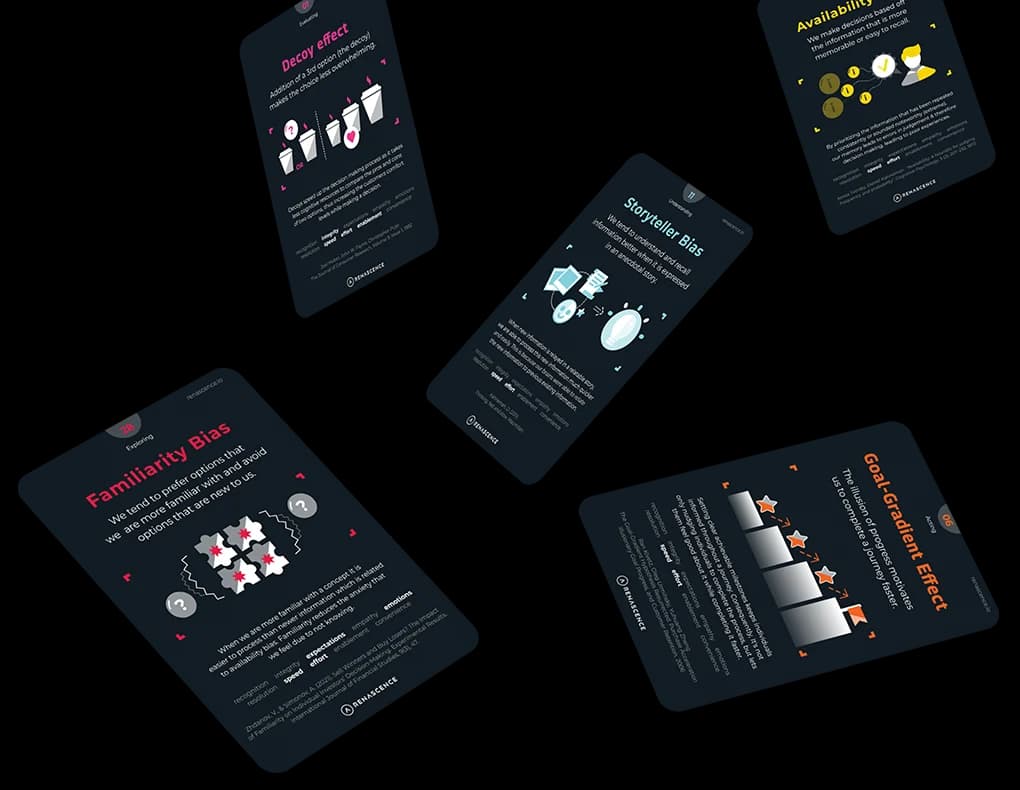
Understanding why customers act a certain way often requires more than what traditional research reveals. That’s where Behavioral Economics steps in.
CX research becomes richer when we:
- Analyze biases like loss aversion, default bias, and effort aversion
- Observe decision-making frameworks, not just outcomes
- Interpret inconsistencies as insights, not errors
Example: In a service flow, customers may skip the “satisfaction rating” button. Traditional research calls it apathy. Behavioral insight sees it as choice overload—especially after cognitive strain.
Renascence’s behavioral CX research combines qualitative studies with friction mapping and bias identification, creating recommendations that improve not just satisfaction—but decision comfort.
When research accounts for emotion, memory, and behavior—you get insights that actually explain the ‘why behind the why.’
Final Thought: Research Is Not an Add-On—It’s Your Experience Engine
Improving CX without research is like renovating a house with the lights off. You may fix what’s visible—but the real damage is always hidden deeper.
CX research is not just surveys and dashboards—it’s how brands listen, learn, and lead. When done right, it unlocks clarity, confidence, and continuous improvement.
At Renascence, research is embedded into every CX blueprint. Not as a report. Not as a project. But as a way of thinking. Because if your customers are evolving, your understanding of them must evolve faster.
Related reading

Writing on how human behavior shapes the experiences brands deliver — at the intersection of behavioral economics and customer experience.
Stay ahead of CX
Get the Journal in your inbox.
Insights, frameworks and event round-ups from the Renascence team. No spam, ever.