
Customer Experience · July 13, 2026
How to Develop Customer Centricity: A Step-by-Step Guide
Customer centricity fails when it's treated as a culture programme. This guide shows how to build it as a design discipline — step by step, layer by layer.

Customer Centricity Is Not a Culture Programme. It's a Design Problem.
Most organisations that fail at customer centricity do not fail because their people do not care. They fail because the systems, structures, and decisions around those people were never designed with the customer in mind. Caring is not a strategy. Design is.
Customer centricity — the consistent orientation of decisions, processes, and resources around what genuinely serves the customer — is achievable. But it requires more than a values workshop and a new slide in the town hall deck. It requires a step-by-step reorientation of how the organisation actually works: how it listens, how it measures, how it resolves conflict between commercial and customer interests, and how it builds the habits that make good customer decisions the path of least resistance rather than the heroic exception.
This guide sets out that reorientation as a practical sequence. It draws on the disciplines of customer experience, service design, and behavioural economics — because the science of how people make decisions is inseparable from the question of how to build an organisation that reliably makes good ones on their behalf.
The core argument: Customer centricity is not a mindset you install through communication; it is a capability you build through deliberate design. The sequence matters — listening infrastructure before strategy, strategy before governance, governance before culture — because each layer depends on the one beneath it.
Why Most Customer Centricity Efforts Stall at the Rhetoric Stage
The pattern is familiar. A leadership team declares that the organisation will "put the customer first." A CX team is formed or expanded. Journey maps are produced. A customer satisfaction metric is added to the scorecard. Eighteen months later, the score has moved marginally, the journey maps are on a SharePoint no one opens, and the CX team is fighting for budget against functions that have harder numbers.
The failure mode is architectural, not motivational. The organisation announced a destination without building the road. Specifically, three structural gaps tend to undermine the effort before it gains traction:
- No shared truth about the customer. Different functions hold different data — contact centre has complaint logs, marketing has survey scores, digital has behavioural analytics — but no one synthesises them into a single, honest picture of what the customer actually experiences.
- No mechanism to resolve the customer-versus-cost conflict. When a process improvement would genuinely help customers but costs money or disrupts operations, there is no governance structure that gives the customer's case a fair hearing. Commercial logic wins by default.
- No feedback loop between customer outcomes and internal decisions. The people who design products, write policies, and set service standards rarely see the consequences of their choices in the customer's life. Abstraction breeds indifference — not malice, but the ordinary inattention that comes from never seeing the downstream effect.
Fixing these gaps is what developing customer centricity actually means. The steps below address each in turn.
Step 1: Build the Listening Infrastructure Before You Build the Strategy
The instinct, when leadership commits to customer centricity, is to start with strategy — a vision statement, a set of CX principles, a journey map of the ideal state. Resist it. Strategy built without a reliable picture of current reality is speculation dressed as direction.
The first task is to establish a Voice of Customer infrastructure that gives the organisation an honest, continuous signal about what customers are experiencing — not what the organisation hopes they are experiencing. This means three things:
- Transactional listening at key moments. Short, timely feedback collected immediately after high-stakes interactions — an onboarding, a complaint resolution, a renewal — captures the emotional reality of the moment before memory smooths it over. The peak-end rule, identified by Daniel Kahneman, tells us that customers remember experiences by their most intense moment and their final moment, not by the average. Knowing which moments are peaks and which are endings is not optional; it is the foundation of any serious CX design effort.
- Relationship-level listening. Periodic surveys that ask customers to evaluate the overall relationship — not just the last interaction — reveal drift that transactional data misses. A customer can rate each individual interaction as satisfactory while the cumulative experience quietly erodes their loyalty.
- Unsolicited signal capture. Complaints, social mentions, contact centre transcripts, and frontline staff observations are often richer than survey data because they are unfiltered. Building a systematic process for surfacing and categorising these signals — rather than treating them as noise — gives the organisation access to the customer's actual vocabulary, which is invaluable for both design and communication.
The output of this step is not a dashboard. It is a shared, honest account of where the customer experience breaks down, and why. That account becomes the foundation for everything that follows. If you want to benchmark your organisation's current listening maturity before proceeding, the CX Maturity Assessment provides a structured starting point across twelve capability dimensions.
Step 2: Map the Journey as It Is, Not as You Wish It Were
Journey mapping is one of the most widely used and most frequently misused tools in service design. The common failure is to map the intended journey — the process as designed — rather than the experienced journey — what customers actually encounter. The gap between the two is where customer centricity lives or dies.
An honest current-state journey map does several things that an aspirational one does not. It identifies the moments where emotional intensity spikes — positively or negatively. It surfaces the workarounds customers have invented to cope with broken processes. It reveals the handoff points between functions where accountability dissolves and the customer falls through the gap. And it names the specific friction points that, if removed, would produce the largest improvement in perceived experience.
The behavioural economics concept of friction — developed by Richard Thaler and colleagues in the context of choice architecture — is useful here. Not all friction is equal. Some friction is protective (a confirmation step before an irreversible action). Most friction is simply waste: steps, delays, and effort that serve no customer purpose and exist only because the process was designed around internal convenience. Distinguishing between the two, and systematically eliminating the latter, is one of the highest-return activities in customer experience design.
Journey maps should be built with real customer data — verbatim quotes, observed behaviours, complaint themes — not with internal assumptions. They should be validated with customers before they are used to drive decisions. And they should be treated as living documents, not project deliverables. A journey map that is accurate today and ignored for two years is worse than useless; it creates false confidence.
Step 3: Define a Customer Experience Strategy That Makes Choices
A customer experience strategy is not a list of things you will do for customers. It is a set of choices about where you will be distinctively excellent, where you will be reliably competent, and — critically — where you will not compete on experience at all. Organisations that try to be exceptional at every touchpoint spread effort so thinly that they are exceptional at none.
A credible customer experience strategy answers four questions:
- Who is the customer we are designing for? Not all customers have the same needs, the same value to the business, or the same tolerance for friction. Segmentation — by need state, not just by demographic — is the foundation of strategic prioritisation.
- What moments matter most? Based on the journey mapping and listening data, which interactions have the greatest influence on loyalty, advocacy, or churn? These are the moments that deserve disproportionate investment.
- What is the distinctive experience we are promising? Not a generic "seamless, personalised experience" — that is a description of ambition, not a strategy. The promise should be specific enough that a frontline employee could use it to make a decision in the moment without asking a manager.
- How will we measure progress? The metric trio of NPS, CSAT, and CES each captures a different dimension of experience. None is sufficient alone. The strategy should specify which metrics matter for which moments, and how they connect to commercial outcomes — because a CX metric that cannot be linked to revenue or cost will not survive the next budget cycle.
Step 4: Build the Governance That Gives the Customer a Vote
This is the step most organisations skip, and its absence explains why so many CX strategies produce good presentations and modest results. Governance is the mechanism by which customer interests are represented in decisions that affect them — product changes, policy rewrites, process redesigns, cost-reduction programmes. Without it, those decisions default to whoever has the most organisational power, which is rarely the customer.
Effective CX governance does not require a large bureaucracy. It requires three things:
- A clear owner. Someone — a Chief Customer Officer, a Head of CX, or an equivalent — who has the authority and the data to represent the customer's case in senior decision-making forums. Without a named owner, accountability diffuses and the customer's perspective becomes everyone's responsibility and no one's priority.
- A standing agenda item. Customer experience metrics and customer impact assessments should appear on the agenda of every significant decision-making body — the executive committee, the product council, the operations review. Not as a report to be noted, but as a variable that shapes the decision.
- A customer impact test for significant changes. Before any major process change, policy revision, or product launch, a structured assessment of the customer impact — what will this feel like from the customer's side? — should be a required step, not an optional one. This is choice architecture applied internally: making the customer-conscious decision the default, not the exception.
For organisations building this capability from scratch, a CX governance strategy provides the structural scaffolding — defining roles, escalation paths, and the decision rights that give customer centricity teeth rather than just voice.
Step 5: Redesign the Processes That Betray the Promise
Every organisation has a set of processes that were designed for internal efficiency and that, from the customer's perspective, are actively hostile. The complaint process that requires three transfers before reaching someone with authority to resolve the issue. The onboarding sequence that asks for the same information four times across four different systems. The renewal process that is smooth for the company and opaque for the customer.
Identifying and redesigning these processes is not a CX activity in the narrow sense — it is an operational transformation. It requires cross-functional collaboration, process mapping, and frequently a willingness to absorb short-term cost or complexity in exchange for a better customer outcome. The organisations that do this well treat process design as a CX discipline, not a back-office function.
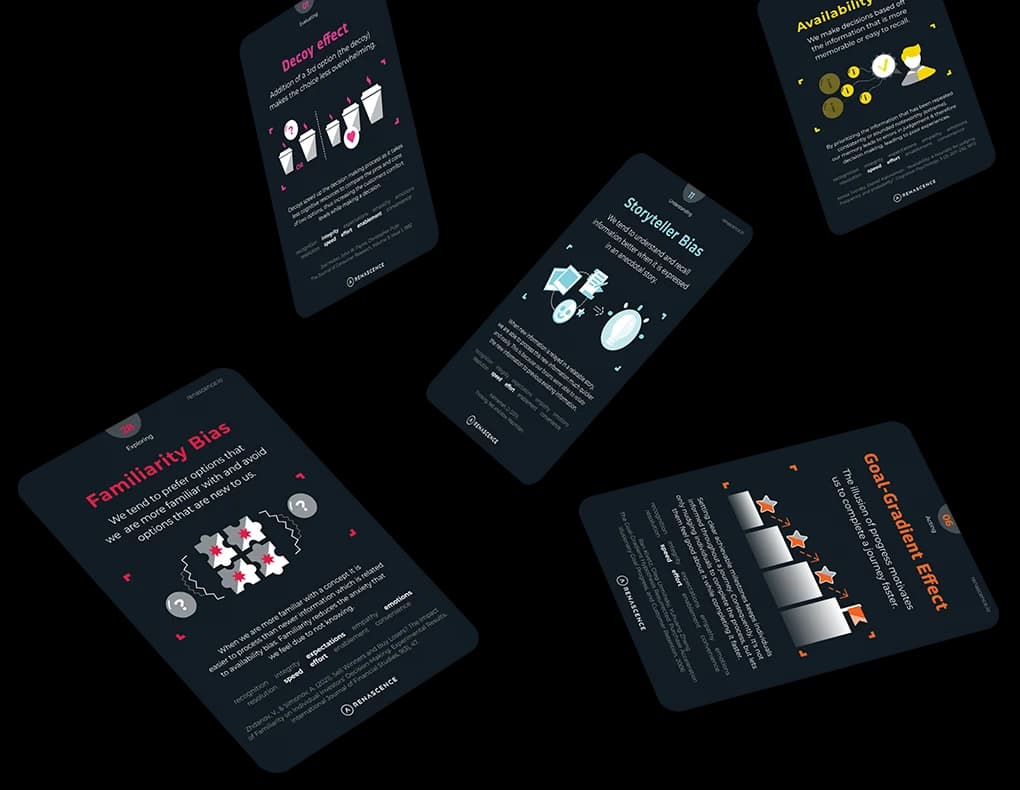
The goal-gradient effect — the behavioural finding that people accelerate effort as they approach a goal — has a direct application here. If a customer can see that they are making progress through a complex process, their tolerance for that complexity increases. Progress indicators, clear next steps, and proactive communication about where the customer is in a journey are not cosmetic improvements; they are structural interventions that reduce perceived effort and improve completion rates.
Step 6: Align Employee Experience With the Customer Experience You Are Promising
There is a well-established principle in service design that the experience a customer receives is a direct function of the experience the employee delivering it is having. An employee who is confused about their role, unsupported by their tools, or working under policies that prevent them from helping customers will not, regardless of personal motivation, consistently deliver a good customer experience.
This is not a soft observation. It is a structural one. Employee experience design — the deliberate shaping of the conditions under which employees work — is upstream of customer experience design. If the internal experience is broken, the external one will be too, and no amount of customer-facing training will fix it.
The alignment work involves three specific questions:
- Do employees understand the customer experience promise well enough to make decisions that honour it without escalating every edge case?
- Do the tools, systems, and information they have access to make it easy to serve customers well, or do they create workarounds that frustrate both employee and customer?
- Are employees recognised and rewarded for customer outcomes, or only for internal metrics that may be disconnected from — or actively in tension with — what customers need?
The answers to these questions determine whether customer centricity becomes a genuine operating capability or remains a leadership aspiration that the frontline cannot translate into action.
Step 7: Close the Loop — Systematically and Visibly
Closing the loop — acting on customer feedback and telling customers what changed as a result — is the step that converts a listening infrastructure from a measurement exercise into a trust-building mechanism. It is also the step most organisations perform inconsistently, if at all.
Closing the loop operates at two levels. At the individual level, it means following up with customers who reported a problem to confirm it has been resolved — a practice that, when done well, consistently outperforms the original interaction in terms of loyalty impact. At the systemic level, it means using aggregated feedback to drive process and policy changes, and communicating those changes to customers in a way that demonstrates the organisation was listening.
The reciprocity principle from behavioural economics is relevant here. When an organisation visibly acts on customer input — and acknowledges that it did so — customers respond with greater engagement and greater tolerance for future imperfections. The act of being heard and acted upon creates an obligation that customers feel, and that obligation is a more durable loyalty driver than any points programme.
Organisations serious about this discipline build customer feedback management as a structured capability — with defined owners for each feedback channel, clear SLAs for individual follow-up, and a quarterly review of systemic themes and the actions taken in response.
Step 8: Measure What Moves the Business, Not Just What Moves the Score
A persistent failure in CX programmes is the optimisation of metrics rather than outcomes. NPS rises because detractors are excluded from the survey sample. CSAT improves because the survey is sent only after positive interactions. CES drops because the question is reworded. None of these movements reflect a genuine improvement in customer experience, and all of them erode the credibility of the CX function with the finance and commercial leaders whose support it needs.
The discipline of connecting CX metrics to commercial outcomes — retention rates, revenue per customer, cost to serve, referral rates — is what gives the CX agenda durability. When a CX leader can demonstrate that a one-point improvement in NPS in a specific segment correlates with a measurable reduction in churn, the conversation with the CFO changes. The CX ROI Calculator is a practical starting point for building that commercial case with your own numbers.
The Harvard Business Review has consistently documented that the economics of customer retention — acquiring a new customer costs substantially more than retaining an existing one — make the commercial case for CX investment straightforward in principle. The challenge is making it specific: which customers, which moments, which interventions, at what cost, with what return. That specificity is what separates a credible CX investment case from a general appeal to customer-centricity as a good thing.
The Sequence Is the Strategy
Developing customer centricity is not a single initiative. It is a sequence of capability-building steps, each of which creates the conditions for the next. Listening infrastructure before strategy, because strategy without data is guesswork. Strategy before governance, because governance without direction is bureaucracy. Governance before culture, because culture without structure is aspiration.
The organisations that get this right — that move from declaring customer centricity to practising it — share a common characteristic: they treat the customer experience as a design problem, not a communication problem. They invest in the structural conditions that make good customer decisions the natural output of normal organisational behaviour, rather than the heroic effort of exceptional individuals.
That shift — from aspiration to architecture — is the whole game. And it is available to any organisation willing to do the work in the right order.
If you are mapping where your organisation sits in that sequence, speak with the Renascence team — or explore how our CX implementation roadmaps translate this sequence into a plan specific to your context, your constraints, and your customers.
Further reading
FAQ
Questions we get on this topic
Related reading



Stay ahead of CX
Get the Journal in your inbox.
Insights, frameworks and event round-ups from the Renascence team. No spam, ever.