
Employee Experience · August 10, 2026
Frontline Attrition Is a CX Problem, Not Just an HR One
Every unprevented resignation shows up downstream as a service recovery, a lost upsell, or a churned customer. Here's why frontline attrition is a CX metric HR happens to own.

Walk any contact centre floor at 6pm and you can spot the agents who are leaving before HR does. They've stopped decorating their desks. They take every offered overtime shift because the money matters more than the job now. They still hit their average handle time, but the small kindnesses — the extra minute spent making a nervous customer feel heard — have disappeared. Attrition doesn't start with a resignation letter. It starts as a slow withdrawal of discretionary effort, and customers feel it weeks before you do.
Here is the uncomfortable thesis: frontline attrition is not an HR metric that occasionally touches customer experience — it is a customer experience metric that HR happens to own. Every point of turnover you fail to prevent shows up downstream as a service recovery, a lost upsell, a one-star review, or a customer who quietly stops calling. Fix retention like an operator, not like a recruiter, and CX quality follows. Treat it as someone else's headcount problem, and no journey map or CSAT dashboard will save you.
Why does frontline turnover matter more than any other CX metric?
Because it is the only metric that degrades every other metric simultaneously. A vacant seat means longer queues. A new hire in week three means more errors, more escalations, and more of the "let me check with my supervisor" moments that erode trust. A team stretched thin covering for departed colleagues means the survivors get tired, cut corners, and leave too.
This chain is not new theory. In their 1994 Harvard Business Review article "Putting the Service-Profit Chain to Work," James Heskett, W. Earl Sasser and Leonard Schlesinger laid out the mechanism plainly: employee satisfaction and retention drive service value, service value drives customer satisfaction, and customer satisfaction drives loyalty and revenue. Three decades on, the chain still holds — most CX transformation programmes still start at the wrong end of it, polishing the customer journey while the employee journey underneath it is falling apart.
What does a departing frontline employee actually cost?
More than the recruitment fee. The direct costs are the visible ones: advertising the role, screening, interviewing, onboarding, training materials, and the manager hours spent on all of it. The Society for Human Resource Management has long estimated that replacing an employee can cost anywhere from half to twice their annual salary, depending on seniority and skill scarcity — and frontline CX roles, which require product knowledge, systems fluency and emotional regulation under pressure, sit well up that range, not down at the bottom.
The costs that don't show up on a finance dashboard are the ones that actually hurt CX:
- Tenure erosion. A contact centre where average tenure drops from eighteen months to eight months is a contact centre that has permanently lost its most experienced problem-solvers — the ones who could resolve a complex complaint without a script.
- Institutional memory loss. The employee who knew that a particular client always calls back if the first fix doesn't work, or that a certain product has a known edge case, takes that knowledge with them. Nobody documents it because nobody thought to.
- Contagion. Resignation is socially contagious on a team. One well-liked colleague leaving raises the psychological permission for others to update their own resume.
- Customer-facing inconsistency. New hires interpret policy differently than veterans. Two customers with an identical issue get two different resolutions in the same week, which quietly damages the fairness perception that underpins trust.
If you want to put a number on this for your own organisation rather than borrow someone else's average, Renascence's EX ROI Calculator is built for exactly that conversation — it turns turnover, engagement and productivity inputs into a business case a CFO will actually read.
Why do frontline employees really quit?
Pay is rarely the whole story, though it's the easiest one to blame because it requires no introspection from management. When exit conversations are run honestly — not as a box-ticking HR exercise but as a genuine debrief — three patterns recur across industries and geographies:
- Powerlessness. Agents who cannot resolve a customer's problem without three approvals feel like they're failing all day, every day. That's not a workload problem; it's a design problem in how authority is distributed.
- Invisible effort. The employee who de-escalates a furious customer at 4:55pm and still logs off on time gets no more recognition than the one who had an easy queue. Effort that isn't seen isn't sustained.
- A manager, not a company. The old adage that people leave managers, not organisations, holds up in frontline environments more than almost anywhere else, because the frontline manager is the entire interface between the employee and "the company." A distant, transactional supervisor is functionally the same as a bad employer, regardless of what the engagement survey says about the brand.
There's a behavioural-economics lens worth naming here: loss aversion, the well-documented finding from Daniel Kahneman and Amos Tversky that losses loom roughly twice as large as equivalent gains. Most retention pitches are framed as gains — a bonus, a new perk, a training course. But the decision to stay or go is usually made in loss terms: "What do I lose if I leave this team, this manager, this routine?" If the honest answer is "not much," no gain-framed incentive will outweigh it. Retention design should therefore build things employees would genuinely feel the loss of — earned autonomy, a recognised specialism, a peer group they'd miss — not just things that sweeten the offer on paper.
How do the first 90 days decide who stays?
Most attrition is decided long before the exit interview. It's decided in the first three months, often in the first two weeks, when a new hire is silently asking one question: was this what I signed up for? Onboarding programmes that front-load compliance training and back-load actual competence — leaving new agents to "shadow and hope" — create a gap between the promise of the job and the daily reality of it, and that gap is where early attrition lives.
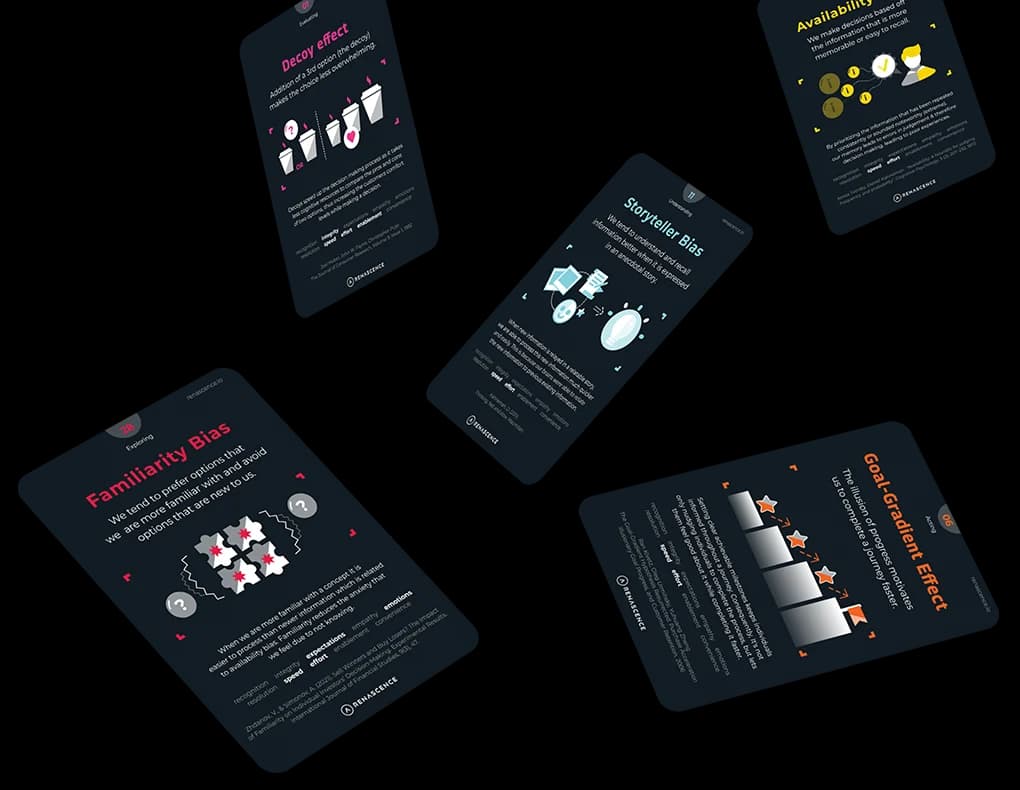
This is where the goal-gradient effect — the behavioural finding that motivation intensifies as people perceive themselves getting closer to a goal — becomes a practical design tool rather than a lab curiosity. New hires who can see a visible, near-term milestone (their first solo call, their first five-star customer comment, their first month without an escalation) push harder toward it than new hires facing an undifferentiated ninety-day training slog. Structure onboarding as a sequence of small, visible wins rather than one long runway to competence, and early attrition drops because the goal always feels close enough to chase.
A practical onboarding sequence that respects this:
- Day 1–3: Show the point, not just the process. Let new hires listen to a recording (with consent) of a genuinely great call or interaction, and unpack why it worked, before they ever touch a script.
- Week 1: First supervised live interaction. Not simulated — real, with a coach silently listening and debriefing immediately after. Delay this and you delay their first sense of competence.
- Week 2–3: Narrow, then widen, authority. Give explicit permission to resolve a small category of issues independently. Nothing kills early motivation faster than "you can talk to customers but you can't actually help them yet."
- Day 30: A named milestone. A visible marker — a badge, a title change, a small pay step, public recognition on the team channel — tied to a demonstrable capability, not just tenure.
- Day 60–90: Assign a specialism. Even a narrow one. Ownership of something specific (a product line, a VIP segment, a peer-training role) is what converts "a job" into "my job," and that shift is the single best predictor of whether someone is still there at month twelve.
Renascence's work on employee experience design starts almost exactly here — treating the onboarding and early-tenure period as a journey with moments of truth every bit as decisive as anything on the customer side, because structurally, it is the same discipline applied to a different audience.
How should leaders build a retention system rather than a retention initiative?
Most organisations run retention as a set of disconnected initiatives — an engagement survey here, a wellness benefit there, an annual town hall. A system is different: it has ownership, cadence, and a feedback loop back into frontline operations.
- Give frontline managers a retention number they're accountable for, not just a productivity number. If a supervisor is measured purely on average handle time, they will optimise for speed even when it costs them their team.
- Run stay interviews, not just exit interviews. Asking "what would make you leave?" of someone still on the team surfaces the fixable friction before it becomes a resignation. Exit interviews only tell you what you've already lost.
- Close the loop on frontline feedback publicly. If an agent flags that a policy makes them look incompetent in front of customers and nothing visibly changes, you've taught the whole team that raising issues is pointless — the single fastest way to manufacture disengagement.
- Redesign escalation paths before you redesign perks. An agent who can actually solve a customer's problem feels more valued than one handed a free lunch while still needing three approvals to issue a refund. Look at how authority and process are structured — Renascence's escalation strategy work is often less about softer skills and more about literally moving decision rights closer to the person on the call.
- Map the employee journey the way you map the customer journey. Stages, moments of truth, emotional highs and lows, and the specific touchpoints — first day, first mistake, first performance review, first promotion cycle — where trust is won or lost. Renascence's CX journey methodology applies directly here, because the underlying discipline of finding and fixing friction doesn't change when the "customer" is an employee.
What actually breaks when leaders try this?
Three things, reliably. First, leaders build the retention programme around what's measurable rather than what's meaningful — engagement survey scores go up while actual tenure doesn't move, because the survey measures sentiment on a single day, not the accumulation of small frustrations across ninety days. Second, frontline managers are handed new retention responsibilities with no reduction in their existing workload, so the new initiative becomes the first thing dropped under pressure. Third, and most commonly: the organisation fixes the employee experience but never touches the process and policy layer underneath it, so agents feel better about coming to work and are still structurally unable to solve customer problems quickly. Culture change without process redesign is a mood improvement, not a retention fix.
The honest fix for all three is sequencing. Don't launch an engagement campaign before you've looked at whether your escalation matrix and staffing model are setting people up to fail. Don't hand managers a retention KPI without giving them either headcount relief or coaching time. And measure the thing you actually want — tenure, internal mobility, regretted attrition rate — rather than the thing that's easy to survey.
How does attrition connect back to the customer, concretely?
Trace a single thread: a bank's contact centre loses 30% of its agents in a year (not an unusual figure in retail banking or telco frontline roles across the region). The average agent now has less tenure and less product depth. First-call resolution drops because newer agents transfer calls they can't yet handle. Customers who get transferred twice are measurably more likely to churn — not because the eventual answer was wrong, but because the effort of getting there breached their patience. That's customer effort doing quiet damage, and customer effort is one of the most reliable predictors of disloyalty in the CX literature, more so in many studies than satisfaction itself.
Now run it forward: an organisation that keeps its best 20% of frontline talent for three years instead of losing them at eighteen months builds a bench of agents who resolve issues without transfers, who recognise repeat customers, who improvise a fair solution instead of reading a script. None of that shows up as a line item. All of it shows up in loyalty. This is why customer loyalty work that ignores the employee journey upstream is, at best, treating a symptom.
Attrition is a lagging indicator of a leading problem: a frontline job that quietly asks people to absorb friction the organisation never bothered to design out.
If there's one line worth remembering from all of this, it's that retention is a design problem before it's a compensation problem. You cannot benefits-package your way out of a job that is structurally frustrating to do well. Fix the authority, the onboarding milestones, the visibility of effort, and the manager relationship first — then the pay conversation becomes about competitiveness, not desperation.
Where should leaders start this quarter?
Pick one team, not the whole organisation. Map its employee journey the way you would map a customer's — from application through to the ninety-day mark — and find the two or three moments where good people are quietly deciding this isn't for them. Fix those before you touch the engagement survey. Attrition rarely turns around because a company tried harder in general. It turns around because someone found the specific point where the job stopped matching the promise, and closed the gap.
Renascence's employee experience practice exists for exactly that kind of diagnostic work — finding where the frontline journey breaks before it costs you the customer journey built on top of it. Related reading on the operational side of this problem includes our look at process discovery tools for CX, which is often the missing half of a retention fix that starts and ends with culture.
Further reading
Related reading



Writing on how human behavior shapes the experiences brands deliver — at the intersection of behavioral economics and customer experience.
Stay ahead of CX
Get the Journal in your inbox.
Insights, frameworks and event round-ups from the Renascence team. No spam, ever.