
Feedback Management · August 15, 2026
From Listening to Action: Fixing the Broken VoC Feedback Loop
Most VoC programmes listen well and act badly. Here's the triage model and ownership structure that turns survey data into fixed processes, not recycled dashboards.

Most Voice of Customer programmes are excellent at listening and terrible at finishing the sentence. A bank collects 40,000 survey responses a quarter, builds a dashboard, presents it to the executive committee — and the same three complaints resurface eighteen months later, unchanged. The problem was never the listening. It was everything that was supposed to happen after.
The gap between hearing customers and acting on what they say is not a motivation problem — it is a design problem. Organisations that close it treat feedback as the start of a workflow with named owners, deadlines and consequences, not the end of a reporting cycle. Organisations that don't treat it as content for a slide end up with a Net Promoter Score that moves in line with the weather and never with the business.
Why do most VoC programmes stall between listening and action?
They stall because feedback has no owner until it does. A survey response lands in a dashboard, gets aggregated into a monthly score, and is discussed in a meeting where no single person is accountable for fixing the underlying cause. Everyone owns the number; no one owns the fix. That diffusion of responsibility is the single most common failure mode in customer feedback management — and it is entirely structural, which means it is entirely fixable.
In its 2005 study Closing the Delivery Gap, Bain & Company found that 80% of companies believed they delivered a superior customer experience, while only 8% of their customers agreed. Two decades on, the gap Bain identified has not closed because it was never a perception problem — it was a routing problem. Feedback about a broken onboarding flow was reaching a customer service team with no authority over product; feedback about a confusing invoice was reaching marketing instead of finance. The information was correct. It was arriving at the wrong desk.
What does "closing the loop" actually mean — and why do organisations get it wrong?
Closing the loop means every piece of feedback triggers a visible response — to the customer who gave it, and to the process that caused it. Most organisations only do the first half, and only for the loudest cases. A detractor gets a call-back and an apology; the systemic issue that produced the detraction gets logged and forgotten. That is service recovery, not closed-loop management.
A closed loop that only closes for detractors is not a loop — it is a fire brigade.
Genuine loop closure operates on two tracks simultaneously. The micro loop resolves the individual customer's issue, fast, ideally within the same working day — this is where recovery and retention happen. The macro loop feeds the pattern behind that complaint into a prioritised backlog of process, product or policy fixes, with a named business owner and a deadline. Programmes that only run the micro loop feel responsive but never actually reduce complaint volume, because the root cause survives every individual resolution. Renascence's work on Voice of Customer strategy starts by separating these two tracks explicitly, because conflating them is the reason so many "closed-loop" programmes never close anything structural.
How should feedback be triaged so it reaches the right owner?
Triage should sort by two variables before anything else: severity and frequency — not sentiment score, and not the channel it arrived through. A single scathing comment about a one-off staff error is a coaching issue. Fifty moderately annoyed comments about the same three-click password reset are a design issue, and design issues compound; they will still be there next quarter, generating fifty more complaints, unless someone with the authority to change the flow is assigned to it now.
A practical triage model routes feedback along three tiers:
- Tier 1 — Immediate recovery: An individual, high-severity issue (a failed transaction, a safety concern, a broken promise) goes to a front-line or escalation owner within hours, following a defined escalation strategy rather than an ad-hoc judgment call.
- Tier 2 — Pattern detection: Recurring, moderate-severity feedback (the same friction point mentioned by 3% or more of respondents in a given period) is bundled into a root-cause ticket owned by the relevant process or product team, with a resolution deadline tracked alongside operational KPIs, not buried in a CX report.
- Tier 3 — Strategic signal: Low-frequency but high-implication feedback — comments that hint at a shifting expectation, a competitor's new standard, or a regulatory sensitivity — is escalated to strategy and product leadership as an input to the roadmap, not treated as noise because the volume is small.
Without this tiering, every piece of feedback gets the same weight, which means urgent issues wait behind trivial ones and strategic signals get drowned by volume. Triage is what turns a feedback inbox into a management system.
What role does behavioral economics play in getting the organisation to act?
Two mechanisms explain why some closed-loop programmes sustain themselves and others collapse after the first enthusiastic quarter.
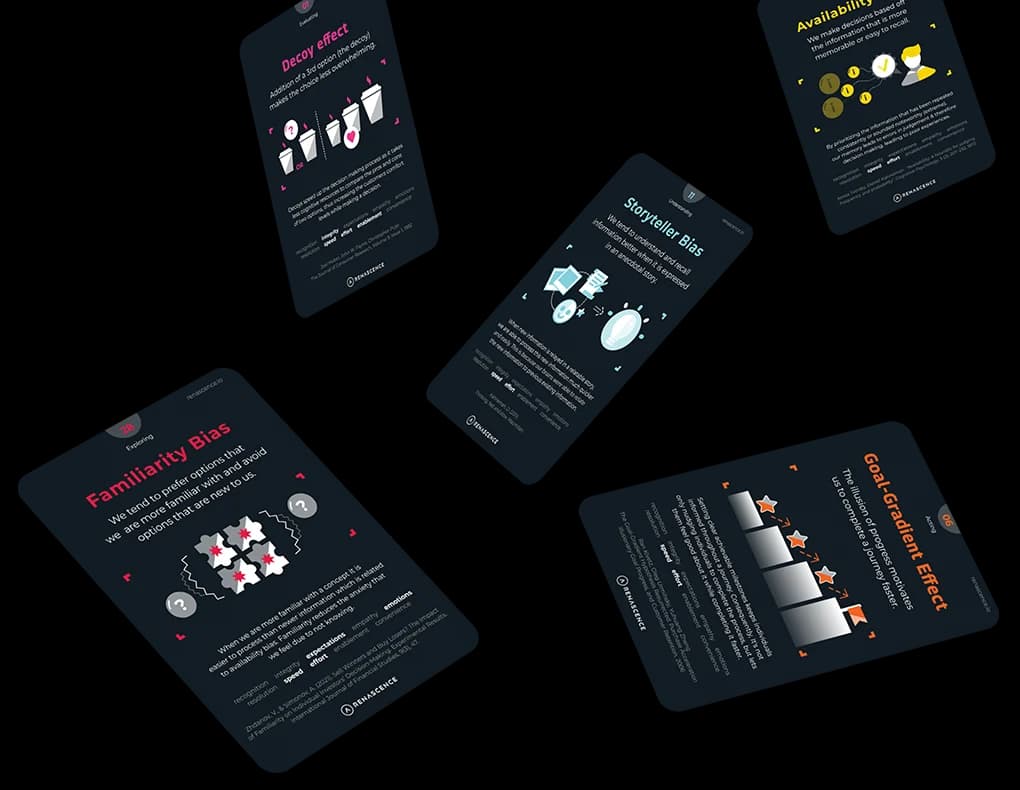
The first is the goal-gradient effect — people accelerate effort as they perceive themselves nearing a finish line, and lose motivation when a task feels endless or vaguely defined. A backlog of "247 open customer issues" demotivates the team responsible for it; a backlog broken into "6 issues remaining this sprint, 3 already resolved" does the opposite. The fix is not a slogan about accountability — it is redesigning how the backlog is displayed. Progress bars, resolved-versus-open counters and visible momentum are not vanity features; they are the behavioral mechanism that keeps a team closing tickets instead of abandoning the list.
The second is the IKEA effect — people place disproportionate value on something they had a hand in building. Front-line staff who are simply handed a new policy to implement tend to comply half-heartedly. Front-line staff who were consulted on the fix — who flagged the friction point in the first place and helped shape the solution — defend it, explain it to colleagues, and notice when it starts to slip. This is the practical argument for building VoC action loops with cross-functional input from the people closest to the customer, rather than designing fixes in a strategy room and pushing them downstream. Renascence's employee experience work exists precisely because the two loops — what employees can act on, and what customers report — are the same loop viewed from opposite ends.
How do you build a VoC-to-action operating system?
Turning feedback into decisions is a repeatable process, not a cultural aspiration. It follows a sequence:
- Define ownership before you collect data. Every survey question or feedback channel should map to a named accountable owner before the first response comes in. If no one can currently answer "who owns this metric," the metric should not be launched yet.
- Triage on arrival, not in a monthly report. Apply the severity/frequency tiering described above as feedback lands, using automated routing rules where volume allows, so Tier 1 issues never wait for a review cycle.
- Set a resolution SLA for every tier. A pattern-level issue that sits in a backlog with no deadline will lose every priority fight to a task with one. Give macro-loop fixes the same deadline discipline as an operational incident.
- Involve the team that owns the friction in designing the fix. This is where the IKEA effect pays off — a fix designed with the branch manager or contact-centre lead who surfaced the issue gets implemented with more fidelity than one imposed from head office.
- Close the loop with the customer, specifically. "We heard you and fixed X" beats a generic thank-you email by a wide margin, because it converts a complaint into evidence that speaking up works — which is the single strongest driver of future participation in your feedback programme.
- Report progress, not just scores. Executive reporting should show issues opened, issues closed, and average time-to-resolution alongside the NPS or CSAT trend — because a stable score with a growing backlog is a warning sign, not good news.
- Audit the backlog quarterly for issues that never got closed. These are almost always the ones with unclear ownership. Re-tier them, reassign them, or escalate them — but do not let them age silently, because a visibly ignored issue erodes trust faster than one that was never raised.
This sequence is deliberately unglamorous. Closing the loop is a workflow discipline before it is an insight discipline, and most VoC programmes invest ten times more effort in the collection instrument — the survey design, the sampling, the sentiment model — than in the seven steps above. That ratio should be closer to even.
How do you know the loop is actually closing — before the ROI shows up?
Score movement lags fixes by months, sometimes quarters, so waiting for NPS to shift before judging whether the system works is too slow to manage by. Track leading indicators instead:
- Time-to-first-response on Tier 1 feedback — the gap between a customer flagging an issue and someone acknowledging it, which should be measured in hours, not days.
- Backlog resolution rate — the percentage of Tier 2 root-cause tickets closed within their SLA each quarter, rising steadily rather than accumulating.
- Repeat-complaint rate — the proportion of new feedback that restates an issue already logged as "resolved." A high or flat rate here means the fix didn't fix anything; it's the most honest signal a VoC programme has.
- Participation rate over time — whether customers who gave feedback before are willing to give it again. Declining participation from repeat respondents is a quiet vote of no confidence that a lagging NPS score won't show for months.
These are the metrics that tell you whether the system is working while there is still time to correct course, rather than a scorecard that confirms, three quarters late, that it wasn't. Organisations serious about this shift often start by benchmarking where their feedback operation actually stands — Renascence's CX Maturity Assessment is one practical way to see which of the twelve building blocks, including closed-loop management, are load-bearing and which are decorative.
None of this replaces good listening. Sampling design, question wording, and channel mix still matter enormously — a biased sample or a leading question will misdirect even the best-run action loop. But the organisations that win on customer experience are rarely the ones with the most sophisticated listening infrastructure. They are the ones where a front-line complaint has a traceable, deadline-bound path to a fix, and where the people closest to the friction were trusted to help design the solution. Harvard Business Review's long-running coverage of customer experience strategy makes the same point from a different angle: measurement without organisational follow-through does not move outcomes, only reports.
The loop is a management system, not a metric
Listening is not a strategy; it is an input. Action is the strategy — and it is judged not by how many surveys go out, but by how many issues stop recurring. The moment a VoC programme starts reporting "issues closed" with the same seriousness it reports "score achieved," the culture around feedback changes: complaints stop being something to manage down and start being something to mine. That reframing, more than any dashboard upgrade, is what separates a company that listens from one that changes because of what it hears.
Renascence helps organisations across the region redesign the operating model behind their customer feedback management — from triage rules and escalation ownership to the reporting cadence that keeps a closed loop actually closed. If your VoC data is generating insight faster than your organisation can act on it, that gap is worth diagnosing before the next survey wave goes out. For related reading on turning listening infrastructure into a genuine advantage, see how employee listening programmes close the loop internally, and how customer lifetime value can anchor which fixes get priority when the backlog is longer than the quarter allows.
Further reading
FAQ
Questions we get on this topic
Related reading


Writing on how human behavior shapes the experiences brands deliver — at the intersection of behavioral economics and customer experience.
Stay ahead of CX
Get the Journal in your inbox.
Insights, frameworks and event round-ups from the Renascence team. No spam, ever.