Digital Transformation · April 15, 2025
Jobs-To-Be-Done
Why do customers choose certain products or services? This question often leads businesses down a path of complex demographic studies and market analyses.

A Shift in Perspective
Why do customers choose certain products or services? This question often leads businesses down a path of complex demographic studies and market analyses. However, the Jobs-To-Be-Done (JTBD) framework offers a transformative lens, focusing on motivations, situations, and expected outcomes to understand customer choices better.
Deep Dive into the JTBD Framework and Job Story
A Job Story is a tool for gaining a deeper understanding of your customers' needs. It focuses on the specific situations in which a customer uses a product, their motivations for doing so, and the outcomes they're hoping to achieve.
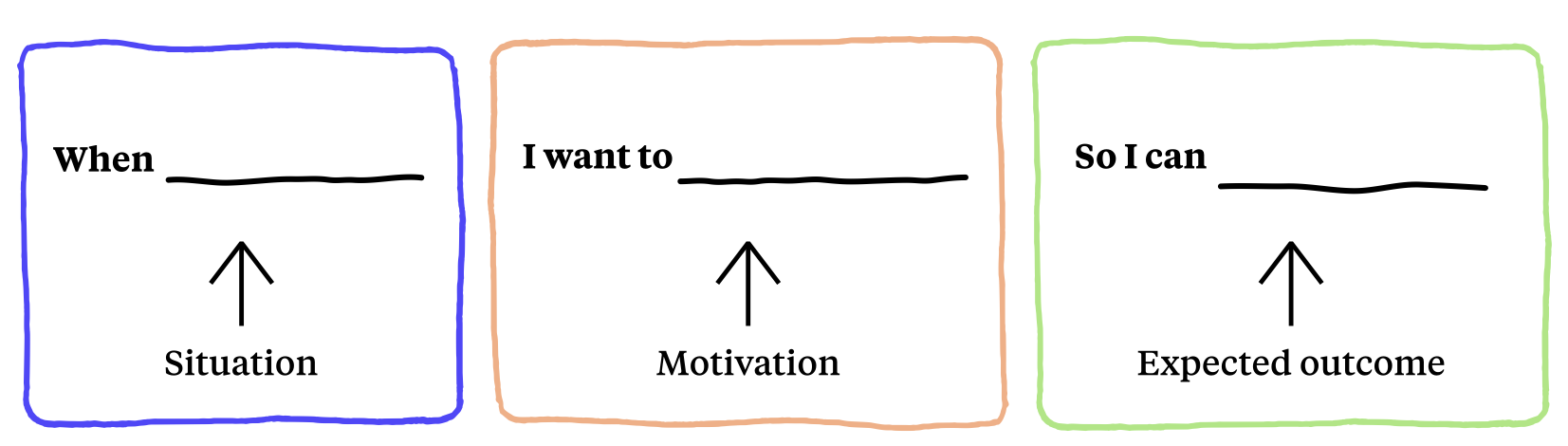
Format of a Job Story:
When (the situation): Describes the context or situation that prompts the user to use the product.
I want to (the motivation): Specifies what the user wants to do in that situation – their motivation for turning to the product.
So I can (the expected outcome): Explains what the user hopes to achieve by using the product – the desired outcome or goal.
Example of a Job Story:
Let's consider an example relevant to a real estate app:
When I am about to visit a property I'm interested in (the situation), I want to easily access detailed information about the property, including its history, current condition, and any potential issues (the motivation), So I can make an informed decision and prepare relevant questions for the real estate agent (the expected outcome).
This Job Story helps product developers and strategists understand the specific context in which the real estate app is used. It also clarifies the user's motivation (to get detailed information) and the outcome they desire (to be well-prepared for a property visit). Using such insights, product features can be tailored to better fit the users' needs.
Deep Dive into the JTBD Framework and Job Story
A Job Story is a tool for gaining a deeper understanding of your customers' needs. It focuses on the specific situations in which a customer uses a product, their motivations for doing so, and the outcomes they're hoping to achieve.
Format of a Job Story:
When (the situation): Describes the context or situation that prompts the user to use the product.
I want to (the motivation): Specifies what the user wants to do in that situation – their motivation for turning to the product.
So I can (the expected outcome): Explains what the user hopes to achieve by using the product – the desired outcome or goal.
Example of a Job Story:
Let's consider an example relevant to a real estate app:
When I am about to visit a property I'm interested in (the situation), I want to easily access detailed information about the property, including its history, current condition, and any potential issues (the motivation), So I can make an informed decision and prepare relevant questions for the real estate agent (the expected outcome).
This Job Story helps product developers and strategists understand the specific context in which the real estate app is used. It also clarifies the user's motivation (to get detailed information) and the outcome they desire (to be well-prepared for a property visit). Using such insights, product features can be tailored to better fit the users' needs.
Case Study: McDonald's Milkshakes and Broader Market Dynamics
JTBD offers a unique lens to view competition, urging businesses to look beyond apparent rivals and understand the broader range of alternatives that customers might choose for the same job.
A compelling illustration of this is the story of McDonald's milkshakes. Initially, McDonald's might have viewed other fast-food beverages as their primary competition. However, when they applied the JTBD framework, they discovered that their milkshakes were often purchased in the morning by commuters. This revelation meant that their real competition included a broader array of breakfast options like bagels, bananas, and energy bars – essentially, anything a commuter might 'hire' to fulfill the job of a convenient, filling breakfast on the go. This insight prompted a reevaluation of their product and marketing strategy, focusing on making their milkshakes the best possible solution for this specific job.
The application of JTBD extends far beyond the fast-food industry. For example, in the newspaper business, had publishers realized their job was to 'keep people entertained' or 'informed' rather than just to sell news on paper, they might have identified the emerging digital platforms as competitors much earlier. This misjudgment opened the door for new players like social media platforms and online news aggregators to redefine the landscape.
Case Study
Our consulting firm, Renascence, had the opportunity to partner with one of the leading real estate developers in the UAE. This collaboration was focused on a crucial task: to audit and enhance a series of digital applications designed for real estate management and customer engagement.
The JTBD Approach
Embarking on this ambitious project, we embraced the JTBD framework, a decision that would redefine our approach and deliver remarkable insights. Our team crafted over 40 unique Job Stories, meticulously designed to encapsulate the diverse needs and scenarios faced by the users of these applications. This extensive collection of Job Stories became the backbone of our audit process, guiding our analysis and testing of each app with precision.

Detailed Outcomes of the JTBD Application
In-Depth Identification of Pain Points:
- In the context of social invitations, RSVP is a request for a response from the invited person or people. It is an initialism derived from the French phrase Répondez s'il vous plaît, literally "Reply if you please" or "Please reply".
Competitive Benchmarking and Market Positioning:
- Utilizing the insights garnered from the JTBD stories, our team conducted a specialized competitive benchmarking exercise. This process shed light on the actual competitors in the digital real estate arena, many of which had been overlooked due to conventional market segmentation methods. The revelation of these competitors, some from outside the traditional real estate app market, allowed us to rethink and reposition our client's digital offerings effectively.
Strategic Product Strategy Overhaul:
- The nuanced understanding gained from the JTBD analysis led us to a pivotal strategic recommendation – transitioning from a multi-app ecosystem to a unified 'super app' approach. This strategy was predicated on the realization that a single, integrated platform could more efficiently and effectively fulfill the array of jobs users required from these apps. The super app concept promised to streamline user experience, reduce complexity, and increase overall user satisfaction.
User Experience Enhancement and Operational Efficiency:
- Addressing the myriad pain points uncovered in our analysis, we embarked on a comprehensive overhaul of the user interface and user journey within the apps. This revamp led to a significant enhancement in user experience, marked by improved navigation, streamlined processes, and intuitive design elements. These improvements not only heightened user engagement but also optimized operational efficiency, reducing time spent on common tasks and simplifying user interactions.
Increased Responsiveness to Market Dynamics:
- A key advantage of the JTBD approach was the agility it afforded in responding to market changes and evolving user needs. With a clearer understanding of the jobs the apps were hired to do, our client could rapidly adapt to new market trends, user feedback, and technological advancements. This agility ensured that the apps remained relevant, competitive, and aligned with user expectations in a fast-changing digital landscape.
Long-Term Vision and Sustainability:
- Beyond immediate improvements, the JTBD framework helped us lay down a roadmap for long-term product evolution. This forward-thinking strategy focused on sustainable growth, continuous user engagement, and adaptability to future market shifts. By aligning the apps with the evolving jobs of the users, we ensured that the digital offerings would remain relevant and valuable in the years to come.
Conclusion: JTBD as a Catalyst for Transformation
The application of the JTBD framework in this project with the UAE real estate developer was a transformative experience for both Renascence and the client. By embracing this user-centric approach, we not only enhanced the current suite of apps but also set a new standard for future digital product development in the real estate sector. The shift towards a super app strategy, underpinned by a deep understanding of user needs and market dynamics, positioned our client at the forefront of digital innovation in real estate.
Recommended materials
Here are in my humble opinion useful materials to look into:
- “Intercom on Jobs-to-be-Done”: A foundational read for understanding JTBD, this guide by Intercom is packed with practical insights and applications for product management.
- “Lenny’s Podcast with Bob Moesta”: An insightful episode featuring JTBD co-creator Bob Moesta, offering deep dives into the framework. Lenny’s podcast, in general, is a valuable resource for product managers.
- Additional Resource - “Competing Against Luck” by Clayton Christensen: For a broader perspective on JTBD, Christensen’s book is an influential read that delves into the theory behind customer choice and innovation.
Related reading



Writing on how human behavior shapes the experiences brands deliver — at the intersection of behavioral economics and customer experience.
Stay ahead of CX
Get the Journal in your inbox.
Insights, frameworks and event round-ups from the Renascence team. No spam, ever.