Customer Experience · April 13, 2025
Customer Experience (CX) and Innovation: Lessons from Leaders
Innovation is often seen as a tech function. But real innovation—the kind that changes customer behavior, creates emotional loyalty, and fuels market leadership—starts with experience. In this article, we explore how industry leaders across the globe (and especially in the Middle East) are using Customer Experience (CX) not just as a measure of satisfaction, but as a catalyst for innovation.
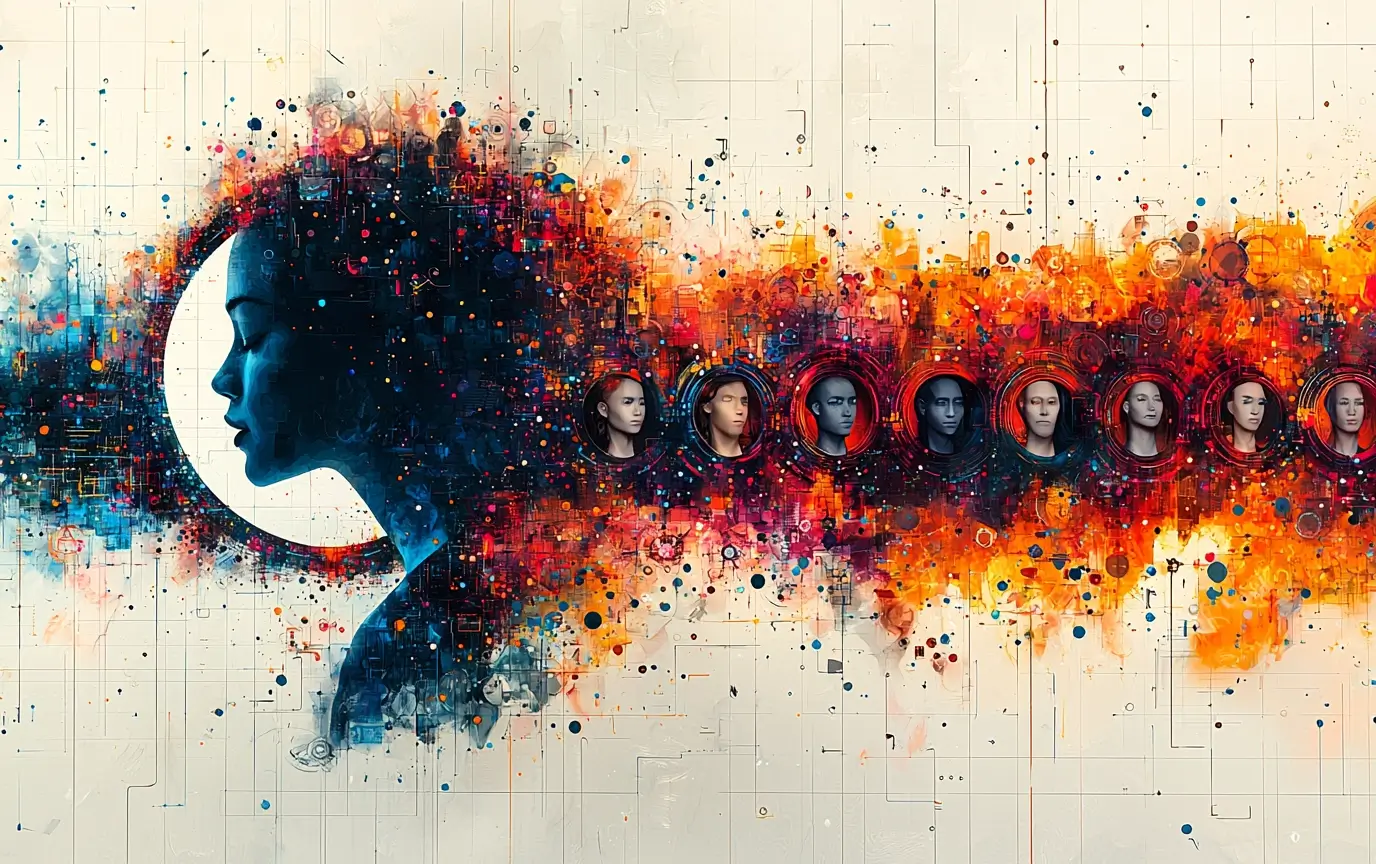
Innovation is often seen as a tech function. But real innovation—the kind that changes customer behavior, creates emotional loyalty, and fuels market leadership—starts with experience. In this article, we explore how industry leaders across the globe (and especially in the Middle East) are using Customer Experience (CX) not just as a measure of satisfaction, but as a catalyst for innovation. From service rituals to behavioral nudges, the most successful organizations are innovating at the emotional level—and we’ll show you exactly how they’re doing it.
CX as a Catalyst for Innovation: The Shift From Product-Led to Experience-Led
Traditionally, innovation meant new features, faster technology, or bigger marketing campaigns. But over the past decade, that definition has evolved. The most disruptive companies today innovate not just in what they offer, but in how people feel when engaging with their brand. That’s the CX-innovation link.
According to PwC’s Future of CX report (2023), 86% of buyers are willing to pay more for a great experience, and 32% will walk away from a brand they love after just one bad interaction. More importantly, brands that prioritize CX in innovation cycles:
- Launch customer-validated products 33% faster
- Experience 24% higher adoption rates for new services
- Reduce failure of innovation projects by up to 60%
This shift is about moving from R&D labs to real-time feedback loops. Great CX innovation comes not from assumptions, but from Voice of Customer (VoC) insight, behavioral testing, and frontline feedback.
At Renascence, we see this firsthand. In one case with a major retail group in the UAE, fusing VoC with service design not only reduced checkout times, but inspired a new loyalty mechanism rooted in psychological consistency—resulting in a 27% uplift in repeat purchase behavior.
Experience Design Drives Customer-Centered Innovation
What makes an idea innovative isn’t just its novelty—it’s whether it removes friction, solves problems, or delights customers in a new way. That’s why Experience Design has become a cornerstone of innovation departments across industries.
Rather than start with “what can we build?”, design-led companies start with “what do people feel, fear, or want—but haven’t verbalized?”
Leading organizations embed Service Design principles to build cross-functional teams that map journeys, identify moments of stress or delight, and prototype emotional responses, not just UI layouts.
Here’s how this plays out in practice:
- A hospitality brand in Dubai redesigned its check-in experience using behavioral insight, cutting wait times by 35%—not through faster systems, but through reframing guest expectations with emotional cues.
- A banking group in London used customer journey heatmaps to discover that confusion—not tech failure—was the root cause of mobile app abandonment. A simple UX text tweak resulted in a 17% usage increase.
The magic? These weren’t “big ideas.” They were small, behaviorally informed designs rooted in the lived reality of customers.
Real innovation starts with asking: Where does the customer’s emotion shift, and how can we intervene there?
Verified Case Study: Etihad Airways Redesigns Loyalty Through Emotion
In 2022, Etihad Airways, based in Abu Dhabi, undertook a loyalty redesign effort. But instead of simply updating its points system, the team—partnering with behavioral experts—focused on emotional loyalty triggers.
What changed:
- Introduced milestone storytelling, where passengers receive personalized messages after 10, 25, or 50 flights—not just points.
- Used reciprocity nudges, surprising loyal fliers with upgraded service on special occasions without pre-prompted requests.
- Designed mobile interactions using the Zeigarnik effect, giving users visual progress on how close they were to the next tier—driving motivation.
Results:
- A 24% increase in tier upgrades within one year
- Loyalty satisfaction scores improved by 18%
- Higher brand recall in competitive NPS benchmarking
Etihad’s strategy wasn’t a tech overhaul. It was an experience redesign based on behavioral dynamics—and it positioned them as a loyalty innovator across the region.
Innovation Is a Team Sport: CX, Product, and Data Must Collaborate
Innovation doesn’t happen in isolation. In every example where CX drove breakthrough results, cross-functional collaboration was the enabler.
Here’s what the best organizations do:
- CX provides the empathy and customer journey perspective
- Product brings the building capability and iteration speed
- Data teams validate the insights and measure success behaviorally
Companies like Majid Al Futtaim and Aldar in the UAE have started embedding CX specialists within product and digital transformation teams, ensuring that customer needs, not just platform specs, guide innovation cycles.
In a recent Renascence-led CX case study in Abu Dhabi, innovation workshops involving both CX and product teams revealed that internal misalignment—not lack of ideas—was the biggest innovation bottleneck. By mapping the internal service blueprint alongside the customer journey, the organization unlocked 14 previously overlooked innovation opportunities.
In short, CX must move from the reporting dashboard to the strategy table. That’s where real experience-driven innovation begins.
CX Innovation in the Middle East: Designing for Purpose, Not Perks
The Middle East, particularly the UAE and Saudi Arabia, has become a hotbed for experience-led innovation. What sets the region apart isn’t just investment—but a cultural shift in how Customer Experience is seen as a nation-building tool, not just a business metric.
Let’s look at two real examples:
1. Dubai Holding Hospitality
Faced with rapidly rising guest expectations, Dubai Holding redesigned the guest experience in partnership with Renascence. Instead of focusing solely on hotel upgrades, the CX team conducted emotional mapping across the journey—highlighting key anxiety points like check-in, multilingual support, and departure delays.
CX innovation introduced:
- A “Calm Zone” pre-lobby for guests arriving early
- Voice-nudged guides via mobile for exploring local areas
- Departure rituals with optional parting gifts and personalized goodbye messages
The outcome:
- Net Promoter Score improved by 31% over 9 months
- Guests mentioned emotional words (relaxed, cared for, connected) twice as often in feedback
- Repeat booking intent rose significantly across regional guests
2. Saudi Arabia’s Vision 2030 Initiatives
The Kingdom’s digital government programs now treat CX as a national innovation lever. Platforms like Absher and Tawakkalna reimagined public service delivery by removing unnecessary clicks, integrating behavioral nudges, and mapping user feedback in real-time.
CX innovation introduced:
- Frictionless e-services redesigned using loss aversion principles
- Clear milestone tracking to reduce uncertainty and improve task completion
- Emotional cues such as welcome animations and gratitude messages embedded into final screens
Result:
- Government trust and satisfaction soared (based on the KSA Citizen Experience Index)
- Mobile task abandonment dropped by 19%
Middle Eastern innovation isn’t about copying Silicon Valley. It’s about designing emotionally intelligent experiences rooted in culture, speed, and clarity.
Behavioral Economics in CX Innovation: Where Rationality Ends and Loyalty Begins
One of the most overlooked forces in Customer Experience innovation is Behavioral Economics—the science of understanding how people make decisions (often irrationally) and how to design for that behavior.
Why does this matter?
Because your customers aren’t spreadsheets. They’re human.
Some examples of behavioral innovation that worked:
- Scarcity nudges: Meraas introduced limited-time experience bundles across leisure brands. Visitors booked 28% more often when experiences were framed with social proof (“8 people just bought this”) and urgency nudges.
- Endowment effect: A retail brand in Doha offered free 3-day trials on membership perks. Even though no payment was taken, over 60% converted once benefits were felt first.
- Choice overload reduction: A regional insurance firm reduced package options from 9 to 3, personalized by customer journey stage. Purchase completion rose 23%.
At Renascence, we embed Behavioral Economics into CX design to shift away from assumption-based ideas to evidence-led interventions. Customers don’t always say what they want—but their behavior reveals everything.
Behavioral design is no longer optional—it’s the core of customer-centered innovation.
Measuring CX Innovation: Beyond Satisfaction Scores
You can’t improve what you don’t measure—but many CX metrics are stuck in the past. Satisfaction and NPS are important, but they rarely capture whether your innovation efforts are truly working.
Leading CX innovators use metrics like:
- Adoption Rate of new experiences: Are customers actually using what you launched?
- Customer Effort Score (CES): Is the innovation making it easier—or harder—to get what they want?
- Emotional Impact Index: How do customers feel before, during, and after the interaction?
- CX Breakthrough Score: A Renascence-designed measure that tracks whether innovations produce new behavior, not just better feedback.
Example: A UAE fintech launched a “Save Before You Spend” feature designed to drive financial wellness. While initial satisfaction was neutral, behavior showed that over 42% of users engaged with the feature at least 4 times in the first month—a strong indicator of future loyalty.
Insight: Don’t mistake silence for failure or praise for success. Behavioral data > compliments.
Product Innovation Fueled by CX: Closing the Feedback Loop
One of the most powerful outcomes of mature CX strategy is that it doesn’t just improve service—it fuels new product development.
Here’s how it works:
- CX identifies unmet needs: Not just complaints, but gaps in meaning, ease, or identity
- VoC and behavioral analytics validate them: Combining what people say with what they actually do
- Cross-functional teams prototype rapidly: With CX as the lens, not just tech feasibility
- New offerings are tested via micro-experiments: Reducing cost and risk
Case Example: Emaar One App
The original app offered real estate management tools. But feedback revealed that users also wanted emotional and community connections. Based on Renascence’s insight delivery, Emaar launched features like:
- Mood-based smart notifications (“How was your morning today?”)
- “Neighbors” feature for community updates
- Personalized home ritual recommendations (e.g., coffee playlist, plant watering nudges)
The impact?
- App usage frequency increased by 41%
- Customer loyalty scores jumped
- Feature adoption was highest among Gen Z and Millennial property owners
CX insights aren’t a sidebar—they’re a springboard for product innovation when teams are aligned.
EX Supports CX Innovation: Why Employee Experience Matters More Than Ever
While this article has focused on Customer Experience, it’s impossible to talk about real innovation without recognizing the Employee Experience (EX) that supports it.
Innovative experiences for customers can only be delivered by motivated, informed, and enabled employees.
Here’s what leading organizations are doing to align EX with CX innovation:
- Frontline feedback systems: At Carrefour UAE (under Majid Al Futtaim), real-time VoE platforms allow store staff to suggest improvements to customer processes. Ideas like faster refund counters and packaging stations came directly from the ground.
- Recognition tied to innovation: In some Renascence-led projects, employees are rewarded for CX-impacting ideas, not just KPIs. This creates a culture where employees feel ownership over change.
- EX rituals that reflect CX values: When customer empathy is a brand pillar, internal meetings also start with empathy moments, reinforcing shared values.
We’ve seen clients unlock breakthroughs in digital onboarding, contact center design, and loyalty campaigns by first reimagining their internal rituals and support systems.
The truth is simple: you cannot innovate externally if your people feel stuck internally.
Culture and Experimentation: Creating Psychological Safety for CX Innovation
True innovation requires risk. But risk can’t exist without psychological safety—and that’s where culture comes in.
Across every case we studied, the most innovative companies had permission to fail, and more importantly, permission to test. Here's how they did it:
- Micro-experiments: Rather than launching new experiences to 100% of users, teams piloted to 5–10% segments, using behavioral analytics to iterate.
- CX innovation sprints: Multidisciplinary teams were brought together for short bursts (1–2 weeks) to tackle one friction point—such as long queues, app abandonment, or delivery delays.
- Celebration of “smart failures”: At a retail brand in Saudi Arabia, CX teams received public credit for ideas that didn’t work—but taught the business something new.
Renascence frequently supports clients in building this test-and-learn culture, using frameworks that include behavioral prototyping, friction mapping, and post-experiment debriefs.
The takeaway? You don’t need a bigger budget—you need a braver mindset.
CX Governance: Enabling Innovation With Guardrails, Not Bureaucracy
One of the silent killers of CX innovation is poor governance. When roles, data, or accountability are unclear, even the best ideas stall.
But governance doesn’t have to be rigid. Done right, it creates guardrails for innovation, allowing teams to move fast while staying aligned.
Here’s what we see in high-performing organizations:
- CX councils or experience boards: These bring together product, digital, marketing, and ops to approve and monitor CX innovation initiatives.
- Clear experience ownership: For every customer journey (onboarding, service recovery, subscription renewal), someone is responsible for its design and evolution.
- Metrics that go beyond NPS: Renascence clients often adopt a combination of behavioral and emotional KPIs to track whether CX innovation is working—not just whether it’s liked.
A strong CX governance strategy gives teams clarity without bureaucracy. It enables collaboration, fast decision-making, and transparent escalation—especially when innovation touches multiple departments.
When governance supports innovation, CX becomes agile, not ad hoc.
Final Thought: Innovation Is an Experience, Not Just a Feature
Across all the regions, sectors, and case studies we’ve explored, one truth stands out: innovation without experience is just noise.
The most meaningful changes don’t always involve AI, new apps, or bold rebrands. Sometimes, they’re about reframing a waiting line. Designing a better feedback moment. Or embedding emotion into a daily service interaction.
Customer Experience innovation isn’t about being first. It’s about being deeply relevant, memorable, and human.
At Renascence, we believe the most powerful innovation happens when CX, EX, behavioral economics, and service design come together. That’s when businesses stop guessing—and start resonating.
Related reading


Writing on how human behavior shapes the experiences brands deliver — at the intersection of behavioral economics and customer experience.
Stay ahead of CX
Get the Journal in your inbox.
Insights, frameworks and event round-ups from the Renascence team. No spam, ever.