








Customer Experience · October 19, 2026
Accor Customer Experience: How 45 Brands Make It Work
Accor runs ibis and Raffles under one roof without diluting either. Here's how segmentation, loyalty redesign and an asset-light model make that possible.

Walk into an ibis Budget off a ring road in Lyon and then into a Raffles suite in Singapore, and you would be forgiven for not realising both belong to the same parent company. That is not an inconsistency. It is the design.
Accor is the rare hospitality group that has made peace with the fact that one customer experience standard cannot serve both a backpacker and a head of state — so it built more than forty. The French group now operates over 5,700 hotels across more than 110 countries under 45-plus brands, spanning everything from economy stays to ultra-luxury addresses. That scale is not a side effect of growth. It is the architecture itself, and it holds the real lesson for any CX leader managing a portfolio rather than a single product.
What is Accor's customer experience strategy?
Accor's experience strategy rests on three mechanisms working together: a segmented brand portfolio that matches service design to distinct customer jobs-to-be-done, a loyalty programme (ALL – Accor Live Limitless) built around redemption flexibility rather than pure points accumulation, and an asset-light operating model that separates property ownership from brand standards so experience consistency does not depend on who owns the building. None of these is revolutionary in isolation. Together, they let Accor run a luxury house like Raffles and a budget chain like ibis under one roof without either brand diluting the other.
Why does Accor run 45-plus brands instead of one unified standard?
Most hospitality groups try to stretch a single brand promise across price points and apologise when it strains. Accor does the opposite: it treats brand segmentation as choice architecture. Its portfolio runs from luxury houses — Raffles, Fairmont, Sofitel, SLS — through premium and midscale names like Pullman, MGallery, Swissôtel, and Novotel, down to economy brands such as ibis, ibis Styles, and ibis Budget. Each brand carries its own service blueprint, its own staff training, its own physical design language.
This matters because of a basic truth in behavioural economics: customers do not evaluate experiences in a vacuum, they evaluate them relative to a reference point. A guest who books ibis expects clean, efficient, no-frills — and is delighted when the room clears that modest bar. The same guest, if housed under a stretched "premium" brand delivering ibis-level service, would feel short-changed, because the brand name itself set a higher anchor. By keeping brand promises distinct, Accor manages expectations before the guest ever checks in — which is the entire function of the expectations principle in service design: a mismatch between what is promised and what is delivered is where satisfaction collapses, regardless of how good the delivery actually is.
The portfolio approach also solves a subtler problem: cross-brand cannibalisation. A single hospitality brand trying to serve every segment forces customers to make awkward trade-off decisions within the same mental category. Separate brands remove that friction entirely — nobody agonises over whether to book "the cheaper Raffles" because that option does not exist. For any multi-segment business, from banks running mass-market and private-banking tiers to retailers running flagship and outlet formats, the principle transfers directly: define the archetype you are serving, then design the entire experience — not just the pricing — around that archetype's expectations. Renascence's work on CX archetypes is built on exactly this logic: segmentation fails when it stops at marketing personas and never reaches the operating model.
How does the ALL loyalty programme change the economics of return visits?
In 2021, Accor retired Le Club AccorHotels and replaced it with ALL – Accor Live Limitless, a rebrand that was also a redesign. The shift that matters for CX practitioners is not the name. It is the redemption logic: ALL points can be spent on stays, but also on dining, wellness, and entertainment experiences across Accor's network — a deliberate widening of what "reward" means beyond the transactional loop of booking another room.
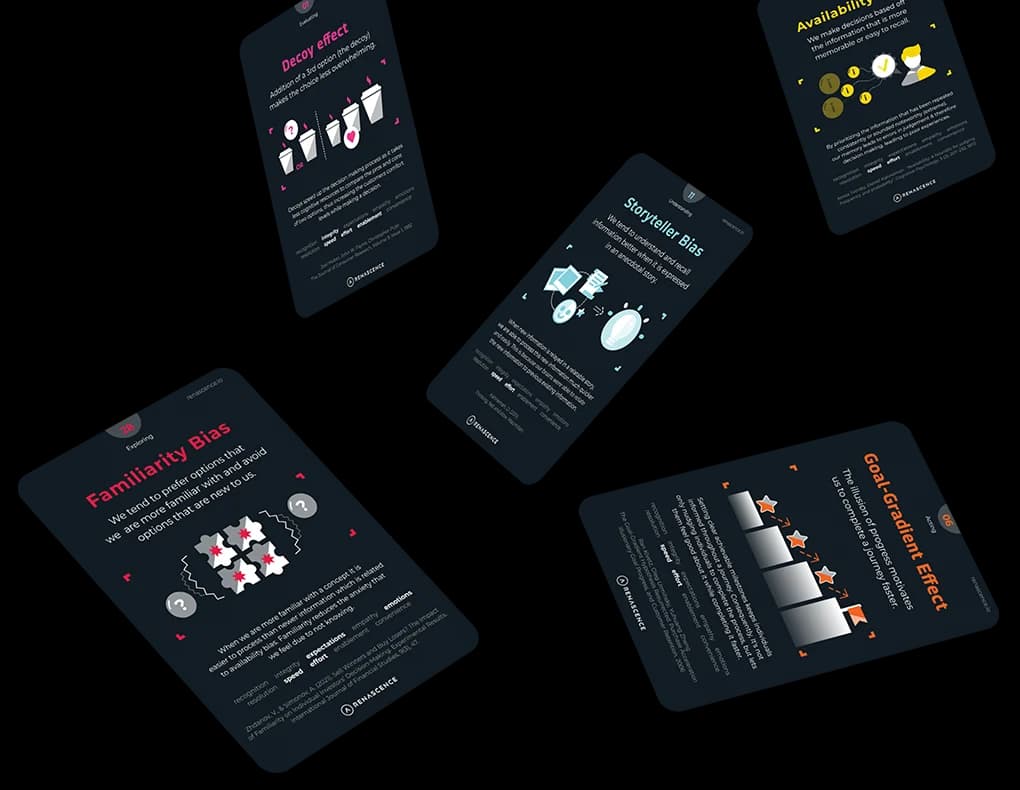
This is the goal-gradient effect at work, the well-documented tendency, first demonstrated in loyalty-card research by Columbia Business School's Ran Kivetz, Oleg Urminsky, and Yuhuang Zheng ("The Goal-Gradient Hypothesis Resurrected," Journal of Marketing Research, 2006), for effort and motivation to accelerate as a reward feels closer. A points programme confined to hotel stays only accelerates motivation for guests who travel frequently enough to see the finish line. A programme that lets points be redeemed against a dinner next week, a spa visit this weekend, or a concert ticket gives infrequent travellers a reason to stay engaged between stays — shortening the perceived distance to a reward and keeping the relationship alive outside the travel calendar.
There is a second mechanism at play: Accor's 2021 move to take a majority stake in Ennismore, the lifestyle hospitality group behind brands such as Hoxton, Mama Shelter, and SLS, extended the universe of experiences ALL members can draw on. Widening the redemption surface area is a direct answer to one of loyalty programme design's oldest failure modes — points that expire unused because the only thing to spend them on is a product the customer buys rarely. A loyalty architecture built around flexible, frequent-use redemption options fights that decay by design.
A loyalty programme that only rewards the next hotel stay is betting on a customer's travel calendar. A loyalty programme that rewards dinner tonight is betting on nothing but human appetite — a far safer bet.
For CX leaders in sectors with naturally long purchase cycles — banking, automotive, real estate — this is the transferable idea. If the core product is bought infrequently, the loyalty mechanism needs redemption moments that happen far more often than the core purchase, or engagement between purchases will simply decay. It is the same reasoning Renascence applies when designing customer loyalty programmes that need to survive the gaps between big-ticket purchases.
What role does Accor's asset-light model play in experience consistency?
Accor has spent much of the past decade deliberately separating hotel ownership from hotel operation, shifting the bulk of its real estate into dedicated ownership structures — most visibly AccorInvest — while Accor itself focuses on brand standards, distribution, and operating systems. This "asset-light" positioning is usually discussed in financial terms, as a way to free up capital and reduce balance-sheet risk. Its CX implications are just as significant and far less discussed.
When a hospitality group owns and operates every property itself, experience consistency depends on direct management control reaching every site — expensive, slow to scale, and fragile the moment the group expands into new markets. When brand standards are licensed and franchised to independent owners who operate the physical asset, consistency has to be engineered into the system itself: the service blueprint, the training curriculum, the technology stack, the inspection regime. Accor's brand promise has to travel through a Mercure franchisee's staff roster in Jeddah exactly as reliably as through a directly managed Novotel in Paris. That forces a discipline most single-site or wholly-owned chains never have to build: documenting what "good" looks like precisely enough that it survives transmission through a third-party operator.
This is the operational core of service design at scale — the difference between a brand promise that lives in the regional manager's head and one that lives in a blueprint anyone can execute. Groups that never separate ownership from operation often never feel the pressure to do this work, right up until the day they try to franchise, license, or expand into a market where they cannot staff every front desk themselves.
Where does Accor's segmentation strategy carry real risk?
A portfolio this wide is not free of tension. Forty-five brands sharing one loyalty currency and one parent identity creates a genuine risk of brand confusion — a guest encountering Mama Shelter, Mercure, and Sofitel under the same umbrella app may struggle to understand what "Accor" as a house actually stands for, even if each individual brand is internally coherent. There is also an execution risk inherent to franchising at scale: the further a brand standard travels from direct Accor management, the more it depends on a franchisee's training investment and local hiring quality — variables Accor influences but does not fully control.
Accor's answer to the first problem is to let ALL function as the unifying thread — one loyalty identity and one app experience stitching together an otherwise fragmented portfolio, so the relationship customers build is with the ALL ecosystem as much as with any single hotel brand. Its answer to the second is the investment in standardised operating systems and inspection discipline that franchising at this scale demands. Neither fully eliminates the risk. Both are the correct response to a problem that is structural, not cosmetic — the price of serving every segment under one house.
What should other CX leaders take from Accor's approach?
Strip away the hospitality specifics and Accor's model offers a transferable playbook for any organisation serving customers across widely different price points, needs, or life stages:
- Segment the experience, not just the price. Different customer archetypes need different service blueprints, not the same blueprint with a discount applied. A mass-market tier and a premium tier should feel like different decisions, not the same decision with different arithmetic.
- Design loyalty redemption for frequency, not just for the core purchase. If the core product is bought rarely, build reward moments the customer can use often, so the relationship survives the gaps between transactions.
- Separate the brand promise from the delivery mechanism. A promise that depends entirely on one team or one site cannot scale. Document the standard precisely enough that it survives being executed by someone who has never met you.
- Manage expectations before the moment of truth, not during it. Brand and price signal what the experience will be before the customer arrives — get that signal wrong and no amount of frontline effort recovers it.
- Accept that unifying a diverse portfolio requires one connective thread. Whether that thread is a loyalty programme, a shared technology layer, or a common service philosophy, something has to hold a segmented portfolio together, or it stops being a group and becomes a holding company.
Here is how a CX or loyalty leader might apply that playbook inside their own organisation:
- Map your customer archetypes honestly. Identify where a single service standard is currently being stretched across customers with genuinely different expectations and willingness to pay.
- Audit your loyalty redemption catalogue against purchase frequency. If the core product is bought once a year, check whether your rewards give customers a reason to engage with the brand more often than that.
- Document the service blueprint at a level of detail that survives handover. Test it by asking whether a new hire, franchisee, or partner could deliver the standard without tribal knowledge.
- Separate the brand promise from the operating entity wherever you plan to scale through partners. Build the inspection and training systems before the franchise agreement, not after the first complaint.
- Give a fragmented portfolio one unifying layer customers can recognise. That might be a loyalty identity, a shared app, or a consistent service philosophy communicated across every sub-brand.
For hospitality groups specifically, benchmarking against peers that have taken a different path to loyalty and consistency is instructive. Renascence has examined how Four Seasons builds loyalty through consistency of service rather than points, how Jumeirah differentiates through its STAY DIFFERENT positioning, and how Mandarin Oriental keeps guests returning without the breadth of a multi-brand portfolio. Each is a different answer to the same underlying question Accor answers through segmentation: what, exactly, is the organisation asking its loyalty to be loyal to?
The real takeaway for multi-brand leaders
Accor's experience strategy works because it refuses the comforting fiction that one brand promise can flex to fit every customer. It builds separate promises instead, and lets a shared loyalty currency and shared operating discipline hold them together. That is a harder strategy to execute than a single unified standard — it demands more blueprints, more training systems, more inspection regimes — but it is the only honest answer to a portfolio this wide. Any organisation serving customers across genuinely different price points and expectations will eventually face the same choice Accor made: stretch one promise until it snaps, or build the discipline to run several promises well at once.
Organisations wrestling with that choice rarely need more strategy slides. They need a clear-eyed read on where their current experience actually stands against the segments they claim to serve — which is precisely the gap a structured CX maturity assessment is built to close, and where Renascence's work in hospitality customer experience and behavioural economics consulting tends to begin.
Further reading
FAQ
Questions we get on this topic
Related reading



Writing on how human behavior shapes the experiences brands deliver — at the intersection of behavioral economics and customer experience.
Stay ahead of CX
Get the Journal in your inbox.
Insights, frameworks and event round-ups from the Renascence team. No spam, ever.