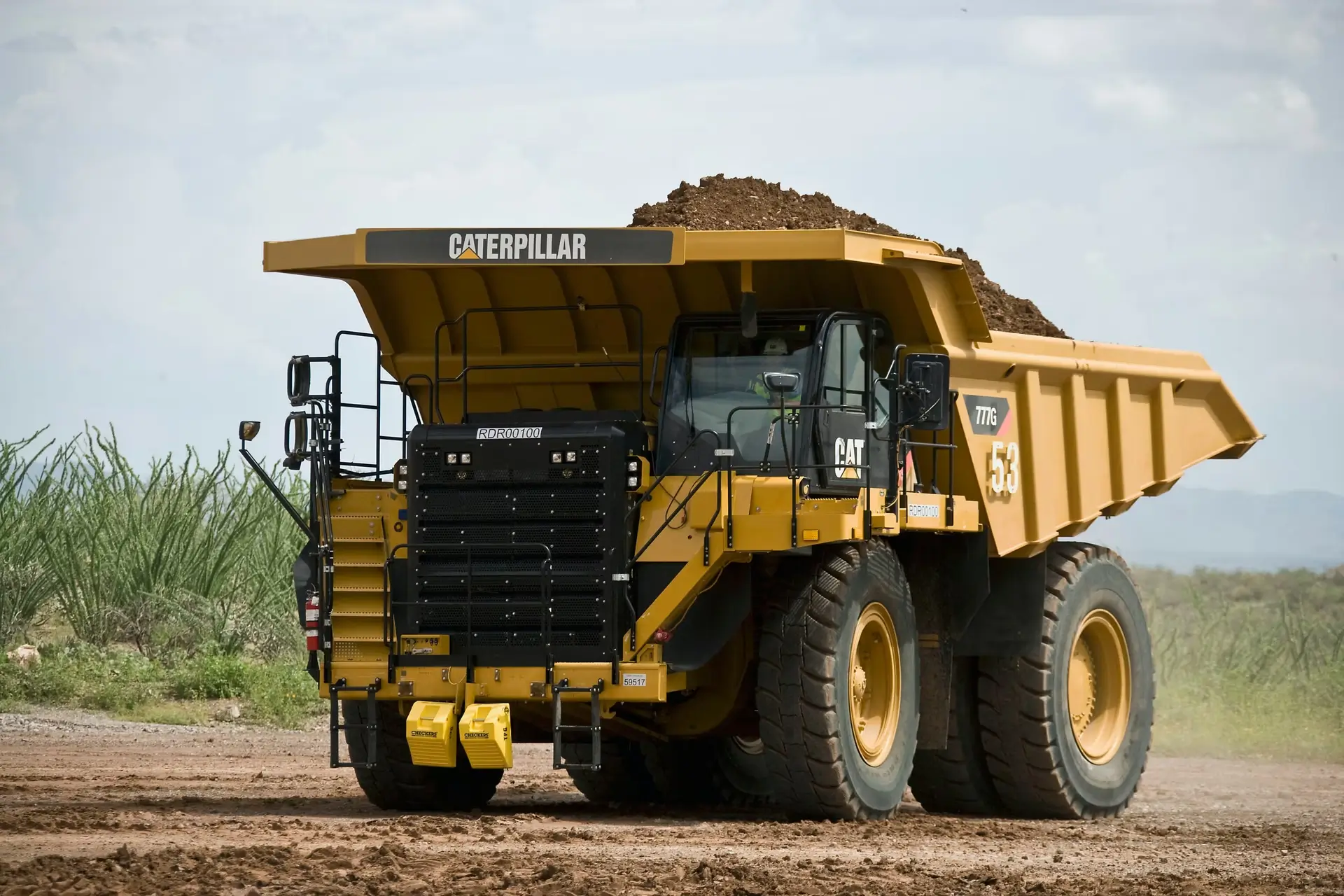
全球矿业运营商。Caterpillar 777车队性能数据科学优化
我们通过分析GPS遥测数据、怠速事件和燃油模式,优化了卡特彼勒777型矿用卡车车队的性能。该车队运营存在加油站怠速时间过长和路线不佳的问题。通过采用机器学习驱动的预测、优化速度区间和转向部分加油策略,我们将有效运输周期提高了3-7%,并将每次加油事件的停机时间减少了15-25分钟,且零资本支出。
01 —The Impact
The results, up front.
3–7% increase in effective haul cycles 15–25 minutes less downtime per fueling event Annual savings and productivity impact of $2M–$6.2M Achieved entirely via process and analytics — no CAPEX
02 — The Challenge
Where they started.
The operator’s fleet encountered bottlenecks at refueling points and inefficient routing, leading to long idle times and fewer productive hauling cycles. Telemetry data existed but was not utilized to drive operational optimization. We conducted a full analysis of GPS tracks, speed curves, idle events, fuel levels, and historical cycle times. ML models were used to recommend optimal speed corridors, predict cycle time windows, and forecast fuel demand precisely enough to shift away from full-tank fueling. We also introduced high-pressure fueling complexes and developed a DS Advisor tool to assist dispatchers with real-time routing and fueling decisions. The project delivered a step-change in efficiency, all through process excellence and data-backed decisioning — requiring no new CAPEX.
04 — Approach & Methodology
How we got there.
The data revealed that full-tank fueling drastically increased refueling downtime and that trucks often queued unnecessarily. Predictive fuel-demand modeling enabled partial fueling at optimal times, which significantly decreased wait time and increased cycle availability.
Routing adjustments based on recommended speed corridors further improved predictability and reduced cycle-time variance.
05 —In Practice
Project samples.
Keep exploring Renascence
Your turn
Ready to write your own success story?
Book a discovery call and see what behavioral CX can do for your business.