神秘顾客审计平台
现场核查标准。
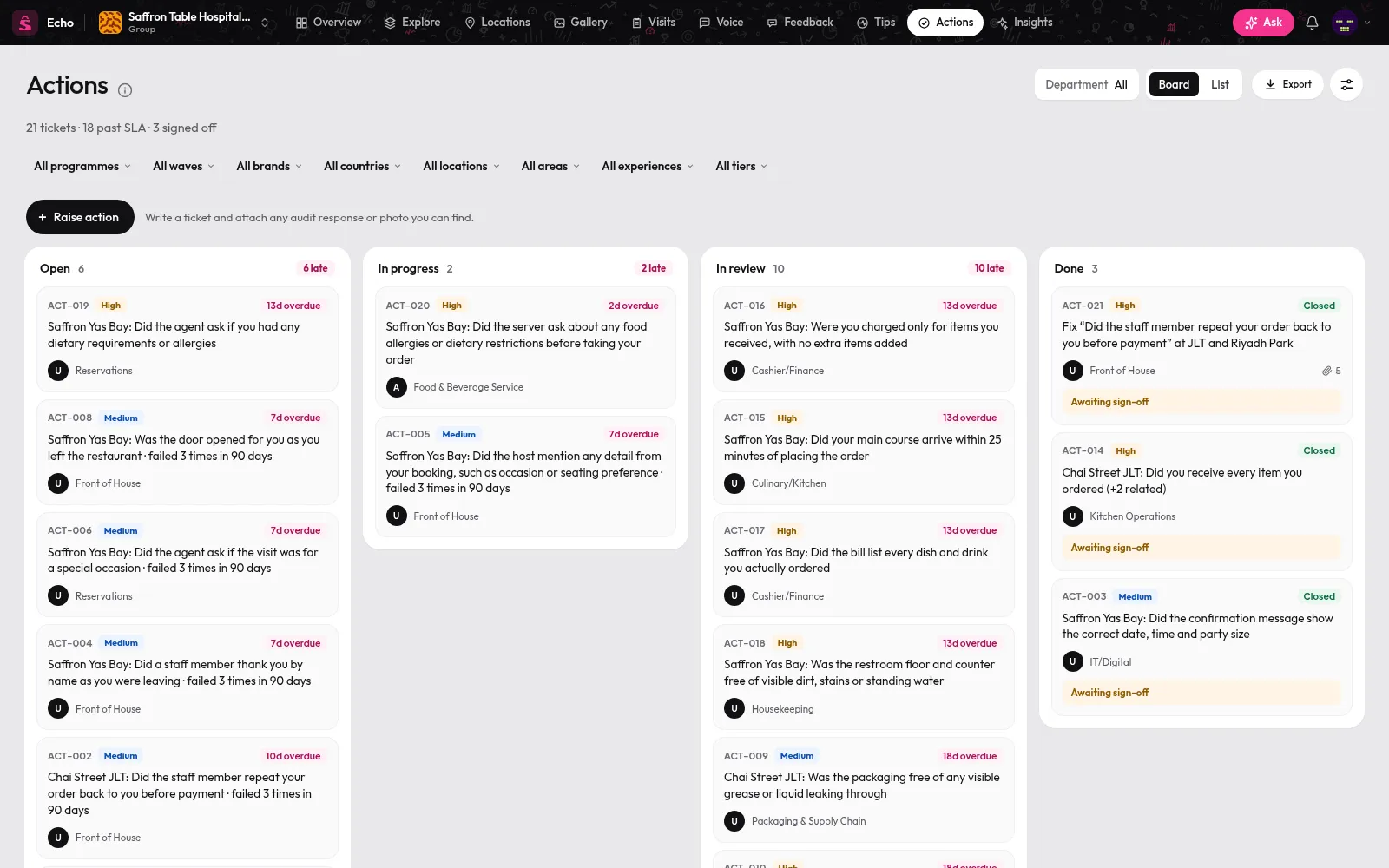
Mysterya根据您的标准审核每个地点,检查每次访问的质量,并将不合格项转化为有负责人和截止日期的行动。
- 标准审计
- 行动
- 截止日期
- 所有地点
关于
行为经济学与人类体验的交汇点,由此诞生了 Renascence 咨询公司。
解决方案
转化为可衡量的成果。" is smooth, authoritative, and perfectly captures the source meaning and tone.通过结构化解决方案,将 CX 愿景转化为可衡量的成果。
行业
跨越十年的客户体验转型,赋能本地区最具代表性的行业。
产品
Renascence专有的工具、平台和AI,赋能客户体验转型。
观点
Renascence:客户体验前沿的洞察、研究和对话。
此项工作背后的平台
Mysterya根据您的标准审核每个地点,检查每次访问的质量,并将不合格项转化为有负责人和截止日期的行动。
01 — 概览
CX governance is the system of ownership, standards, decision rights, and metrics that ensures customer experience is managed deliberately and consistently across an organisation — not left to whoever cares most that week. It answers the questions every CX leader eventually faces: who decides, who is accountable, and how do we know it is working?
Most organisations invest in journey mapping, voice-of-customer programmes, and CX training — then watch the improvements erode within a quarter. The culprit is rarely strategy. It is the absence of a governance structure that sustains it. Without defined roles, cross-functional forums, and agreed standards, CX reverts to the default: siloed, reactive, and inconsistent.
Renascence designs CX governance frameworks that embed customer experience into the operating model itself — so that good decisions happen by design, not by exception. The result is a CX function that survives leadership changes, scales across business units, and produces measurable outcomes rather than periodic enthusiasm.
The cost of ungoverned CX is measurable. Here is what the evidence says about what governance actually changes.
02 —包含内容
Each engagement is scoped to your maturity and context. These are the core building blocks — delivered as an integrated system, not a menu of standalone outputs.
03 —我们的方法
We assess your maturity, research the people involved and pinpoint the highest-impact opportunities.
We craft the strategy and interventions, grounded in evidence and validated with real users.
We implement alongside your teams, with quick wins and knowledge transfer along the way.
We embed governance, measurement and tools so the gains compound over time.
04 —成果
05 —证明
06 —来自期刊
来自我们顾问的深度洞察。
07 — 重要意义
Most CX investments produce a wave of energy and a set of outputs — a journey map, a new survey, a refreshed service standard. What they rarely produce is a system that sustains those outputs when the project team disperses and the next priority arrives. Daniel Kahneman's peak-end rule explains part of the problem: organisations remember the peak of a CX initiative (the launch, the workshop, the executive sponsor's enthusiasm) and forget that the ending — the quiet erosion of standards six months later — is what customers actually judge them by. Governance is how you design a better ending.
Decision rights are the most underrated element. When it is unclear whether CX improvements require sign-off from Marketing, Operations, or the COO, nothing moves. Thaler and Sunstein's work on choice architecture applies internally as much as it does to customers: the default behaviour of any organisation is to do what is easiest, which is usually to defer. A governance framework changes the default — it makes acting on CX insight the path of least resistance, not the exception that requires a champion.
In the MENA region specifically, where organisations are often growing rapidly across multiple markets and business units, the absence of governance creates compounding inconsistency. A customer in Riyadh experiences a different standard from one in Dubai, not because of deliberate localisation but because no one owns the standard. CX governance is not bureaucracy — it is the infrastructure that makes intentional, consistent experience possible at scale.
Listen: The Naked Customer podcastConversations on CX, loyalty & behavior08 —FAQ