

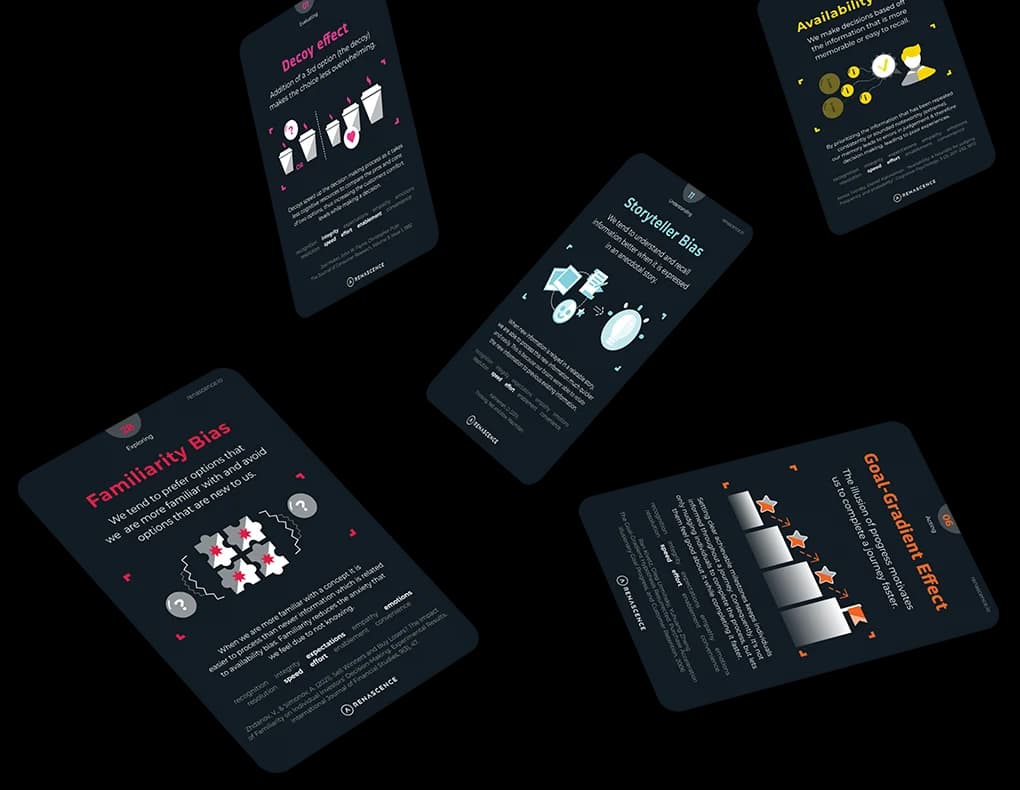







New features spike engagement — but novelty fades fast unless CX teams design for lasting value
The Novelty Effect describes the well-documented tendency for people to perceive newer experiences, products, or environments as inherently more exciting and valuable — often regardless of whether they represent a genuine functional improvement. A customer encountering a freshly redesigned app interface, a newly launched loyalty programme, or a just-released product variant will typically rate it more favourably than an equivalent older offering, simply because it is new.
The cognitive roots run deep. The brain's dopaminergic reward system responds strongly to novel stimuli: encountering something unfamiliar triggers a small but measurable release of dopamine, producing a sensation of curiosity and mild pleasure. This is an evolutionary inheritance — novelty historically signalled opportunity or threat, both of which demanded attention. In a commercial context, that same neurological machinery causes customers to conflate "new" with "better," inflating their initial evaluations and driving early adoption behaviour.
Compounding this is the role of expectations. When a brand announces something new, customers arrive with heightened anticipation. That anticipatory state colours the entire early experience, making even ordinary interactions feel more satisfying than they objectively are. The effect is real, but it is also temporary — which is precisely what makes it both an opportunity and a risk for CX teams.
When customers encounter a redesigned app or new loyalty perk, engagement spikes due to unfamiliarity rather than genuine improvement.
Highlighted pillars are the ones this bias moves most. Design for them first.
Track engagement curves beyond the 30-day post-launch window to separate novelty-driven spikes from genuine adoption signals.
Pair new feature releases with structured follow-up surveys at 60 and 90 days to capture sentiment after the honeymoon fades.
Design onboarding journeys that progressively reveal functional value, so customers build habitual use rather than initial curiosity.
Audit CSAT and NPS data collected within the first two weeks of any major change, flagging it as potentially novelty-inflated before acting on it.
How the Novelty Effect Shows Up in Customer Experience
Product Launches and Feature Releases
Consider how Apple structures its annual iPhone releases. Even in years when hardware changes are incremental, early reviewers and customers consistently describe the new model as a meaningfully better experience. Sales spike in the launch window, driven substantially by novelty rather than by measurable performance gains. The same pattern appears in software: when Spotify rolls out a redesigned home screen, engagement metrics typically rise in the first weeks — not because the underlying catalogue has changed, but because the interface feels fresh.
Retail and Physical Environments
Bricks-and-mortar retailers exploit the Novelty Effect through store refits and seasonal resets. Nike's flagship concept stores — such as its House of Innovation locations in New York and Shanghai — are deliberately designed to feel perpetually new, with rotating product displays and technology-driven interactive elements. Customers report higher satisfaction and longer dwell times in recently refreshed environments, even when the product assortment is largely unchanged.
Digital and Service Touchpoints
The experiment referenced above — in which users preferred a newly redesigned website over the original, despite identical underlying functionality — is a near-universal finding in UX research. Hospitality brands such as Marriott have observed analogous effects when relaunching their mobile apps: initial app-store ratings surge post-redesign, then gradually normalise as the novelty fades and users begin evaluating the experience on its actual merits.
"Novelty is not a substitute for quality — but it is a powerful amplifier of perceived quality in the short term. The CX challenge is to convert that initial enthusiasm into durable loyalty."
Connection to the REBEL Framework: The Explore Stage
Within Renascence's REBEL framework, the Novelty Effect sits in the Explore group — the stage at which customers are actively discovering, evaluating, and forming first impressions of a brand or offering. This placement is precise: novelty is at its most potent precisely when a customer is in discovery mode, before habitual patterns of use have formed and before the initial excitement has had time to decay. CX designers working on Explore-stage touchpoints — awareness campaigns, onboarding flows, first-visit experiences — must account for both the uplift novelty provides and the inevitable regression that follows.
The bias also connects meaningfully to the CX pillars of Recognition, Expectations, and Emotions. Novelty triggers emotional arousal (Emotions), raises the bar for what customers anticipate next (Expectations), and creates a moment in which a brand can signal that it sees and values its customers by offering something fresh and considered (Recognition).
Practical Design Principles for CX and Behavioural Teams
1. Leverage Launch Appeal Deliberately
Treat every launch — whether of a product, a service update, or a redesigned touchpoint — as a behavioural event, not merely a commercial one. Use language that foregrounds newness: "Introducing," "Now redesigned," "First look." Pair this with exclusive early-access mechanics, as Amazon Prime does with its early-access sales, to amplify the novelty signal and reward existing customers simultaneously.
2. Sustain Engagement Beyond the Honeymoon Period
Because the Novelty Effect is temporary, teams must plan for the post-novelty plateau from the outset. Build a roadmap of incremental updates — new content, new features, new personalisation layers — that arrive at regular intervals to re-stimulate the novelty response. Netflix's continuous content refresh is a masterclass in this: the platform itself rarely changes dramatically, but the perpetual arrival of new titles keeps the novelty mechanism active.
3. Balance Novelty with Familiarity
Radical change can disorient loyal customers and destroy the habitual ease that drives retention. The most effective CX interventions introduce novelty at the periphery — new visual treatments, new interaction patterns, new service gestures — while preserving the core structural familiarity that customers rely upon. Starbucks exemplifies this balance: seasonal limited-edition drinks generate genuine novelty-driven excitement without altering the fundamental ordering ritual that millions of customers perform on autopilot.
4. Measure Beyond Initial Satisfaction Scores
CSAT and NPS captured immediately after a launch will be inflated by the Novelty Effect. Behavioural teams should establish a measurement cadence that tracks satisfaction at 30, 60, and 90 days post-launch to distinguish genuine experience improvement from novelty-driven uplift — and to identify where sustained engagement interventions are most urgently needed.
Related biases
Behavioral Biases
Design with behavior, not against it.
Explore more biases, or work with us to apply behavioral science to your customer experience.