









Customer Experience · July 22, 2026
Symphony and CX: Why Experience Is a Composition, Not a Process
Most CX frameworks describe who owns what — not what the customer feels. The symphonic metaphor reframes experience design as composition, with real operational consequences.

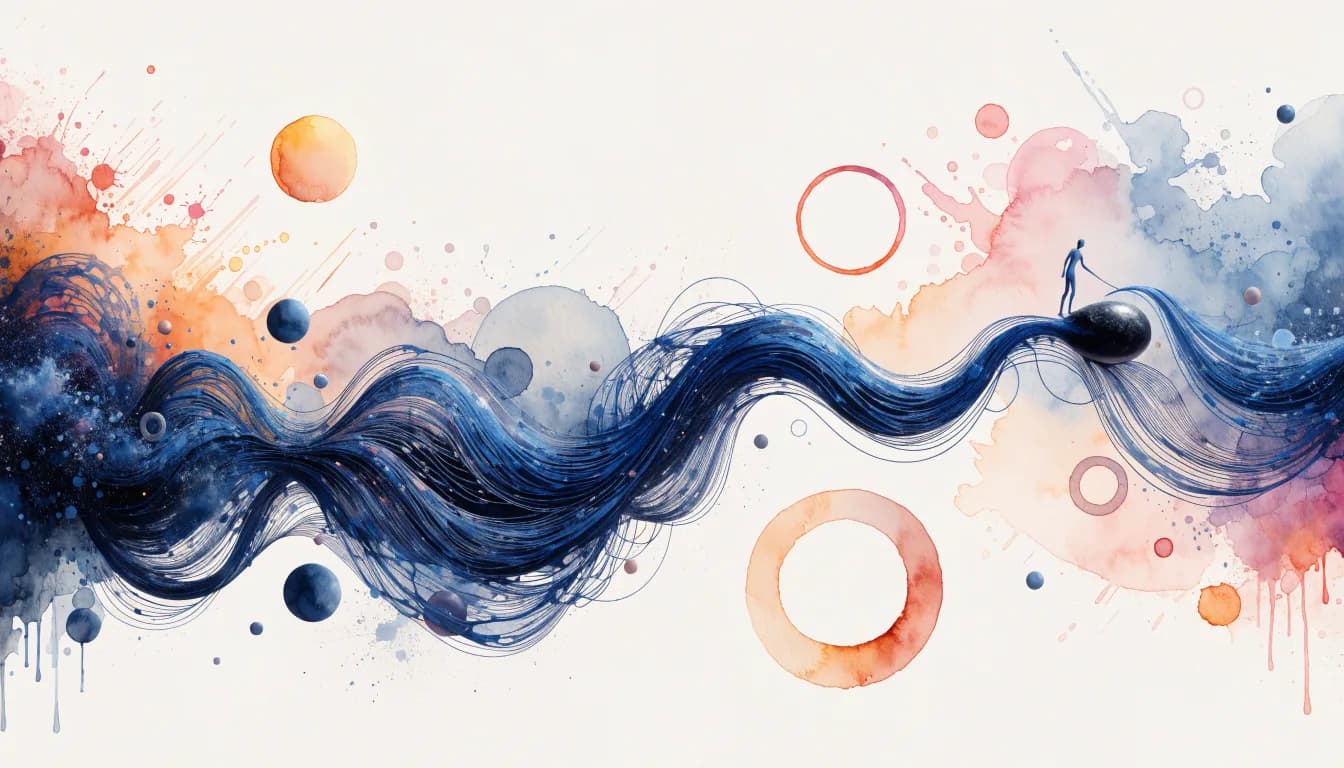
Most customer experience frameworks are built like org charts — hierarchical, departmental, sequential. They describe who owns what, which team handles which touchpoint, and where the handoff happens. What they rarely capture is what it actually feels like to be the customer moving through the whole thing. That gap — between the map and the music — is precisely what the symphonic metaphor illuminates.
The argument here is simple, and worth stating plainly: a customer experience is not a process. It is a composition. And the difference between those two framings determines almost everything about how you design, measure, and improve it.
Why the Orchestra Metaphor Is More Than Poetic
Analogies in business writing are usually decorative. This one is structural. Consider what a symphony actually requires: dozens of instruments, each with a distinct role, playing in a specific sequence, at a calibrated volume, under shared direction, toward a single emotional effect. Remove one section and the audience notices — not because they can name the missing instrument, but because something feels wrong. The experience is incomplete.
Customer experience works identically. A banking customer who receives a warm welcome at the branch, a fast loan approval, and a clear contract — but then waits three weeks for onboarding documentation — does not remember the welcome. They remember the wait. The peak-end rule, identified by Daniel Kahneman and Amos Tversky, tells us that people evaluate an experience by its most intense moment and its final moment — not its average. A single discordant note in the wrong place can define the whole performance.
This is not a metaphor for aesthetics. It is a design principle with operational consequences. If you build your CX function around departmental handoffs rather than the emotional arc of the customer, you will optimise each instrument in isolation and wonder why the audience keeps leaving at the interval.
What "Understanding Customer Experience" Actually Requires
The phrase understanding customer experience appears in job descriptions, board presentations, and training curricula alike — usually without much precision about what understanding actually entails. It tends to mean one of three things, depending on who is using it:
- Operational understanding: knowing which processes touch the customer and where they break down.
- Metric understanding: being able to read NPS, CSAT, and CES scores and identify trends.
- Experiential understanding: knowing what it feels like to be the customer — the anxiety before a complaint call, the relief when a problem is resolved without being asked twice, the quiet satisfaction of a service that simply works.
Most organisations have the first two. Almost none have the third in any systematic way. And yet it is the third that drives the decisions that matter. You cannot design for an emotional arc you have never mapped. You cannot fix a moment of truth you have not identified as such.
Genuine understanding of customer experience requires a structured approach to journey mapping that goes beyond swimlane diagrams. It requires capturing not just what happens at each touchpoint, but what the customer is trying to accomplish (their job-to-be-done), what they feel when it goes wrong, and what a resolution that restores confidence actually looks like. That is the difference between a process map and a score.
The Conductor Problem: Who Is Actually in Charge of the Whole Experience?
In an orchestra, the conductor's job is not to play an instrument. It is to hold the whole in mind — to ensure that the strings do not drown the woodwinds, that the tempo serves the movement, and that the audience arrives at the intended emotional destination. Without a conductor, even excellent musicians produce noise.
Most organisations lack a conductor. They have a Head of Digital who owns the app, a Head of Operations who owns the branch, a Head of Marketing who owns the campaign, and a Head of Service who owns the complaint. Each is optimising their section. Nobody is listening to the whole piece.
This is the structural argument for a dedicated CX function — not as a layer of bureaucracy, but as the entity responsible for the emotional arc across all touchpoints. Customer experience roles have evolved significantly in the past decade precisely because organisations have recognised this gap. The question is no longer whether to have a CX lead, but what authority and cross-functional access that role actually carries.
A CX director without influence over product, operations, and technology is a conductor with no baton. They can describe what the music should sound like. They cannot make it happen.
Customer Experience in Banking: Where the Symphony Breaks Down Most Visibly
Few industries illustrate the conductor problem more starkly than banking. The customer experience in banking is structurally fragmented: retail banking, digital banking, wealth management, and lending are often separate P&Ls with separate leadership, separate technology stacks, and separate customer metrics. The customer, however, experiences them as one bank.
The result is a familiar dissonance. A customer opens a current account digitally in eight minutes — clean, fast, well-designed. They then try to add a beneficiary for international transfer and are asked to visit a branch with three forms of identification. The instruments are playing different scores. The customer hears the contradiction immediately, even if no individual team sees it as their problem.
Behavioral economics adds another layer of complexity here. Loss aversion — the well-documented tendency for people to weight losses roughly twice as heavily as equivalent gains — means that a single friction point in a banking journey does disproportionate damage to trust. A customer who has had ten smooth interactions and one genuinely bad one does not average those experiences. The bad one dominates. Banks that understand this design their recovery moments as carefully as their acquisition moments.
Customer Experience Strategies That Hold Together Under Pressure
A customer experience strategy that functions only in normal operating conditions is not a strategy — it is a plan for fair weather. The test of any CX approach is what happens when something goes wrong: a system outage, a delayed delivery, a billing error, a complaint that escalates. These are the moments when the orchestra either holds together or falls apart.
Strategies that hold under pressure share several characteristics:
- They define moments of truth explicitly. Not every touchpoint carries equal weight. A strategy that treats all interactions as equivalent will misallocate effort. The moments that determine whether a customer stays or leaves — the complaint call, the renewal conversation, the first experience after a problem — deserve disproportionate design attention.
- They connect employee experience to customer experience. Frontline staff who feel unsupported, under-informed, or disempowered cannot deliver a composed, confident customer interaction. Employee experience is the upstream driver of CX quality; treating them as separate workstreams is a category error.
- They build recovery into the design, not the exception process. Service failure is not an edge case. It is a predictable feature of any complex system. Organisations that design their recovery rituals with the same care they apply to their onboarding journeys convert complaints into loyalty at a rate that surprises most leadership teams.
- They use behavioral economics as a design tool, not a post-hoc explanation. Choice architecture, defaults, and friction reduction are not marketing tactics — they are structural decisions about how easy or hard it is to do the right thing. Embedding behavioral economics into journey design means fewer customers abandoning processes mid-way, not because you persuaded them, but because you removed the obstacles.
Customer Experience Careers, Roles, and What the Market Is Actually Paying in 2026
The CX job market has matured considerably. Where once "customer experience" was a rebranded customer service title, it now encompasses a genuine range of specialisms — each with distinct skill requirements, organisational positioning, and compensation expectations.
The most in-demand customer experience roles in 2026 cluster around three capability areas:
- Strategy and governance: CX Directors, Chief Experience Officers, and CX Strategy Leads who own the framework, the metrics, and the cross-functional agenda. These roles sit close to the C-suite and require as much political fluency as technical knowledge.
- Design and research: Service designers, journey architects, and VoC analysts who translate customer insight into operational change. Strong demand in technology, financial services, and public sector.
- Implementation and operations: CX programme managers, transformation leads, and experience operations specialists who turn strategy into running change. Often the hardest roles to fill, because they require both analytical rigour and the ability to work across resistant functions.
Customer experience salary ranges in 2026 vary significantly by geography, sector, and seniority. In the MENA region specifically, senior CX roles at director level in banking and telecoms have moved into compensation brackets that reflect genuine strategic value — a shift from five years ago, when CX was frequently housed under marketing or operations with corresponding pay grades. For a detailed breakdown of what the market signals about role value, this analysis of CX design lead compensation is worth reading alongside any job description review.
CX job descriptions have also become more precise. The best ones specify not just responsibilities but the cross-functional authority the role carries — which is the single most reliable indicator of whether an organisation is serious about CX or merely signalling it.
Certifications, Books, and the Question of What Actually Develops CX Capability
The market for customer experience certifications has expanded rapidly. Programmes from CXPA, Medallia, and various university executive education units now compete with practitioner-led courses and consultancy-developed curricula. The honest assessment: most certifications are better at signalling intent than building capability. They teach frameworks. They rarely teach judgment.
What actually develops CX judgment is a combination of structured frameworks, real case exposure, and the habit of reading the field seriously. For those building a reading list, the best customer experience courses in 2026 and a review of the best CX certifications offer a useful map of the landscape.
On the question of best customer experience books: the canon is smaller than the market suggests. Kahneman's Thinking, Fast and Slow (Farrar, Straus and Giroux, 2011) remains essential reading for anyone who wants to understand why customers behave as they do rather than as surveys suggest they should. Richard Thaler and Cass Sunstein's Nudge (Yale University Press, 2008) is the foundational text for choice architecture as a design tool. For practitioners specifically, the field has benefited from works that treat CX as a discipline with rigour — not a collection of service tips.
One notable addition to the practitioner canon is The Symphony of Customer Experience by Raed Abdulla — a 450-page work published in August 2024 that applies the orchestral metaphor systematically to CX design. The symphonic framing used in this article draws on that conceptual territory: the idea that a customer experience, like a musical performance, must be composed, conducted, and evaluated as a whole rather than as a sum of independent parts.
Customer Experience Trends Shaping 2026 and Beyond
The customer experience trends that matter in 2026 are not the ones that generate the most conference keynotes. They are the ones that are quietly restructuring how organisations operate.
AI-assisted personalisation at scale is the most significant structural shift. Not chatbots — those are table stakes. The more consequential development is AI that can identify which moment in a customer's journey is most likely to determine their next decision, and surface that insight to the right person in the organisation in time to act on it. The gap between organisations that have this capability and those that do not is widening.
Experience operations as a discipline is emerging as the connective tissue between CX strategy and CX delivery. The insight that a journey map is only as valuable as its connection to operational reality — to the systems, processes, and people who execute it — is driving investment in what some are calling "ExOps": the infrastructure that keeps experience design and operational delivery aligned over time.
Customer experience conferences in 2026 reflect these priorities. The most substantive gatherings are moving away from inspirational case studies toward working sessions on governance, measurement, and the organisational conditions that allow CX programmes to sustain beyond their initial momentum. That is a sign of a field maturing.
The return of simplicity as a competitive advantage. After years of adding channels, features, and touchpoints, the organisations gaining ground in customer experience are often those removing complexity. Fewer steps. Cleaner defaults. Interactions that require less of the customer's cognitive effort. This is friction reduction in Richard Thaler's sense — not just making things faster, but making them easier to navigate without thinking hard. The goal is a System 1 experience: one that feels effortless because it has been designed that way, not because it is simple by accident.
From Introduction to Mastery: The Customer Experience Career Path
For those at the beginning of a customer experience career path, the most useful reframe is this: CX is not a function you join. It is a lens you develop. The practitioners who build genuine authority in this field are those who can hold the customer's perspective and the organisation's operational reality simultaneously — who understand both the emotional arc of an experience and the system constraints that shape it.
The CX Maturity Assessment is a useful starting point for understanding where an organisation currently sits across the building blocks of experience capability — and therefore where the highest-leverage development opportunities lie, whether you are a practitioner joining a team or a leader building one.
A customer experience introduction that stops at "the customer is at the centre of everything we do" is not an introduction — it is a slogan. The real introduction begins when you map your first journey seriously, identify your first genuine moment of truth, and watch an organisation change its behaviour because of what you found. That is when the metaphor becomes operational. That is when the orchestra starts playing together.
The Score Is Always Unfinished
The symphonic metaphor has one more implication worth sitting with. A symphony is performed, not installed. It requires continuous interpretation, continuous rehearsal, and a conductor who listens as much as they direct. Customer experience is the same. It is not a project with a completion date. It is a practice — one that compounds over time when it is taken seriously, and deteriorates quietly when it is not.
The organisations that will define customer experience strategy in the next decade are not the ones with the most sophisticated technology or the most elaborate frameworks. They are the ones that understand what they are actually composing — and who take responsibility for how it sounds to the person in the audience.
That person is your customer. They are listening to every note.
Further reading
FAQ
Questions we get on this topic
Related reading


Stay ahead of CX
Get the Journal in your inbox.
Insights, frameworks and event round-ups from the Renascence team. No spam, ever.