








Customer Experience · July 10, 2026
CX Management PDF Guides: What's Actually Worth Reading
Most CX management PDF guides are long on frameworks and short on mechanism. Here's how to evaluate what's worth your time before you download.

Most PDF guides on customer experience management are downloaded, skimmed, and forgotten within a week. That is not a criticism of the reader — it is a diagnosis of the guides themselves. They are long on frameworks and short on the mechanisms that actually change behaviour: inside organisations, and inside customers' heads.
This article does something different. Rather than listing downloadable files and hoping the titles speak for themselves, it maps the intellectual territory those guides are trying to cover — the core disciplines, the genuine frameworks, the questions worth asking — so that when you do pick up a PDF, you know what to look for, what to ignore, and what to demand that it proves.
The short answer: The most valuable customer experience management resources are not the ones with the most downloads — they are the ones that treat CX management as an organisational discipline with measurable outcomes, not a collection of service tips. Look for guides that address governance, measurement rigour, journey architecture, and the behavioural mechanisms that drive customer decisions. Everything else is decoration.
What Customer Experience (CX) Management Actually Covers
Before evaluating any guide, it helps to be precise about what customer experience (CX) management actually is. The term is used loosely enough to cover everything from "be nicer to customers" to full enterprise transformation programmes. That ambiguity is where most PDF guides fail — they pick one corner of the topic and present it as the whole.
CX management, properly defined, is the systematic design, delivery, measurement, and improvement of the experiences a customer has across every touchpoint with an organisation — before, during, and after a transaction. The word "systematic" is doing the heavy lifting. It implies governance, accountability, repeatable processes, and feedback loops. Without those, you have a collection of good intentions, not a management discipline.
The discipline spans at least five distinct domains:
- Strategy and governance: Who owns CX decisions? How are they funded, escalated, and reviewed? What is the organisation's stated CX ambition and how does it translate into measurable commitments?
- Journey architecture: How are customer journeys mapped, prioritised, and redesigned? Which moments of truth receive investment and on what basis?
- Measurement and voice of customer: Which metrics are used, how are they collected, and — critically — how do they connect to business outcomes rather than sitting in a dashboard nobody acts on?
- Culture and employee experience: How does the organisation build the internal conditions — skills, incentives, norms — that make good customer experiences possible at scale?
- Behavioural design: How are the psychological mechanisms of customer perception, memory, and decision-making deliberately engineered into the experience?
A guide worth downloading will address at least three of these five. One that addresses only one — say, NPS benchmarking — is a reference document, not a management guide.
Why Most CX Management Guides Disappoint
The PDF guide as a format has an inherent structural problem: it rewards comprehensiveness over precision. Authors feel compelled to cover everything, which means they cover nothing deeply. The result is guides that are simultaneously too long and too thin — eighty pages that could be twenty, because each page says something obvious.
There is also a commercial distortion. Many of the most widely circulated CX guides are produced by technology vendors whose primary interest is in positioning their platform as the solution. The frameworks they offer are real enough, but they are designed to funnel the reader toward a particular software category. That is not inherently dishonest, but it means the guide's architecture is shaped by a sales logic, not an intellectual one.
The third failure mode is the absence of behavioural reasoning. A guide might correctly identify that customers are dissatisfied at a particular touchpoint, but if it does not explain why — what psychological mechanism is producing the dissatisfaction — then the recommended fix is likely to be cosmetic. Faster response times, friendlier language, a redesigned form: these are outputs, not causes. The cause is usually something more interesting: a violated expectation, a perceived loss of control, an effort that feels disproportionate to the reward. Addressing the mechanism produces durable improvement; addressing the symptom produces a temporary score lift.
What the Best Guides Get Right: A Framework for Evaluation
When assessing any CX management resource — PDF or otherwise — apply this checklist before investing time in it:
- Does it define its terms precisely? Guides that use "customer experience," "customer service," and "customer satisfaction" interchangeably are not operating at the level of rigour the discipline requires. Precision in language signals precision in thinking.
- Does it connect CX to business outcomes? Any serious guide should be able to articulate the mechanism by which improved experience translates into revenue, retention, or cost reduction — not assert it as self-evident.
- Does it address governance and accountability? Experience does not improve without someone being responsible for it. Guides that focus only on customer-facing tactics without addressing internal ownership are incomplete.
- Does it treat measurement as a means, not an end? NPS, CSAT, and CES are useful instruments. A guide that treats them as the goal — rather than as signals that prompt action — has confused the map for the territory.
- Does it acknowledge the role of employee experience? The upstream driver of customer experience is almost always employee experience. Guides that ignore this are describing an effect without its cause.
- Does it incorporate behavioural science? The most sophisticated CX thinking draws on what we know about how customers actually perceive and remember experiences — not how they report perceiving them in a survey.
The Behavioural Science Layer Most Guides Miss
This is where the intellectual gap is widest, and where the most practical value lies. Customers do not experience their interactions with an organisation the way a journey map suggests — as a linear sequence of touchpoints each weighted equally. They experience them through a set of cognitive shortcuts and emotional filters that are well-documented in behavioural economics.
Two principles are particularly consequential for CX management. The first is the peak-end rule, identified by Daniel Kahneman and his colleagues: people judge an experience not by the sum of its moments but by how they felt at its most intense point and at its end. This has a direct design implication. An organisation that delivers a consistently adequate experience but ends it poorly — a clunky offboarding, an unresolved complaint, a confusing final invoice — will be remembered as a poor experience, regardless of everything that preceded it. Conversely, a strong ending can rehabilitate an otherwise mediocre journey.
The second is loss aversion: the well-established finding, also from Kahneman and Amos Tversky's prospect theory, that losses feel approximately twice as painful as equivalent gains feel pleasurable. In CX terms, this means that a customer who experiences a service failure does not need the problem "made up to them" — they need the loss neutralised before any positive gesture lands. Organisations that lead with compensation before acknowledgement get this backwards, and customers feel it.
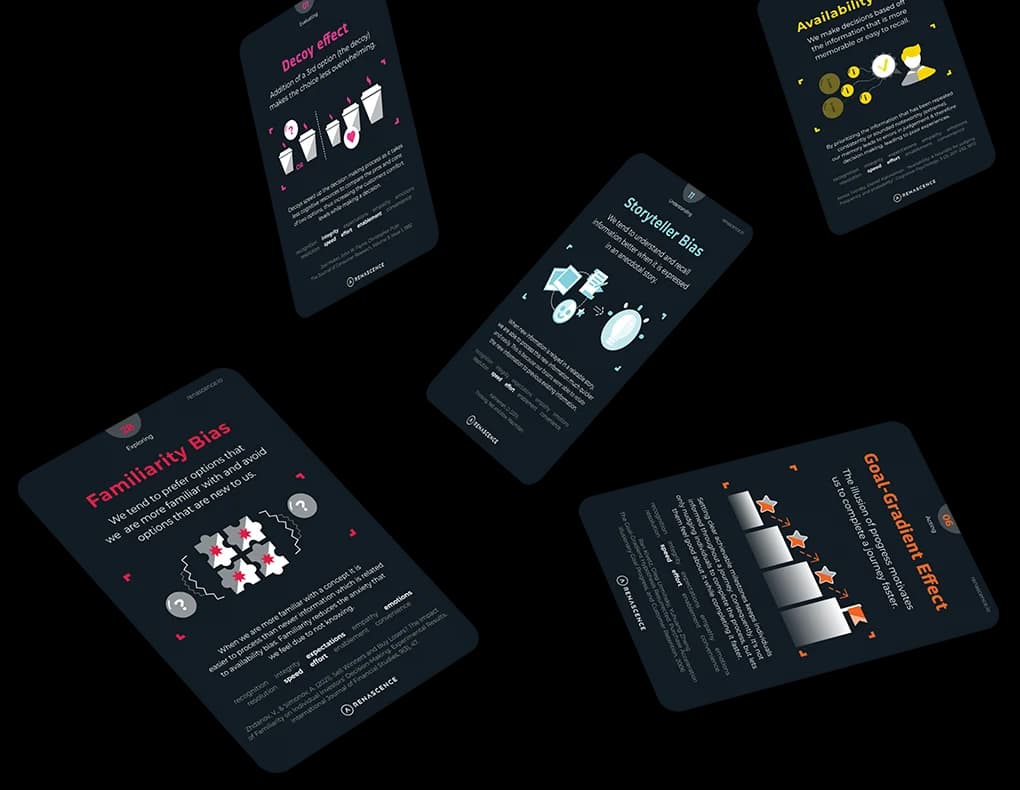
A PDF guide that does not engage with these mechanisms — or with related concepts like friction and sludge (Richard Thaler's distinction between effort that is genuinely necessary and effort that is imposed for institutional convenience) — is leaving the most actionable part of CX design on the table. If you want to go deeper on how behavioural economics applies directly to experience design, that body of work is worth treating as a discipline in its own right, not a footnote.
The Governance Question Every CX Guide Should Answer
Here is a test: find the word "governance" in the next CX PDF you download and count how many pages are devoted to it. In most guides, the answer is zero or one. That is a structural omission, because without governance, every other element of CX management is advisory rather than operational.
CX governance covers the decisions about who sets CX standards, who is empowered to enforce them, how cross-functional conflicts are resolved when operations and CX priorities diverge, and how CX performance is reviewed at the executive level. These are not administrative details — they are the conditions under which CX improvement either happens or stalls.
The most common failure pattern in CX programmes is not poor strategy or inadequate technology. It is the absence of a clear owner with genuine authority. When CX sits in marketing, it competes with brand priorities. When it sits in operations, it competes with efficiency targets. When it sits in a dedicated CX function with no budget authority, it produces recommendations that nobody acts on. The guide that helps you design the right governance structure for your organisation's size, sector, and maturity is worth more than any collection of journey-mapping templates.
Measurement: What a Rigorous Guide Should Teach You
The metric debate in CX — NPS versus CSAT versus CES versus something else — has generated more heat than light. A good guide cuts through it by making a simple distinction: relationship metrics measure how a customer feels about the organisation overall; transactional metrics measure how they felt about a specific interaction. Both are valid. Neither is sufficient alone. And neither tells you why the score is what it is.
The more important question, which most guides sidestep, is what happens after the score is collected. Customer feedback management is not a measurement discipline — it is a response discipline. The value of a survey is not in the data it generates but in the action it triggers. Organisations that collect feedback without closing the loop — acknowledging what they heard, changing what they can, explaining what they cannot — are not managing customer experience. They are auditing it, which is a different and considerably less useful activity.
A rigorous guide will also address the limits of self-reported data. Customers' survey responses reflect their conscious, deliberate assessments — their System 2 thinking, in Kahneman's dual-process framework. But many of the most consequential customer decisions — whether to return, whether to recommend, whether to defect — are driven by System 1: fast, automatic, emotionally-weighted responses that customers themselves cannot fully articulate. This is why mystery shopping and observational research remain valuable complements to survey data: they capture what customers do rather than what they say they feel.
Journey Mapping: From Decoration to Decision Tool
Journey maps appear in virtually every CX management guide, and they appear in virtually every CX programme that subsequently fails to improve. The map is not the problem. The problem is what organisations do — or do not do — with it.
A journey map is a hypothesis about how customers experience a process. It becomes useful only when it is tested against actual customer behaviour, updated when that behaviour changes, and connected to a prioritisation mechanism that determines which parts of the journey receive investment. Without those three things, a journey map is a workshop output, not a management tool.
The guides worth reading on this subject make a further distinction: the difference between the designed journey (what the organisation intends), the actual journey (what customers experience), and the perceived journey (what customers remember and recount). These three are rarely identical, and the gaps between them are where the most important CX work happens. If you are building or refining your approach to customer journey design, that three-layer distinction is a useful diagnostic frame.
The Employee Experience Dimension
No PDF guide on CX management is complete without a serious treatment of employee experience — not as a feel-good addendum, but as the primary upstream variable. Frontline employees make thousands of micro-decisions every day that collectively constitute the customer experience. Those decisions are shaped by the clarity of their role, the quality of their tools, the signals they receive about what is actually valued, and the degree to which they feel the organisation treats them with the same care it asks them to extend to customers.
Organisations that invest in employee experience as a CX lever — not merely as an HR priority — tend to produce more consistent customer experiences, because consistency is a function of culture, not compliance. You can write a service standard into a policy document, but you cannot write discretionary effort into a policy document. That comes from somewhere else.
The guides that understand this tend to treat CX maturity as an organisational capability question, not a customer-facing design question. They ask: what needs to be true inside this organisation for the intended customer experience to be delivered reliably, at scale, over time? That is a harder question than "how do we improve our NPS," and it is the right one.
Building Your Own Reading List
Rather than chasing a single definitive guide, the more productive approach is to build a reading stack that covers the five domains of CX management outlined earlier — strategy, journey architecture, measurement, culture, and behavioural design — with at least one rigorous source per domain.
For behavioural design, Daniel Kahneman's Thinking, Fast and Slow (Farrar, Straus and Giroux, 2011) remains the foundational text, and its implications for experience design are direct enough that any CX leader should have read it. Richard Thaler and Cass Sunstein's Nudge (Yale University Press, 2008) is the applied complement, particularly on choice architecture and defaults.
For strategy and governance, the most useful resources tend to be practitioner-produced rather than academic — case studies, diagnostic frameworks, and maturity models that reflect real organisational constraints rather than idealised conditions. The Harvard Business Review's archive on customer experience is a reliable source for practitioner-level strategy thinking, with the caveat that individual articles vary considerably in rigour.
For measurement, the primary sources are the organisations that developed the metrics: Bain & Company on NPS, the Corporate Executive Board (now Gartner) on CES. Reading the original methodology papers rather than secondary summaries reveals both the genuine insight and the significant limitations that popularisation has obscured.
For journey architecture and service design, the Nielsen Norman Group's research on journey mapping is methodologically sound and practically grounded — a useful counterweight to the more visually impressive but analytically thin journey maps that circulate on social media.
And for a structured view of how all these elements fit together into a coherent CX strategy, this overview of CX strategy in plain terms is a useful starting point before going deeper into any single domain.
The Standard Worth Holding
The best customer experience management resources — in whatever format — share a common quality: they treat the reader as a practitioner trying to solve a real organisational problem, not as a student absorbing a curriculum. They are specific about mechanisms, honest about trade-offs, and rigorous about what counts as evidence. They do not promise that CX transformation is simple, because it is not. They do not suggest that a single framework will resolve the complexity of an organisation's relationship with its customers, because none will.
What they do offer is a sharper way of seeing the problem — and that, in the end, is what any good guide is for. The PDF is just the container. The question is whether what is inside it changes how you think, and therefore how you act. Hold that standard, and most of what is available will fall short. But what remains will be genuinely worth your time.
If you are at the point of moving from reading to doing — assessing where your organisation currently stands and what the highest-leverage interventions are — a CX maturity assessment is a more direct starting point than any PDF. The reading is preparation; the diagnosis is where the work begins.
Further reading
FAQ
Questions we get on this topic
Related reading



Stay ahead of CX
Get the Journal in your inbox.
Insights, frameworks and event round-ups from the Renascence team. No spam, ever.