








Customer Experience · July 18, 2026
Customer Experience Associate Salary in 2026: Full Guide
CX associate salaries range from $33,000 to over $106,000 in 2026. The gap tracks how strategically organisations define the role — not just seniority.

Most people entering a customer experience role ask the wrong first question. They ask "what will I earn?" when they should be asking "what does this role actually do, and where does it lead?" The salary question matters — but the answer only makes sense once you understand what the market is actually paying for, and why the range is so wide.
A Customer Experience Associate in 2026 can earn anywhere from $33,000 to well over $100,000 annually in the United States, depending on industry, company size, geography, and — critically — how the role is defined. That spread is not noise. It reflects a profession that is still sorting itself out: some organisations treat CX associates as glorified call-centre agents, others as strategic operators who sit close to revenue. The salary follows the definition.
This guide maps the full picture — what the data actually shows, what drives the variation, and how a CX associate role connects to a career that compounds in value over time.
What Does a Customer Experience Associate Actually Do?
The job title is deceptively broad. In a retail context, a CX associate might handle returns, resolve complaints, and manage in-store service interactions. In a financial services firm, the same title might belong to someone analysing customer feedback data, mapping pain points across a digital onboarding journey, and presenting findings to a product team. Both are legitimate; neither is wrong. But they are not the same job.
The core of the role — across most definitions — involves being the connective tissue between what customers experience and what the organisation knows about that experience. That means listening (through surveys, calls, reviews, and direct interaction), interpreting (what is the customer actually trying to accomplish?), and communicating findings upward so that something changes. The best CX associates are not just empathetic; they are analytically curious and operationally credible.
Understanding what the role genuinely requires is the foundation of any honest salary conversation. If you are being paid to resolve tickets, that is one market. If you are being paid to improve a journey, that is another. The discipline of journey mapping sits at the heart of the more strategic interpretation of the role — and it is that interpretation that commands the higher end of the pay scale.
What Are Customer Experience Associates Actually Earning in 2026?
The verified salary data for 2026 tells a story of a profession with a wide distribution and a clear upward skew for those in more strategic or enterprise environments.
According to ZipRecruiter's current salary data, the average annual salary for a Customer Experience Associate in the United States sits at approximately $38,541. The 25th percentile earns around $33,000 per year; the 75th percentile earns $44,000; and top earners at the 90th percentile reach up to $49,000. These figures reflect the broad market, including entry-level and retail-adjacent roles.
Indeed's salary data places the average somewhat higher, at $56,951 annually — a difference that likely reflects the mix of roles captured in each platform's dataset.
The more striking figure comes from Salary.com, which tracks specialised and corporate-level CX associate roles and reports an average of $93,000 per year, with the 25th-to-75th percentile range spanning $80,200 to $106,800. This is not a contradiction of the ZipRecruiter data — it is a reflection of a different tier of the same job family.
The salary range for a Customer Experience Associate in 2026 spans from roughly $33,000 at the entry level to over $106,000 in enterprise and specialist roles. The gap is not arbitrary — it tracks almost perfectly with how strategically the organisation has defined the function.
Why Is the Salary Range So Wide?
Four variables account for most of the variation. Understanding them is more useful than fixating on a single average figure.
Company Size and Organisational Maturity
Enterprise-level companies — those with 5,000 or more employees — pay an average of approximately $104,020 for CX associate roles, according to Salary.com data. Startups average around $87,970 for comparable positions. The gap reflects both the complexity of the role in larger organisations and the greater resources available to fund it. Large enterprises also tend to have more formalised CX functions, which means the associate role is better defined, better scoped, and better compensated.
Organisational CX maturity matters here too. A company that has invested in a CX maturity assessment and structured its experience function accordingly will typically have clearer role definitions, more rigorous hiring criteria, and — as a direct consequence — higher compensation benchmarks.
Geography
Location remains one of the most powerful salary levers. ZipRecruiter data shows that Mountain View, California averages $60,434 annually for CX associates — approximately 56.8% above the national ZipRecruiter average. New York averages $72,660. Texas, by contrast, sits at around $35,907. Remote work has compressed some of these differentials, but they have not disappeared: cost-of-living adjustments and local labour market dynamics still shape what employers are willing to pay.
Industry
The sector matters enormously. A CX associate in financial services or technology is typically operating in a higher-stakes environment — one where a poor customer interaction has measurable revenue consequences — and is compensated accordingly. Customer experience in banking, for instance, has become a genuine competitive differentiator, particularly as digital-first challengers have raised the baseline expectation for service quality. That strategic importance translates into higher investment in CX talent.
Retail and hospitality roles, by contrast, often sit at the lower end of the range — not because the work is less demanding, but because the margin structures of those industries constrain what they can pay.
Role Definition and Scope
This is the variable most within a candidate's control. A CX associate who can demonstrate fluency in customer feedback analysis, journey mapping, and cross-functional communication is a different hire from one who can manage a service interaction professionally. Both are valuable; only one commands a salary north of $80,000.
How Experience and Career Progression Shape Earnings
The trajectory of a CX career is one of its most compelling features. Salary.com data illustrates the progression clearly:
- A mid-level Customer Experience Associate with four to seven years of experience averages $92,968 annually.
- A Customer Experience Strategy Manager with seven or more years of experience averages $114,582.
- A Senior Strategy Manager averages $156,383.
These are not incremental steps — they represent a genuine compounding of value as practitioners move from executing CX interactions to designing CX systems. The transition from associate to strategist is the most important career move in the discipline, and it is not primarily about tenure. It is about the ability to connect customer behaviour to business outcomes in a language that executives find credible.
For those mapping a longer-term path, the CX strategy certifications worth holding in 2026 offer a useful guide to the credentials that signal strategic capability — and that tend to correlate with faster progression through the salary bands.
What Drives the Shift from Associate to Strategist?
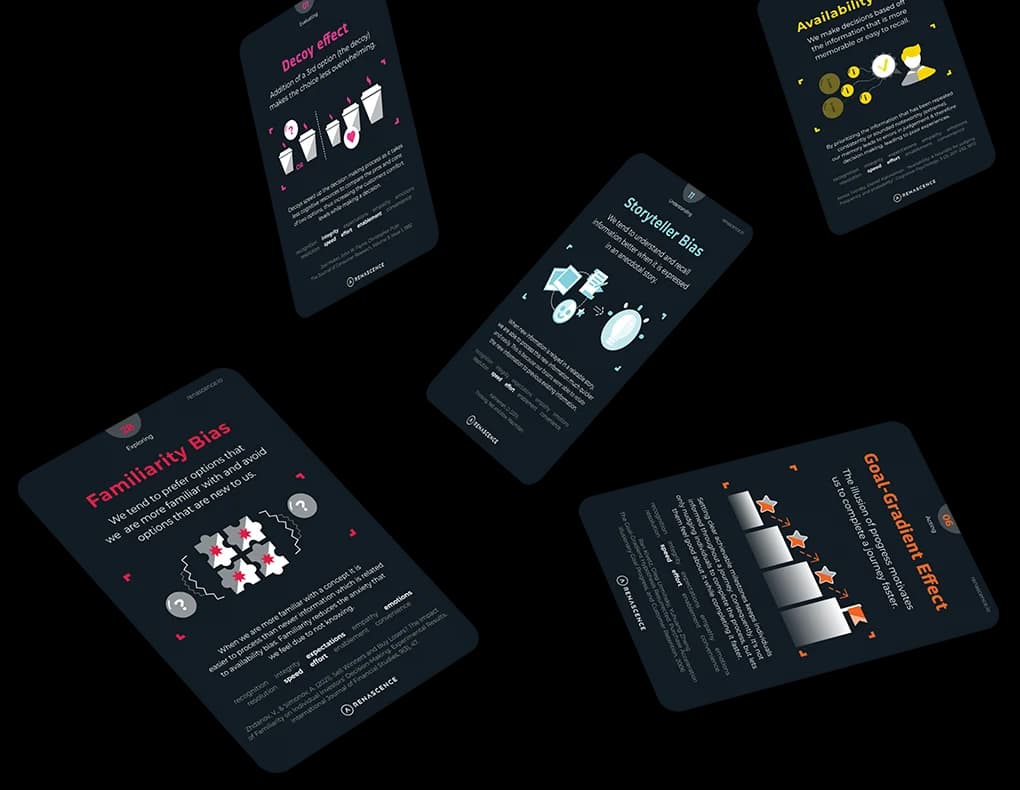
The behavioral economics concept of the goal-gradient effect — the tendency to accelerate effort as we perceive ourselves getting closer to a goal — applies here in an instructive way. CX professionals who can articulate a clear destination (strategy manager, head of experience, CXO) tend to make faster progress than those who treat each role as an endpoint. The career path is not a ladder with fixed rungs; it is a trajectory shaped by the skills you build and the problems you choose to solve.
The skills that matter most at the transition point are not technical in the narrow sense. They are:
- Journey literacy — the ability to read a customer journey not as a flowchart but as an emotional arc, identifying where trust is built and where it breaks.
- Data fluency — comfort with NPS, CSAT, and CES data, and the ability to move beyond the metric to the mechanism: not just "satisfaction dropped" but "here is why, and here is what we change."
- Cross-functional credibility — the ability to work with operations, product, and finance in their language, not just the language of CX.
- Behavioural insight — an understanding of how customers actually make decisions, which is rarely as rational as internal models assume. This is where behavioral economics applied to CX becomes a genuine differentiator.
- Communication discipline — the ability to distil a complex customer insight into a recommendation that a senior leader will act on.
These are learnable. They are also, notably, the skills that CX job descriptions at the strategic level consistently name — which means developing them is both a career investment and a direct response to market demand.
Hourly Rates and Entry-Level Benchmarks
For those entering the profession — or moving from a different function — the hourly picture is equally instructive. Entry-level and retail-focused CX associate roles typically pay between $15.00 and $23.00 per hour, based on active job postings from employers in those segments. This translates to roughly $31,200 to $47,840 annually at full-time hours, consistent with the ZipRecruiter percentile data.
These roles are not dead ends. They are, for many practitioners, the place where the foundational understanding of customer experience is built — the direct exposure to real customer problems, real friction, and real moments where a well-handled interaction changes how someone feels about a brand. That experience is not incidental to a CX career; it is the raw material from which strategic insight is eventually made.
The mistake is staying too long without deliberately building the analytical and strategic skills that unlock the next tier. Entry-level experience is an asset with a shelf life — it compounds only if you layer something on top of it.
Customer Experience Roles Across Industries: Where the Opportunities Are
The demand for CX professionals is not evenly distributed. Certain sectors are investing heavily in the function; others are still treating it as a support cost rather than a strategic capability.
Technology and financial services lead on both compensation and strategic investment. Healthcare is an accelerating market — patient experience has become a regulatory and reputational priority, and the gap between what patients expect and what most healthcare systems deliver is substantial. Healthcare customer experience roles are increasingly well-funded as a result.
Retail remains a high-volume employer of CX associates, though the strategic ceiling in many retail organisations is lower than in financial services or technology. The exception is enterprise retail — large omnichannel operators where the complexity of the customer journey across digital and physical channels creates genuine demand for sophisticated CX capability.
Public sector and government services represent an underappreciated opportunity. The gap between citizen expectations and service delivery in most public organisations is significant, and there is growing political and institutional pressure to close it. Public services CX roles are less lucrative than their private-sector equivalents, but they offer scope and impact that is hard to match elsewhere.
What the Salary Data Doesn't Tell You
Salary benchmarks are useful anchors, but they obscure the most important variable: the quality of the CX function you are joining. A $55,000 role in an organisation that has a genuine CX strategy, executive sponsorship, and a culture of acting on customer insight is worth more — in career terms — than a $75,000 role in an organisation where CX is a reporting function with no real authority.
The questions worth asking in any CX role interview are not primarily about compensation. They are about structure: Does the CX function have a seat at the table when product decisions are made? How does customer feedback actually change what the organisation does? Who owns the customer journey, and what happens when a touchpoint underperforms?
The answers to those questions tell you whether you are joining a function that will develop your career or one that will consume your time on metrics that no one acts on. If you want to assess where an organisation genuinely stands, the CX Maturity Assessment offers a structured way to benchmark a function across the dimensions that matter — useful both for organisations building their capability and for practitioners evaluating where to invest their careers.
Building a CX Career That Compounds
The practitioners who reach the upper end of the salary range — the strategy managers and senior leaders earning north of $114,000 — share a common characteristic. They did not simply accumulate years of experience; they accumulated a progressively more sophisticated understanding of the relationship between customer experience and business performance.
That understanding is built through a combination of deliberate practice, structured learning, and exposure to organisations where CX is taken seriously. The discipline of running a CX management programme that actually delivers is not something most practitioners learn in a single role — it is assembled over time, from different vantage points.
The behavioral economics concept of loss aversion is worth invoking here, not as a career strategy but as a warning. Many CX professionals stay in roles that are comfortable but not developing them, because the perceived risk of moving feels greater than the certain cost of stagnation. The data suggests the opposite is true: the salary differential between a well-developed mid-career CX strategist and someone who has spent the same years in a static associate role is not marginal. It is the difference between $44,000 and $114,000.
The profession rewards those who treat their own career with the same analytical rigour they apply to customer journeys — mapping where they are, identifying the friction points in their development, and designing deliberate interventions to close the gaps. That is, in the end, what understanding customer experience is really about: not the metrics, not the job titles, but the discipline of making something better, one decision at a time.
The salary will follow.
Further reading
FAQ
Questions we get on this topic
Related reading



Stay ahead of CX
Get the Journal in your inbox.
Insights, frameworks and event round-ups from the Renascence team. No spam, ever.