Service design is the discipline of deliberately orchestrating people, processes, technology, and physical or digital environments so that every interaction a customer has feels coherent, low-effort, and worth repeating. It works simultaneously on the frontstage — what the customer sees and feels — and the backstage — the operational machinery that makes it possible.
Most organisations already have a service. What they lack is intentional design. Processes accumulate over years of departmental fixes; handoffs between teams become invisible fault lines; and customers absorb the cost of internal misalignment as confusion, delay, or disappointment. In Kahneman's terms, the average of those moments rarely matters — but the painful peaks and the unsatisfying endings define whether someone comes back.
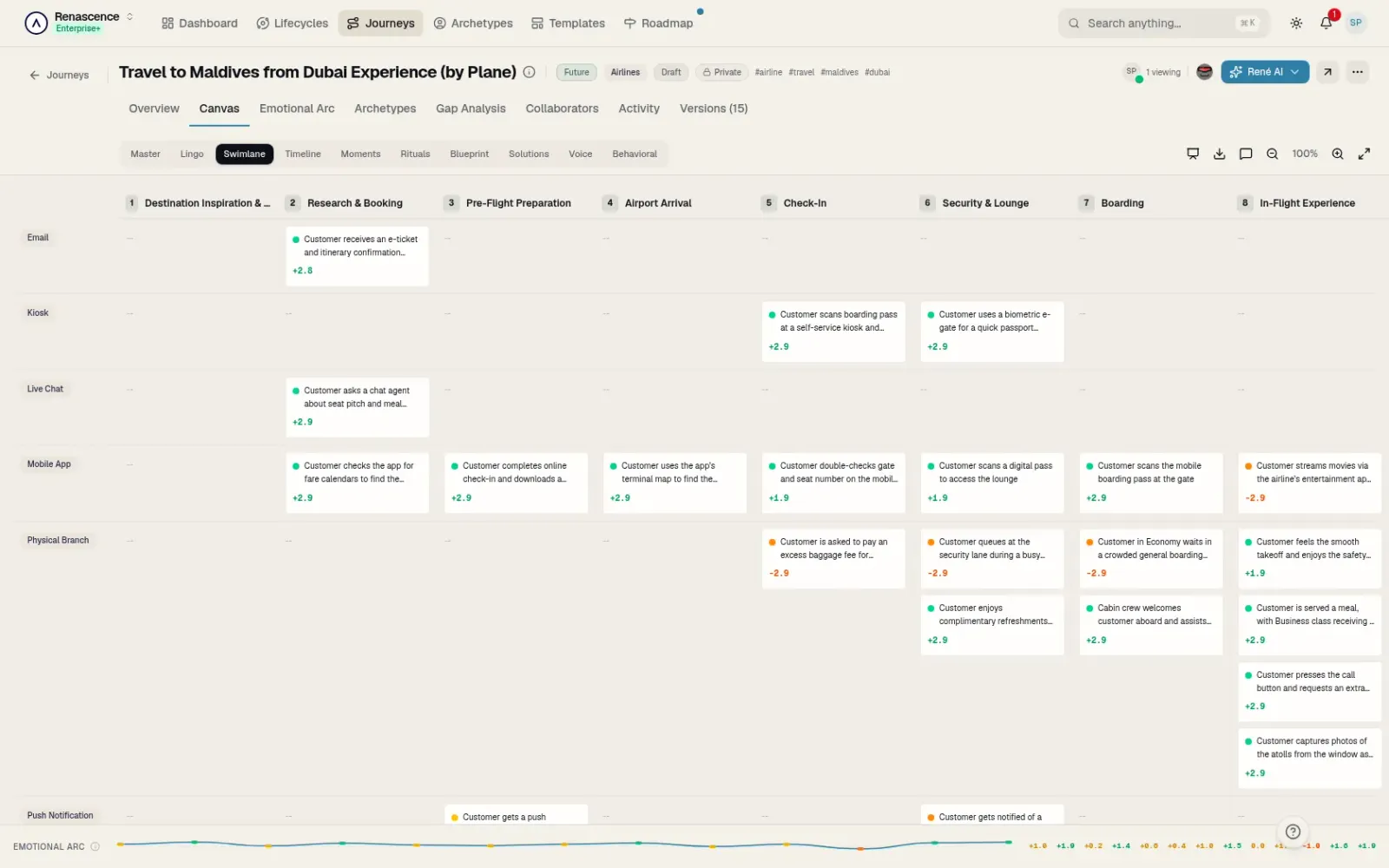
Renascence applies service design to close that gap: mapping what actually happens, diagnosing where the system breaks down, and rebuilding the experience so that the organisation's intent and the customer's reality finally match. In the MENA context — where rapid service expansion, multichannel complexity, and rising customer expectations collide — that alignment is not a nice-to-have. It is the difference between a service that scales and one that quietly erodes trust.