حول

شركة الاستشارات التي ولدت عند ملتقى الاقتصاد السلوكي والتجربة الإنسانية.

René Studio
استوديو تجارب الذكاء الاصطناعي

منصة تصميم تجربة العملاء (CX) التي بنيناها من عقد من العمل مع العملاء.

استكشف René Studio
Mysterya
تدقيقات سرية، مباشرة

عمليات تدقيق سرية نجريها، تُسجّل نتائجها مباشرةً لكل موقع.

استكشف Mysterya
نحن نوظّف الآن

انضم إلى فريق يعيد تشكيل كيفية تجربة العالم للعلامات التجارية.

عرض الوظائف الشاغرة ←

الشركة

انمُ معنا

تواصل

الخدمات

استشارات شاملة في تجربة العملاء والإدارة للعلامات التجارية الكبرى.

René Studio
استوديو تجارب الذكاء الاصطناعي

كل تفاعل، موضح ومقيّم في مساحة عمل واحدة مدعومة بالذكاء الاصطناعي.

استكشف René Studio
Mysterya
تدقيقات سرية، مباشرة

التسوق الخفي، مع تقييم وتوثيق فوري.

استكشف Mysterya
جميع الخدمات

استكشف المجموعة الكاملة من خدمات تجربة العملاء والاستشارات الإدارية.

تصفح جميع الخدمات ←

الأساس

أخصائي

الحلول

حلول ممنهجة تحوّل طموح تجربة العملاء إلى نتائج قابلة للقياس.

René Studio
استوديو تجارب الذكاء الاصطناعي

صمم خرائط للرحلات التي نعيد تصميمها وسجلها وصححها، باستخدام الذكاء الاصطناعي.

استكشف René Studio
Mysterya
تدقيقات سرية، مباشرة

تحقق من تسليم التجربة التي صممتها.

استكشف Mysterya
جميع الحلول

استكشف جميع حلول تجربة العميل التي نقدمها.

تصفح الحلول ←

الاستراتيجية والحوكمة

التصميم والتنفيذ

الثقافة والتجربة

القطاعات

عقد من تحول تجربة العملاء عبر أبرز قطاعات المنطقة.

René Studio
استوديو تجارب الذكاء الاصطناعي

رحلات جاهزة للقطاع، يتم تقييمها بواسطة الذكاء الاصطناعي في دقائق.

استكشف René Studio
Mysterya
تدقيقات سرية، مباشرة

عمليات تدقيق سرية مصممة لقطاعك، مع تقييم مباشر.

استكشف Mysterya
جميع القطاعات

تعرّف على كيفية عملنا في جميع القطاعات.

تصفح القطاعات ←

البيئة العمرانية

المالية والتقنية

الأفراد والتنقل

المنتجات

أدوات ومنصات حصرية وتقنيات ذكاء اصط

René Studio
استوديو تجارب الذكاء الاصطناعي

صمم رحلات العملاء وقيّمها وحسّنها باستخدام الذكاء الاصطناعي.

استكشف René Studio
Mysterya
تدقيقات سرية، مباشرة

راجع كل موقع وتصرف بناءً على ما تجده.

استكشف Mysterya
REBELالمجموعة أ · 36 قوة

القوى التي تشكل كيفية تجربة البشر للعالم.

استكشف REBEL Reveal ←
جميع المنتجات

استكشف منظومة منتجات Renascence الكاملة.

تصفح المنتجات ←

PLATFORMS

الذكاء الاصطناعي والتكنولوجيا

التعلم والأطر

مجموعة أدوات تجربة العملاء

الرأي

رؤى وأبحاث وحوارات في طليعة مجال تجربة العميل.

René Studio
استوديو تجارب الذكاء الاصطناعي

حوّل ما تقرأه إلى رحلة يمكنك تقييمها.

استكشف René Studio
Mysterya
تدقيقات سرية، مباشرة

اكتشف ما يمر به العملاء حقًا، زيارة بعد زيارة.

استكشف Mysterya
اقرأسجل التجربةمقالات وأبحاث حول CX والسلوك والتحول.شاهد واستمعنول التجربةالبودكاست المرئي الخاص بنا حول CX والسلوك.منسّقأخبار CXأخبار الصناعة الهامة في CX، بدون ضوضاء.

أحدث المقالات

أحدث الحلقات

آخر الأخبار

المركز

أدوات وقوالب وموارد مجانية للارتقاء بممارستك لتجربة العملاء.

René Studio
استوديو تجارب الذكاء الاصطناعي

صمم رحلات العملاء وقيّمها وحسّنها باستخدام الذكاء الاصطناعي.

استكشف René Studio
Mysterya
تدقيقات سرية، مباشرة

كل زيارة، كل موقع، كل نتيجة. مباشرة.

استكشف Mysterya
البياناحرق المجموعة.
عشر فضائل. لا أعذار.ابدأ القراءة ←
المركز

كل أداة مجانية، وقالب، ومورد في مكان واحد.

تفضل بزيارة المركز ←

أدوات الذكاء الاصطناعي

أدوات مجانية

التعلّم

الثقافة

Solution · الأنماط الأساسية لتجربة العملاء

CX Archetypes: Know Exactly Who You're Designing For

Most CX failures trace back to one root cause: designing for an average customer who doesn't exist. CX Archetypes give your teams a shared, research-grounded picture of who actually walks through your door.

احجز مكالمة استكشافيةماذا يتضمن؟

المنصة التي تدعم هذا العمل

René Studio
منصة تصميم تجربة العملاء بالذكاء الاصطناعي

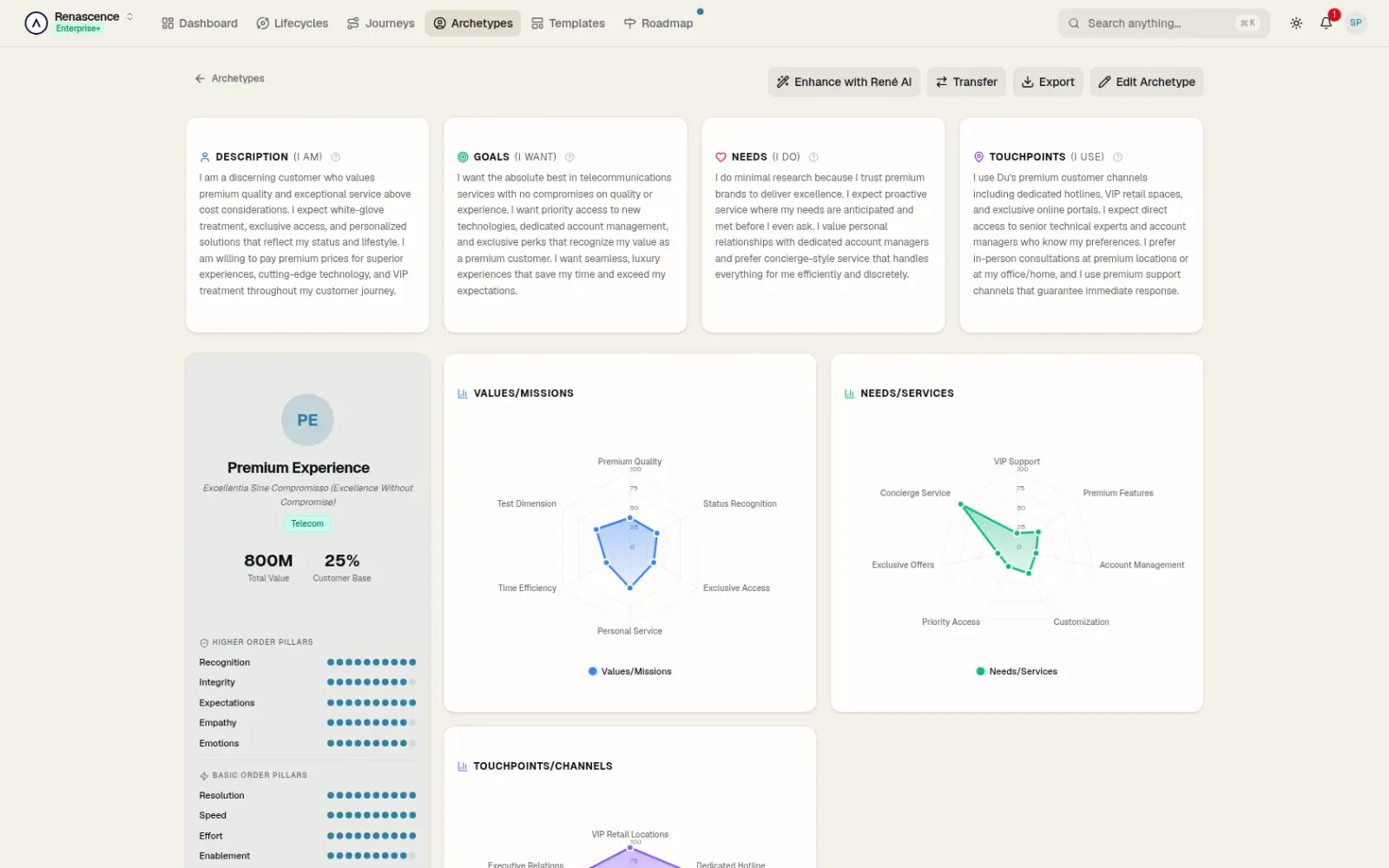
الأنماط الأصلية التي تستخدمها فرقك بالفعل.

تعيش نماذجنا الأولية في René Studio بجانب رحلات العملاء، حتى يتسنى التحقق من كل قرار تصميمي مقابل الأشخاص الموجه إليهم.

  • الأنماط الأصلية
  • الاحتياجات والدوافع
  • مرتبط بالرحلات

01 — نظرة عامة

What are CX Archetypes and why do they matter more than personas?

CX Archetypes are research-based models of your distinct customer types, defined by their goals, motivations, behaviors, and decision-making patterns — not demographics alone. Where a persona tells you a customer is a 35-year-old professional, an archetype tells you she's a Control-Seeker who needs to feel informed at every step or she walks.

Most organisations already have personas. What they lack is behavioral depth: the underlying drivers that explain why a customer hesitates, complains, churns, or advocates. Archetypes answer that question. They draw on behavioral economics — specifically the distinction between System 1 and System 2 thinking — to map not just what customers do, but the cognitive shortcuts and emotional triggers that shape every choice they make.

The practical result is a shared language across your business. When your product team, your contact centre, and your branch network all understand that Archetype 3 is a Reassurance-Seeker who needs social proof before committing, every design decision gets faster, sharper, and more consistent. That alignment is where the commercial return lives.


The business case for archetype-driven design is grounded in what happens when teams stop guessing who they're serving.

Commercial impactMcKinsey & Company, 2023
3.2x
Higher likelihood of exceeding revenue targets for companies that lead with customer understanding over product-out thinking
Efficiency gainObserved pattern across Renascence engagements
-23%
Reduction in wasted design effort when cross-functional teams share a single validated model of customer behavior
Risk reductionForrester Research
40%
Of CX investments fail to deliver because they target the wrong customer need — archetypes directly address this root cause

02 —ماذا يتضمن؟

What a CX Archetypes Engagement Delivers

Each engagement produces a set of validated, activation-ready archetype models — not slide decks that gather dust, but working tools your teams use in design sprints, service blueprints, and campaign briefs.

Qualitative interviews, observational research, and behavioral data analysis that surface the real motivations, anxieties, and decision triggers behind your customers' actions.

A concise set of 3–6 distinct archetype profiles, each defined by goals, core needs, behavioral patterns, and the emotional states that drive or derail their journey with you.

For each archetype, a clear map of the moments that matter most — the points where their specific needs are highest and where your service either earns or loses their trust.

Each archetype is annotated with the behavioral economics principles most relevant to that type — loss aversion, the goal-gradient effect, social proof — so your designers know which levers to pull.

Ready-to-use reference cards, journey overlays, and workshop facilitation guides that embed archetypes into your team's day-to-day design and decision-making processes.

A facilitated working session that brings your CX, product, marketing, and operations teams into a shared understanding of the archetypes and how each function serves them differently.

03 —منهجيتنا

How We Build Your CX Archetypes

1

Discover

We assess your maturity, research the people involved and pinpoint the highest-impact opportunities.

2

Design

We craft the strategy and interventions, grounded in evidence and validated with real users.

3

Deliver

We implement alongside your teams, with quick wins and knowledge transfer along the way.

4

Sustain

We embed governance, measurement and tools so the gains compound over time.

04 —النتائج

ما يمكنك توقعه.

1

تأثير قابل للقياس

كل مشاركة ترتبط بمقاييس الأعمال — لا بمقاييس التفاخر.

2

القدرة التي تحتفظ بها

ننقل المهارات والأدوات والأطر ليتمكّن فريقك من امتلاكها.

3

Aligned organization

المعايير المشتركة والحوكمة تجعل كل فريق يعمل بتناغم.

أكثر وضوحًا
الاستهداف والتصميم
مشترك
لغة العميل
أعلى
الملاءمة والتأثير

05 —إثبات

شاهدها في العمل.

جميع دراسات الحالة

07 — لماذا يهمنا الأمر

Why Behavioral Depth Changes Everything in CX Design

The dominant failure mode in CX is designing for a statistical average. Demographic segments tell you who is in the room; archetypes tell you what they need from you and what will make them leave. Daniel Kahneman's work on dual-process cognition established that most customer decisions are driven by fast, emotional, heuristic thinking — not the rational deliberation that most service designs assume. An archetype built on behavioral research reflects that reality. One built on survey demographics does not.

There is a compounding organisational benefit that is easy to underestimate. When a bank's digital team, its branch network, and its complaints function all operate from different mental models of the customer, every handoff creates friction. Archetypes dissolve that. They become the common reference point that makes cross-functional design conversations shorter, sharper, and less political. We have consistently found that teams with a shared archetype model move from insight to design decision in a fraction of the time.

In MENA markets specifically, the behavioral diversity within a single customer base is striking. A retail bank in the Gulf may serve a risk-averse national customer, a transaction-focused expatriate professional, and a digitally-native younger segment — each with fundamentally different trust signals, communication preferences, and service expectations. A single persona flattens that. A well-constructed set of archetypes preserves it, and gives your teams the precision to serve each type well without building three separate service models.

Listen: The Naked Customer podcastConversations on CX, loyalty & behavior

08 —FAQ

CX Archetypes: Frequently Asked Questions

A CX Archetype is a behavioral model of a distinct customer type, defined by goals, motivations, decision-making patterns, and emotional drivers. A persona typically describes who a customer is demographically. An archetype explains why they behave as they do — which is the information you actually need to design services that work.

It is most valuable for CX, product, marketing, and service-design leaders who are making significant decisions about customer journeys, digital experiences, or service models. It is particularly well-suited to organisations that have data on what customers do but lack a clear picture of why — and to teams where different functions are working from inconsistent assumptions about the customer.

Most engagements produce between three and six archetypes. Fewer than three tends to flatten meaningful behavioral differences; more than six becomes difficult for teams to hold in working memory and apply consistently. The right number depends on the genuine behavioral diversity in your customer base, which the research phase establishes.

We combine qualitative depth interviews, observational and ethnographic research, and analysis of existing behavioral and operational data. Where client data permits, we also draw on behavioral analytics — drop-off patterns, complaint themes, channel-switching behavior — to validate and sharpen the qualitative findings. The goal is archetypes grounded in evidence, not intuition.

A full engagement — from research through to activation toolkit and alignment session — typically runs six to ten weeks, depending on the size of the customer base, the number of segments to explore, and the volume of existing research available. A focused engagement building on strong existing data can move faster.

Engagements are scoped and priced on a project basis, reflecting the research depth, number of archetypes, and activation requirements. We do not offer a one-size template because the research phase is genuinely variable. We provide a clear scope and fixed fee after an initial discovery conversation.

You receive a set of validated archetype profiles, a needs-and-moments map for each archetype, a behavioral annotation layer identifying the key cognitive and emotional drivers, an activation toolkit for embedding archetypes in design work, and a facilitated alignment session. All deliverables are built for practical use, not for presentation.

Segmentation divides customers by observable characteristics — spend, frequency, product holding, demographics. Archetypes explain the behavioral logic underneath those segments. The two are complementary: segmentation tells you who is in each group; archetypes tell you how to design for them. Many clients use both, mapping archetypes onto existing segments to add the behavioral layer their current models lack.

This is the right question, and it is why activation is a core part of the engagement rather than an afterthought. We build reference tools designed for the formats your teams actually work in — journey workshops, sprint briefs, service blueprints — and run a cross-functional alignment session to establish shared ownership. An archetype that lives only in a PDF has no commercial value.

Significantly. Customer bases in MENA markets often span national and expatriate populations, multiple languages, and sharply different levels of digital adoption and institutional trust. These are not cosmetic differences — they produce genuinely distinct behavioral patterns that a single archetype set must capture accurately. Our research approach is designed for this complexity, and our teams operate across the region with direct market experience.

Yes. The same behavioral modeling approach applies to employee archetypes, and the two are closely related: the archetype of the customer a frontline employee serves shapes what that employee needs to do their job well. Some engagements run customer and employee archetypes in parallel, which produces a much richer service-design foundation.

The first step is a 30-minute discovery conversation to understand your current customer understanding, the decisions you are trying to make, and where behavioral depth would add the most value. From that conversation, we produce a clear scope and recommendation. There is no obligation and no sales pressure — if archetypes are not the right tool for your situation, we will tell you.

واصل استكشاف رينيسانس

ابدأ المحادثة

هل أنت مستعد للبدء مع الأنماط الأساسية لتجربة العملاء؟

احجز مكالمة استكشافية مع أحد كبار المستشارين واكتشف ما هو ممكن.